BOOK REVIEW: Myth: A Very Short Introduction by Robert A. Segal

Myth: A Very Short IntroductionMyth: A Very Short Introduction by Robert A. Segal
My rating: 4 of 5 stars

Amazon.in Page

Get Speechify to make any book an audiobook

This book situates myth amid the broader body of scholarship by examining what role myth plays within – or in opposition to – various academic disciplines, including: science, philosophy, religion, the study of ritual, literature, psychology, structuralism, and social studies. The book is organized so as to compare competing ideas of various major scholars in each of the aforementioned domains. So, as the blurb is upfront about, the book doesn’t spend much time talking about what myths are, and the discussion of how myths are structured is only made as relevant to distinguishing various hypotheses.

One does obtain some food-for-thought about what myths are as one learns how different scholars have approached myth. Questions of how narrowly myth should be defined (e.g. only creation stories v. all god and supernatural tales,) and how myths compare to folktales, national literatures, and the like are touched upon. One also learns that some scholars took myths literally (and, therefore, saw them as obsolete in the face of science and modern scholarship,) but other scholars viewed myths more symbolically.

If you’re looking for an introductory book to position myth in the larger scholarly domain and to examine competing hypotheses about myths, this is a great book for you. However, those who want a book that elucidates what myths are (and aren’t) and how they are structured and to what ends, may find this book inadequate for those objectives. Just be aware of the book you’re getting.


View all my reviews

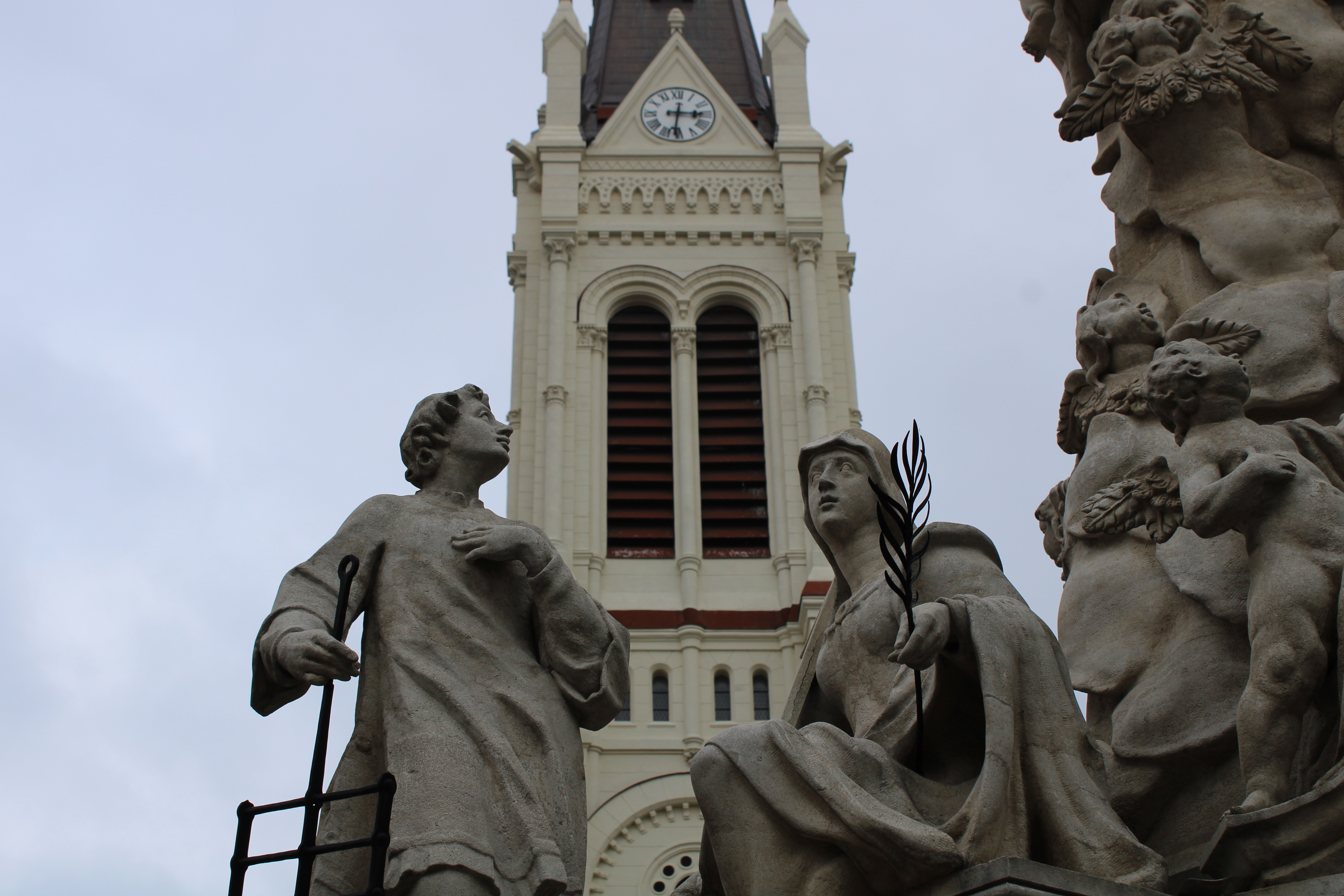
DAILY PHOTO: A Church in Bidar

Taken in Bidar in August of 2022

DAILY PHOTO: Gompa Art, Ravangla

Taken at the Bon Monastery near Ravangla, Sikkim

Taken at the Ravangla Gompa in May of 2022

Temple on a Hill [Free Verse]

granite bubbled out of the jungle,
and - upon it - they built a temple

its walls were anchored into stone
until its walls were the hill,
and the hill was its walls

and no one could find one true point
at which one ended & the other began

was it built to be 
closer to the heavens,
or further from hell?

not by people for whom
heaven & hell
reside in the mind --
unattainable by velocity,
inescapable by distance --
constant traveling companions
only confronted head-on

maybe they wanted it to feel
permanent,
knowing even that granite
would crumble in due time

BOOK REVIEW: Awakening the Sleeping Buddha by The 12th Tai Situpa [Pema Donyo Nyinche]

Awakening the Sleeping BuddhaAwakening the Sleeping Buddha by Pema Donyo Nyinche
My rating: 5 of 5 stars

Amazon.in Page

This is a concise overview of Buddhism from the Kagyu Vajrayana [Tibetan] Buddhist perspective. It’s a straightforward, just-the-facts look at the fundamental teachings of Buddhism, and doesn’t plumb the depths of the subject, but rather offers a readable broad-brush view. And yet the author managed to state ideas in such a way as to provoke thought and offer insight.

The book is divided into eight chapters, each of which takes on a major concept from Mahayana Buddhism: Buddha nature, bodhichitta (compassion,) reincarnation / karma, emptiness, Tantric science, transformation, Enlightenment, and Mahamudra (the core meditation of the Kagyu lineage.) The organization is informed by what concepts one needs to learn to move through greater levels of refinement towards Enlightenment, with the final chapter examining Buddhist teachings as presented in the Kagyu line.

I value books on Buddhist philosophy and psychology that keep things simple and don’t overly religify the topic. This book does a good job of it, and that says something when considering the great complexity and esoteric nature of Tibetan schools of Buddhism. If you’re looking for an introductory text on Buddhism from the Vajrayana perspective, this is an excellent book to read.


View all my reviews

DAILY PHOTO: Saint Stephen’s Basilica Under Blue Skies

Taken in the Summer of 2011 in Budapest

DAILY PHOTO: Bon Monastery, Sikkim

Taken in Sikkim on May 12, 2022

BOOK REVIEW: Jagannatha of Puri by Gayatri M. Dutt

Jagannatha of puriJagannatha of puri by Gayatri Madan Dutt
My rating: 4 of 5 stars

Amazon.in Page

I recently visited Puri, and – seeing the little, big-eyed Jagannath idols and images all across Odisha – I was curious to learn about the mythology behind the Puri temple and its tripartite deity. This 30+ page comic may not be the most scholarly or detailed account, but it may be the quickest way to get the gist of the story. And the comic does present an intriguing morality tale that includes lessons of patience and unselfishness.

The story begins with a king who is obsessed with finding a fabled cave-shrine that he was directed to in a dream. The king sends his best men out in search of the cave as its whereabouts are unknown. In time, one of the men stumbles upon a village whose chieftain is said to regularly make secretive visits to the cave and its idol. And from there, the race is on to get the king to the cave. But the deity is elusive, and insists that its followers work together harmoniously.

It’s a clear and well-developed story. It blends intriguing trippy elements like time-travel and messages in dreams with traditional religious mythology.

If you’re looking for a brief explanation of the Puri temple and the Jagannaths, it’s worth giving this short comic a look.


View all my reviews

BOOK REVIEW: Romanticism: A Very Short Introduction by Michael Ferber

Romanticism: A Very Short IntroductionRomanticism: A Very Short Introduction by Michael Ferber
My rating: 4 of 5 stars

Amazon.in Page

Romanticism was a literary, artistic, and philosophical movement of the late 18th and early 19th century. It’s commonly believed to have been a response to the Enlightenment, a desire to not throw out the baby with the bathwater as the influence of religion waned. In this book, we learn that that’s a misleading oversimplification, but not one completely devoid of truth.

Like a lot of “movements,” Romanticism is a fairly loose set, containing a disparate band of entities. This is exacerbated because it’s not just, say, a style of painting or of music, but rather it cuts across a diverse range of activities. Because of that, the book offers the least clarity in the opening chapters (ch. 1&2) and in the last one (ch. 6.) The first two try to rope in Romanticism and to differentiate it from “sensibility,” a movement oft-confused for Romanticism. The last chapter attempts to show the commonality that cuts across different domains, e.g. how are Romantic paintings similar to Romantic novels, or – for that matter – Idealist philosophy.

However, starting with chapter three, the book provides clear insight into the nature of Romanticism. Chapter three investigates poetry. Chapter four examines philosophy and Romantic attitudes towards religion and science. This was quite eye opening to me because I’d previously contrasted Romanticism with the Enlightenment, and here I learned that the Romantics’ views on religion and science were far from the opposite end of a spectrum. Chapter five shines light on the social context of Romanticism, focusing on politics, the French and the Industrial Revolutions, and War, but also evaluating what influence, if any, Romanticism had on changing views toward women.

I feel I came away from the book with a better understanding of Romanticism, and so I’d recommend it for others interested in learning more.

View all my reviews

DAILY PHOTO: St. Vitus Stained Glass, Prague

Taken in 2002 in Prague