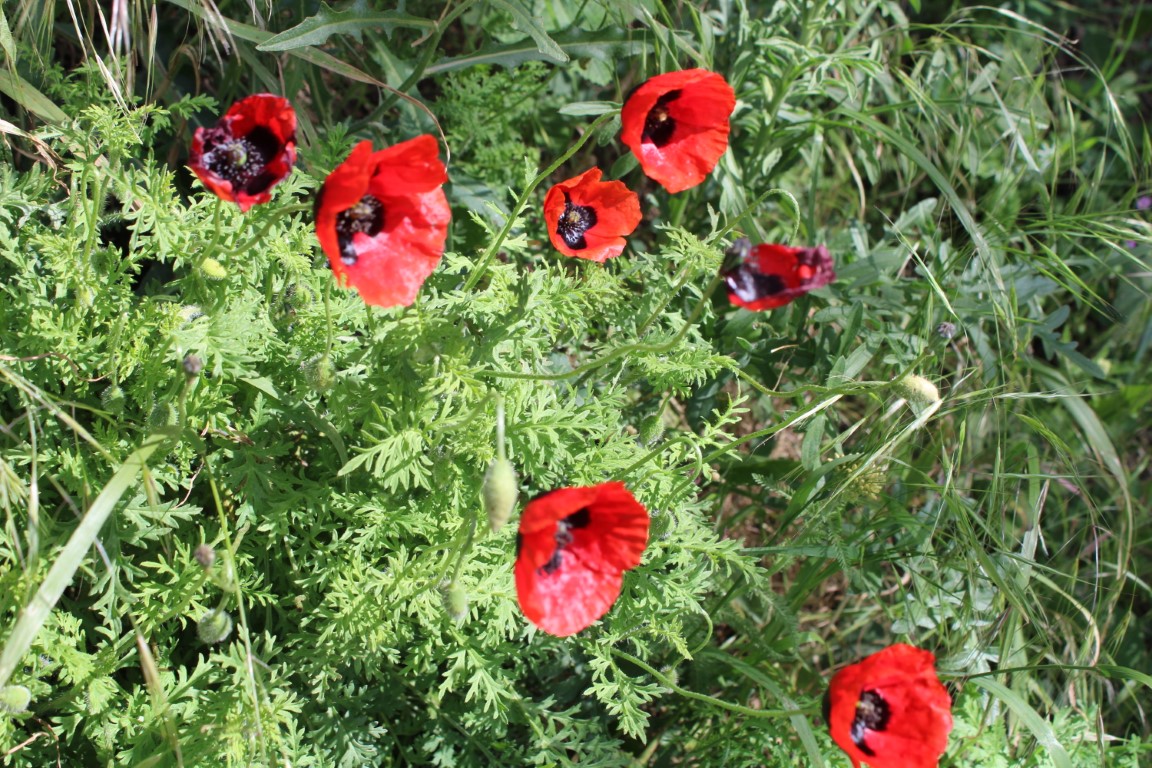
wild poppies
 take my mind to a tragic
  poem learned in youth.

wild poppies
take my mind to a tragic
poem learned in youth.
No. It’s not that I’m insufficiently petty, but rather that I lack the requisite memory and passion for such things.
I once read about a psychopath who claimed that when he was wronged, he would hold onto it, bide his time, and get his nemesis with a commensurate reply at a later date — often years later when other person had completely forgotten about the matter. Quite frankly, I don’t know how he had the mental energy.
 Moonwalking with Einstein: The Art and Science of Remembering Everything by Joshua Foer
 Fluent Forever: How to Learn Any Language Fast and Never Forget It by Gabriel Wyner
Which food, when you eat it, instantly transports you to childhood?
Probably Fair food would (as in County Fair.) Provided they haven’t all changed since I was a kid. (Having not been to a Fair since childhood, I wouldn’t know. Hence, its validity as an answer.) So, anything inappropriately breaded and deep-fried.
I’ve never run across home-cooking or home style cooking that was close enough to my mother’s to trigger nostalgia. (Though I guess tuna-mac recalls undergrad years lean on time and money, but with a youthful propensity to not worry over the waistline.)
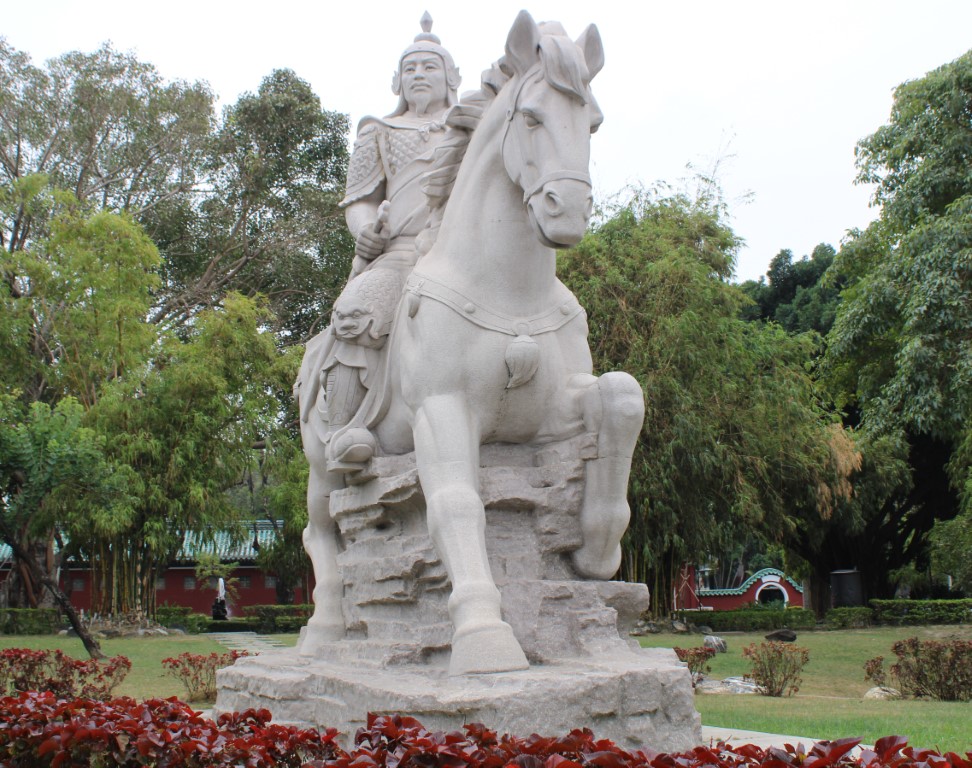
Drunk, I'd keep a lamp lit to find my sword,
 The blare of horns sounded throughout the camp.
 Soldiers ate meat under waving banners;
 The military band played boisterous tunes.
 Autumn brought our troops to the battlefield.

Carried by a charger at full gallop,
 My bow thwipped, sending swift arrows flying.
 We restored Imperial lands, boldly,
 And won great fame for fighting gallantly,
 But fame grows thin and gray just like my hair.

Reeds cover the tiny island.
   Shallow streams cut through the cold sand.

I see the Southern Tower for
   The first time in two decades.

How many days since I moored
   Under this willow tree?
   Mid-Autumn Festival is almost here.

On the rocks of Yellow Crane,
 Do my friends still reside?

This old place has many new sorrows.

If I bought wine and we cast off together,
 Could we be young again?

Remember me when I am gone away,
   Gone far away into the silent land;
   When you can no more hold me by the hand,
 Nor I half turn to go yet turning stay.
 Remember me when no more day by day
   You tell me of our future that you plann'd:
   Only remember me; you understand
 It will be late to counsel then or pray.
 Yet if you should forget me for a while
   And afterwards remember, do no grieve:
   For if the darkness and corruption leave
   A vestige of the thoughts that once I had,
 Better by far you should forget and smile
  Than that you should remember and be sad.
What makes you feel nostalgic?
In order of frequency: 1.) music; 2.) some random memory; 3.) a pattern of colors.

Twelve o'clock.
 Along the reaches of the street
 Held in a lunar synthesis,
 Whispering lunar incantations
 Dissolve the floors of memory
 And all its clear relations,
 Its divisions and precisions,
 Every street lamp that I pass
 Beats like a fatalistic drum,
 And through the spaces of the dark
 Midnight shakes the memory
 As a madman shakes a dead geranium.

Half-past one,
 The street lamp sputtered,
 The street lamp muttered,
 The street lamp said, 'Regard that woman
 Who hesitates towards you in the light of the door
 Which opens on her like a grin.
 You see the border of her dress
 Is torn and stained with sand,
 And you see the corner of her eye
 Twists like a crooked pin.'

The memory throws up high and dry
 A crowd of twisted things;
 A twisted branch upon the beach
 Eaten smooth, and polished
 As if the world gave up
 The secret of its skeleton,
 Stiff and white.
 A broken spring in a factory yard,
 Rust that clings to the form that the strength has left
 Hard and curled and ready to snap.

Half-past two,
 The street lamp said,
 'Remark the cat which flattens itself in the gutter,
 Slips out its tongue
 And devours a morsel of rancid butter.'
 So the hand of a child, automatic,
 Slipped out and pocketed a toy that was running along the quay.
 I could see nothing behind that child's eye.
 I have seen eyes in the street
 Trying to peer through lighted shutters,
 And a crab one afternoon in a pool,
 An old crab with barnacles on his back,
 Gripped the end of a stick which I held him.

Half-past three,
 The lamp sputtered,
 The lamp muttered in the dark.
 The lamp hummed:
 'Regard the moon,
 La lune ne garde aucune rancune,
 She winks a feeble eye,
 She smiles into corners.
 She smoothes the hair of the grass.
 The moon has lost her memory.
 A washed-out smallpox cracks her face,
 Her hand twists a paper rose,
 That smells of dust and old Cologne,
 She is alone
 With all the old nocturnal smells
 That cross and cross across her brain.'
 The reminiscence comes
 Of sunless dry geraniums
 And dust in crevices,
 Smells of chestnuts in the streets,
 And female smells in shuttered rooms,
 And cigarettes in corridors
 And cocktail smells in bars.

The lamp said,
 'Four o'clock,
 Here is the number on the door.
 Memory!
 You have the key,
 The little lamp spreads a ring on the stair;
 Mount.
 The bed is open; the tooth-brush hangs on the wall,
 Put your shoes at the door, sleep, prepare for life.'

The last twist of the knife.


 Tiger Riding for Beginners