“The Darkling Thrush” by Thomas Hardy [w/ Audio]

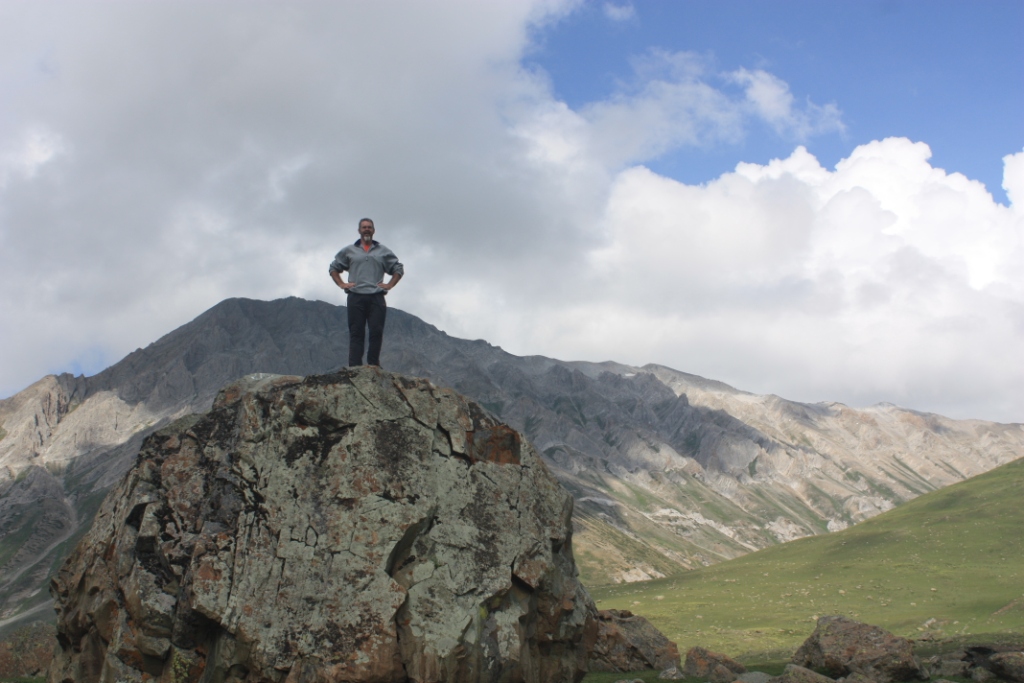
I leant upon a coppice gate
 When Frost was spectre-grey,
And Winter's dregs made desolate
 The weakening eye of day.
The tangled bine-stems scored the sky
 Like strings of broken lyres,
And all mankind that haunted nigh
 Had sought their household fires.

The land's sharp features seemed to be
 The Century's corpse outleant,
His crypt the cloudy canopy,
 The wind his death-lament.
The ancient pulse of germ and birth
 Was shrunken hard and dry,
And every spirit upon earth
 Seemed fervourless as I.

At once a voice arose among
 The bleak twigs overhead
In a full-hearted evensong
 Of joy illimited;
An aged thrush, frail, gaunt, and small,
 In blast-beruffled plume,
Had chosen thus to fling his soul
 Upon the growing gloom.

So little cause for carolings
 Of such ecstatic sound
Was written in terrestrial things
 Afar or nigh around,
That I could think there trembled through
 His happy good-night air
Some blessed Hope, whereof he knew
 And I was unaware.

“Sonnets from the Portuguese 43” by Elizabeth Barrett Browning [w/ Audio]

How do I love thee? Let me count the ways.
 I love thee to the depth and breadth and height
My soul can reach, when feeling out of sight
 For the ends of being and ideal grace.
I love thee to the level of every day's
 Most quiet need, by sun and candle-light.
I love thee freely, as men strive for right;
 I love thee purely, as they turn from praise.
I love thee with the passion put to use
 In my old griefs, and with my childhood's faith.
I love thee with a love I seemed to lose
 With my lost saints. I love thee with the breath,
Smiles, tears, of all my life, and, if God choose,
 I shall but love thee better after death.

“Bright Star” by John Keats [w/ Audio]

Source: NASA
Bright star, would I were stedfast as thou art --
 Not in lone splendour hung aloft the night
And watching, with eternal lids apart,
 Like nature's patient, sleepless Eremite,
The moving waters at their priestlike task
 Of pure ablution round earth's human shores,
Or gazing on the new soft-fallen mask
 Of snow upon the mountains and the moors --
No -- yet still stedfast, still unchangeable,
 Pillow'd upon my fair love's ripening breast,
To feel for ever its soft fall and swell,
 Awake for ever in a sweet unrest,
 Still, still to hear her tender-taken breath,
 And so live ever -- or else swoon to death.

“Happy the Man” by Horace; Translated by John Dryden [w/ Audio]

Happy the man, and happy he alone,
He who can call today his own:
He who, secure within, can say,
Tomorrow do thy worst, for I have lived today.
Be fair or foul, or rain or shine
The joys I have possessed, in spite of fate, are mine.
Not Heaven itself, upon the past has power,
But what has been, has been, and I have had my hour.

Auguries of Innocence by William Blake [w/ Audio]

To see a World in a Grain of Sand
And a Heaven in a Wild Flower
Hold Infinity in the palm of your hand
And Eternity in an hour
A Robin Red breast in a Cage
Puts all Heaven in a Rage
A Dove house fill'd with Doves & Pigeons
Shudders Hell thr' all its regions
A dog starvd at his Masters Gate
Predicts the ruin of the State
A Horse misused upon the Road
Calls to Heaven for Human Blood
Each outcry of the hunted Hare
A fibre from the Brain does tear
A Skylark wounded in the wing
A Cherubim does cease to sing
The Game Cock clipd & armd for fight
Does the Rising Sun affright
Every Wolfs & Lions howl
Raises from Hell a Human Soul
The wild deer, wandering here & there
Keeps the Human Soul from Care
The Lamb misused breed Public Strife
And yet forgives the Butchers knife
The Bat that flits at close of Eve
Has left the Brain that wont Believe
The Owl that calls upon the Night
Speaks the Unbelievers fright
He who shall hurt the little Wren
Shall never be beloved by Men
He who the Ox to wrath is movd
Shall never be by Woman lovd
The wanton Boy that kills the Fly
Shall feel the Spiders enmity
He who torments the Chafers Sprite
Weaves a Bower in endless Night
The Catterpiller on the Leaf
Repeats to thee thy Mothers grief
Kill not the Moth nor Butterfly
For the Last Judgment draweth nigh
He who shall train the Horse to War
Shall never pass the Polar Bar
The Beggars Dog & Widows Cat
Feed them & thou wilt grow fat
The Gnat that sings his Summers Song
Poison gets from Slanders tongue
The poison of the Snake & Newt
Is the sweat of Envys Foot
The poison of the Honey Bee
Is the Artists Jealousy
The Princes Robes and Beggars Rags
Are Toadstools on the Misers Bags
The Truth that's told with bad intent
Beats all the Lies you can invent
It is right it should be so
Man was made for Joy & Woe
And when this we rightly know
Thro the World we safely go
Joy & Woe are woven fine
A Clothing for the soul divine
Under every grief & pine
Runs a joy with silken twine
The Babe is more than swadling Bands
Throughout all these Human Lands
Tools were made & Born were hands
Every Farmer Understands
Every Tear from Every Eye
Becomes a Babe in Eternity
This is caught by Females bright
And returnd to its own delight
The Bleat the Bark Bellow & Roar
Are Waves that Beat on Heavens Shore
The Babe that weeps the Rod beneath
Writes Revenge in realms of Death
The Beggars Rags fluttering in Air
Does to Rags the Heavens tear
The Soldier armd with Sword & Gun
Palsied strikes the Summers Sun
The poor Mans Farthing is worth more
Than all the Gold on Africs Shore
One Mite wrung from the Labrers hands
Shall buy & sell the Misers Lands
Or if protected from on high
Does that whole Nation sell & buy
He who mocks the Infants Faith
Shall be mocked in Age & Death
He who shall teach the Child to Doubt
The rotting grave shall ne er get out
He who respects the Infants faith
Triumphs over Hell & Death
The Childs Toys & the Old Mans Reasons
Are the Fruits of the Two seasons
The Questioner who sits so sly
Shall never know how to reply
He who replies to words of Doubt
Doth put the Light of Knowledge out
The Strongest Poison ever known
Came from Caesars Laurel Crown
Nought can Deform the Human Race
Like to the Armours iron brace
When Gold & Gems adorn the Plow
To peaceful Arts shall Envy bow
A Riddle or the Crickets Cry
Is to Doubt a fit Reply
The Emmets Inch & Eagles Mile
Make Lame Philosophy to smile
He who Doubts from what he sees
Will ne er Believe do what you Please
If the Sun & Moon should Doubt
Theyd immediately Go out
To be in a Passion you Good may do
But no Good if a Passion is in you
The Whore & Gambler by the State
Licencd build that Nations Fate
The Harlots cry from Street to Street
Shall weave Old Englands winding Sheet
The Winner Shout the Losers Curse
Dance before dead Englands Hearse
Every Night & every Morn
Some to Misery are Born
Every Morn & every Night
Some are Born to sweet delight
Some are Born to Endless Night
We are led to Believe a Lie
When we see not Thro the Eye
Which was Born in a Night to perish in a Night
When the Soul Slept in Beams of Light
God Appears & God is Light
To those poor Souls who dwell in Night
But does a Human Form Display
To those who Dwell in Realms of Day

Rhapsody on a Windy Night by T.S. Eliot [w/ Audio]

Twelve o'clock.
Along the reaches of the street
Held in a lunar synthesis,
Whispering lunar incantations
Dissolve the floors of memory
And all its clear relations,
Its divisions and precisions,
Every street lamp that I pass
Beats like a fatalistic drum,
And through the spaces of the dark
Midnight shakes the memory
As a madman shakes a dead geranium.

Half-past one,
The street lamp sputtered,
The street lamp muttered,
The street lamp said, 'Regard that woman
Who hesitates towards you in the light of the door
Which opens on her like a grin.
You see the border of her dress
Is torn and stained with sand,
And you see the corner of her eye
Twists like a crooked pin.'

The memory throws up high and dry
A crowd of twisted things;
A twisted branch upon the beach
Eaten smooth, and polished
As if the world gave up
The secret of its skeleton,
Stiff and white.
A broken spring in a factory yard,
Rust that clings to the form that the strength has left
Hard and curled and ready to snap.

Half-past two,
The street lamp said,
'Remark the cat which flattens itself in the gutter,
Slips out its tongue
And devours a morsel of rancid butter.'
So the hand of a child, automatic,
Slipped out and pocketed a toy that was running along the quay.
I could see nothing behind that child's eye.
I have seen eyes in the street
Trying to peer through lighted shutters,
And a crab one afternoon in a pool,
An old crab with barnacles on his back,
Gripped the end of a stick which I held him.

Half-past three,
The lamp sputtered,
The lamp muttered in the dark.
The lamp hummed:
'Regard the moon,
La lune ne garde aucune rancune,
She winks a feeble eye,
She smiles into corners.
She smoothes the hair of the grass.
The moon has lost her memory.
A washed-out smallpox cracks her face,
Her hand twists a paper rose,
That smells of dust and old Cologne,
She is alone
With all the old nocturnal smells
That cross and cross across her brain.'
The reminiscence comes
Of sunless dry geraniums
And dust in crevices,
Smells of chestnuts in the streets,
And female smells in shuttered rooms,
And cigarettes in corridors
And cocktail smells in bars.

The lamp said,
'Four o'clock,
Here is the number on the door.
Memory!
You have the key,
The little lamp spreads a ring on the stair;
Mount.
The bed is open; the tooth-brush hangs on the wall,
Put your shoes at the door, sleep, prepare for life.'

The last twist of the knife.

BOOKS: Everyday Shakespeare by Ben & David Crystal

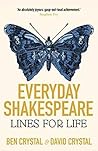
Everyday Shakespeare: Lines for LifeEveryday Shakespeare: Lines for Life by Ben Crystal
My rating: 4 of 5 stars

Amazon.in Page

This is like a word-a-day calendar, but with a quotation from Shakespeare for each day (rather than a vocabulary word.) Also, each quote has accompanying text that explains what the quote is from, what it means, why the language says what it does, and the context in which an individual might use Shakespeare’s words today. [Note: while that last bit (i.e. how to employ the Bard’s words today) is a major theme of the book, I wouldn’t recommend it. It will make one look more like a pretentious nincompoop than like a clever wordsmith.] That said, the book still has great value for anyone interested in Shakespeare’s work, specifically, or the evolution of the English language, more generally. In dealing with many phrases that describe workaday activities that were common then as now, the book builds a niche different from books that deal in the grandiose phraseology of war and aristocratic life.

Many people struggle with Shakespeare, and this book helps make clear why some of the statements that were about mundane matters had the meaning they did. I would put people’s difficulties with Shakespeare into three buckets. First, poetic and non-colloquial language in which the reader knows all the words and their meanings, but the poetic / stylistic language and grammar throws them for a loop. This book shouldn’t really need to deal with this one, but it does a little bit. Second, evolutionary language drift, in this case the reader knows the words but is thrown off because they don’t mean what they once did. The book is quite helpful in clarifying these changes. Third, the revolutionary shifts, these involve words and phrases wholly unfamiliar to the reader because they deal in activities and perspectives not present in our daily lives. The book explains these changes, as well, but there aren’t a great deal of them because the selections are supposed to be applicable today.

The book draws from the entire Shakespeare canon, but more heavily from the plays than from the sonnets or long form poems. (Also, not surprisingly, it draws more heavily from the popular plays — i.e. many of the tragedies and the popular comedies — than it does from the more obscure plays (i.e. most histories and a few of the others.) This only makes sense, and I was happy to see references to sonnets, histories, and other Shakespearean poems at all.

All in all, this is an informative book and is recommended for those who are interested in getting into Shakespeare, or who are intrigued by the ever-shifting landscape of the English language.

View all my reviews

St. Crispin’s Day Speech [from HENRY V] by William Shakespeare [w/ Audio]

This day is call'd the feast of Crispian.
 He that outlives this day, and comes safe home,
 Will stand a-tiptoe when this day is nam'd,
 And rouse him at the name of Crispian.
 He that shall live this day, and see old age,
 Will yearly on the vigil feast his neighbours,
 And say "Tomorrow is Saint Crispian."
 Then will he strip his sleeve and show his scars,
 And say "These wounds I had on Crispian's day."
 Old men forget; yet all shall be forgot,
 But he'll remember, with advantages,
 What feats he did that day. Then shall our names,
 Familiar in his mouth as household words --
 Harry the King, Bedford and Exeter,
 Warwick and Talbot, Salisbury and Gloucester --
 Be in their flowing cups freshly rememb'red.
 This story shall the good man teach his son;
 And Crispin Crispian shall ne'er go by,
 From this day to the ending of the world,
 But we in it shall be remembered --
 We few, we happy few, we band of brothers;
 For he today that sheds his blood with me
 Shall be my brother; be he ne'er so vile,
 This day shall gentle his condition;
 And gentlemen in England now a-bed
 Shall think themselves accursed they were not here,
 And hold their manhoods cheap whiles any speaks
 That fought with us upon Saint Crispin's Day.

To the Virgins, to Make Much of Time by Robert Herrick [w/ Audio]

Gather ye rose-buds while ye may,
   Old Time is still a-flying;
 And this same flower that smiles today
   Tomorrow will be dying. 

The glorious lamp of heaven, the sun,
   The higher he's a-getting,
 The sooner will his race be run,
   And nearer he's to setting.

That age is best which is the first,
   When youth and blood are warmer;
 But being spent, the worse, and worst
   Times still succeed the former.

Then be not coy, but use your time,
   And while ye may, go marry;
 For having lost but once your prime,
   You may forever tarry.

PROMPT: Historical Figure

If you could meet a historical figure, who would it be and why?

Assuming no babel fish technology – i.e. that we’d need a common language – I’d say William Blake, Walt Whitman, or Mark Twain. The latter would probably be the most fun, the middle the most uplifting, and the first the most insightful (or perhaps most mystical.)