“I’m Happy to Be a Free Yogi” by Drukpa Kunley [w/ Audio]

I'm happy to be a free Yogi,
growing evermore into inner happiness.

I can have sex with many women
as it helps them find the path of liberation.

Outwardly I'm a fool
and inwardly I live a clear spiritual path.

Outwardly I enjoy wine and women
and inwardly I work for the benefit of all beings.

Outwardly I live for my pleasure
and inwardly I do everything in the right moment.

Outwardly I'm a ragged beggar
and inwardly a blissful Buddha.

“Toward the South” by Guillaume Apollinaire [w/ Audio]

Zenith
These griefs
These gardens on and on
Where the toad croons a tender cry skyblue
The hind of silence startled races by
The nightingale that love has bruised sings in
Your body's bush on which I've picked each rose
Our hearts hang from the same pomegranate bough
And in our gaze pomegranate blossoms blow
That falling one by one have strewn the road

Translator: Harry Duncan

“Still will I harvest beauty where it grows” by Edna St. Vincent Millay

Still will I harvest beauty where it grows:
In coloured fungus and the spotted fog
Surprised on foods forgotten; in ditch and bog
Filmed brilliant with irregular rainbows
Of rust and oil, where half a city throws
Its empty tins; and in some spongy log
Whence headlong leaps the oozy emerald frog...
And a black pupil in the green scum shows.
Her the inhabiter of divers places
Surmising at all doors, I push them all.
Oh, you that fearful of a creaking hinge
Turn back forevermore with craven faces,
I tell you Beauty bears an ultra fringe
Unguessed of you upon her gossamer shawl!

“The Poets light but Lamps –” (930) by Emily Dickinson [w/ Audio]

The Poets light but Lamps --
Themselves -- go out --
The Wicks they stimulate
If vital Light

Inhere as do the Suns --
Each Age a Lens
Disseminating their
Circumference --

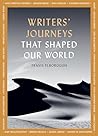
BOOKS: “The Art of Writing” Trans. / Ed. by Tony Barnstone and Chou Ping

The Art of Writing: Teachings of the Chinese MastersThe Art of Writing: Teachings of the Chinese Masters by Tony Barnstone
My rating: 5 of 5 stars

Publisher Website

This thin volume is packed with insights on writing — especially, but not exclusively, poetry. It consists of four chapters. The first two are the ars poetica of Lu Ji and Sikong Tu, respectively (i.e. The Art of Writing and The Twenty-Four Styles of Poetry.) The second half of the book consists of two chapters of collected sayings and poetry commentary excerpts.

I haven’t read a book so dense with quotable lines in a while. Some of the advice offered is universal and timeless (e.g. avoid cliches and read voraciously,) but some of it reflects a uniquely Chinese perspective rooted in Taoist and Zen sentiments (e.g. how to use wu wei [effortlessness] in one’s writing and so forth.)

There is a preface and each of the sections has its own editorial opening, but these never feel like padding (which often happens with books that come out to less than a hundred pages of content.) Instead, this ancillary material is concise and helps to offer historic and cultural context.

I’d highly recommend this book for writers and those interested in Eastern aesthetics and literature. That said, you don’t necessarily have to be interested in both. Any writer could pick up some beneficial tips while reading this book, and it’s compact, highly readable, and even humorous in places.

View all my reviews

“Leda and the Swan” by William Butler Yeats [w/ Audio]

Correggio’s Leda and the Swan (1532)
A sudden blow: the great wings beating still
Above the staggering girl, her thighs caressed
By the dark webs, her nape caught in his bill,
He holds her helpless breast upon his breast.

How can those terrified vague fingers push
The feathered glory from her loosening thighs?
And how can body, laid in that white rush,
But feel the strange heart beating where it lies?

A shudder in the loins engenders there
The broken wall, the burning roof and tower
And Agamemnon dead.
Being so caught up,
So mastered by the brute blood of the air,
Did she put on his knowledge with his power
Before the indifferent beak could let her drop?

“The Friend” by A.A. Milne [w/ Audio]

By E.H. Shepard; Public Domain; Source: Wikimedia Commons
There are lots and lots of people who are always asking things,
Like Dates and Pounds-and-ounces and the names of funny Kings,
And the answer's either Sixpence or A Hundred Inches Long,
And I know they'll think me silly if I get the answer wrong.

So Pooh and I go whispering, and Pooh looks very bright,
And says, "Well, I say sixpence, but I don't suppose I'm right,"
And then it doesn't matter what the answer ought to be,
'Cos if he's right, I'm Right, and if he's wrong, it isn't Me.

“A Dream Within a Dream” by Edgar Allan Poe [w/ Audio]

Take this kiss upon the brow!
And, in parting from you now,
Thus much let me avow --
You are not wrong, who deem
That my days have been a dream;
Yet if hope has flown away
In a night, or in a day,
In a vision, or in none,
Is it therefore the less gone?
All that we see or seem
Is but a dream within a dream.

I stand amid the roar
Of a surf-tormented shore,
And I hold within my hand
Grains of the golden sand --
How few! yet how they creep
Through my fingers to the deep,
While I weep -- while I weep!
O God! Can I not grasp
Them with a tighter clasp?
O God! can I not save
One from the pitiless wave?
Is all that we see or seem
But a dream within a dream?

“Tiantai” [天台] by Fēnggān [w/ Audio]

I came once to Tiantai,
And back ten-thousand times.
Like clouds or water tides:
Drift and flow, come and go.
I stroll, free of worry,
Buddha's Path - in no hurry.
While the world's forked roads
Lead men to fret and scurry.

“No Man Is an Island” by John Donne [w/ Audio]

No man is an island,
Entire of itself;
Every man is a piece of the continent,
A part of the main.

If a clod be washed away by the sea,
Europe is the less,
As well as if a promontory were:
As well as if a manor of thy friend's
Or of thine own were.

Any man's death diminishes me,
Because I am involved in mankind.
And therefore never send to know
for whom the bell tolls;
I tolls for thee.