Of Samurai & Cats: Issai Chozan’s Neko no Myōjutsu

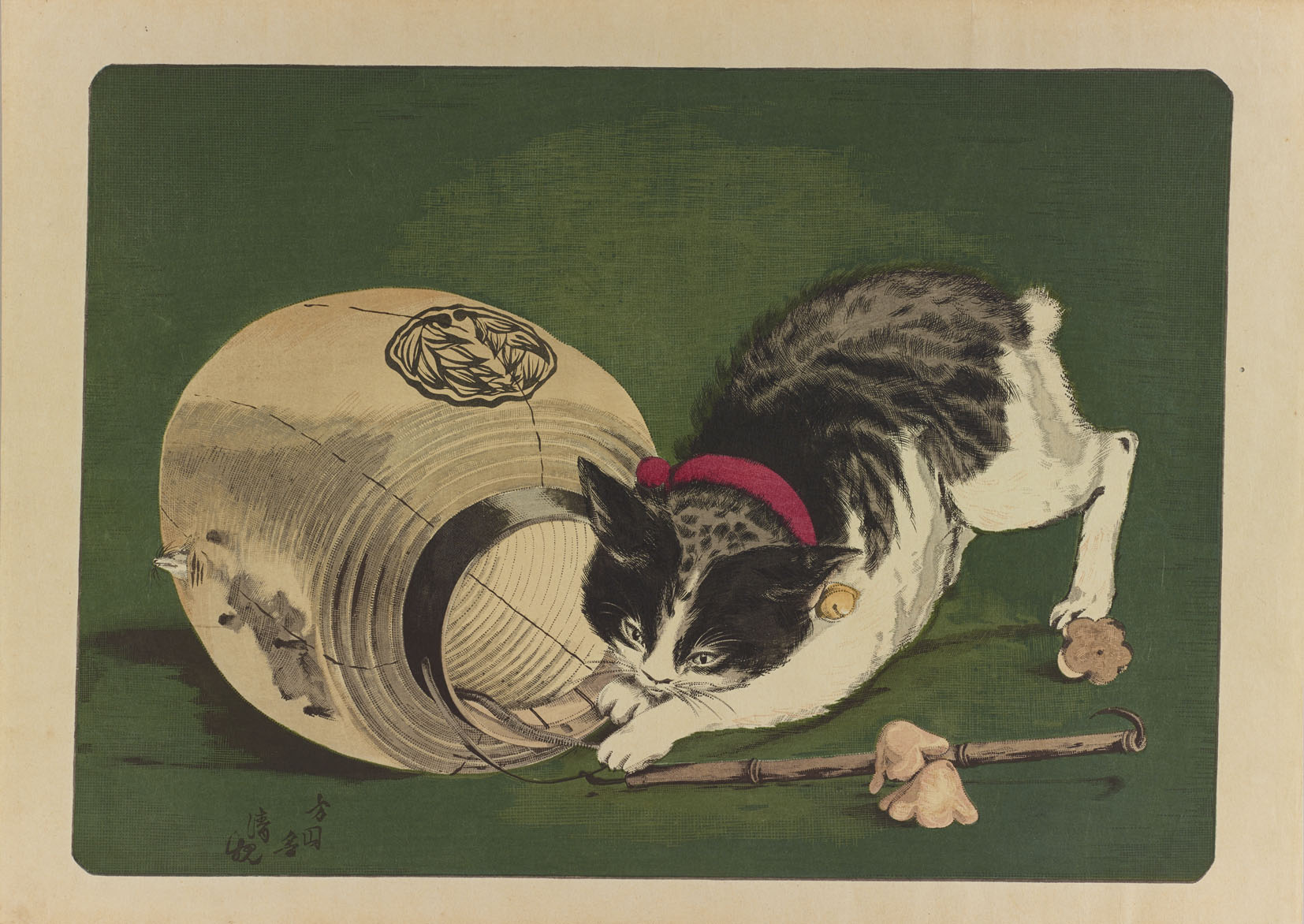
Cat & Lantern (1877) by Kiyochika Kobayashi

BACKGROUND: Issai Chozan’s Neko no Myōjutsu (“Eerie skills of the Cat”) was published in the book Inaka Sōji in 1727. It’s an example of dangibon, a light-hearted form of instructional short story, a form for which Issai Chozan is said to have been one of the originators. On the surface a story of rat-catching cats, in reality it’s a lesson in strategy and philosophy of combat.

SYNOPSIS: I’ll include citations and links below, so you can read the story in its entirety, should you choose to do so. But for now, a brief synopsis: A samurai, Shoken, has a rat in his house, and it’s driving him crazy. Shoken’s housecat is terrorized by the rat. The samurai brings in the best rat-catching cats from the neighborhood, and each is soundly defeated by the rat. Shoken decides to take matters into his own hands, chasing after the rat with a wooden sword (bokken,) but the rat evades each attempted strike and, ultimately, bites the samurai on the face. Finally, Shoken brings in a legendary elder cat from across the city, a cat who doesn’t look like much, but who effortlessly evicts the rat from Shoken’s house. The balance of the story is a conversation between the successful old cat and three of the skillful younger cats who’d failed to catch the rat (as well as with Shoken.) Each of the three explains its approach to achieving victory, and in turn the master cat explains the limitations of each one’s approach. The old master goes on to explain how when he was younger, he’d met a tomcat who slept all day, and yet no rat would come within miles of it. He asked how the tomcat achieved this, but the tomcat was unable to explain it.

THE LESSON: The first cat, a young black cat, explained that it was a master of technique. The black cat was agile and strong in movement of all kinds and practiced diligently to streamline and perfect all of its techniques. The old cat pointed out that focus on technique still left the black cat with too active a mind, thinking too much about how it would defeat its opponent. The master went on to say that there is value in technique, but it can’t be allowed to be the extent of one’s abilities. He emphasized that one’s clever actions must be in accord with the Way.

The second cat, a tabby, proudly proclaimed that all of its effort went into building its energy or spirit (ki, also called chi,) and that it could defeat most rats with a gaze (though not the one in question.) The old master explained that spirit is a fine thing but being too conscious of it hurt the second cat’s ability. The master went on to say that one can never be sure that the opponent won’t have more spirit than one, and so complete reliance on ki can lead one to a defeat.

The third cat, a gray one, said that its philosophy relied on yielding and never forcing a fight. The old master explained that this was a misunderstanding of the principle of harmony, and that this kind of yielding was a man-made contrivance that was not in accord with nature and often led to muddiness of the mind. While the old cat goes on to say that none of these elements (technique, ki energy, or yielding) is without value, it’s clear as he continues that the answer isn’t as simple as being a combination of them, but rather requires a completely new way of being, of experiencing and perceiving the world.

To Shoken, the old cat explained the importance of not thinking of swordsmanship as a means to defeat an enemy but, rather, a means of understanding life and death. The old cat went on to discuss mushin (i.e. “no mind,”) a serene state of mind that allows one to be flexible to whatever comes along. The old cat emphasized the importance of eliminating distinctions of object and subject through a process of self-realization and explained that the process of seeing into one’s being one can trigger satori (sudden enlightenment.)

CITATIONS:

Matheson Trust for Comparative Religion translation, available online at: https://terebess.hu/zen/neko.pdf

Ozawa, Hiroshi. 2005. The Cat’s Eerie Skill. Essence of Training in Japanese Culture: Technique Acquirement and Secret of Kendo. Online at: https://tenproxy.typepad.jp/recent_engagement/files/essence_of_training_in_japanese_culturee.pdf

Suzuki, D.T. 1959. The Swordsman and the Cat. Zen and Japanese Culture. New York: Pantheon Books. pp. 428-435

Wilson, William Scott. 2006. The Mysterious Technique of the Cat. The Demon’s Sermon on the Martial Arts. Tokyo: Kodansha International

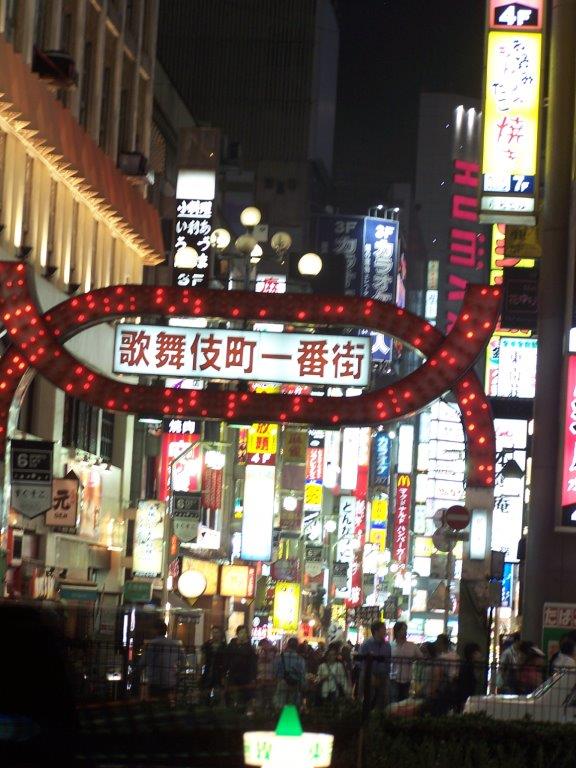
Japan Limerick

There was a rich businessman from Japan
 who'd always wanted to be his country's Batman.
  But his civil city
   was not Gotham-gritty,
 and the cape made him look like a madman.

Noda City Limerick

There was an executive from Noda,
a member of the class, high bourgeois.
He was the big boss
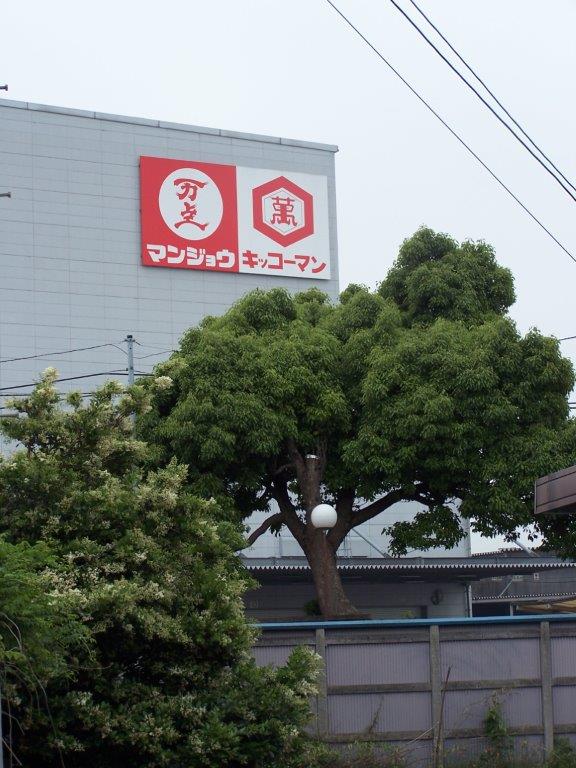
over all the soy sauce,
but when he told people, they heard, "Blah, blah, blah!"

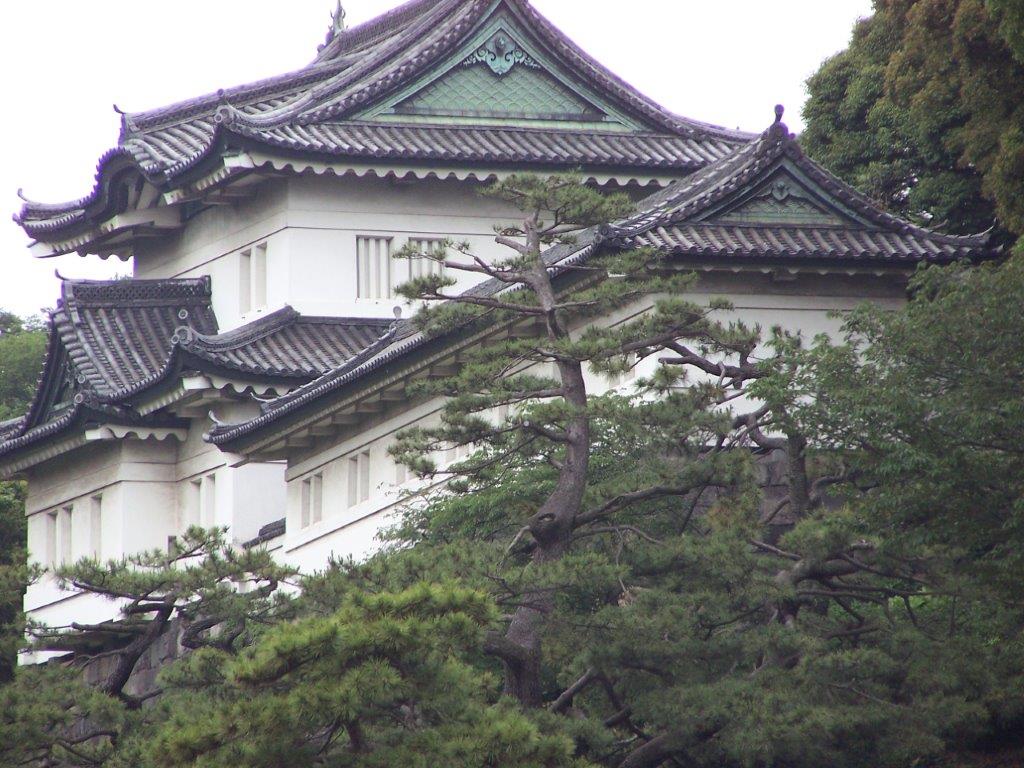
DAILY PHOTO: Chiyoda Castle

Taken in the Summer of 2008 in Tokyo

BOOK REVIEW: A Stranger in Tibet by Scott Berry

A Stranger In Tibet: The Adventures Of A Wandering Zen MonkA Stranger In Tibet: The Adventures Of A Wandering Zen Monk by Scott Berry
My rating: 5 of 5 stars

Amazon.in Page

This book tells the story of a Japanese Zen Buddhist monk, Kawaguchi Ekai, who traveled to India, Nepal, Lo (now Upper Mustang,) Sikkim, and Tibet in the early years of the twentieth century in search of Buddhist scriptures and teachings. His ultimate goal was Tibet, which he’d heard had the complete Buddhist canon in Tibetan. However, at that time, Tibet (like some of the other nations he traveled through) was xenophobic and strictly controlled / prohibited movements of foreigners, sometimes under penalty of death. This necessitated Kawaguchi first spending a year-and-a-half in Darjeeling to become fluent in Tibetan, and then using a range of disguises to facilitate travel. There was a book published after Kawaguchi’s trip entitled, “Three Years in Tibet,” but there are reasons why one might prefer Berry’s work, reasons that will be addressed below.

Kawaguchi was an interesting figure, a skilled polyglot, a fast thinker, and an iron-willed pursuer of truth. He was also bigoted and held uncompromising moral beliefs upto which few could live. The travelogue is sometimes comic, sometimes tragic, but always interesting. Sometimes Kawaguchi comes across as a Buddhist Don Quixote, but other times he’s a valiant scholar / adventurer.

As for why one might enjoy reading Berry’s account better: first, “Three Years in Tibet” is rather bloated and wasn’t written directly by Kawaguchi but rather by way of journalists. Second, Berry explores the truth behind some of the intolerant and sectarian views of Kawaguchi. Third, Berry offers broader context into the intrigues and geopolitics of the times that led to the shunning of foreigners in the first place.

This book delves into a fascinating time in a little-known part of the world, and it’s a compelling read throughout. I’d highly recommend it for those interested in learning more about the region and its past.


View all my reviews

Raging Tengu [Haiku]

i walk a calm street,
but find myself facing
a rabid Tengu

BOOK REVIEW: Monkey: New Writing from Japan: Vol. 2: Travel ed. Ted Goosen & Motoyuki Shibata

MONKEY New Writing from Japan: Volume 2: TRAVELMONKEY New Writing from Japan: Volume 2: TRAVEL by Ted Goossen
My rating: 5 of 5 stars

Amazon.in Page

Out: December 28, 2021

This anthology of travel-themed short writings by prominent Japanese authors includes: short stories, essays, poems, excerpts from longer works, and even an illustrated story [i.e. “The Overcoat” by Satoshi Kitamura.] The nature and degree of travel varies considerably with some pieces being travelogues or setting-centric fiction, but other pieces explore travel in a more symbolic sense (e.g. “Hell” by Kikuko Tsumura or “Decline of the Aliens” by Hideo Furukawa.] And one piece, “Cardboard Boxes and Their Uses” by Taki Monma deals more with the topic of being shut in, so it might be considered a study in travel through its absence.

The anthology includes works by literary stars such as Mieko Kawakami, Haruki Murakami, and Yasunari Kawabata, and showcases translation by some of the most well-know translators of Japanese literature. [The edition ends with a dozen brief statements by translators about what they have found particularly daunting to translate — not necessarily because the literal translation is difficult but because the elegance of the origin language can be lost to clunkiness in the translated language.]

Among my favorite pieces were “The Dugong” (a historical fiction story with a “Journey to the West” feel to it,) Haruki Murakami’s essay entitled “Jogging in Southern Europe” (which anyone who’s ever exercised amid people who don’t exercise will find amusing,) “Five Modern Poets on Travel” [particularly the tanka of Kanoko Okamoto and the haiku of both Hisago Sugita and Dakotsu Iida,] and “Every Reading, Every Sound, Every Sight” by Jun’ichi Konuma. That said, I don’t think there was a clunker in the bunch, each piece was well-composed and translated, and I’d highly recommend reading this book.


View all my reviews

BOOK REVIEW: The Three-Cornered World by Natsume Sōseki

The Three-Cornered WorldThe Three-Cornered World by Natsume Sōseki
My rating: 5 of 5 stars

Amazon.in Page

This novel was originally entitled Kusamakura or “Grass Pillow,” and it’s the Alan Turney translation that bears the title The Three-Cornered World. Turney drew from a concept that Natsume presents in the book – i.e. that an artist lives in the triangle created by the collapse of a corner called common sense. It’s a poetic and philosophical novel that is very much character-centric. In other words, if you must have an intriguing story, this book is not so much for you. However, if you find ideas and clever use of language appealing, you’ll love it.

The premise is that an artist takes retreat in the mountain countryside, and becomes infatuated with a local woman with a storied past. As the book tells us of the artist’s experience, it discusses aesthetics, the philosophy of art, and the place of emotion in artistic experience. This book is often compared to Bashō’s travelogue (i.e. Narrow Road to the Deep North) as it involves a great deal of elegant imagery and the occasional interspersed poem.

While the book is light on story, I was wowed by the author’s thought process and his use of language. While I’ve never read the original in Japanese, Turney’s translation is beautiful writing in its own right and I suspect it captures the sparse beauty for which Natsume’s work is famed. It is definitely worth reading.

View all my reviews

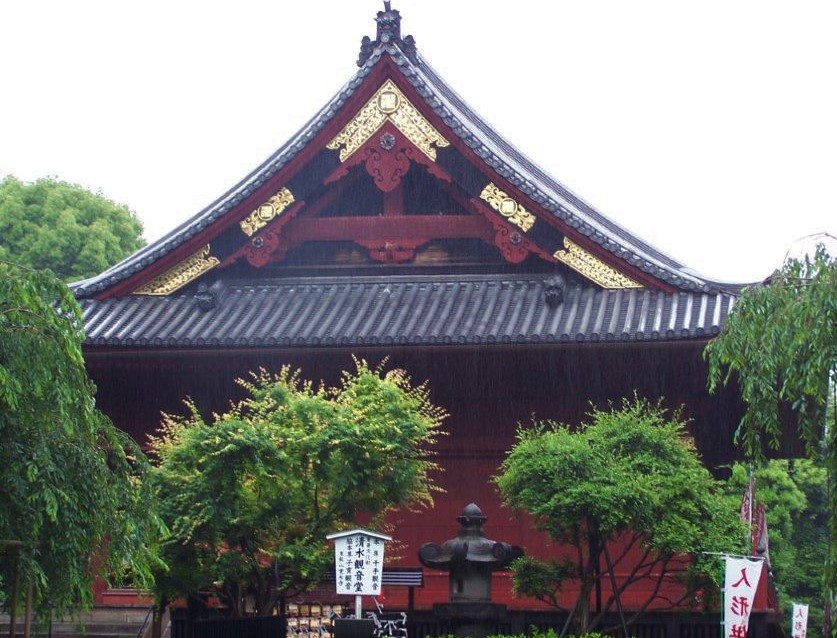
DAILY PHOTO: Rainy Day at Tōshō-gū Shrine in Ueno Park

Taken in Ueno Park, Tokyo in the summer of 2008

BOOK REVIEW: Basho’s Haiku Journeys by Freeman Ng

Basho's Haiku JourneysBasho’s Haiku Journeys by Freeman Ng
My rating: 4 of 5 stars

Amazon.in Page

Out: October 19, 2021

The first thing a prospective reader should be clear about is that these aren’t Basho’s haiku. Basho wrote travelogues in haibun (a spare form of prose typically matched with one or more haiku,) and so one might expect the poems to be from them. On a related note, while all of the poetry is haiku in form, not all of it is haiku in substance. That is to say, it’s all presented in a three-line 5 – 7 – 5 syllable format, but some of it reads like a prose description of events chopped up into 5 – 7 – 5 syllable bit-sized pieces. That’s not to say that there aren’t many poems that do have the feel of true haiku, presenting spare natural imagery juxtaposed but not explained, analyzed, or judgement-laden. It seemed like the further into the book I got, the more of the poems felt like proper haiku.

It is a children’s book, so I don’t think it’s a major concern that it focuses on the most rudimentary elements of haiku (i.e. syllable count and nature imagery) at the expense of subtler elements. The Zen nature of Basho’s haiku might be challenging for a young reader. I addition to the colorful and whimsical artwork, showing prominent places from Basho’s travels, there is a single page explanation of haiku to help get kids writing their own.

If you’re looking for a book to get a child interested in nature, haiku, or travel, you should give this one a look.

View all my reviews