The Deferential Calculus of Being an American in India

Every time I come home, the security man at the desk at our apartment building jumps to his feet and proceeds to stand at attention until I pass. This makes me uncomfortable, as do the many other ingrained acts of deference that occasionally border on obsequiousness. I’ve considered stopping to tell him he can be permanently “at ease” with me, but given the language barrier I’m afraid I’d just confuse the issue–plus have him standing at attention that much more longer. So, when in Rome…

If you’re an American, but not, say… General Pershing, you’d probably find this makes you uneasy as well. I think one of the reasons that Americans have historically excelled at technological development  is that we were in a hurry to have machines do our laundry, wash our dishes, or trim our nose hairs so that we wouldn’t have to have some other human apparently kowtowing to us. (This may be why the 19th century North was considerably more technologically advanced than its Southern counterpart, which had successfully rationalized a subclass of human being.)

There’s a guy who stands at the end of the lane and lifts a swing arm up and down every time a car (or, oddly, a pedestrian such as myself) comes down the lane. The first couple times I walked around the end in hopes of indicating to him that, “Hey, see you don’t really need to swing that thing up, I can just walk right around it, easy as pie.” I think I hurt his feelings, or–perhaps worse–undermined his reason for getting up in the morning. My point is that operating a swing-arm barrier is a perfect example of the type of job that has been completely mechanized in America.

I’m sure that cultural differences are the root of my discomfort. India is coming from the caste system, whereby who you were born to determined your status in a rigidly hierarchical structure. While Indians may have dropped the caste system, the underlying thought process dies hard. I, on the other hand, come from a culture which believes that on a fundamental level we are all equal. Americans are often stymied as to why we are viewed as being arrogant by other cultures. This may be a failure to see things in the same light. It’s not so much that we project that we are better than the average Joe, it’s that we don’t accept that the kings and holy men those cultures hold dear are above us. This is true. I don’t think I’m better than the door man, but I also don’t think the King of [Fill in the blank] is better than me. [OK, the perception of arrogance is also partly that we’re loud and expect a ubiquity of comfort that is simply not available in much of the world. There is that. And the fact that our leaders often think they can fix every problem everywhere, and–given this is not actually true–we have left a lot of chaos in the our wake since our rise to hegemony.]

So the whole culture thing is part of it. However, I also worry that the man who brings my food with a warm smile and a bow is spitting in it. I wonder if the lady who launders my clothes, and then goes the extra mile by ironing them (though they mostly consist of T-shirts and jeans), might be preparing an itching powder attack. I wonder if the security guy standing at attention is just waiting for me to lock myself out of my apartment so that he can exercise some passive aggressive payback. [I suspect this is why Indian bureaucracy is notoriously slow and prickly. It’s a desire to exercise the leg up on has while one is in other ways part of an underclass.] I heard a comedienne of Indian origin say that her mother always flew British Airways just for the delight of bossing a Brit around. All of this consternation is because I worry that they think that I think I’m superior to them, which I don’t.

Yesterday I was eating at an Indian fast food joint called Kaati Zone. It’s one of those places that you order at the counter, get your food at the counter, and take it to one’s table. (FYI- this set up is much less common here except for little holes in the wall where one stands to eat.) When I was done, I pitched my trash in the trash can and put my tray on top, just like one would at a Wendy’s. When I turned around there was a young woman with her jaw agape and eyes wide looking right at me. My first thought was that I had pitched my wallet or my journal in the trash. I did a pat down and found I was alright. As I left, it dawned on me that her surprise may have had something to do with my handling of my own garbage.

CLASSIC WORKS: Bushidō by Inazo Nitobe

Bushido: The Soul of JapanBushido: The Soul of Japan by Inazo Nitobe

My rating: 4 of 5 stars

Amazon page 

On the whole, people are ambivalent about feudal times. On the one hand, it was a horrible time to be alive for 99.5% of the population. Chances are that if you’d lived during that time you’d be toiling ceaselessly on the land with no hope of improving your lot in life. Everything was determined by heredity, with merit having little to do with anything. This added insult to injury because that person you’d have had to suck up to was as likely to be putz as not.

On the other hand, there is widespread nostalgia for those times because one can’t help but feel that they were the golden days of virtue. As Ralph Waldo Emerson said, we think that society is ever advancing, but, in reality, we advance like a wave–losing as much on the backside as we gain on the front.

Inazo Nitobe’s book gives us an accounting of the chivalric virtue practiced by the samurai, the warrior class of feudal Japan. Bushidō means the way of the warrior. Nitobe lived after Japan’s feudal era, in the late 19th and early 20th centuries. Nitobe was an educator, and the book has a feel of erudition. Interestingly, the author was a Quaker and received education in the West, and, therefore, is able to contrast the Japanese worldview with that of Westerners.

The book is built around discussion of the seven virtues of bushido: justice, courage, benevolence, politeness, sincerity, honor, and loyalty. Each of these virtues has a chapter devoted to it (Ch. 3 through 9.) But first the book introduces bushido as an ethical system, and then it explains the effect that Buddhism, Shintoism, and Confucianism played in the development of this system.

Later chapters outline the education and training of a samurai, the importance of stoicism, the institution of suicide (seppuku), the symbolism of the sword in Japanese society, the role of women, the role of bushido as an ethical system in the present-day (his present), and its proposed role in the future. It is interesting that the book begins by discussing those things that influenced the development of bushidō, and it ends with discussion of how bushidō influences the larger world.

Our views of virtue have changed, but at some level remain consistent. The seven virtues are all still considered virtuous, but we don’t regard them in the same way today. In some cases we are undoubtedly better off with today’s views, but that’s not always the case.

Consider the seventh precept, loyalty. We still value loyalty, but in today’s world the rule of loyalty has an ever-present Shakespearean addenda: “to thine own self be true.” In other words, we no longer believe in loyalty that is blind as was valued in the days of old.

Sincerity, by which Nitobe generally means honesty, is also seen in a different light today. As depicted in the Jim Carey movie, Liar Liar, there’s a widespread view that it’s better to fib and make someone feel better than it is to tell the truth and hurt that person’s feelings.

One of the most intriguing chapters is the one that deals with seppuku. This is a concept that has never been well-understood in the West, and it’s a major point of cultural disconnect. While the Japanese have tended to see suicide as a means to restore honor that was lost in failure, in the West we tend to see it as a more pathetic and cowardly affair. I’ve recently been reading Ian Fleming’s You Only Live Twice, and this is one of many points of diverging attitudes between “Tiger” Tanaka and James Bond.

Bushidō is definitely worth a read. It’s thought-provoking, and is one of those books to be read slowly and conscientiously.

View all my reviews

A [Different] Skeptic’s View of Traditional Chinese Medicine

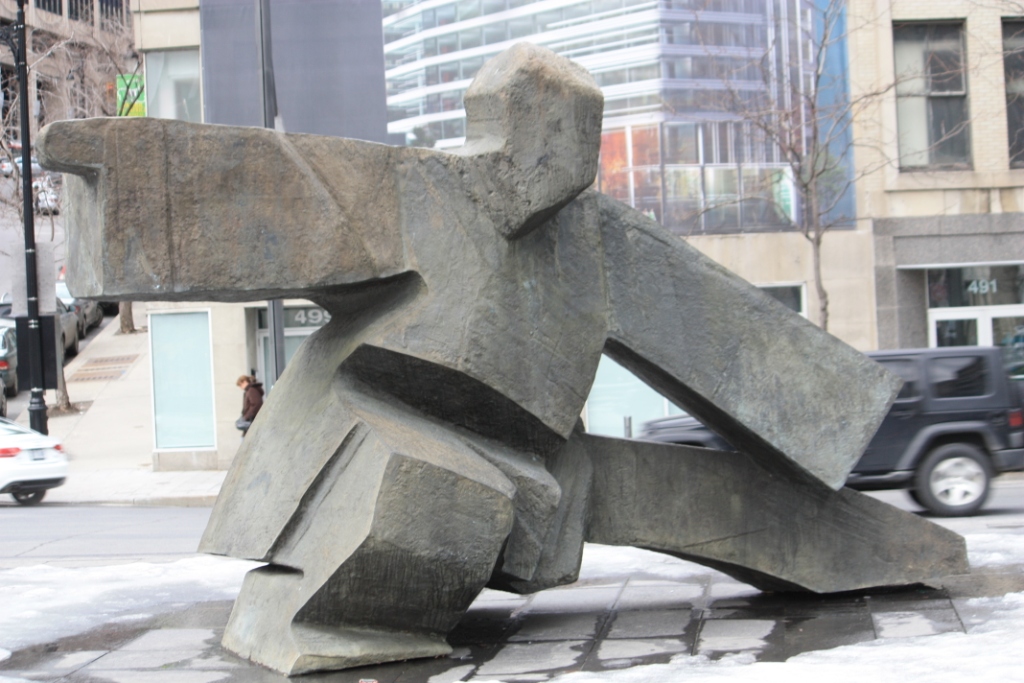
Tai Chi Sculpture; Taken in Montreal

Tai Chi Sculpture; Taken in Montreal

I’m sick. I mean that literally for those readers who are saying, “Yes, I read your blog occasionally; I’m well aware that you’re a sick freak.”

I rarely get sick. I can usually knock colds out at the first sign of a scratchy throat with big does of zinc and remedies I’ll discuss below. I can’t remember the last time I had the flu. Let me say to any angry gods that I’m not bragging, so please don’t smite me. I hope I haven’t just fallen off some divine pestilence list (God: “Geewhiz, that boy hasn’t had the flu since like 2002, lets send him a doozy… plus throw in a side of locust plague.”) I’m just stating a fact; I’m blessed with a mighty immune system and a lack of those plague-bombs commonly called children.

However, before you, too, begin to wish evil upon me for my freakish good health, let me say that when I do get a full-bore cold, it’s a catastrophic train wreck. This is because I have a proclivity for sinusitis. That means that all those tiny little tubes by which mucus flows from one chamber to the next in my head so that it can eventually be expelled into a facial tissue become clogged up. This creates an effect similar to a trucker’s strike at a dildo factory. The phalli (phalluses?) keep coming off the line, but none of them are being shipped out, so soon everything is fucked. When I tap on the highest point on my head it sounds like one thumping on a perfectly ripe watermelon. GROSS CONTENT AHEAD: (If you’re disgusted easily, skip to the next paragraph.) So, last night my left side passages were so blocked that pus was oozing out around my left eye, and I began to have an earache as the pus tried to escape out my ear only to find my eardrum in the way. END GROSS-OUT ZONE.

So you might be expecting that I had a sleepless night and have a doctor’s appointment this morning. I’ve gone that route before. I know exactly what the doctor would do, she’d write a prescription or two: one for a round of antibiotics and one for something to reduce the pain. As a skeptic, this is the approach in which I should put my trust. They develop these medicines using the scientific method and double-blind studies.

What did I do? I diced up some ginger and made a steaming cup of ginger tea and, as it steeped, I ran through a couple qi gong exercises. Then, after drinking the tea, my passages opened up, I blew my nose and slept soundly for about four hours until it was time for me to get up and start my day. As a skeptic, Traditional Chinese Medicine (TCM) isn’t the horse on which I should put my money. It all revolves around chi (qi), life energy, a substance whose existence is to the best of my knowledge is completely unsupported by direct observation. It’s chocked full of archaic sounding treatments like “Immortal spanks the naughty dragon.” (Okay, I made that one up, but you get my point.) TCM proposes that the kidneys are integral to sexual health.

So why am I pressing acupressure points, doing qi gong (life energy exercises), and making homemade tea? The easy answer would be that, if I hadn’t, I probably would have gotten five non-consecutive minutes of sleep last night, and I’d, at best, now be sitting in a waiting room with my skull in my hands hoping to be squeezed in to a doctor’s busy schedule.  However, I have more of an explanation than that.

I don’t know much about medicine (either Western allopathic  or TCM.) So in the absence of knowledge about what one doesn’t know, one seeks analogy in what one does know.  First, everything I know makes me distrustful of the  “free lunch.” To my mind, the Western approach, in which I don’t have to do anything but pop pills periodically, is a free lunch scenario. If I to be active (or even consciously passive, i.e. restful) to achieve my cure, I’m inherently  more confident in it. In the martial arts, we groan at the sight of these “home-study black belt” courses. Any martial artist who is honest with himself or herself knows that the only way to develop the skills is by spending at least a couple of days a week in the dōjō and training outside the dōjō as well. One can’t learn martial arts like one learns music appreciation or business administration. As an economist, there’s always some hidden cost of the “free lunch.” So despite the vigorous use of the scientific method, I tend to be skeptical of Western medicine.  I’m skeptical because nothing worthwhile I’ve ever done could be achieved by just popping a pill, and I see little reason why achieving a healthy state should be any different. [If anyone knows of a pill for manuscript revision, I’d be willing to try it.]  (I’m particularly disconcerted by medicines like pain-killers that remove the symptoms while apparently doing nothing about the ailment itself.)

So I can’t say for sure whether the ginger tea, acupressure, and qi gong had anything to do with my passages opening up. It was, after all, a system under tension. GROSS-OUT BEGINS: At some point either the passage was going to open, my left eyeball was going to pop out of its socket, or my eardrum was going to rupture sending an avalanche of pus pouring onto my shoulder. GROSS-OUT COMPLETED. However, even if all the TCM approach did was to take my mind off of my misery while I was waiting, it did more for me than the pill-popping alternative.

Second, I also know a little something about systems, generically speaking. Another thing that appeals to me about TCM is its fundamental recognition that any problem will create feedback effects that reverberate through the system.  In other words, the root cause may not be anywhere near where the problem is first noted. Because of this, one may end up having to fix a dysfunction distant from the symptom in order to fix the problem. This seems consistent with other systems with which I am familiar.

I have some arthritis from a lifetime of beatings–most notably in my lower back and my ankles. It occurred to me that my back problem might be exacerbated–if not caused–by a problem with my right foot and ankle. I suspected the damaged ankle and flat foot might cause my pelvis to tilt and my lower back to be off kilter, thus wearing through the cartilage on the side of my back that gives me problems. Maybe this was, in fact, wrong. However, when I asked the specialist who diagnosed my ankle arthritis about this possibility, he looked at me like I was the biggest idiot in the world.  “You see, son, the ankle bone is connected to the shin bone and the shin bone is connected to the knee bone and the knee bone is connected to the thigh bone, the thigh bone is connected to the pelvic bone, and it’s not until this point that the pelvic bone is connected to the back bone. There’s like half a dozen things between those two problems. They couldn’t possible have anything to do with each other.”

Now let me be clear, I’m not dismissing Western medicine by any means. There are some things it does vastly better than TCM or Ayurvedic healing or any other holistic healing method. So if I show up in your Emergency Room with a piece of rebar sticking out of my skull, please don’t throw this back in my face. “Oh maybe you should massage the Valley of Harmony (LI-4), do some ‘Parting the Clouds,’ and drink a glass of lavender-infused carrot juice.”

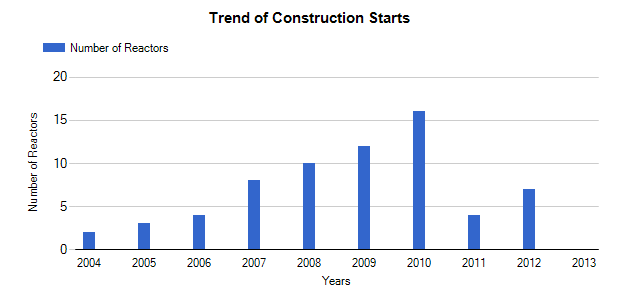
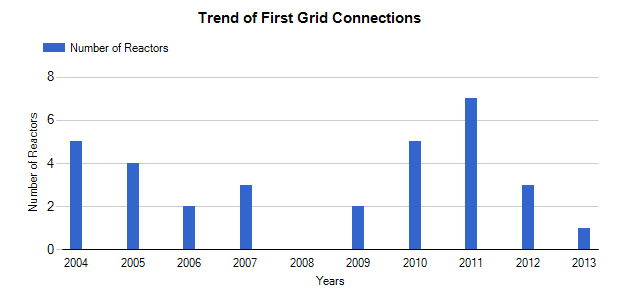
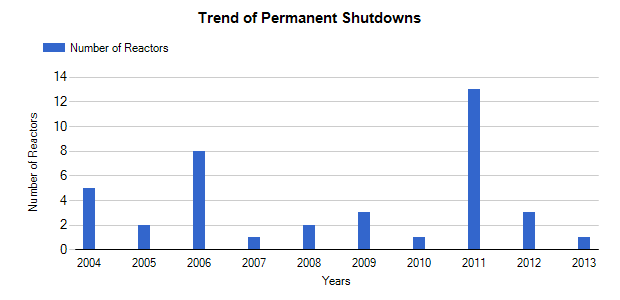
Was the Fukushima-Daiichi Incident the Final Nail in Nuclear Energy’s Coffin?

Today is the two-year anniversary of the tsunami that swamped parts of eastern Japan. Among the ongoing effects of this event was a re-chilling of attitudes toward nuclear energy–undoing a thaw that some swore was imminent. The tsunami hit the Fukushima-Daiichi plants and knocked out generators that were needed to run the coolant pumps with the power lines down. In the days after the disaster, the release of radioactivity and explosions of built up hydrogen presented some of the most prominent news stories.

Japan obtained about a third of its energy from nuclear prior to the event. All reactors were shut down in subsequent months, at no small cost to their economy. Eventually, a couple of plants were brought back on-line, providing only a fraction of the electricity of the country’s full fleet of 50+ nuclear plants.The Japanese had plans to add another 15 plants to their reactor fleet at that time, plans that have since vanished.

Even China, the world’s most prolific builder of nuclear plants as of late, had a brief moratorium on nuclear power plant (NPP) construction. However, China seems to have regained its ardor for nuclear power. France, of course, won’t be dissuaded either. However, for much of the rest of the world, doubts remain.

Pictures may be worth a thousand words.

Source: International Atomic Energy Agency (IAEA) Power Reactor Information System (PRIS)

Source: International Atomic Energy Agency (IAEA) Power Reactor Information System (PRIS)

Source: IAEA PRIS

Source: IAEA PRIS

Source: IAEA PRIS

Source: IAEA PRIS


The Nuclear Renaissance and International Security

Edited by Adam N. Stulberg and Matthew Fuhrmann

2013, Available Now

Buy this book

ONLINE RESOURCES
Contents

Contributors

Introduction

The Case of the Biggest Ego

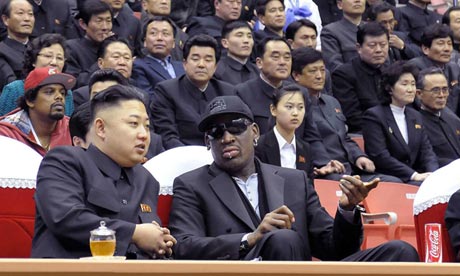
Dear Leader, Version 3.0, and Dennis Rodman

Dear Leader, Version 3.0, and Dennis Rodman

I was reading an article in The Economist over the weekend about the sanctions against North Korea, and Kim Jong Un’s “don’t mess with me, I’m CRAZY!” response.

The article featured the photo above. I was immediately struck by the fact that Kim Jong Un’s head is higher, despite the fact that Dennis Rodman is about six-and-a-half foot tall and Kim Jong Un is… well, let’s just say a dwarf.  I don’t know exactly how tall Kim is, and I’m sure nobody truly does. I tried to look up Kim’s height, but the figures ranged from 5’3″ to 5’9″. This isn’t surprising. The Kim family motto is, don’t let blatant facts to the contrary get in the way of a good lie; stick to your guns, execute people as necessary, and show your skeptics the crazy eyes. Kim Jong Il was believed to have worn six-inch lifts and a nine-inch pompadour to impress his underlings with his grand total 5’2″ physique. Of course, each successive generation of the Kim Dynasty has an easier time because the country’s citizenry is shrinking due to undernourishment, a fate that isn’t shared by the Kims. (Sadly, this isn’t a joke. North Korea is one of the few nations whose average height has been in decline over recent decades.)

It’s not really surprising that Kim insists on his head being higher than his guests. (I know what you’re asking. Whose set of phonebooks is he sitting on, because there sure as hell aren’t enough phones in North Korea for him to be sitting on the DPRK listings–which is more of a pamphlet?) Anyway, kings, emperors, and dictators have always required others to scrunch down so that the royal status will remain unquestioned.

However, if there is anyone who can match a dictator’s monumental ego ton for ton, it’s a professional athlete. Consider Lance Armstrong, he sued reporters for telling the truth about him. What kind of rarefied atmosphere does one have to live in to do that?  Then there are the many athlete-rapists whose defense was “Your Honor, I didn’t know I needed permission to have sex with that person. I think my lawyer may have failed to make you aware that I’m this year’s MVP… Even an MVP needs permission? That’s some crazy shit.”

As a society, we nurture the notion that the dictates of polite society don’t apply to those who are skilled at winning games. Coaches have been known to be fired mid-season for losing, but Bobby Knight beat the hell out of kids for decades before he got fired. We deify athletes just like the people of North Korea, who can’t afford leisure activities of any kind, deify their dictator.

So this photo answers for me an intriguing question, who’s more narcissistic: a professional athlete or a professional dictator. Seeing Dennis Rodman peering at the game over the twin humps of his knees answers the question nicely.

To be fair, Rodman did get a subtle dig in with his Team USA cap;  subdued as it may have been, that must have gotten Kim’s goat. Rodman also got in a nice Coca-Cola product placement. Fun fact: I was once told by a Coke employee that there were only two countries in which Coke was not sold. Everybody guessed that North Korea was one of them, but that’s not correct. It was Burma and Cuba (don’t ask me how the latter has been making Cuba Libres all this time.) Given Burma’s reforms, I wouldn’t be surprised if today it was down to one (or none.)  [World dominance… check.]

Tulip 7

Night falls on Bangkok

Night falls on Bangkok

I’m speed-walking down the sidewalk off Sukhumvit Road like one of those elderly mall-walkers.  Like the mall-walkers, there’s an irony to my speedy step. I’m on vacation. I have no particular place to be, and no particular time by which I need to be there. Unlike the mall-walkers, my path is perilous. I have to weave around street-food vendors deepfrying springrolls or grilling satays (and fight my stomach’s urgings), evade the grasping taunts of idle tuk-tuk drivers, and wave off T-shirt vendors selling shirts featuring elephants, thaiboxers, and Singha beer.

I don’t know why I’m moving so quickly. It feels natural. It’s the pace of the city. To walk slow would be to swim against the current. If you want the truth, I walk fast because in the back of my mind, in the deep recesses of irrationality, I feel that if I slow down the city will collapse into me, forming a black-hole. It will start with a few tuk-tuk drivers, a beggar, a prostitute, and a few street vendors converging on me. They will create a gravity, attracting more vendors, beggars, drivers, and hookers. If I don’t walk fast, I fear that I will be crushed in the center of a dense mass of humanity.

Leaning against the marble wall of a bank façade, a master of timing, an Indian man blinks, touches his forehead, and grimaces–as if my approach causes him some sort of psychic pain. I brace myself for the scam. He steps away from the wall into my path, gently extending an arm.

He says, “Sometimes, you think too much.” He’s trying to convince me that he has insight into my soul by making a statement that, while perfectly correct, contains no information content whatsoever. He’s smooth in behavior and handsome of feature. I bet he makes a mint in his chosen profession.

An instantaneous battle rages inside of me. On the one hand, I’m an introvert– or perhaps a sociopath– something like that. Whatever my affliction, interacting with strangers is draining. On the other hand, I’m curious about everything. I know the man is a scam artist. It’s not that I was never on the turnip truck, but I fell off a couple of decades ago, and while it took me several bounces to come to a stop, I eventually became quasi-worldly. While I know he’s a scam artist, I don’t know what kind. I so desperately want to know that I stop.

After a greeting, he says, “I can tell your future. There are two women in your life, I can tell you how it will work out.” His speech is clear, and well-spoken, like he was born in Mumbai, but moved to Cincinnati when he was 15. He is, in all respects, a smooth operator.

However, he’s wrong already.  As I said, I’m not exactly a people person. It takes all my mental energy to even be monogamous, as opposed to nul-agamous. The idea that I’m maintaining two relationships would be a bit laughable to anyone who could really “see into my mind.” Whenever I hear about one of these guys who has two separate families, I always think, “How many hours a day did the good Lord grant you?” Because I can’t fathom living that way and not being in an utter state of exhaustion every minute of every day. I’d be a wreck.

However, I give him points for playing the odds. I’m a middle-aged man with a gray goatee walking down the street in Bangkok. I’m probably the only one fitting that description who hasn’t fallen desperately (and pathetically) in love with an “eighteen year old” bar girl who the man secretly thinks is 16, but who, in reality, is 29.

Incredulity must show in my face, because he changes tack. “Let me show you proof of my abilities.”

He extracts a flip-style pocket-notepad from the inner pocket of a tweed sport-coat that is grossly out-of-place in steamy Bangkok, but which lends credibility. He scribbles down something on a page so that I cannot see. He then tears off the strip of paper containing his writing. He wads the paper up.

“I want you to think of the English-language name of a flower. Have you got it?” he asks.

“Yeah,” I reply.

“Now think of a number between six and nine. Have you got it? Now think of them together.”

In my mind I see, Tulip 7.

He hands me the wadded up scrap. I unravel it. It reads, “Tulip 7.”

He then opens his day-planner and asks me to put in any amount that I feel is fair and he will tell me about my future.

What he doesn’t know is that I’m the exact wrong person to pitch his act to. As a skeptic, I make Descartes look like gullible. (After all, Descartes developed a “proof for the existence of God”–granted everyone deserves a nadir of thought, and that was clearly Descartes’.) The most fundamental thing that studying Economics and Political Science taught me was that humans are completely incapable of making meaningful predictions. I’d seen this guy’s act before from a guy named Professor Bruce Bueno de Mesquita, but instead of getting a few baht on the streets, the political scientist got millions of American tax dollars for convincing the CIA that he could tell the future.

As I walk away, he says, “You have an ailment. I can tell you about it.”

I think, Good one, that’s a true test of my powers of skepticism, and I continue to walk, thinking out how the mentalist scammer did his trick… and wondering if I have cancer.

My Humble Narcissistic Opinion on Organizations

Whenever an organization is built around an idea or set of values, that idea or set of values shrinks dwarf-like into the background. What looms large is the imperative to protect and expand the organization.

The organization is an organism, but one whose only growth governor is the attractiveness of its ideas. You think those ideas are the organization’s genes, but they aren’t. They aren’t the codes by which the organization lives. They aren’t its DNA. They are its skin. But even the loveliest beauty queen can be a gloppy, cancerous mess on the inside. No, the code that your organization lives by is the same viral code by which all organizations live.

Step 1: Preserve the organization.

Step 2: Grow the organization.

Step 3: Annihilate competitors.

Step 4: Repeat steps 1 through 3 until you’ve consumed the world.

You say that I’m not a loyal Party man. Guilty. I cannot be loyal to Party without being disloyal to my own mind. If one’s views mirror those of the Party, how likely is it that one didn’t twist one’s ledger into line? Not likely, I’d say. My thoughts are not static. They evolve. I learn. I will no more subordinate my belief s to a Party then I will chain my neck to a rock.

Your Company doesn’t make widgets, it makes Company.

You say I don’t believe in God. I see God in every leaf. I see him in the new fallen snow. I see him in the confident aerial leap of a nervous squirrel. I feel the pulse of him in my hand when it holds another hand. No, what I don’t believe in is religion. They say the problems of religion are the fault of flawed individuals. I say they have it exactly backwards. There wasn’t an evil cell in Hitler’s body, but together they formed an evil seed. Yet, one man cannot make a holocaust. Ever increasing numbers had to fall in love with a skin-deep mirage of an idea, and ignore the ugliness inside.  A man can only be as evil as the world lets him, but a government? a church? Those, my friend, can consume worlds.