PROMPT: Night or Morning

Daily writing prompt
Are you more of a night or morning person?

Morning. Whether I want to be or not.

PROMPT: Energy

Daily writing prompt
What things give you energy?

Food and air, mostly. Ultimately, the Sun, I suppose.

PROMPT: Unwind

Daily writing prompt
How do you unwind after a demanding day?

Reading is best for me. It’s low energy and as long as I don’t do it on the phone I’m not subjected to the blue light that they use in phone screens (specifically to keep one from unwinding.) Reading eases me to sleep, especially if I don’t pick writing that’s too stimulating.

Potential Energy [Free Verse]

Boulders, precariously perched
on the edge of a precipice.

Do the residents
of the huts
down the mountain
ever think of that boulder?

Maybe they thought not being
directly under it would keep
them safe, but what bounce
might a boulder take --
freefalling, tumbling, hitting
outcrops, sliding on scree,
cracking to fragments,
being not spherical in the least,
and so on?

My guess is that they never think
about it... or think about it
every minute.

And in some moment when
they aren't thinking of it...
SPLAT!

PROMPT: 100-year-old

Daily writing prompt
Write a letter to your 100-year-old self.

Dear 100-year-old self,

In the unlikely event that we’re still alive, go play with the wolves. Let them have their meal, meager though it may be. We’ve had a good run, and – unless I miss my guess – are not feeling vigorous of either mind or body. If we are feeling vigorous of mind and body, please disregard until such time as it’s not true anymore. In said case, I’m very curious about what kind of scientific breakthrough occurred (or magic fountain we fell into,) and look forward to learning about that in due time.

Signed,

Your younger self, the one far more afraid of dementia & incontinence than of death-
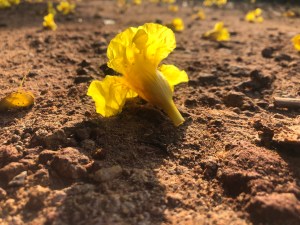
Morning Glow [Haiku]

a bloom falls to earth;
lit up by the morning sun,
it glows… for a time.

PROMPT: Energy

What things give you energy?

Breath and food. But I also find movement, music, and being in a natural setting feel energizing,

Burning Sensation [Free Verse]

What's this world?

It's energy playing a game,

  a game whose goal is to be rid
    of an intense burning sensation,

  a burning sensation caused by
     low-entropy energy sitting
     around with nothing else to do
     but burn brightly. 
  
  We, the wasters of energy, are 
     a soothing lotion to the universe,

     expediting the making high-entropy, 
          soothing, tepid energy from 
          all those stars -- 
          i.e. the universe's poison ivy.

Summer Sun [Haiku]

summer sun
 turns the sky orange;
  skin prickles.

BOOK REVIEW: Invention and Innovation by Vaclav Smil

Inventions and Innovations: A Brief History of Infatuation, Overpromise, and DisappointmentInventions and Innovations: A Brief History of Infatuation, Overpromise, and Disappointment by Vaclav Smil
My rating: 5 of 5 stars

Amazon.in Page

Release Date: February 14, 2023

This book is about technological failures, the various ways in which technologies fail, and what lessons can be learned from these failures when hearing about new “world-changing breakthroughs.” The author explores nine technologies in depth, three for each of three varieties of technology failure.

The first group are those technologies that came online as promised, fixing a major problem, only to later be discovered to have side-effects deemed disastrous. The examples used are: leaded gasoline, DDT pesticide, and CFC (Chlorofluorocarbon) refrigerant. These technologies have come to be associated with health defects, air pollution, ecological collapse, and ozone depletion.

The second group (like the first) came online, but then never became competitive with existing technologies. The technologies presented as examples are: airships, nuclear fission for power production, and supersonic flight. Airships died out not only because of the Hindenburg disaster, but also because people preferred airplanes to a craft with the combined slowness of a boat and the crash potential of a plane. Nuclear fission became untenable for new commercial power plants due to a risk premium on build costs even though it doesn’t contribute to global warming and (once powerplants are paid for) is exceedingly cheap per kilowatt-hour. Supersonic flight was just too costly and short-ranged to compete with subsonic flight.

The final group are those technologies that failed to come online at all, despite intense efforts. These include travel by vacuum tube (i.e. Hyperloop, and, yes, like at the bank but with people inside) nitrogen-fixing grains (negating the need for fertilizer,) and nuclear fusion. Despite the celebrity billionaire love of Elon Musk and Richard Branson, hyperloop isn’t advancing because of challenges of maintaining vacuum over large distances. Making cereal grains that feature the nitrogen-fixing capabilities of legumes has also proven more difficult than expected. Nuclear fusion recently experienced a moment in the sun when, for the first time, they got more energy out of it than was needed to achieve it. (This wasn’t written about in the review copy I read, but I suspect will be mentioned in the finished book. At any rate, it doesn’t negate the author’s point as it’s still just one breakthrough of several that would be needed for the technology to be commercially viable.)

In the last chapter, the author gets into a number of other technologies with shorter discussions that are meant to illustrate specific issues with excessive technological optimism. He also investigates some technologies that he believes need to come down the pike, given our present and expected future challenges.

I found this book fascinating. The author seems to love being contrarian (he not only contests popular optimism by those overestimating technological progress but also contests the pessimism regarding the first group of failed technologies, so it appears that he enjoys pointing out how mass opinion [or the opinion of another smart person] is wrong.) That said, there’s a great deal of thought-provoking information in the book. And, I think it can help people more critically consider claims about up-and-coming technologies.


View all my reviews
