BOOKS: “DCeased” by Tom Taylor

DCeasedDCeased by Tom Taylor
My rating: 5 of 5 stars

Amazon.in Page

It’s the zombie apocalypse in a world brimming with superheroes. Sort of. As is mentioned a couple of times throughout the story, it’s not really zombies as we know them, and there are a few crucial distinctions. But, basically, zombie apocalypse. What matters is that it is a threat that grows to inexorable proportions because it infects efficiently and spreads rapidly, and no one is immune. The threat is increasingly everyone and everywhere. The source is a viral bit of “programming” called the Anti-Life Equation.

This is about as dark as superhero comics get. The heroes that we are used to saving the day experience only victories of a short-lived and pyrrhic nature, while experiencing defeat after defeat. There are no ex machina saviors, at least not that amount to more than a blip in the scheme of things.

I found this story, depressing as it may be, to be intensely suspenseful. Full Disclosure: I also liked the Avengers “Infinity War” movie much more than “Endgame.” It’s not that I necessarily like seeing villains win, but that a story feels more compelling when there is strong and successful opposition and when costs accrue. And credible opposition and true stakes are often missing from superhero comic book stories.

I’d recommend this book for superhero comic book readers.

View all my reviews

BOOKS: “Saga of the Swamp Thing: Book One” by Alan Moore

Saga of the Swamp Thing, Book OneSaga of the Swamp Thing, Book One by Alan Moore
My rating: 5 of 5 stars

Amazon.in Page

This volume presents two separate and complete story arcs. The first features the Floronic Man (Jason Woodrue) as the main villain, and it deals heavily in the origins of Swamp Thing and the creature’s struggles to come to grips with who it is and why it experiences the world as it does. The second story makes a shift to a more supernatural threat and shows a Swamp Thing who is more comfortable in its… roots? twigs? foliage? — whatever Swamp Thing has in lieu of skin.

Alan Moore does his usual superb job of creating a clever and satisfying set of tales. Swamp Thing was groundbreaking in its cross-genre mélange of horror, supernatural, eco-fiction, and sci-fi. There is also a certain smartness about the comic. One is led to consider questions of consciousness and humanity’s role in nature through these stories. And solutions are rarely achieved by punching the villain into a stupor. This won’t be for everyone. In some ways, the comic elevates the wise old mentor to the role of hero.

I enjoyed reading this book and would highly recommend it for readers of comic books and graphic novels.

View all my reviews

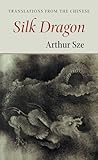
BOOKS: “Silk Dragon II” ed. & trans. by Arthur Sze

Silk Dragon: Translations from the Chinese (Kage-an Books)Silk Dragon: Translations from the Chinese by Arthur Sze
My rating: 5 of 5 stars

Amazon.in Page

Release Date: May 28, 2024

Let me begin with a note of clarification: The edition that I read was the “Silk Dragon II” collection, which is due out in May of 2024. I mention this because there is potential for confusion in that this book looks like a sequel (i.e. a completely new set of poems,) but really it is something between a new edition and a sequel. That is to say, while it has a substantial amount of new material, it is built on the original “Silk Dragon” volume. This edition adds eighteen new poem translations, most of which are from poets of the modern era (I mean that loosely, not technically, so 20th century onwards.) I’d recommend readers get this edition, but not both this and the original.

This collection includes a wide range of poems from ancient times through China’s various dynasties to the modern day. It includes translations that are extremely well-known, such as Li Bai’s “Drinking Alone with the Moon” and Liu Zongyuan’s “Snow on the River.” But it also includes many pieces that are likely to be new to most poetry readers, particularly given they will be reading translations (i.e. Non-specialists in Chinese poetry.) As mentioned, the bulk of the new poems are from recent decades and tend to be free verse. [Though there are four new classical poems, as well.]

I found the translations to be evocative and approachable. I am unable to comment on how well Sze captures the feel of the original, but I can say that the translations of poems I’m familiar with were at least on par with other translations that I’ve read. The translations don’t always display the sparseness one sees in classical Chinese poetry, but the challenge of conveying form and meaning and metaphor through translation is immense and, at some level, impossible.

I’d highly recommend this poetry collection for readers of poetry and translated literature.

View all my reviews

BOOKS: “Great Minds on Small Things” by Matthew Qvortrup

Great Minds on Small Things: The Philosophers' Guide to Everyday LifeGreat Minds on Small Things: The Philosophers’ Guide to Everyday Life by Matthew Qvortrup
My rating: 4 of 5 stars

Amazon.in Page

This book was inspired by Voltaire’s Philosophical Dictionary, a collection of essays by the French polymath put out in several editions and which covered topics such as: “Adultery,” “Free Will,” “Kissing,” and “Nakedness.” In some ways, the inevitable comparison that results from such a “reboot” as this proves the connection between the books to be apt. But in at least one sense, the comparison is unfortunate.

On a superficial level, comparison is apt. Not only does this book expound upon a range of alphabetized topics, often of an “everyday” nature, but it uses many of Voltaire’s topics. It should be noted that Qvortrup’s book also includes many topics that Voltaire didn’t address, notably topics such as “cars” that didn’t exist in Voltaire’s day. One difference that benefits the book greatly is that (as the title suggests,) Qvortrup’s book draws on ideas of a wide range of thinkers, mostly philosophers but also artists of a philosophical bent. [Whereas, Voltaire’s book is a single-point of view, his own.] The “great minds” in this book range from the ancient world to that of the present. While it is (by the author’s admission) Western-centric, it does reference Eastern thinkers (e.g. Taoists and Buddhists) more than many books I’ve read that weren’t as self-aware of their own Eurocentrism.

Where the comparison to Voltaire’s dictionary is not so apt is that Qvortrup’s book rarely mixes wit and stimulation in the way for which Voltaire had a genius. This doesn’t mean Qvortrup’s book isn’t witty or thought-provoking, but just that it’s rarely both, simultaneously. In dealing with a topic like flatulence it can be witty but trivial, in expounding on the ideas of Kant it is intriguing but not usually amusing. That said, the book is laden with interesting ideas and insights into seminal thinkers that most people will find unexpected, if quirky. It is also the case that the overall tone of this book is lighter and more aimed at amusement than is Voltaire.

I found this book to be compelling, readable, and well worth the time, and would recommend it for readers of pop philosophy.

View all my reviews

BOOKS: “Rangikura” by Tayi Tibble

Rangikura: PoemsRangikura: Poems by Tayi Tibble
My rating: 4 of 5 stars

Amazon.in Page

Release Date: April 9, 2024

This collection by New Zealander, Tayi Tibble, consists of free verse and prose poetry of an autobiographical nature (or presented as such.) It is playful in its use of language, especially in its use of slang and Maori language words, as it deals in a broad emotional landscape.

It has bursts of creative brilliance and evocativeness, but also periods where it’s like reading a teenager’s diary.

All in all, I enjoyed the collection and would recommend it for poetry readers.

View all my reviews

BOOKS: “Robert Frost: Sixteen Poems to Learn by Heart” ed. by Jay Parini

Robert Frost: Sixteen Poems to Learn by HeartRobert Frost: Sixteen Poems to Learn by Heart by Robert Frost
My rating: 5 of 5 stars

Amazon.in Page

Release Date: March 12, 2024

This book presents sixteen of Frost’s poems, each with a commentary on the poem, how events in Frost’s life influenced said poem, and assorted background details. It includes the “greatest hits” (e.g. “Mending Wall,” “The Road Not Taken,” “Fire and Ice,” and “Stopping by Woods on a Snowy Evening,”) a few of Frost’s more obscure works, and a number that are in-between in status.

I found the commentaries to be interesting and readable, which is important as Frost’s poems are now in the public domain, and so the value of this volume hinges on Parini’s work. Parini includes some stories that offer insight into Frost’s mindset, as with the story of the lady who approached him after a reading to ask the meaning of “Fire and Ice.” Reading Frost isn’t like reading, say, Allen Ginsberg, the latter being one who put it all out there – unabashedly, Frost’s poetry is more guarded and deals more in nuanced metaphor. This makes a volume like this useful if it can offer any insight into the poet’s mindset, which I think Parini does.

I considered reading this book to be an opportunity to learn more about the poems and poet, and – therefore – did not heavily weight the stated theme of presenting poems that should be rote memorized. I mention this because I suspect Parini had other criteria in mind as well. While the book does include poems that are easily memorized (e.g. “Fire and Ice” and “Stopping by Woods on a Snowy Evening”) as well as poems that have messages worth learning by heart (e.g. “Mending Wall” and “The Road Not Taken,”) it also includes poems that aren’t so memorable because they are long, not especially lyrical, or not particularly filled with stand-out ideas or vivid imagery (e.g. “Directive,” “The Wood Pile,” and “Birches.”) This also begs the question, why one wouldn’t include a poem like “Nothing Gold Can Stay,” which is short, lyrical, and has an easily grasped message (i.e. easily memorized.)

As for ancillary matter, there is an appendix that offers tips for memorizing poems as well as a short “recommended reading” bibliography.

That said, I enjoyed reading this book; I got a lot out of Parini’s commentary, and I would recommend the book for poetry readers.

View all my reviews

BOOKS: “A Year of Last Things” by Michael Ondaatje

A Year of Last Things: PoemsA Year of Last Things: Poems by Michael Ondaatje
My rating: 5 of 5 stars

Amazon.in Page

Release Date: March 19, 2024

This collection consists of free verse and prose poems, largely of an autobiographical nature (or presented as such.) A number of these autobiographical poems are at once travel poems, tales from the author’s visits to various countries.

While Ondaatje is more well-known for his critically acclaimed novels (e.g. “The English Patient” and “Anil’s Ghost,”) he’s not new to the poetic artform. The poems in this volume are clever, readable, nicely paced, and interesting. I enjoyed reading this book and would highly recommend it for poetry readers.

View all my reviews

BOOKS: “Bohemian Manifesto” by Laren Stover, Paul Himmelein, and Patrisha Robertson

Bohemian Manifesto: A Field Guide to Living on the Edge (Kindle Edition)Bohemian Manifesto: A Field Guide to Living on the Edge by Laren Stover
My rating: 5 of 5 stars

Amazon.in Page

The central premise of this book is that not only does the Bohemian artist live on, but she does so in five distinct varieties: the Beat, the Zen Bohemian, the Dandy, the Folkloric Bohemian, and the Nouveau Bohemian. While the title calls this book a “manifesto,” the term used in the subtitle, i.e. “field guide,” is far more apropos. Like a field guide to birds or mushrooms, it lays out
characteristics and distinctions, the characteristics of Bohemians, generally, and the five flavors thereof, more specifically, and it does so in a way that separates them from the other varieties of human.

One might be wondering, why are these varied categories classed as Bohemian, as it seems they are their own distinct class. One way to understand this is to consider the “Zen Bohemian,” who often bears little resemblance to the “Zen Buddhist” for which one might mistake him. The Zen Buddhist has both a strong connection to and a depth of knowledge of Zen Buddhism, but the Zen Bohemian often rather has a strong connection to a broad hodge-podge of Eastern philosophies and spiritual traditions that he may or may not properly understand the distinctions between.

This book is quite readable, and informative in an easy-going way, but it’s also perplexing. It’s informative in that it clarifies the characteristics of Bohemians across many criteria (e.g. food, clothing, tastes in literature, art, movies, and music, interest in boxing, etc.) It’s perplexing in that it starts with the premise that Bohemians are, at their core, free spirits who refuse to be hemmed in by convention, but then the bulk of the book is about the various tribe-signaling boxes that the Bohemian puts himself within to conform to the norms of the group. It seems that the authors are aware of this and actually produce humor through oddly specific statements such as, “They [Bohemians] still adore Laurie Anderson even though their yuppie brother went to see her.” It feels like they are aware that, to the extent Bohemians are truly free spirits, any description the authors give will be wrong at some level of granularity, and so they lean into it with great (sometimes comedic) specificity.

I enjoyed reading this book and picked up a number of interesting references to other books and whatnot. (I’m currently reading Kliph Nesteroff’s “The Comedians” because of a reference to it in this book.) I did find bits on subjects like wardrobes and astrology to be a bit tedious, but just skimmed through them.

View all my reviews

BOOKS: “The Man with the Compound Eyes” by Wu Ming-Yi

The Man with the Compound EyesThe Man with the Compound Eyes by Wu Ming-Yi
My rating: 5 of 5 stars

Amazon.in Page

This book is at once a work of eco-fiction, literary fiction, and speculative fiction. The story revolves around a pair of characters whose worldlines become intertwined when the Pacific Trash Vortex is spun out, crashing into the Eastern shore of Taiwan. “Riding” the trash vortex is Atile’i, a member of a remote Pacific Island where second sons (of which he is one) are exiled to the sea to ensure the tiny island’s population doesn’t outstrip its resources. Atile’i is found by Alice, an academic who moved to a rural area of the Eastern shore and who is in an extended period of grieving the loss of her son and [common law] husband. Their union helps them each in the process of finding closure for their respective traumas.

There is a secondary story involving supporting characters, but at its heart, the book is about how an unlikely pair is brought together by environmental factors. That said, the secondary story does offer the reader insight into the indigenous population of Taiwan, a number of tribes whose relation to the island has been overshadowed by both the huge numbers of Chinese immigrants and the various agents of colonization (i.e. Europeans and the Japanese.)

I found this book to be highly readable. It manages to highlight environmental perils without being preachy in a way that detracts from the intensity of the story (and, thus, which reduces the effectiveness as a tool of persuasion.) [This being a line that some other eco-fiction writers have been unable to walk, such that they dissipate the power of story through a need to virtue signal, tribe signal, and finger-point.]

I’d highly recommend this book for readers of literature in translation, eco-fiction, literary fiction, or anyone who likes an interesting story.

View all my reviews

BOOKS: “The Banished Immortal” by Ha Jin

The Banished Immortal: A Life of Li Bai (Li Po)The Banished Immortal: A Life of Li Bai by Ha Jin
My rating: 5 of 5 stars

Amazon.in Page

Li Bai is considered to be one of China’s best poets of all time, writing during the Tang Dynasty (618-907 AD,) a time swole with poetic greats. However, it’s not just a prolific collection of extant masterpieces that make Li Bai worthy of a biography intended for a general audience. Li Bai was also a compelling character. He was, at once, a drunk and a genius; a swordsman of some skill and a card-carrying Daoist. It’s not just that he could edit drafts into brilliant poems, but he was said to be gifted at spontaneously spouting clever verse. He was constantly struggling to gain a post in government, but failed time and again. Even when his poetic renown became so great that he was given a post in the Imperial court, he was disappointed to find that it was largely ceremonial and that he would have no great impact on anything. He had a stunning fall from grace when he aligned with the wrong side during a civil war and was lucky to have been exiled rather than executed.

Ha Jin, a prominent present-day Chinese author best known for the novel Waiting, does an excellent job of exploring Li Bai’s life. What I particularly enjoyed is that Ha Jin (a poet himself) discusses how events in Li’s life spurred some of his great poems (which are often included in whole or in part.) Ha Jin is also careful to make clear when biographical accounts diverge, and there are many unknown or disputed details of Li’s life. In fact, there is a bit of a mythology around Li Bai, as one might guess from the title – which refers to a nickname bestowed upon the poet based on the belief that he was a Daoist immortal.

I’d highly recommend this book for readers of biography, those interested in Chinese history, or those who are intrigued by rebellious poetic souls.

View all my reviews