BOOK REVIEW: The Future of the Mind by Michio Kaku

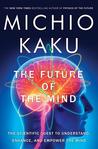
The Future of the Mind: The Scientific Quest to Understand, Enhance, and Empower the MindThe Future of the Mind: The Scientific Quest to Understand, Enhance, and Empower the Mind

by Michio Kaku

My rating: 4 of 5 stars Amazon page

The Future of the Mind continues a line of inquiry that Michio Kaku has been following with his earlier books Physics of the Impossible and Physics of the Future. The central question remains: what sci-fi imaginings might come to fruition, which of them are impossible given the laws of physics in the known universe, and what breakthroughs or discoveries would be necessary to achieve the achievable. Technology is the inevitable gateway to these advanced breakthroughs. Humanity has eliminated gross evolutionary pressures through technology—this might not remain true, but we can certainly not expect X-men style mutations as a result of the foreseeable progression of humanity (which is more likely to be described by the horrible—though probably presagious 2006 movie Idiocracy than it is by the X-men movies.)

The theme of the book, as the title suggests, is the mind. As the most complex system that we know of, the human nervous system offers fertile ground for investigation. Among the sci-fi mainstays considered by Dr. Kaku are telepathy, telekinesis, false memories (think Total Recall), intelligence enhancement, mind control, artificial intelligence, and the nature of alien minds. Along the way he considers the challenges of reverse engineering the brain and whether consciousness could take a non-material form (e.g. embedded in a beam of light.)

As always, Kaku’s book is easy to follow, even for the scientific neophyte. Few others write on the topic with such clarity. While part of Kaku’s book deals with the same concepts covered by Roger Penrose in his book Shadows of the Mind, the Kaku book scores much higher in readability. Of course, the flipside is that Kaku’s book offers less explanatory power. So if one isn’t looking for pop science simplification, The Future of the Mind is probably not for you. However, if you want the jist of the science and have neither the background nor the energy to digest the mathematical and biological nuance, you’ll find this book readable.

Incidentally, Kaku is more optimistic about the ability to computationally replicate consciousness than Penrose, which the latter argues is impossible. Professor Kaku’s optimism runs through all of his books. He takes the stance that if one can imagine it–and figure out a technological or theoretical loophole around the known barriers –one can achieve it. Therefore, some of his discussion of what could come to pass depends upon theories about, for example, black-holes being true. It should be noted that Kaku is quite clear about the differences of opinion that exist about these theories and the role that differences between theory and reality could play in making science fiction into scientific reality.

I enjoyed this book. I’ve been reading a lot about neuroscience lately—entirely on the pop science level- and found this book to be beneficial to my understanding of the subject. It begins by discussing what is known about the brain and consciousness—it turns out that a lot remains unknown, but the technology of recent years has vastly improved our understanding of the brain, and it continues to do so by the day. The book also delves into the depths of what could come to be. There is definitely pragmatic understanding to be gained as well as outlandish, but fun, science fiction ruminations.

For sci-fi fans and writers, it’s definitely worth reading. I had many new conceptions of the future as I read the book. (I might suggest reading Physics of the Impossible first, which gives an overview many “impossible” technologies and explains how few are just flat impossible regardless of technological development and scientific discovery. My review of that book is here.) Many of the ideas covered may seem a bit eccentric, such as what first contact with an alien race would look like. (Kaku is of the notion that the transmission of an immaterial consciousness(es), possibly in conjunction with self-replicating machines would be the likely shape of such an alien presence.)

I recommend this book for almost anyone. We are really only beginning to venture out of the dark ages understanding the mind, and this book provides an interesting map what might be possible.

As I mentioned it, sadly, this may be the more likely future of the human mind:

View all my reviews

BOOK REVIEW: The Fault in Our Stars by John Green

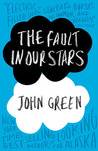
The Fault in Our StarsThe Fault in Our Stars by John Green

My rating: 5 of 5 stars

Amazon page

The title of this novel about the doomed love affair of two cancer-riddled teens says a great deal, and—while lifted from Shakespeare–it’s well-chosen. The lead character is a sixteen-year-old girl named Hazel who has lungs that, as she puts it, “suck at being lungs.” She meets a boy, Augustus, at support group who is in remission, but who had a leg amputated in the process of achieving his momentary cancer-free status. Hazel takes an immediate liking to the handsome and charismatic Augustus (i.e. “Gus”), but remains standoffish because she is–to use her own words–“a grenade.” Meaning that she is going to die young, leaving her loved ones devastated. She has enough guilt about the fact that she will do this to her parents, but is unwilling to subject Gus to the same fate. Augustus, however, is an ardent and skillful wooer and eventually wears Hazel down with his winning ways and selfless acts.

This isn’t a typical read for me by a long shot. It’s written in the language of YA fiction, and it’s brutally depressing in places. Neither of the aforementioned characteristics usually draw me in. However, despite its sad subject matter, the book has a sense of humor that is essential to keep the story from crushing one’s will to continue reading. Of course, the fact that all the major young characters are dying is a cloud ever-present throughout the book. I will say it’s the most viscerally emotional novel I’ve read in some time. The only books this depressing that I’ve read recently were nonfiction works on Pol Pot era Cambodia and the Holocaust.

The strength of the book is its characters. They may be atypically intelligent, clever, and well-spoken teens, but they are intriguing, likable, and well-developed characters. Besides Hazel and Gus, there is a secondary character named Isaac who has a form of cancer that isn’t highly lethal but which does claim his eyes. Hazel and Gus are in one way polar opposites. Gus, the former star athlete, is ever concerned about his legacy, but the less ambitious Hazel believes that everyone fades into oblivion rapidly. These divergent perspectives of similarly doomed youths give one insight into the varied approaches to experiencing one’s mortality.

Another intriguing character is Peter Van Houten, a one-time American writer living in Amsterdam and the heir to a fortune off which he lives as a professional drunk. Van Houten wrote a single book about a person who dies young, which turns out to be based on his own child and is Hazel’s favorite book. Gus reads the book to please Hazel, but becomes genuinely intrigued with its ambiguous ending. Van Houten is an unpleasant character, but his book is a focal point of the storyline. The couple takes a trip to Amsterdam to try to get answers about the novel’s abrupt ending, and this experience proves to be the pivotal point in their relationship. Van Houten–jackass as he may be–does end up passing on some useful wisdom to Hazel and Gus.

I rate this book highly for being readable, captivating, and gripping. I would recommend it for those who don’t usually read YA, though the language and focus is decidedly geared toward a YA audience.

It should be noted that the film adaptation will come out this summer. For some reason they filmed it in Pittsburgh instead of the story’s real setting—and my one-time home—Indianapolis, Indiana. I’ll try not to hold this against it, too much.

View all my reviews

BOOK REVIEW: The Tao of Bruce Lee by Davis Miller

The Tao of Bruce Lee: A Martial Arts MemoirThe Tao of Bruce Lee: A Martial Arts Memoir by Davis Miller

My rating: 3 of 5 stars

Amazon page

While one expects this to be a biography of Bruce Lee, the first half of it is much more an autobiography of the author that is loosely themed around Bruce Lee’s influence on his life. It’s an unusual book in this regard. However, while my description may induce visions of a dismal read by a self-absorbed author, it’s really not so bad. The latter half of the book is much more tightly focused on the events of Bruce Lee’s life—or, more dramatically, his death.

To be fair, there’s not much material for a Bruce Lee biography. Few lights have shone so bright that, while brief, they provided decades of afterglow. Bruce Lee was just in the news last week as he was made a character in a new MMA video game—over 40 years after his death. (It might seem odd for Bruce Lee to be featured in an MMA game, but while movie Bruce Lee showed us high-flying, high-kicking kung fu, Bruce Lee the founder of Jeet Kune Do emphasized the ability to fight at all ranges, against opponents of any style, and in a pragmatic fashion.) But Bruce Lee the movie star delivered only four completed movies as an adult (though he had a childhood acting career unrelated to Kung fu.) Martial Artist Bruce had only one real fight that anyone knows about and even it remains a subject of great controversy to this day. There are competing claims about who came out on top, to what degree, and how. According to the book, there’s not even much of a sparring record of which to speak.

With the proceeding information in mind, it might not be such a surprise that the author took the tack he did and still produced only the slim volume that he did. Miller’s description of his own life pulls no punches and he spares himself none of the embarrassment incumbent in being a young man seeking to emulate the squealing man with the fists of fury. He doesn’t come across as the narcissist that one might expect from a person who devotes at half of a biography of a global superstar to his own obscure juvenile years. In fact, his profile is of a scrawny kid who got his fair share of wedgies and other bully-induced torments. The autobiographical parts are more homage than self-aggrandizement.

Just as Miller is honest about his own lost pubescence as a scrawny kid, he will win enemies with his frankness about Bruce Lee and those in the gravitational pull of the kung fu superstar. Those who deify Lee will no doubt be displeased to read intimations that he died not on a walk with his wife and from a rare adverse side-effect of a prescription—but non-illicit–drug, and instead died on the bed of a lover from a hash or pot overdose.

Furthermore, Miller tells of how Bruce Lee told his students to stop teaching Jeet Kune Do, because Lee was worried about where it was going. Miller goes on to report about how Bruce Lee’s martial art went awry according to many. Then there is the suggestion that Lee had little first-hand fighting (or sparring) experience on which to build such a combative art in the first place.

However, the overall portrait of Lee is of an exceptional human being, and one who had such a wide range of influence, from fitness to philosophy. While the Bruce Lee physique is now much sought after and regularly seen among movie stars, all the leading men of Lee’s era were doughy by comparison. (One may look no further than his Way of the Dragon nemesis, Chuck Norris.) Lee wasn’t just a movie star and martial artist; he was also a philosopher and thinker. While it’s true that he didn’t produce much in the way of novel ideas, by Hollywood standards he was a regular Algonquin Roundtable member. Lee oozed charisma so powerfully that after all these decades he’s almost as likely to be seen on a T-shirt as Che Guevara—don’t ask me why the Latin American Guerrilla fighter is so popular in silk screen, but that’s beside the point.

To sum it up, this isn’t a book about Bruce Lee, it’s about how his life and death shaped so many other lives—starting with Miller’s. While I didn’t count pages, there seems to be about as much space devoted to the events surrounding Lee’s death as the events of his life. Of course, there’s a bit of sensationalism, but inquiring minds want to know. People are intrigued about how a man who looked to all appearances to be one of the healthiest men on the planet could have died so young. (It’s an interesting irony that Bruce Lee’s almost complete lack of body fat—estimated at under 1%–could well have exacerbated his oversensitivity to whatever substance killed him.)

I’d recommend this book for anyone curious about the life and death of Bruce Lee.

View all my reviews

BOOK REVIEW: Dirk Gently’s Holistic Detective Agency by Douglas Adams

Dirk Gently's Holistic Detective Agency (Dirk Gently, #1)Dirk Gently’s Holistic Detective Agency by Douglas Adams

My rating: 3 of 5 stars

Amazon page

Dirk Gently’s Holistic Detective Agency [DGHDA] is the opening book in Douglas Adams’ second series of novels (what would have been a trilogy—at least–had Adams not passed away.) DGHDA was followed by The Long Dark Tea-Time of the Soul, and that would have been followed by The Salmon of Doubt—though the manuscript was released in its incomplete form along with other random works in a collection by the same name—as publishers are want to make their cash cows rage after the dying of the light.

Adams is most famous for the Hitchhiker’s Guide to the Galaxy [H2G2] series. DGHDA shares the British absurdist humor of H2G2, but is a more genre-bending a work. While H2G2 crosses humor and sci-fi, DGHDA takes those two genres and throws detective and supernatural fiction into the works. The book was billed by the author as a “detective-ghost-horror-who dunnit-time travel-romantic-musical-comedy-epic.” Of these, “horror” is dubious given the fundamental silliness, “epic” is a little grandiose for a work of 300 pages, and the “romantic” and “musical” parts are rather thin.

The title refers to a detective agency owned by Dirk Gently, who believes in the fundamental interconnectedness of all things and is a bit of a con man. Gently is the lead character in a comedic sense, but his straight man–Richard MacDuff–has at least equal claim to being the book’s overall lead. (Just as straight man Arthur Dent leads in the H2G2 books.) Gently gets involve when he discovers Richard engaged in the inexplicable activity of breaking into the window of his (Richard’s) girlfriend’s apartment—a girlfriend with which he has a favorable relationship. This convinces Gently that Richard has either been hypnotized or possessed, either of which makes him a prime customer of Gently’s agency.

The mystery part of the novel revolves around the new owner and editor of a magazine—Gordon Way–who dies, and whose ghost continues to be active in story (even having PoV chapters in this shifting PoV novel.) Richard comes to believe he’s a suspect, although the bungling former editor of the magazine—Michael Wenton-Weakes–is the lead suspect. Of course, the fact that the deceased is the father of Richard’s girlfriend, Susan Way, does encourage the notion that Richard could be involved. Of course, it wouldn’t be much of a who-dun-it if it was a straightforward case of one of these men with motives having done it.

As would be expected of a book by Douglas Adams, it has its moments of hilarity, but it wasn’t as funny as the best of the H2G2 books. The best absurdist device introduced into the book is the Electronic Monk. In an era in which no one has time for believing in things, one can purchase or rent a robot to believe things for one—particularly those outlandish notions that are unsupported by evidence and thus are least worthy of the effort of belief.

The main characters are all sufficiently quirky to be memorable, likable, or both. The characters are one of the strengths of this book. The story is a bit disheveled, probably purposefully so, but it doesn’t make for the easiest work to follow–particularly early in the story when one hasn’t yet got a firm grasp of who’s who and who’s doing what. That said, it’s a decent enough plot, all things considered.

I’d recommend this for those who like humorous speculative fiction.

View all my reviews

BOOK REVIEW: Marvel 1602 by Neil Gaiman (Art: Andy Kubert)

Marvel 1602Marvel 1602 by Neil Gaiman

My rating: 5 of 5 stars

Amazon page

This is anachronism done right by Neil Gaiman. The title gives one the jist of this graphic novel’s theme. It’s the Marvel Universe circa 1602. There’s a big cast of Marvel characters in this collection of eight comics. However, those who don’t follow comics might not recognize some of the characters because they are decidedly less comic-esque in this take. The characters mostly go by their given names rather than their superhero nom de guerre and not one of them wears spandex—and even capes are fairly few and far between. While the cast is large, there’re just a few main players and some major Marvel superheroes play only minor or unheroic roles.

The principal heroes in this book are Nicholas Fury (as head of the Queen’s Intelligence Service), Carlos Xavier (principal of a school for mutants), Virginia Dare (the first girl born in the Roanoke Colony), Rojhaz (the–decidedly Caucasian but–Native American protector of Dare), Stephen Strange (close to his modern-day namesake), Matthew Murdoch (think Daredevil), and a smattering of other X-men, Avengers, and Fantastic 4 members.

The principal villains are King James I (as himself), Count Otto Von Doom (similar to the modern character), The Inquisitor Enrique (a Magneto-esque character), David Banner (advisor to James I and–it would appear–the gray Hulk), and Natasha (think Black Widow). Before one bemoans the fact that the slate of heroes seems much stronger than the slate of villains, it should be noted that there is a threat that far exceeds the likes of Von Doom.

The world of Marvel 1602 is quite similar to Earth 1602, but there are differences such as the existence of pterodactyls and dinosaurs in some locales. The plot includes political intrigue in the form King James I of Scotland’s desire to nudge an ailing–but beloved—Queen Elizabeth I out-of-the-way. We soon find out that three assassins have been dispatched to target Fury, the Queen, and Virginia Dare, but finding out who hired them and why takes up a fair piece of story line. There’s a substory that features Matthew Murdoch and Natasha on a mission to retrieve what can only be described as a McGuffin (a highly sought after artifact whose value and purpose remain completely unknown until a big reveal, but for which characters are none-the-less willing to lay their lives on the line on pure faith) that offers its own intrigue. There is also the matter of strange weather that increasingly comes to be considered a harbinger of doom (not Von Doom the character, but actual doom.) Ultimately, this is a bigger threat than is presented by any of the human villains, and it can only be overcome through a combination of Richard Reed’s brilliance, Nicholas Fury’s courage, and Rojhaz’s sacrifice of what matters most to him.

I enjoyed this graphic novel. First, having a top-rate writer like Gaiman was certainly a help. There was none of the juvenile / poorly written dialogue that usually plagues comic writing. Gaiman is his usual clever, witty self. Second, while the anachronisms often border on silly (e.g. 1602 Reed’s noodling out Einstein’s discovery of 300+ years later), they are intriguing and recognize real science. Third, the last being said, there’s a lot of effort put into making the comic appropriate for the era in which it’s set. It’s not just putting frilly shirts on modern-day characters. The blending of fact into the fiction is thought-provoking.

If you read graphic novels–even sparsely–this is one that you should definitely check out.

View all my reviews

BOOK REVIEW: The Rise of Superman by Steven Kotler

The Rise of Superman: Decoding the Science of Ultimate Human PerformanceThe Rise of Superman: Decoding the Science of Ultimate Human Performance by Steven Kotler

My rating: 5 of 5 stars

Amazon page

This is NOT a book about the comic book hero. It’s a book about a mental state called “the flow” and how adventure and extreme athletes have used it to make tremendous strides in their sports. The characteristics of the flow include extreme focus, time dilation / time distortion, a vanishing sense of self, extremely high performance, fearlessness, and a falling away of everything non-essential to the task at hand.

Kotler is by no means the first author to write about the flow. The term was inaugurated by a book entitled Flow first published in 1990 by a University of Chicago Psychology professor named Mihaly Csikszentmihalyi. Csikszentmihalyi coined the term in the process of conducting a study on happiness. He found that happy people tended to engage in activities in which they could immerse themselves and find the zone. Contrary to the early part of Kotler’s book–in which it sounds like adventure athletes cornered the market on flow–Csikszentmihalyi says that said activity could be work or hobby and that the flow is to be found in poetry writing, yoga, martial arts, copy writing, or potentially any activity in which the skill level and challenge are both high.

(To be fair, Kotler does get around to recognizing that extreme athletes neither invented nor exclusively exploit the flow. However, his—well-taken—point is that such athletes are unusually good at finding, and dropping deep into, the flow in part because risk-taking behavior is an important trigger. And for free climbers [rock climbers without ropes], mega-ramp skateboarders, and bodysuit skydivers sometimes there are only two possible states of existence—the flow and being scraped off a rock.) It should be noted that some of the elements of flow sound a lot like the states that have been described by various mystical religious traditions for centuries, e.g. the dissolution of a feeling of separation between self and the rest of the universe. Warning: religious readers may find it disconcerting to read that there are scientific explanations for states that were once attributed to communion with god or the like.

While I’ve given Kotler’s book high rating, I haven’t yet given one reason to read it—and I do recommend people read it. First, while Csikszentmihalyi is the “father” of flow research, his methods were decidedly low tech–i.e. surveys and interviews—but Kotler reports on more recent studies involving neuroanatomy, neuroelectricity, and neurochemistry. Second, while Kotler delves into the science of the flow, he does so in a manner that is approachable to non-scientists. Finally, all of the narrative accounts of extreme athletes interspersed with the more technical commentary make for a very readable book, even if one is not particularly knowledgeable of—or interested in—such sports. I gave this book a high rating both for its food-for-thought value, and because of its high readability.

I will admit that I was not so enamored of the book when I first began it, and other readers may find the same irritation. For one thing, Kotler’s adoration of extreme athletes comes off sounding like diminishment of mainstream athletes and others involved in “flowy” activities. A prime example of this is seen in Chapter 1. Kotler gives us an endearing description of how gymnast Kerri Strug won the gold in the 1996 Olympics by sticking a landing on a shattered ankle. However, he then comes off a bit douchey when he suggests that Strug’s achievement pales in comparison to Danny Way’s skateboard jumps at the Great Wall of China.

For another thing, in his zealousness to prove that extreme sports practitioners are full-awesome while mainstream athletes are “meh,” Kotler makes some comparisons that seem apples and oranges to a neophyte such as me. If they are fair comparisons, he certainly doesn’t explain why they should be considered so. The best example of this is when he states that Olympic divers took decades to achieve increases in rotation that extreme skiers and skateboarders surpassed in much less time. This seems unreasonable for two reasons. First, divers have a very standard distance in which to achieve their acrobatics. In other words, they don’t get to build a “mega-platform” that’s 50% taller like Danny Way creates “mega-ramps” that were bigger than ever before. Of course, if you can increase the distance between yourself and the ground you can increase your spins, rotations, or whatever much more quickly (yes, your danger goes up vastly, I’m not diminishing that.) Second, the divers gained zero advantage from technological improvements, but the same cannot be said for skiers and skateboarders. In other words, if you go from skis made of oak to ones made of carbon nanotubes (that are 50 times stronger and 1/100th of the weight) of course you’re going to make gains faster.

Perhaps, I’m overstating Kotler’s disdain for mainstream athletics, but that’s what happens when one uses a national hero as a set up to show how much more awesome a relatively unknown skateboarder is (among skateboarders Way is extremely well-known but he’s not a household name as the Olympian was–at least for a short time in the late 90’s.) I suspect that Kotler was just trying to convince a general audience that the athletes he’s speaking about aren’t pot-smoking knuckleheads who are as likely to be seen on America’s Funniest Home Videos crushing their nads on a handrail as setting a new world record. These men and women are serious people engaged in serious activities, and they give it their all. They do deserve more respect for that than they are probably given by broad sectors of the populace. Perhaps, the importance of what these folks are achieving does need to be conveyed because the demographic that reads books and the one that follows extreme sports probably has wide wings of non-overlapping area. (I’m not saying skateboarders are illiterate or bookworms don’t skate–just that the Venn diagram has substantial areas of mutual exclusivity.)

As I indicated above, in each chapter we get both some insight into the nature of the flow and its triggers and stories of adventure / extreme athletes that serve as examples of what’s being discussed. In chapter 2 we learn what the flow looks like in terms of brain waves (i.e. high theta/low alpha, or between meditation and a relaxed / resting state of wakefulness.) In chapter 3, we learn about the neuroanatomy of the flow in terms of what areas of the brain it lights up, and what areas shut down–which is more important to flow states. In chapter 4, we learn about the neurochemistry of the flow and that a cocktail of dopamine, norepinephrine, endorphins, anandamide, and serotonin makes up the chemistry of flow, but, critically, not so much with the adrenaline. The subsequent chapters deal with triggers of the flow, and what conditions best set up achievement of this state of mind.

Chapter 9 stands out as an important, but quite different, portion of the book. It deals with the downside (or dark side) of the flow. This has a lot to do with the fact that the aforementioned internal substances (and the flow state in general) are quite addictive. While it’s unfair to say, and unlikely, that the extreme athletes Kotler writes about (i.e. the ones at the top of their games) are drug addicts as some might assume of skate boarders, snow boarders, and the like, it may not be unreasonable to say that they have a kind of monkey on their backs—albeit a perfectly legal one rooted in their own neurochemistry.

As I’ve said, I recommend this book for anyone who is interested in this state of mind. One needn’t be interested in extreme sports to get a lot out of the book.

View all my reviews

BOOK REVIEW: The Wild Life of Our Bodies by Rob Dunn

The Wild Life of Our Bodies: Predators, Parasites, and Partners That Shape Who We Are TodayThe Wild Life of Our Bodies: Predators, Parasites, and Partners That Shape Who We Are Today by Rob Dunn

My rating: 4 of 5 stars

Amazon page

Dunn’s book addresses a host of intriguing questions such as:

-Why are there diseases that disproportionately attack those in the richest parts of the world while being almost non-existent in poor countries?
-Why is obesity at epidemic proportions among modern humans?
-Why—while people have diverse tastes overall—do there seem to be universal preferences for sweet, salty, and fatty foods?
-Why are so many people’s lives wrecked by constant stress and worry?
-Is the Appendix really a vestigial organ with no apparent purpose?

As the subtitle suggests, this book is about the role that other species have played in human evolution and the way we look, behave, and think today. The message of The Wild Life of Our Bodies is that humanity’s proclivity to see itself as an island–uninfluenced by other species–has its cost.

The book is popular science–approachable to a layman but with the usual disdain for gratuitous assertions and shoddy reasoning that define the scientific though process. That being said, Dunn does put some editorial opinion out there in ways that might appear as fact in a slipshod reading. The most prominent example being Dunn’s suggesting that what best defines humanity is not our intelligence or ability for abstract representation (or even our physical appearance), but that we are the only (first?) species that has killed other species off not purely of self-defense or for food, but to exercise control over our ecosystem. I doubt this would strike a majority of impartial scientists as a fair and unbiased way to define humanity. Granted, this point not what The Wild Life of Our Bodies is about, and whether one thinks this it is fair or not is not critical to whether one will find the book to be of value. However, the idea (and the fact) that humans have zealously killed off other creatures is certainly relevant to the discussion at hand.

If “terraforming” is the term for how an alien race might environmentally engineer Earth to make it suitable for them to live here, perhaps we could call humanity’s assault on other species “bio-forming” of the planet—choosing a roster of species that strikes our fancy. All the time humans were trying to make ourselves more comfortable by getting rid of inconvenient species, we remained ignorant to the downside.

Dunn covers a broad range of mismatches between who we are evolutionarily and how we live in the modern world. The Wild Life of Our Bodies suggests that, like the pronghorn antelope, humans are in many cases over-designed because of the loss of species (parasites, predators, symbiotes, etc.) that helped to make us who we are today. (One question that once puzzled biologists was why pronghorns were so much faster than every species they faced.)

While it sounds good to be over-designed (at least relative to the alternative), it’s not without cost. In our case, we had guts that were supremely adapted to having parasites, but the lightning fast (on an evolutionary timescale) elimination of those parasites has left us with bodies that attack a non-existent enemy and this has resulted in a number of new diseases. We are used to diseases that succeed in the poorest—and, hence, least hygienic areas– but disease that mostly attacked in the cleanest places on Earth have puzzled us for some time. Crohn’s disease is a prime example. “Rewilding” (i.e. putting parasites back into) the guts of Crohn’s patients has shown positive results.

Dunn lays out a couple of the theories as to how the loss of our intestinal bacteria may result in a number of first-world ailments. Interestingly, some of these diseases aren’t even digestive in nature, and might seem to have no logical connection to gut bacteria. However, our body’s systems are a system-of-systems—i.e. they are integrally linked. One issue is that some parasites have been able to mask their presence, and our bodies have learned to present a heightened response to account for this veiled threat. Today our systems can’t tell the difference between our squeaky clean guts and a gut full of these sneaking parasites so it drops the immune system version of an A-bomb.

This is one example of why some diseases don’t exist in the third-world where the body knows what parasites it’s up against. One might say, “Yes, but these ailments of over-reactive systems can’t be as bad as the effects of the parasites.” That’s often not true. Most people with internal bugs (we all have them to some degree), don’t even realize it. The fact that people with Crohns’ are willing to have predators implanted in them speaks to this issue.

There has been concern for years about downside of the rampant use of anti-bacterials, antibiotics, and antiseptics, and this is a topic Dunn addresses as well. For example, there seems to be little evidence that such agents in soap do any particular good, but they decidedly do bad (encouraging drug resistant species.)

Perhaps the single greatest change in the nature of homo sapiens life resulted from the agricultural revolution, and Dunn delves into how this seminal event changed our bodies. With paleo-dieting all the rage, it will come as no surprise that there have been some major changes to the human diet since our hunter-gatherer ancestors roamed the Earth. Once again, we have bodies built on an evolutionary timescale, and they don’t necessarily cope well with our new diets.

One problem is that we have strong hardwired drives for foods that were a rarity in our species’ past, but which we now produce in abundance. For example, we eat far too much refined sugar because our bodies are wired to love sweet, but that kind of food was rare to our pre-agricultural ancestors. Hence we have the existence of diabetes, and its greater prevalence where high-sugar diets are common. Many people are also saddled with an evolutionary advantage to store fat because their ancestors come from a clime where food was not abundant year round. The problem is that now there’s a grocery store on every corner and this once great advantage is contributing to burgeoning waistlines.

I gave this book a high rating on the grounds that it presented a lot of food for thought, and that’s what I most value in non-fiction. Some of the theories may turn out to be incorrect, but this book offers one a lot to think about and clear explanations of the bases for what can otherwise seem a little outlandish. There is also some wit in places that contributes to heightened readability.

View all my reviews

BOOK REVIEW: How to Lose Friends & Irritate People by Laszlo Wanky

Cover_How_to_Lose_Friends


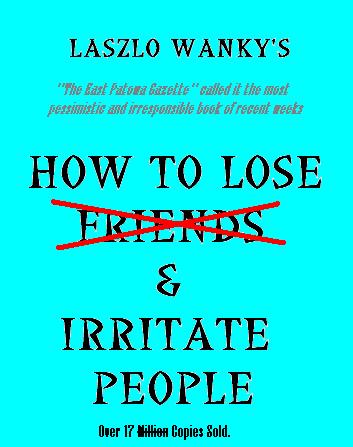
How to Lose Friends and Irritate People by Laszlo Wanky

My Rating: 5 out of 5 Stars

Amazon Page


Wanky pays an homage to Dale Carnegie’s seminal self-help book by calling it, “a book for its time–that time being one in which people were lonely, pathetic, and didn’t understand social networking.” The author’s central premise is that we live in very different times, and today people are inundated by Facebook friends they neither like nor find interesting. Furthermore, Wanky goes on to argue, gone are the days when likable people are  liked. We live in an era in which douche-bags and drug-addled celebrities are gods among men. The book offers many headline examples, such as how Miley Cyrus’s career crashed as the sweet and admirable Hannah Montana, but then she caught her second wind by adopting the persona of a meth-addicted prostitute.


Roughly half of the book is dedicated to how to find success in defriending unwanted virtual amigos. Wanky suggests that the usual tactic of subtly “un-adding” people almost always fails because people are too “wussified” to make it stick. The only effective strategy, according to the author, is to trick others into removing you from their list of pseudo-friends. Be forewarned, however, being uninteresting and annoying is not enough–one must be spectacularly despicable. This is hard for most people–whom Wanky calls “the sychophantic masses”–because they slobber over being liked. Wanky devotes three chapters to helping people get over their love of being liked. The most cogent of these chapters is, “Kim Jong Un or Gandhi: Who Ya Wanna Party With?


The aforementioned chapters also help set up Part II of the book, which explains how one can put a skyrocket on one’s career by borrowing the techniques of the likes of Howard Stern, Rush Limbaugh, and Piers Morgan. Wanky shows how, like these individuals, one can be thoroughly unlikable while having people hang on your every word.  Again, three chapters form the core of this part of the book. They are: “Loud = True”, “Bombastic Fact Picking for Beginners”, and “Your Hairstyle Makes You Sound Stupid.”


I’m not going to pretend that Mr. Wanky’s language is fluid or graceful.  The author’s prose is colloquial… at best. A typical sentence–seen in chapter 8–is, “If ya wanna get with the boom-chiggy-booms, you gotta shout those fart-monkeys down, cause if they hear ’em they’ll all be like, ‘who’s the fart-monkey now, bitch, who’s the fart-monkey now?'”


The book’s strengths include its incredible brevity. Weighing in at only 26 pages, four chapters consist entirely of 27-syllable haiku. It also features fine graphics such as a picture of a “fart-monkey” that any grandmother would be proud to stick on their refrigerator. (The color choices were bit odd, but Wanky was clearly limited to the 16-color box of Crayolas.)


I’d recommend this book for anyone who doesn’t like friends and who really despises people’s indifference toward them. I have no doubt that by following Mr. Wanky’s recommendations, one can become a thoroughly loathsome individual in a matter of days.


Lastly, Happy April Fool’s Day.


BOOK REVIEW: Futureland by Walter Mosley

FuturelandFutureland by Walter Mosley

My rating: 4 of 5 stars

Amazon page

As suggested by the subtitle, this is a collection of nine short stories about a dystopian world. What makes it a particularly intriguing read is that the stories take place in one world, and the events all exist within a greater context that could qualify the book as a loosely plotted novel had the writer not defined it as a story collection.

Some characters recur in different stories. For the most part the recurring characters are cameo appearances (e.g. Folio Johnson, a detective and the lead in one story, commiserates at a bar in another). However, the character of Ptolemy “Popo” Bent is a critical character in both the first and penultimate chapters.

Race and politics aren’t subtle in this book. Given the [sad] proclivity of American readers to only read / enjoy politically charged works with which they agree (unless the book in question is making fun of the opposition), it’s safe to say that—on the whole–those at the left-end of the political spectrum will find this book more palatable and on-point and those to the right-end will find it unbelievable and overbearing in its message.

Having said that, I’m of the persuasion that finds Mosley’s dystopian vision strains credulity, and yet I thoroughly enjoyed this collection of stories. This book’s dystopia is characterized by global domination by a corporation and a religion called the “Infochurch,” both led by the same man. The corporate control of the world storyline is a little hard to swallow. A monopoly can’t enslave people (or even enforce its monopoly status) unless it has a monopoly on force, and it’s hard to imagine a path by which a private business gets the people to give them a monopoly on force. That being said, Mosley’s stories are engrossing, creative, and readable.

The nine stories are as follows:

1.) Whispers in the Dark (6 Chapters): A man makes the ultimate sacrifice to help nurture a brilliant child’s special gift.

2.) The Greatest (9 Chapters): A female boxer becomes the world champion while seeking to help her father, whose addition to a drug called Pulse has left him in dire health. (The father’s story, Voices, appears later in the collection.)

3.) Dr. Kismet (4 Chapters): The man who is, for all intents and purposes, Emperor of the World tries to co-opt the co-chair of the 6th Radical Congress—a leading member of his opposition.

4.) Angel’s Island (5 Chapters): A hacker, sent to prison for Antisocial Behavior, has a device called a snake-pack installed that can control him by administration of drugs and shocks. But the ultimate hacker might not be the most easily controlled using technology.

5.) Electric Eye (4 Chapters): Folio Johnson, a private eye with an electronic eye, is hired to find out why young International Socialists are dropping dead left and right. Johnson learns that any hardware, even his eye, can be hacked.

6.) Voices (8 Chapters): Professor Jones, father of the female boxer from The Greatest, undergoes a transplant of neural matter to repair damage from his Pulse addition. After having dreams and memories that are not his own, Jones discovers that his treatment is not all that it seemed.

7.) Little Brother (3 Chapters): Frendon Blythe is on trial before a computer that acts as both judge and prosecutor. He pleads his own case, and finds he was a pawn.

8.) En Masse (12 Chapters): A worker gets sent to a new division only to find that it’s nothing like his previous divisions. Instead of strict rules, GEE-PRO-9 has no rules. He wonders if it might be a test by the management. It turns out that it is a test–just not of the type he imagined.

9.) The Nig in Me (6 Chapters): After a plot to destroy certain races backfires, a surviving man finds himself missing those with whom he was closest.

There’re no stinkers among these stories. They are all intriguing and readable, but a few of them stood out as being particularly good. These were: Whispers in the Dark, Angel’s Island, Voices, and En Masse.

I’d recommend this for readers of soft science fiction.

View all my reviews

BOOK REVIEW: The Science of Yoga by William Broad

The Science of Yoga: The Risks and the RewardsThe Science of Yoga: The Risks and the Rewards by William J. Broad

My rating: 3 of 5 stars

I brought a great deal of interest and enthusiasm towards this subject as I began reading this book. As I proceeded to read, my feelings about The Science of Yoga became much more mixed. At its best, the book shows the state of scientific research on yoga and crushes myths that are deeply ingrained, and it points out risks of which yogis and yoginis should take notice. At its worst, it is sensationalism run-amok–suggesting hugely expensive solutions to issues that are either relatively small problems or that the author fails to prove are really problems at all. Put more simply, at its best it’s outstanding, but at its worst it’s tripe. What I will say about this book is the same thing that its author says about yoga, which is that—on balance—it does more good than harm.

The book is arranged into seven chapters, each of which discusses the scientific research on a different dimension of controversial beliefs about yoga. These include the historic claims of supernatural yogic abilities, the issue of whether yoga increases cardiovascular health, the role of yoga in mental health and well-being, the safety of practicing yoga, the role of yoga in healing, the sexual claims of yogis, and whether yoga enhances creativity. It is written in a scholarly format, heavily end-noted and with bibliographic citations. There is front matter giving information about key people, time lines, and yoga styles in outline form.

In an afterword, Broad points out that this has been his most controversial book to date. I can see why, but, to be fair, I’m sure much of the criticism is unfairly based on a failure to read the book or a desire for the author to treat many of yoga’s mythical aspects as science (as many of its practitioners do.) The former problem was exacerbated by the fact that a single chapter excerpt was published in the New York Times as a teaser for the book. Designed to spark controversy (always good for readership), it was one of the most negative of chapters—the one dealing with yoga injuries. Some who took umbrage probably didn’t realize that Broad is a yoga practitioner, and that there are chapters that are overwhelmingly positive on yoga (e.g. the chapter on “mood” which deals with yoga’s influence on psychology has mostly great things to say about the discipline.) While all of the chapters combine a mix of good and bad news, one comes away from some of them seeing a positive picture of yoga and others with a negative one. In the first half of the book it seems as though chapters may have been arranged to alternate positive and negative dimensions.

Of course, there will also be people who are outraged because of the discussions of the debunking of the con games of their beloved yogis, or for a failure to discuss the critical importance of things like Chakra fluffing. It should be noted that Broad doesn’t deride or mock such spiritual beliefs, he more or less ignores them beyond the occasional off-hand mention—as one would expect in a book about science.

My primary criticism with The Science of Yoga is a common one consideration of problem-solving utilizing public policy (not just with respect to yoga), which is to become so impassioned about a problem that you lose all sight of cost-benefit considerations or the negative feedback effects incentivized by your “solutions.” The problems about which Broad gets so exercised as to suggest an overhaul of yoga as we know it, largely fall into two categories. First, there are problems that are exceedingly rare but catastrophic for in individual involved. This is exemplified by the apparent heightened incidence of strokes among individuals engaged in certain inversions (e.g. a shoulder stand in which the neck is under compression.)

In an interesting turn away from science, Broad makes assumptions in the face of lack of evidence about the incidence of stroke in yoga practitioners. He assumes that yogis have at least the same incidence of stroke due to vertebral artery injury as the general population because of inversions and other yogic activities that put pressure on blood vessels in the neck. He does make clear that it’s just a guess, but one could equally well speculate that those who practice yoga suffer a diminished rate of such strokes because of greater flexibility and strength in the neck. (For the most part the human body is an anti-fragile system, i.e. it grows stronger when subjected to stresses—up to a point—than when shielded from stresses.) While he does call for increased study of the issue, he’s also simultaneously calling for expensive reforms. In essence, he’s calling for a solution before awaiting the evidence that there’s actually a real problem. Stroke is the 800 pound gorilla of the risks the Broad writes about in terms of damage, and so it’s not surprising that he paints the risk in ominous terms. He criticizes the Yoga Journal for dismissing it as a “minuscule number of cases”, but even taking his estimate of 300 (and realizing it could be much lower and is compared to 800,000 cases of stroke per year in the US according to the CDC) “minuscule” does not sound that out of line in a country of 314 million people.

Second, there is the issue of bad information being spread by yoga teachers and authors either because they don’t know any better or because they have an incentive to deceive. This is exemplified by the widespread notion that yoga (and particularly pranayama— breathing exercises) increases one’s cardiovascular fitness. Is it wrong? Yes, but it’s not clear that this propagation of bad information has hurt anybody. That may sound harsh, but—think about it–many people lead long and fruitful lives believing things that aren’t true. Now you may say, “Yes, but people who believe the Earth is flat can’t get hurt believing that, but yoga practitioners can be hurt by wrong information.” I would agree that some wrong information could be damaging, but consider the example given, which–I might add–is one of the main thrusts of Broad’s book. If it were the case that many people got fat because they thought yoga would help their cardio when instead it decreased their metabolism (as the evidence suggests it does), then no one would believe the myth. The idea wouldn’t have the strong hold that it does. What happens more often is that people either lose weight because they stress and eat less or they stay the same—either way they haven’t been hurt any more by bad information. Even if someone came to yoga to lose weight and gained some, they will abandon yoga and go to Zumba or Taebo with greater flexibility and probably a diminished risk of injury for having done yoga.

By spreading information about the risks and the state of scientific understanding of them Broad is doing good work. However, he goes on to suggest that we need lots of bureaucrats to monitor and license yoga and that we need much more rigorous requirements for yoga teachers than the 200 or 500 hour Yoga Alliance certifications that currently exist (or the teaching certificates issued by the gurus or teacher trainers of various styles of yoga), and herein lies two problems. It’s not clear that a problem exists to merit such an expensive solution.

First of all, many of the worst cases that he points out were people engaged in questionable practices on their own. I’m sorry for my frankness, but you can’t regulate stupid out of existence. There was one kid who sat for hours in Vajrasana (sitting on haunches), one who fell asleep in a forward bend, and another who had a stroke after holding a shoulder stand on a hard surface for hours. Now, my experience may not be as extensive as others, but I’ve attended yoga classes in the US, India, and Thailand. I’ve had teachers tell me to hold a pose for 5 deep breaths. I’ve even had teachers tell me to hold a pose for 10 deep breaths. No teacher has ever said to me, “Hold that pose for four hours or until you have a stroke, whichever comes first.” Even teachers with a couple hundred hours of instruction and a couple hundred more of experience don’t—as a rule—give patently stupid advice. (To the degree that there are rare exceptions, thinking that no teacher would ever again give a piece of bad advice if they just all had PhDs is a little presumptuous.)

The major problem with Broad’s suggestion of a need to overhaul the system and install bureaucratic gatekeepers and overseers and to make teachers jump through vastly more educational hoops is that it increases the cost of doing yoga with a teacher. Now, I know that yoga is associated with relatively affluent people, but—believe it or not–there are yoga practitioners who aren’t SUV-driving, Abercrombie&Fitch-wearing, maid-hiring suburbanites. If the monthly cost of attending yoga class goes from tens of dollars to hundreds of dollars because every yoga teacher has to have a PhD in Kinesiology and every studio has to comply with the extensive regulations and licensing fees of the newly formed Department of Yoga Management, then many people who are happy with the level of instruction they are currently getting are going to be emulating books and videos and injury rates could actually go up.

Another example of a “problem” that is not definitively shown to be a problem is Broad’s extensive criticism of an author of a popular book on yoga (i.e. Larry Payne) for using a Ph.D. designation that was from a southern Californian diploma-mill. While there is something objectionable about putting a PhD behind one’s name that wasn’t justly earned, it’s not at all clear that this was a problem. One expects to hear how Larry Payne left a pile of wrecked souls in his wake. However, while Broad devotes pages to ridiculing Payne for putting PhD after his name, the few mentions of the Payne’s interactions with others suggest that he helped them get healthier (e.g. Dr. Ursatine) and that he furthered the state of his professional field. The implication being that the credential matters vastly more than the individual’s experience and diligence. Interestingly, Dr. Fishman (for whom Broad has nothing but kind words—presumably because he holds an MD) is quoted as speaking glowingly about Payne and his contributions to the field.

Another example of sensationalism can be seen in the chapter on sexuality. While we would expect this chapter to be entirely about the claims of yoga being able to enhance one’s sex life, a fair amount of it is devoted to pointing out instances of lecherousness among yogis. I’m not saying that it’s bad to point out bad behavior of gurus in terms of harassing or molesting their female students, but unless there’s some evidence that this inclination is tied the sexual practices of yoga, this would seem to be the wrong venue for the discussion. In other words, if yogis are no more lecherous on the whole than other teachers or coaches, then it would seem that mention of this issue is just to titillate. If yogis are uncontrollable horn-dogs because of yogic practices, then fine, but you’ve got to establish that there’s evidence for that somehow.

Overall, I’d recommend that individuals interested in the scientific literature on yoga read this book. It provides a good overview of the literature, and is well-cited. The books weakness comes from insisting that a large number of mole hills are really the Himalayas. These mole hills can be addressed with education, but can never be eliminated. Suggesting we upend the apple cart to produce “solutions” to marginal problems is ridiculous. We may think a world in which there was never another fatal traffic accident would be nice, but I assure you we would not want to live in the world in which all the actions were taken necessary to achieve said goal. If one compares the extrapolated estimates of hospital visits for yoga injuries, they are really quite few and we have no reason to believe that the vast majority aren’t life-threatening or permanently disabling.

For me it would have been a great book if it laid out the risks and rewards, and suggested caution. Of course, then it probably wouldn’t have gotten any more attention than the many books that already exist on the subject of yoga injuries, so maybe some good can come of Broad’s implication that going to the yoga studio is akin to storming the beaches at Normandy and that we need to stop the horrors or yoga practice.

View all my reviews