You air that serves me with breath to speak!
 You objects that call from diffusion my
   meanings and give them shape!
 You light that wraps me and all things in
   delicate equable showers!
 You paths worn in the irregular hollows by
   the roadsides!
 I believe you are latent with unseen
   existences, you are so dear to me.

You flagg'd walks of the cities! you strong
   curbs at the edges!
 You ferries! you planks and posts of wharves!
   you timber-lined sides! you distant ships!

You rows of houses! you window-pierc'd
   façades! you roofs!
 You porches and entrances! you copings and
   iron guards!
 You windows whose transparent shells
   might expose so much!
 You doors and ascending steps! you arches!
 You gray stones of interminable pavements!
   you trodden crossings!
 From all that has touch'd you I believe you
   have imparted to yourselves, and now
   would impart the same secretly to me,
 From the living and the dead you have
   peopled your impassive surfaces, and the
   spirits thereof would be evident and
   amicable with me.
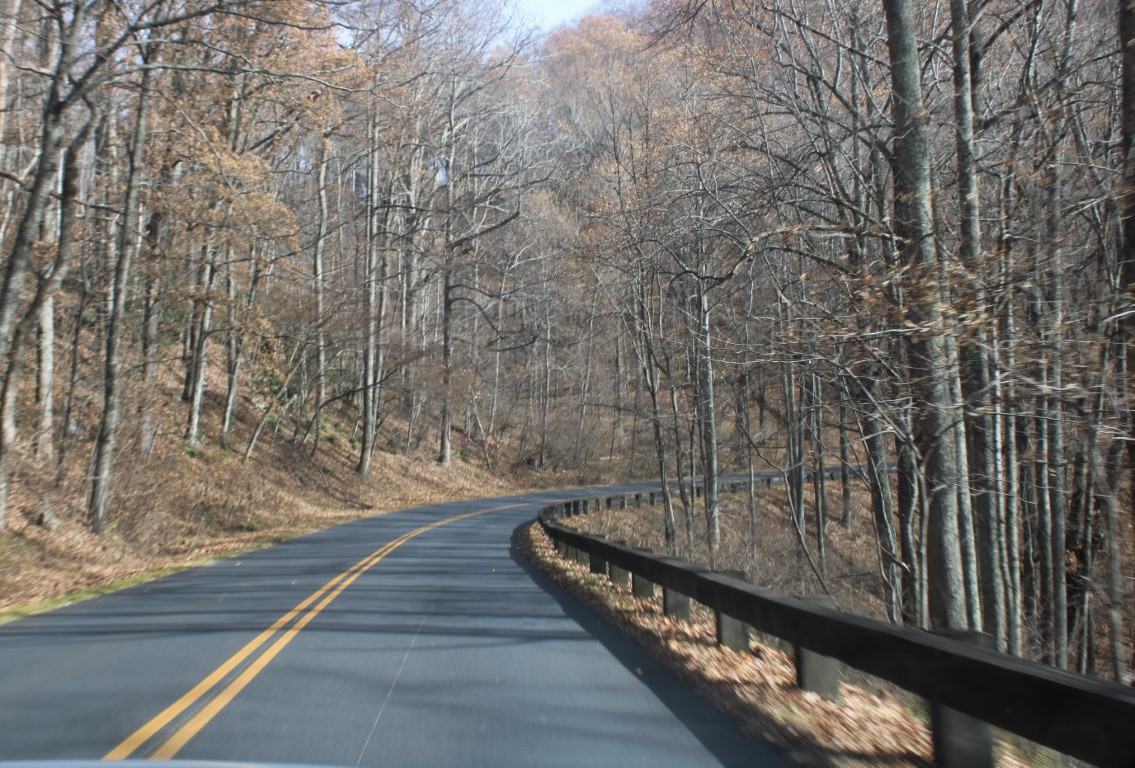
You road I enter upon and look around, I
   believe you are not all that is here,
 I believe that much unseen is also here.

Here the profound lesson of reception, nor
   preference nor denial,
 The black with his wooly head, the felon,
   the diseas'd, the illiterate person, are not
   denied;
 The birth, the hasting after the physician,
   the beggar's tramp, the drunkard's stagger,
   the laughing party of mechanics,
 The escaped youth, the rich person's
   carriage, the fop, the eloping couple,

The early market-man, the hearse, the
   moving of furniture into the town, the
   return back from the town,
 They pass, I also pass, any thing passes,
   none can be interdicted,
 None but are accepted, none but shall be
   dear to me.
Afoot and light-hearted I take to the open
   road,
 Healthy, free, the world before me,
 The long brown path before me leading
   wherever I choose.

Henceforth I ask not good-fortune, I myself
   am good-fortune,
 Henceforth I whimper no more, postpone
   no more, need nothing,
 Done with indoor complaints, libraries,
   querulous criticisms,
 Strong and content I travel the open road.

The earth, that is sufficient,
 I do not want the constellations any nearer,
 I know they are very well where they are,
 I know they suffice for those who belong to
   them.

(Still here I carry my old delicious burdens,
 I carry them, men and women, I carry them
   with me wherever I go,
 I swear it is impossible for me to get rid of
   them,
 I am fill'd with them, and I will fill them in
   return.)
Writing is joy --
   so saints and scholars all pursue it.

A writer makes new life in the void,
   knocks on silence to make a sound,
   binds space and time on a sheet of silk
   and pours out a river from an inch-sized heart.

As words give birth to words
   and thoughts arouse deeper thoughts,
   they smell like flowers giving off scent,
   spread like green leaves in spring;
   a long wind comes, whirls into a tornado of ideas,
   and clouds rise from the writing-brush forest.
Translation by Tony Barnstone and Chou Ping in The Art of Writing (1996) Boston: Shambhala.
I know what my heart is like
   Since your love died:
 It is like a hollow ledge
 Holding a little pool
   Left there by the tide,
   A little tepid pool,
 Drying inward from the edge.
Without desire everything is sufficient.
 With seeking myriad things are impoverished.
 Plain vegetables can soothe hunger.
 A patched robe is enough to cover this bent old body.
 Alone I hike with a deer.
 Cheerfully I sing with village children.
 The stream under the cliff cleanses my ears.
 The pine on the mountain top fits my heart.
Translation by Kazuaki Tanahashi and Daniel Leighton in Essential Zen (1994) HarperSanFrancisco.
Passage O soul to India!
 Eclaircise the myths Asiatic, the primitive
   fables.

Not you alone, proud truths of the
   world,
 Nor you alone, ye facts of modern
   science,
 But myths and fables of eld, Asia's, Africa's
   fables,
 The far-darting beams of the spirit, the
   unloos'd dreams,
 The deep diving bibles and legends,
 The daring plots of the poets, the elder
   religions;
 O you temples fairer than lilies, pour'd over
   by the rising sun!
 O you fables, spurning the known, eluding
   the hold of the known, mounting to
   heaven!
You lofty and dazzling towers, pinnacled,
   red as roses, burnish'd with gold!
 Towers of fables immortal, fashion'd from
   mortal dreams!
 You too I welcome, and fully, the same as
    the rest!
 You too with joy I sing.

Passage to India!
 Lo, soul! seest thou not God's purpose from
   the first?
 The earth to be spann'd, connected by
   network,
 The races, neighbors, to marry and be given
   in marriage,
 The oceans to be cross'd, the distant
   brought near,
 The lands to be welded together.

A worship new I sing,
 You captains, voyagers, explorers,
   yours,
 You engineers, you architects, machinists,
   yours,
 You, not for trade or transportation only,
 But in God's name, and for thy sake, O
   soul.
When an author composes too short a poem,
  it trails off with a lonely feeling
  like looking down at solitude with no friends
  or peering into the vast sky, disconnected.
 One string on a harp is crisp and sweet
  but sings without resonance and harmony.
Translation by Tony Barnstone and Chou Ping in: The Art of Writing (1996) Boston: Shambhala Publications.
My spirit is too weak -- mortality
   Weighs heavily on me like unwilling sleep,
   And each imagined pinnacle and steep
 Of godlike hardship tells me I must die
 Like a sick eagle looking at the sky.
   Yet 'tis a gentle luxury to weep
   That I have not the cloudy winds to keep
 Fresh for the opening of the morning's eye.
 Such dim-conceived glories of the brain
   Bring round the heart an undescribable feud;
 So do these wonders a most dizzy pain,
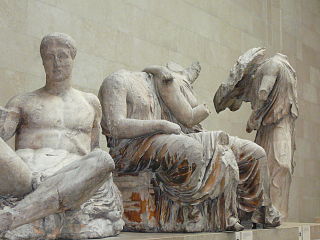
   That mingles Grecian grandeur with the rude
 Wasting of old time--with a billowy main --
   A sun--a shadow of a magnitude.











 Tiger Riding for Beginners