
Taken in December of 2014 in Budapest.


Taken in December of 2014 in Budapest.
 How Pleasure Works: The New Science of Why We Like What We Like by Paul Bloom
My rating: 3 of 5 stars
Paul Bloom’s book is about why we take pleasure in peculiar actions, proclivities, and objects. These are the pleasures that aren’t readily or directly explained by our evolutionary hardwiring. Evolution has programmed us to experience pleasure with sex and eating to encourage procreation and nourishment. In other words, those who experienced pleasure with sex had sex more often, and passed on their genes more successfully. Those who had a healthy appetite, ate more, became stronger, survived, and passed on their genes.
However, just because the pleasure of sex is readily understood through biology, doesn’t give us insight into the panoply of activities that people find pleasurable in a sexual way that have no value for procreation whatsoever. Bloom uses the example of masochism, but there are all sorts of kinky fetishes out there that one might also consider. It’s the peculiar pleasures that Bloom tries to explain. This is not to suggest that Bloom’s book is entirely about food or sex. He addresses each of those subjects with a chapter of its own, but they aren’t the sum total of the book. Both he and I, no doubt, rely heavily on food and sex because they are such fundamental pleasures and ones whose domains have blossomed far beyond the dictates of biology.
So what does the book address besides food and sex? It examines why people collect things that were once owned by famous people? Bloom sites a study showing that Joshua Bell anonymously playing violin in the subway in street clothes can barely garner a collective $32 in an afternoon, even having been passed by people who will pay $200 each to hear him later that evening as he wears a tuxedo in a concert hall, though playing the same songs on the same $3.5million violin. Why do we sit around watching television and movies? If any of these pleasures seem self-evident, I would encourage you to ask yourself why they should be? It’s by no means clear that we should value something more highly because of who previously owned it, and it’s certainly not clear why we should get value by watching others play act lives that seem more interesting than our own.
The theory that Bloom presents is called essentialism. It’s the idea that each of these things that give us pleasure represents the essence of something or someone in our minds. So a person who pay’s 500 times the going rate for a used guitar solely based on the fact (x-factor) that it once belonged to John Lennon is, according to Bloom, imagining that there’s some sort of essence of Lennon that rubbed off onto the guitar. Yes, the guy buying the guitar could be buying it entirely based on economic considerations, but the only reason there’s an economic benefit (economic rents in economist terminology) to be made is that there are people out there (many of them) who desire to possess a famous artist’s instrument even though it costs them far more than an equivalent guitar not owned by a famous person. Things become even clearer when one looks at an item like JFK’s tape measure—i.e. a mundane item that is not tied to the man’s fame. (Said tape measure sold for an absurd amount.)
Bloom discusses art forgeries to elaborate this concept of “essence” versus the intrinsic value (i.e. the beauty of the art.) There are many cases of paintings being sold for millions because they were believed to be painted by a certain “artistic genius” and then they become trash when it’s discovered that they were painted by a nobody—a nobody who’s genius was clearly sufficient to convince all the experts that he was some other genius for a while, mind you. If what we cared about was the beauty of the painting, its value would have nothing to do with its origins. In this example, it might seem to be all about rarity (a dead artist paints no more, and, thus, has a limited stock of paintings), but there is reason to believe that’s not the whole story.
We can see the value of these essences ubiquitously. There have been a number of blind taste test experiments that show that oenophiles (wine lovers/experts) can’t tell nearly as much about a wine’s delicate intricacies when they don’t have its label on hand. Famously, there was the CEO of Perrier who couldn’t pick his own company’s water out of a blind line up of waters, though insisting it was a superior product. (It took him five tries out of seven waters.) Even after that event there were people willing to spend twice as much for Perrier because it gave them some pleasure that was completely delinked from its taste or nutritional characteristics.
Bloom’s thesis is interesting, and he presents a lot of fascinating examples in this book. What the book doesn’t really explain is how come certain essences act heavily on some people and not at all on others. It also seems like a theory that begs for another level of explanation. Why should such essences exist, i.e. what is their root cause? The latter may prove difficult given the degree to which individuals vary in their peculiar pleasures from one to the next.
I found this book to be intriguing, and would recommend if for people with interests in the oddities of human behavior.

Taken in November of 2014 in Mumbai.
The story is that Mr. J. N. Tata built this hotel after being turned away from upscale hotels at the turn of the 20th century because he wasn’t white (he’s Parsi. He made it one of the most opulent hotels in India. I haven’t seen corroboration of this story, but it’s what people say.
This photo is taken from the Gateway of India.

Taken in November o 2014 at Daulatabad Fort.
This girl was part of a school group visiting Daulatabad Fort while I was there. The teacher asked me to explain something about the differences between the U.S. and India in terms of geography and economics.
The photo below is the same group resting in the citadel, the highest point of the fortress.

A pharmacy.

Taken in December of 2014 in Budapest.

These bike stations are a relatively new addition to Budapest, and can be found at 76 locations around the city. They are sponsored by MOL, the Hungarian oil and petroleum company.
I polished off three books this week. That’s not as impressive as it might seem; they were all slim volumes. I’ll do reviews on these books in the near future, but a few words about each will suffice here.
The first was Zen Mind, Strong Body; a book about which I had mixed feelings. It’s by a calisthenics expert named Al Kavadlo, who is a personal trainer, author, and YouTube phenom. On the positive side, Kavadlo is a sharp guy with many useful insights into bodyweight exercise and fitness in general. Additionally, Kavadlo eschews the snake-oil salesmanship that is rampant in the fitness world.
On the other hand, the book is basically a rehash of blog posts, and the “new / first time seen pictures” aren’t useful for learning the exercises because they’re mostly just the author standing in random places with his shirt off. Furthermore, there’s no such consolidating theme to the book as is suggested by the title. I think it just has that title (a take-off on DT Suzuki’s classic work on Zen) because “The Best of Al Kavadlo’s Blog Posts” doesn’t scream “buy me.” I thought a little extra value-added could have been provided for the people who paid for the book, but you will learn from it.
The second book was Quarantine in the Grand Hotel. This novel brings satire and humor into a locked-door mystery. It was written by a Hungarian author in the 1930’s, but remains a readable and enjoyable book.
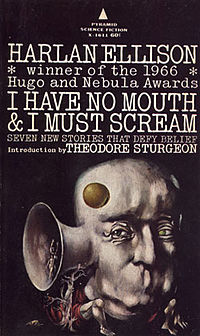 The third book was the short story collection by Harlan Ellison that I mentioned I would begin this week. I Have No Mouth and I Must Scream consists of seven stories that are nominally in the genre of science fiction, but could also be classified as tales of the strange. This book was first published in 1967. Ellison writes stories in a readable style, though one that can sometimes be called “trippy.” If I were going to award a “book of the week” for the book that I found most engaging, it would be this one.
I only got a couple of chapters each into the Mo Yan novel Life and Death Are Wearing Me Out and the epic poem The Aeneid. The former is readable has a fascinating premise, but the latter–not unexpectedly– is a little more of a chore to read (but is a classic and seems worth the difficulties.)
Having finished off some nonfiction in the preceding week, I made room to resume reading a book that I started a couple of months ago entitled Why Do People Get Ill? A two-man team consisting of a psychoanalyst and a neuroscientist joined together to write this book. It examines the role that stress and the mind play in illness. Yes, things like germs (i.e. bacteria and viruses) cause illness. However, that’s not the whole story, and a couple of key questions remain. First, how come some people can be repeatedly exposed to causative factors and their bodies knock out disease leaving them asymptomatic. Second, how come others readily come down with ailments–sometimes even when they haven’t been exposed to causative factors. To put matters in scholarly terms, germs may be a necessary condition for disease, but they are rarely a sufficient condition.
I didn’t do much yoga or martial arts specific reading this week. However, today I finally began The Pyjama Game, which is a book about Judō that I mentioned in one of my previous Reading Reports.
I purchased four books this week, all on Kindle and mostly on sale. Those books, which I’m sure to be discussing and reviewing on later dates are:
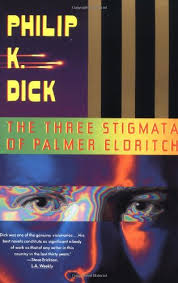
The Three Stigmata of Palmer Eldritch: Because I’m a huge PKD fan, and this is said to be one of his best books–of his books that I haven’t yet read. This was in the Kindle Monthly Deals.
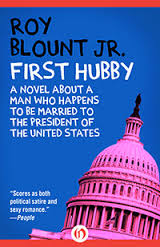
First Hubby: This will be my first Roy Blount Jr. book, but I did enjoy him on that NPR game show (i.e. Wait Wait… Don’t Tell Me!) This was also a Kindle Monthly Deal as I recall.
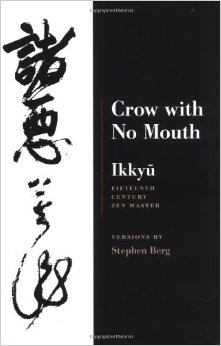
Ikkyu: Crow with No Mouth: This is the story of a Zen master who lived in Kyoto in the 15th century. He sounds like a fascinating man, and was also a skilled poet. This one wasn’t on sale, but neither was it expensive at the usual price.
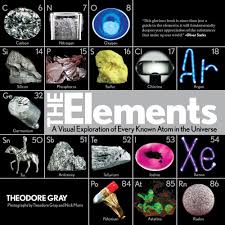 The Elements: This book is a Kindle Daily Deal as I’m writing this. I love me some science. I did have to look through the sample pages before buying. Even though it was inexpensive, I was concerned that it might not have much usefulness on my black&white, base-model Kindle because the graphics are an important part of the book. However, it looked like there was enough text explanation to be worth the $2.00–even if the graphics don’t show up well.
And that was my week in books.
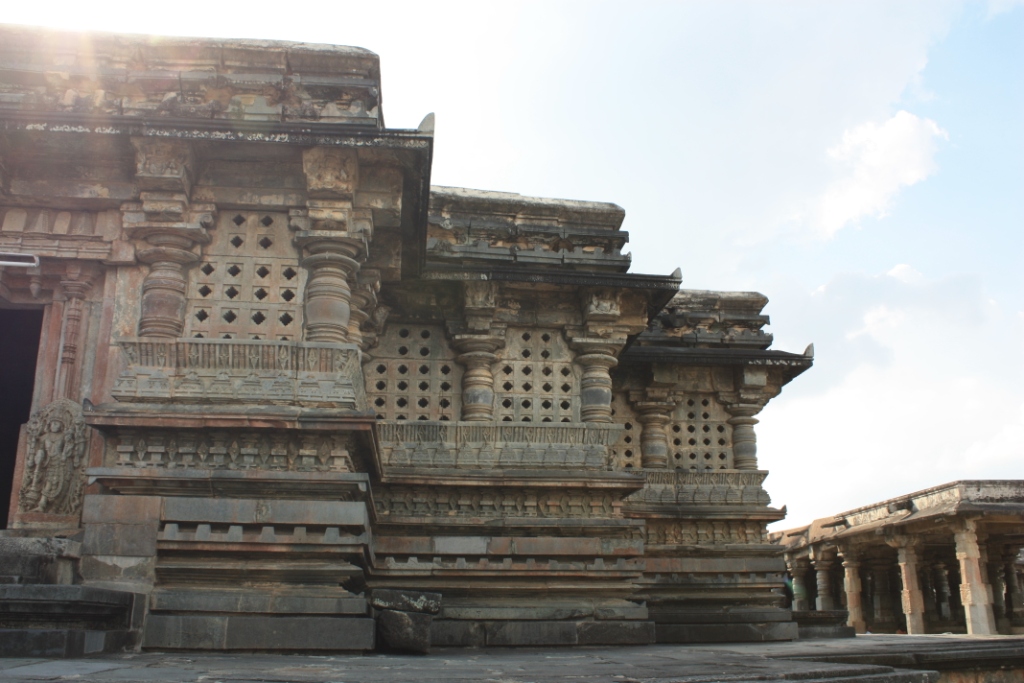
Taken in November of 2013 in Belur
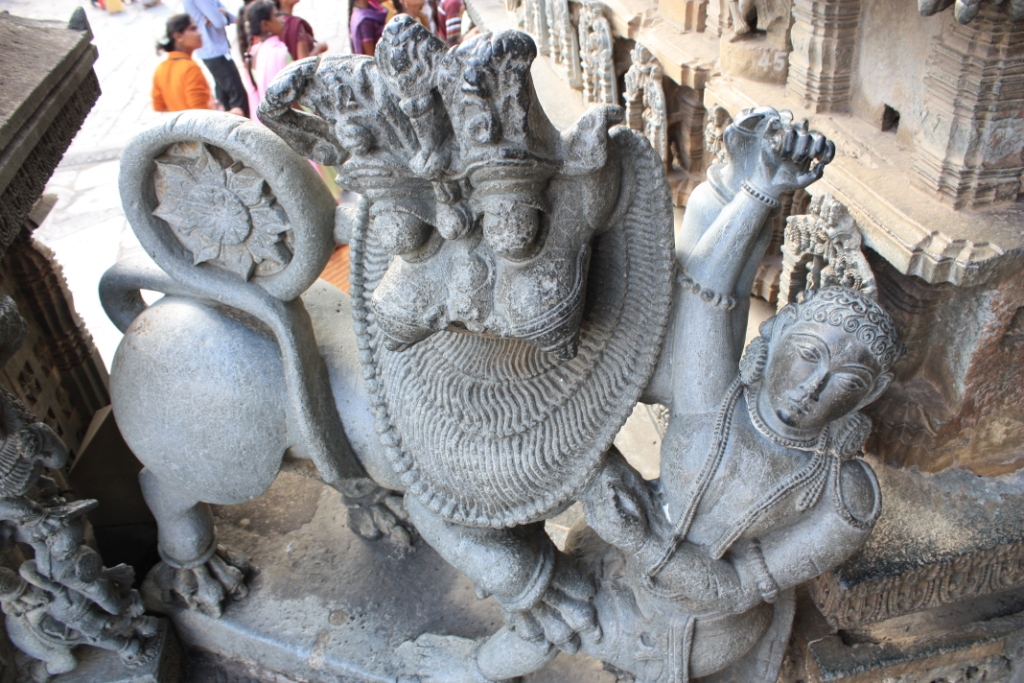
The temples at Belur and Halebidu are among India’s most impressive–but least known–historical sites. Both cities were a capitals during the days of the Hoysala Empire, but are well off the major tourist path. If you’re spending some time in South India, these temples should be on your itinerary.
 Where is Uncle’s shop? It’s where you are going if you got into an auto-rickshaw with a driver who has volunteered to drive you around for less than the metered rate. It may not be where you want to go, where you think you’re going, or where you’d like to go. But in the driver’s eyes, by taking him up on a reduced fare, you’ve entered into an implicit contract to be taken to a random store and nagged into buying something expensive enough that the shop can happily recoup the driver’s finders fee.
FYI- Bangalore auto-rickshaw fare is currently 25 rupee (Rs) for the first 1.9km, and 13Rs for every kilometer thereafter. If the driver offers to take you around for 10 or 20Rs, you know they have plans. (Although there is a small chance that they are counting on you to be ignorant of the fact that the place they are offering to take you is 50 feet away.) Usually, a driver will offer to take you to a place for 4 to 8 times the metered rate (sometimes more if he has no idea where said place is–a not uncommon condition in Bangalore.) In other words, the driver will normally try to rip you off in the old-fashioned way (which eats at your pocket-book, but not at your time.)
If you find the new-fangled rip-off scheme to be a deplorable con, just remember to save some of your wrath for FaceBook, Google, and the other websites you commonly use. They almost all work on the same model. You get charged little or nothing to use said sites in exchange for agreeing to be shamelessly pitched stuff you don’t want or need.
What does Uncle’s shop sell? I hope you like a good mystery, because there’s no telling whether Uncle’s shop sells anything in which you have the slightest interest. If you are a single male, Uncle’s shop probably sells saris and pashminas. If you have a tiny apartment, Uncle’s shop probably specializes in 14 foot tall bronze statues of Ganesha. It could sell woven goods, knick-knacks, bric-a-brac, widgets, tsotchkes, or relics of a religion you know nothing about so you can engage in some low-grade impiety. (FYI- You may not realize this but for the devoted, it can be a bit offensive for a bunch of non-believers to be wearing “OM” symbols or having Buddha statues who aren’t Hindu/Yogic or Buddhist, respectively. Sort of the way many hardcore Christians feel about how Christmas was shanghai’d by a jolly old elf or Easter was overtaken by a giant bunny.) In some cases, Uncle’s shop will sell all of the aforementioned items and more.
Surely I will get an outstanding deal at Uncle’s shop, right? I mean, Uncle is not going to rip off his nephew’s customer, right? Wrong. First of all, there is an infinitesimally small chance that the driver is biologically related to the store owner in any way, shape, or form. It’s probably more likely that they’ve never formally met.
Second, let’s do some Uncle’s shop mathematics. We will call the wholesale cost of the product “C” and the bloated profit that the store owner would like “W” (for “wishful thinking profit”) and the lowest profit “Uncle” is willing to accept “R” (for “reservation price profit.”) If you just walked into the shop off the street and bought said item you’d pay some amount ≤(C+W) and ≥(C+R).
However, now the driver expects a reward. [Granted, it may be nominal in the scheme of things.] We’ll call the fixed-rate payment to the driver “S” (for “sucker wrangling charge.”) [You may wonder why I’m assuming this is a fixed-rate payment. Fair enough, if the driver is savvy, it will be percentage. However, my finding has been that between 60% and 80% of autorickshaw drivers in Bangalore don’t understand the concept of a map. I’m not saying they don’t know how to use a map. I’m saying that they don’t get that it’s a representation of the streets surrounding them. My point being, auto-rickshaw drivers are–as a group–not savvy. Granted, certain among them are really savvy. However, my point holds as long as we can except that S>0, for all S–whether fixed or a percentage.)
Long story short, now you will pay between (C+W+S) and (C+R+S), where S>0. Long story shorter, going to Uncle’s shop with an auto driver will not save you money (unless you’re looking for something specific, and it will save you the value of time to have a guide to show you where to get what you’re after. Good luck with said guide being an auto driver, the driver doesn’t care what you want, he wants you to buy whatever Uncle’s shop is selling. You can buy what you want on your own time.) It’s true that you may find it worth it to pay the nominal extra amount for many reasons, i.e. convenience, a likable driver, etc. Just be informed.
How come it’s called Uncle’s shop, when nobody involved is the Uncle of anybody else involved? Indians use “auntie” and “uncle” as honorifics for older individuals who are in positions / stature commanding respect–it needn’t be a relative by blood. For auto drivers, this includes random shop owners who’ll pay them 50 rupee for dragging hapless tourists into the store.

Taken in December of 2014 in Vác, Hungary
I took this photo near the Danube in Vác. I’m not sure what the thing that looks like bowling pin is supposed to be (hence the Nude Bowling Trophy Topper comment.) Maybe it’s supposed to be a vase. At any rate, it’s a nifty work of art.
 999: Twenty-nine Original Tales of Horror and Suspense by Al Sarrantonio
My rating: 4 of 5 stars
999 is a collection of 28 short stories and one novella that are all in the genre of horror and dark suspense. The collection includes some superstar authors such as Stephen King, Joyce Carol Oates, Neil Gaiman, and David Morrell, but all of the authors are established writers and most will be familiar to readers in this genre.
I won’t go into each story in-depth, but will list and briefly describe each. A few of the stories stuck with me, while others were quite forgettable—so I’ll point out which were which. Your results may vary.
1.) “Amerikanski Dead at the Moscow Morgue” by Kim Newman: This is a Cold War Zombie story. It was intriguing.
2.) “The Ruins of Contracoeur” by Joyce Carol Oates: The family of a disgraced Judge move to a remote area to stay out of the limelight, and faceless monster sightings ensue. How bad could a Joyce Carol Oates’ story be? It’s solid and well-written. It wasn’t among my favorites.
3.) “The Owl and the Pussycat” by Thomas M. Disch: An “inanimate” stuffed owl and plush-toy cat converse about their wicked, spouse-abusing owner. Creepy, but not one of the strongest entries. The stories in this collection range from realism to far-fetched speculative fiction. This work is toward the latter end of the spectrum.
4.) “The Road Virus Heads North” by Stephen King: A mutating “killer” picture is obtained at a yard sale. This is among the stronger stories.
5.) “Keepsakes and Treasures: A Love Story” by Neil Gaiman: About a collector of the “exotic.” While Gaiman is my favorite author of this bunch, I can’t say this is story was among my favorites of the collection. I will say that it has some of the cleverest wording of any of the stories (as one would expect of Gaiman), but maybe that humor works at right-angles to the story. You decide.
6.) “Growing Things” by T.E.D. Klein: About a husband / Mr. Fixit and his following of advice columns on a growth. This is a short piece, but not among the more memorable stories. It’s innovative, but not the least bit intense.
7.) “Good Friday” by F. Paul Wilson: A vampire story set in a convent. A good story, but obviously not particularly innovative. However, if you like the idea of nuns battling vampires, here’s your story.
8.) “Excerpts from the Records of the New Zodiac and the Diaries of Henry Watson Fairfax” by Chet Williamson: A swanky dinner club that rotates hosts and each host tries to outdo the last in the presentation of “exotic delicacies.”
9.) “An Exaltation of Termagants” by Eric Van Lustbader: I’ll have to be honest; this was the least memorable of these stories. When I flipped back through to write this review, I found that I’d completely forgotten the piece. I think its lack of memorableness speaks for itself. It’s about an unappealing man and his sucky life that’s tied to his poor relationships with women. I think the problem is two-fold. First, it’s one of the longer stories in the collection. Second, unlike Joe R. Lansdale’s “Mad Dog Summer,” it’s a long short story without memorable characters or a taut story arc. In short, if you’re going to go long, you’ve got to give us characters we can either love or despise, and you’ve got to give us a pace that keeps us intrigued. This story does neither. I know it’s all subjective, but I think this collection without this story would be improved.
10.) “Itinerary” by Tim Powers: A mysterious caller asks the protagonist to tell an unknown woman caller that said caller “just left” in response to her inquiry. From there the story meanders into personal tragedy before bringing it all back together in the end. It was so-so. I liked the premise, but it didn’t have that x-factor in execution.
11.) “Catfish Gal Blues” by Nancy A. Collins: A river catfish mermaid story. This was a weird but highly memorable story.
12.) “The Entertainment” by Ramsey Campbell: Man thinks he’s checked into a hotel, but it’s really some sort of asylum. Not the most memorable, but not the least either.
13.) “ICU” by Edward Lee: Man awakes in an ICU, and is informed that he’s a gangster involved in pedophilia and other hardcore taboo pornography. Vivid and well-crafted.
14.) “The Grave” by P.D. Cacek: A young woman with a horrible mother discovers a grave in the woods that she’s never seen before. This one is eery and visceral.
15.) “The Shadow, The Darkness” by Thomas Ligotti: About a tour group promised “the ultimate physical-metaphysical excursion.” This paranormal story is just OK.
16.) “Knocking” by Rick Hautala: Remember Y2K? It was the idea that the entirety of the world of computing would come to a screeching halt because their little (inadequately programmed) computer minds would be blown by a date starting in “20?” This story is based on that notion.
17.) “Rio Grande Gothic” by David Morrell: A cop keeps finding shoes left in the same section of road, and eventually begins to wonder if someone isn’t trying to tell him something. This story does a good job of capturing one’s curiosity and keeping one’s attention.
18.) “Des Saucisses, Sans Doute” by Peter Schneider: This is one of the shorter stories in the book, and it’s also an almost absurdist dark piece. You may laugh or you may vomit, either way the writer had an effect.
19.) “Angie” by Ed Gorman: This story is white-trash gothic. It’s about a couple that are “stuck” with this kid, and are concerned that the child has learned their dirty, little secret and will turn them in. It was one of the stories that stuck with me most intensely. The unlikable character development is exceptional.
20.) “The Ropy Thing” by Al Sarrantonio: A couple of kids in a neighborhood assaulted by a thing that is… well, ropy (rope-like.) Not one of the better pieces, but it has the virtue of being short.
21.) “The Tree is My Hat” by Gene Wolfe: A man befriends an outcast on island in the South Pacific. It’s a solid piece.
22.) “Styx and Bones” by Edward Bryant: A cheating man comes down with a mysterious ailment. This is a well-executed story.
23.) “Hemophage” by Steven Spruill: Another vampire story, this one set inside a detective story.
24.) “The Book of Irrational Numbers” by Michael Marshall Smith: It’s about a guy from Roanoke, Virginia who is obsessed with numbers. As there aren’t many math short stories, if you are a big fan of math fiction you may find this interesting. The writing style is fun. If you aren’t a math fan, you may lose the story.
25.) “Mad Dog Summer” by Joe R. Lansdale: A man recounts a story of murder from his youth living in a rural community. This is one of the strongest stories in the collection. It’s also one of the longest, but the author does an outstanding job of keeping one’s attention throughout.
26.) “The Theatre” by Bentley Little: A clerk at a bookstore ventures into a forbidden floor above the store to find a creepy theater that will change his life. It’s a good, creepy story.
27.) “Rehersals” by Thomas F. Monteleone: I don’t know that I would have put this in the same genre as the other stories, but it’s an excellent story—and so I can see why the editor was eager to include it. It is speculative fiction, as opposed to being realist, but I wouldn’t count it as either horror or suspense. It’s about a man handling props in a community theater who is given glimpses into what his life could have been like if he’d stood up to his abusive father. It’s one of the best stories in the collection.
28.) “Darkness” by Dennis L. McKiernan: A man moves into a beautiful house willed to him by an eccentric uncle. The problem is that the lights in the house are so bright as to be an assault on the eyes—leaving not a shadow or dark space in the house. The lights are wired to be either all on or all off. It doesn’t occur to the nephew that the lights might be that way for a reason.
29.) “Elsewhere” by William Peter Blatty: This is the longest piece–a novella / very short novel and not a short story. It’s about a realtor who’s trying to sell a house that’s haunted. She brings together a writer and a couple “experts on the paranormal” to debunk the haunting so that the house will become salable. But everything is not as it appears.
This is a good collection of stories. Some are better than others, but the best are extraordinary. I’d highly recommend it for anyone who likes horror, dark suspense, or the macabre. Within that genre, it’s an eclectic mix of stories in form, substance, and style.


