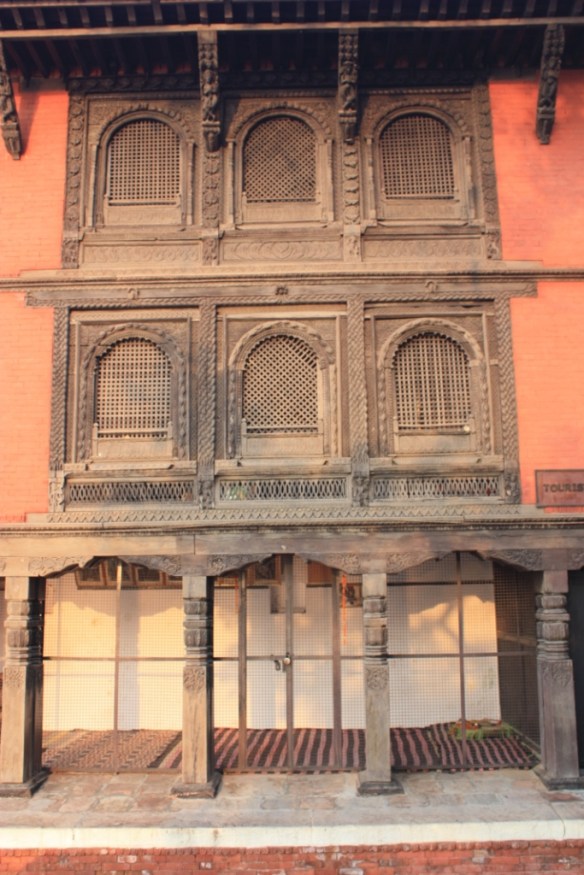
Taken in May of 2016 in Lusaka


 The Country Without a Post Office by Agha Shahid Ali
My rating: 5 of 5 stars
This is a collection of 27 poems about life in conflict-riddled Kashmir. Kashmir is a territory in the Himalayas that’s governed by India, but claimed by both India and Pakistan—and, it should be noted, has a significant population of residents that want to be part of neither country. In other words, there are some who’d like to see an independent Kashmir. However, at the moment Kashmir is one portion of one of India’s 29 states, Jammu and Kashmir—a state which is, itself, tripartite (Hindu Jammu, Muslim Kashmir, and Buddhist Ladakh.)
It’s a telling quote from Tacitus with which the author begins the collection. Solitudinum faciunt et pacem appellant. I won’t claim that I didn’t have to look this up, but it means: “They make a desert, and call it peace.” The first poem echoes variations on that quote.
There are a range of poetry styles within this collection, including: rhyming verse, free verse, poetic prose, and ghazal. A ghazal is a Middle Eastern style of lyric poem which has a pattern of rhyme and is metered to be set to music; there are several in this collection. Some of the poems are sparse and some are wordy, and variety is the order of the day.
The 27 poems of this collection are divided among five parts. The book is brief (under 100 pages), and it contains only a prologue and notes (some of which are interesting) with respect to ancillary matter.
This collection paints a portrait of war and life in a war-torn locale. It’s as much the latter as the former. The title poem, “The Country With No Post Office,” suggests the sapping nature of life where the institutions of governance and civil society have broken down.
I’d recommend this collection for those who enjoy poetry, but also for those interested in the conflict in Kashmir.
 Love Alone: Eighteen Elegies for Rog by Paul Monette
My rating: 4 of 5 stars
This is a collection of modern verse offering the poet’s experience of the death of his partner and the years leading up to it. Said partner, Roger Horwitz, succumbed to AIDS during the late 80’s. It’s a tale of scouring and worrying—scouring because any infection could be fatal and worrying for the same reason. It tells of melancholy holidays, exhausting doctor’s office visits, and then the mourning. If I make it sound like Monette just jotted off about the mundane aspects of life, it’s this approach that captures the grind of the disease. This approach both creates a narrative and shows how life looks in the shadow of a terminal disease.
As the subtitle suggests, there are 18 poems in this collection. They are divided into three parts, though most are in the first part.
I found the collection to be evocative and the language to be clever.
This is a brief review because it’s a brief work—as one might expect of a poetry collection. It’s less than 70 pages inclusive of front matter and a biography of the author.
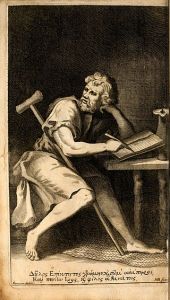
Public domain image of Epictetus, sourced from Wikipedia
There’s a story about Epictetus infuriating a member of the Roman gentry by asking, “Are you free?”
(Background for those not into Greek and Roman philosophy. Epictetus was a Roman slave who gained his freedom to become one of the preeminent teachers of stoicism. Stoicism is a philosophy that tells us that it’s worthless to get tied up in emotional knots over what will, won’t, or has happened in life. For Stoics, there are two kinds of events. Those one can do something about and those that one can’t. If an event is of the former variety, one should put all of one’s energy into doing what one can to achieve a preferable (and virtuous) outcome. If an event is of the latter variety, it’s still a waste of energy to get caught up in emotional turbulence. Take what comes and accept the fact that you had no ability to make events happen otherwise.)
To the man insulted by Epictetus, his freedom was self-evident. He owned land. He could cast a vote. He gave orders to slaves and laborers, and not the other way around. What more could one offer as proof of one’s freedom? Of course, he missed Epictetus’s point. The question wasn’t whether the man was free from external oppressors, but whether he was free from his own fears? Was he locked into behavior because he didn’t have the courage to do otherwise?
I recently picked up a book on dream yoga by a Tibetan Lama, Tenzin Wangyal Rinpoche. Lucid dreaming has been one of my goals as of late. I wasn’t expecting to learn anything new about practices to facilitate lucid dreaming because I’ve been reading quite a bit about the science, recently. I just thought that it would be interesting to see how the Tibetan approach to lucid dreaming maps to that of modern-day psychology. Tibetan Buddhists are–after all–the acknowledged masters of dream yoga, and have a long history of it. Furthermore, I’ve been doing research about the science behind “old school” approaches to mind-body development, lately. At any rate, it turns out that there were several new preparatory practices that I picked up and have begun to experiment with, and one of them is relevant to this discussion.
This will sound a little new-agey at first, but when you think it out it makes sense. The exercise is to acknowledge the dream-like quality of one’s emotionally charged thoughts during waking life. Consider an example: You’re driving to an important meeting. You hit a couple long red lights. You begin to think about how, if you keep hitting only red lights, you’re going to be late and it’s going to look bad to your boss or client. As you think about this you begin to get anxious. But there is no more reality in the source of your fear than there is when you see a monster in your dreams. There’s a potentiality, not a reality. Both the inevitability of being late and the monster are projections of your mind, and yet tangible physiological responses are triggered (i.e. heart rate up, digestion interfered with, etc.) It should be noted the anxiety isn’t without purpose. It’s designed to kick you into planning mode, to plan for the worst-case scenario. Cumulatively, one can get caught up in a web of stress that has a negative impact on one’s health and quality of life. For most people, when they arrive on time, they forget all about their anxiety and their bodily systems will return to the status quo, until the next time (which might be almost immediately.) Some few will obsess about the “close call” and how they should have planned better, going full-tilt into a stress spiral.
Mind states have consequences, whether or not they’re based in reality. I’ve always been befuddled by something I read about Ernest Hemingway. He’d won a Nobel Prize for Literature and was universally regarded as one of the masters of American literature, but he committed suicide because he feared he’d never be able to produce works on the level that he’d written as a younger man. There seems to be more to it than that. Many others managed to comfortably rest on their laurels when writing became hard[er]–including writers with much less distinguished careers. The monster may be imaginary, but if you feed it, it still gets bigger.
As you go about your day, try to notice your day-dreams, mental wanderings, and the emotional states they suggest. You might be surprised to find how many of them have little basis in reality. They are waking dreams.

Taken in October of 2014 at Daulatabad Fort
As you enjoy your weekend, if at any point dread of the work-week to come arises, take a moment to reflect on the fact that at least you don’t have this guy’s job carrying stones on your head up several flight of uneven stone steps all day – everyday.
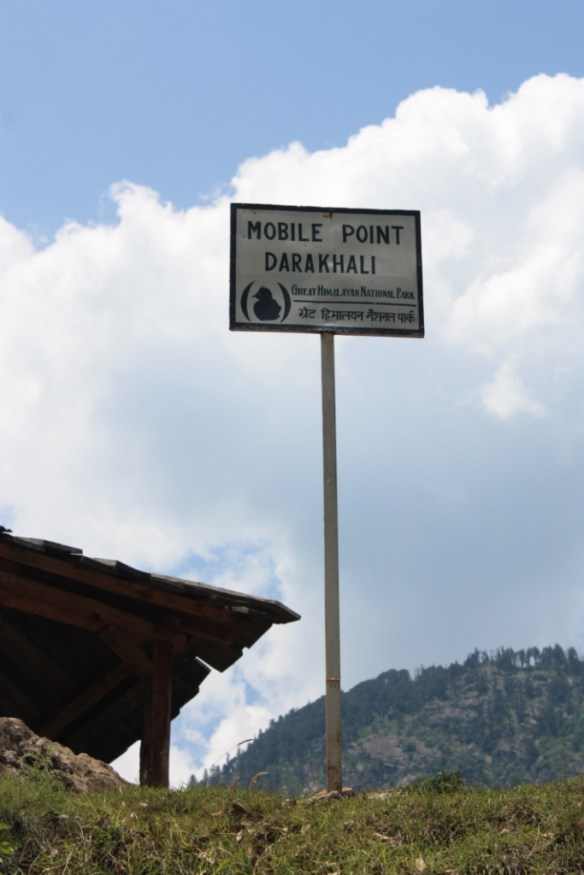
Taken in Great Himalayan National Park in July of 2015
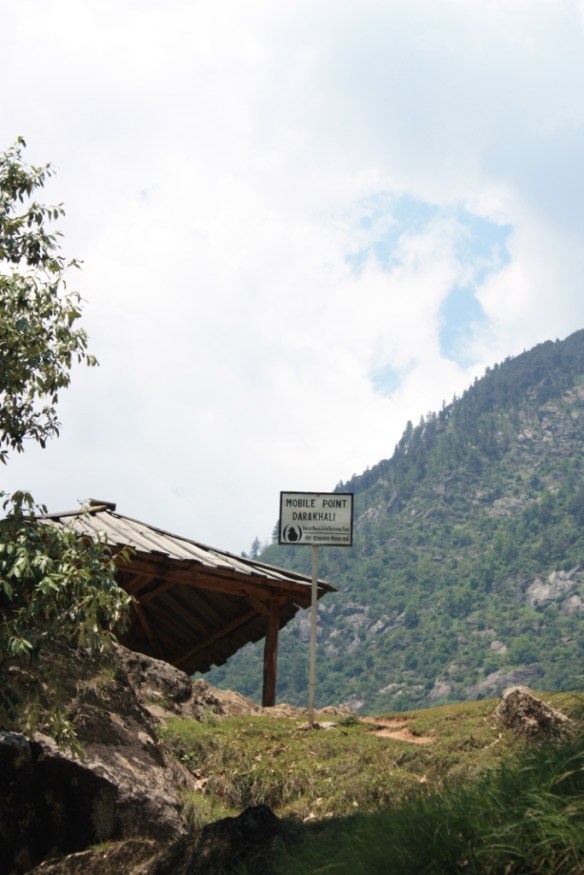
Back in my day, we had the “Scenic Overlook.” Now when you’re trekking they have the “Mobile Phone Access Point.” Thoreau would cry.
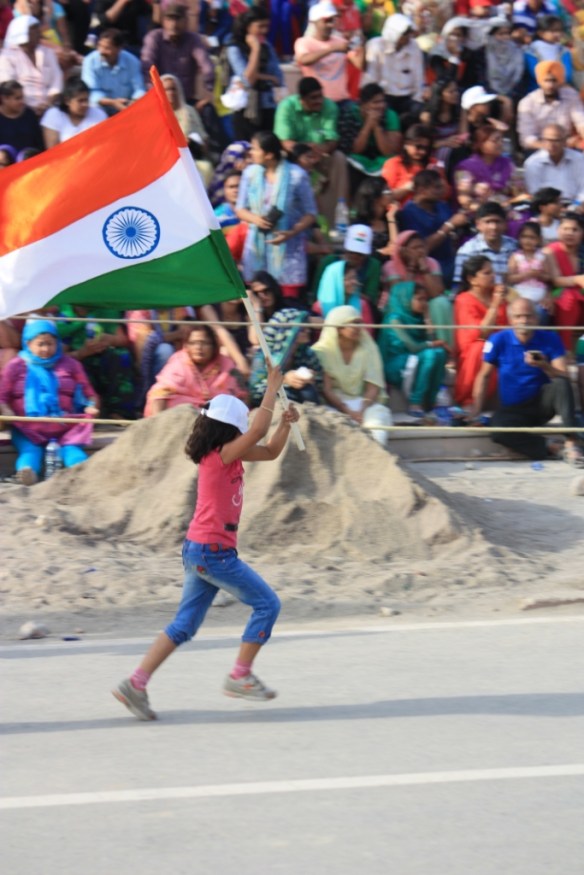
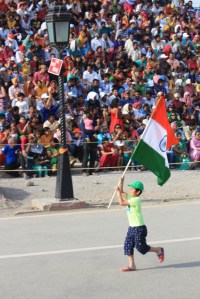
Taken in April of 2016 at the Wagah border crossing
Taken at the Wagah (Attari) Border Crossing Retreat Ceremony. Kids running with the Indian flag toward the border with Pakistan. These were some of the more skilled flag wavers, which–oddly enough–meant they did less “waving” of the flag. Those who waved the flag tended to wrap it around the pole. These kids had technique, just hold on tight and run like the dickens.

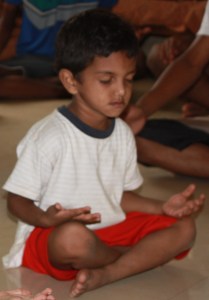 “What do you want to BE when you grow up?”
They ask you when you’re just a little pup.
So, what part of what I must BE,
is different from the me you see?
Dad thought, “the part that they’ll pay you for.”
Like an allowance for finishing a chore?
“Yes, young man, but you can safely assume,
no one else will pay you to clean your room.”
Kids don’t think of being gainfully employed.
Which seems to make grownups quite annoyed.
At five, I wanted to be a cowboy.
“Son, there’s no jobs in that line of employ.”
That’s OK, then I’ll be an Indian.
“You’d have to be born that way, my friend.”
I wasn’t born a doctor, but you said that’s OK.
“That’s not the same, son, what can I say?”
I know what then, Dad, I’ll be the Batman!
“Come on, son, that’s not a feasible plan.”
You’re thinking Superman, Batman has no powers.
“Bruce Wayne by day, Batman at night, where’s the sleeping hours.”
You have a point there, you’ve got me stumped.
Thinking myself prematurely defunct.