
Taken on July 2, 2016 in Kolkata

This cathedral is located due East of the Victoria Memorial in Kolkata (Calcutta.) It’s an Anglican church that dates to 1847.
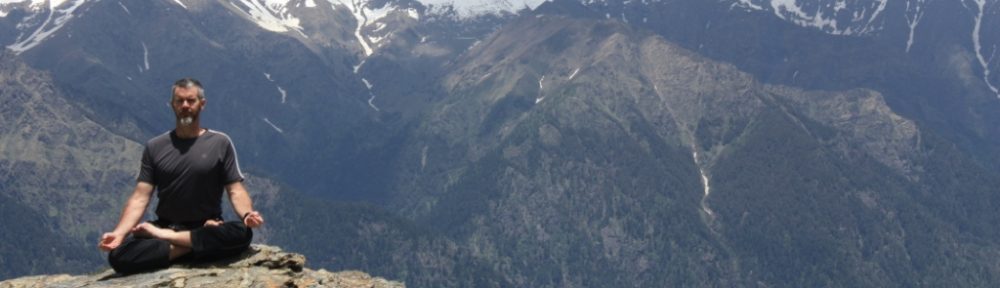

Taken on July 2, 2016 in Kolkata
This cathedral is located due East of the Victoria Memorial in Kolkata (Calcutta.) It’s an Anglican church that dates to 1847.
 Krav Maga: Real World Solutions to Real World Violence by Gershon Keren
My rating: 4 of 5 stars
This is a comprehensive guide to the Krav Maga Yashir style of Krav Maga. The fact that there are multiple styles of Krav Maga was news to me. Yashir means “straight” or “direct” and this system was founded by the book’s author, Gershon Ben Keren, drawing heavily upon Imi Lichtenfeld’s original program, but modified to make it relevant for a modern, civilian practitioner. (To offer an example of said modification, Lichtenfeld’s system presumed that the fighter was an infantryman with a pack on his back, and so the original Krav Maga avoided movements that would be hazardous when so loaded down, but that are feasible for the average civilian on the street.) The author has a scholarly background in the psychology of violence, and emphasis on the realities of violence is a recurring theme.
The book follows a typical format for martial arts books. The early pages discuss the philosophy and approach of the system in detail. The book then proceeds to discuss basics such as stance and the fundamentals of punching and kicking. Finally, it delves into progressively more challenging self-defense scenarios (unarmed, armed, multiple attacker, and from various directions) and the counters that the system offers.
The book succeeds in its objectives. The photographs are well-done and provide the requisite clarity. One particularly nice feature is that the scenario photographs are taken in realistic settings so as to reinforce the importance of recognizing and using one’s environment. Key concepts are reiterated throughout so as to facilitate learning. The organization is systematic and builds logically through progressively more challenging situations.
The biggest criticism is of some of the book’s repetitiveness. Repetitiveness is not necessarily a bad thing. It can be an important tool for learning, particularly with ideas that need to be thoroughly ingrained—e.g. self-defense concepts. However, some of the repetition in this book is more wasteful than beneficial. The scenario sections feature a textual description of the attack / defense event, and then there’re captioned photos that visually portray how the scenario plays out. The captions repeat much of the text, and they do it so close to the original text that it’s hard to imagine it being much more than an annoyance.
I’d recommend this book for someone who is considering whether to take Krav Maga classes, or for martial artists looking for insight in to the nature of this system. It has some sound general advice on self-defense that those interested in that topic might find useful.
 Imi Lichtenfeld – The Grand Master of Krav Maga by Gaetano Lo Presti
My rating: 2 of 5 stars
I bought this book because it’s the only English language biography of Imi Lichtenfeld (a.k.a. Imrich Sde-Or) that I could find, and by all accounts the man led a fascinating life. Lichtenfeld is most famous for founding the Israeli martial art known as Krav Maga. For those unfamiliar, Krav Maga is a self-defense system that prides itself on using as much of the human body’s natural instinct as possible in defense. It eschews the fancy and unrealistic techniques widely found in martial arts in favor of simple and direct tactics. However, it’s not the founding of Krav Maga that makes Lichtenfeld’s life so intriguing. (Believe me, there are plenty of founders of martial arts whose lives would less than engrossing reads.) Lichtenfeld was also a Holocaust survivor / resistance fighter, a circus performer, and a skilled athlete.
The good news for biographers is that there is still plenty of room for a bestselling biography of this man. There are two major problems with this book. I should point out that both problems result from the fact that this book is written by an apparently dedicated student of Krav Maga, and not by a professional writer, a biographer, or a master of creative nonfiction. I suspect the author did as good a job as he could, given that a proper primary source-based biography would take over a person’s life, is an art and science that must be learned, and—unfortunately—a lot of sources are now deceased / destroyed.
Anyway, back to the problems: First, it’s a translation that seems to have been done without the help of a translator or editor with native English competency. In fact, some of it reads like it was put through Babel Fish or Google Translate. As far as I know, the original Italian edition maybe a brilliantly written, if brief, biographical outline of Lictenfeld’s life. Second, the book is an outline of Lichtenfeld’s life, and it doesn’t offer enough detail to give the reader the visceral reading experience that learning about this man’s life should have been. There’s no in-depth research of the dramatic events in which Lichtenfeld was involved. Contrary to popular advice on writing, the author tells–not shows.
The book is actually a short biographical sketch of Lichtenfeld, followed by what might be considered a “biography” of Krav Maga, and that is followed by bio-blurbs of some of the more well-regarded students of Lichtenfeld.
On the positive side, the book is a cheap and quick read. It will give one some insight into Lichtenfeld, but—I fear—will leave many readers with a craving to know more. I wouldn’t recommend it for someone who wants a biography of Lichtenfeld, but, if you’re looking for a biographical sketch or are interested in the lives of prominent martial artists, it will probably serve your purpose.

Taken on July 4, 2016 in Kolkata
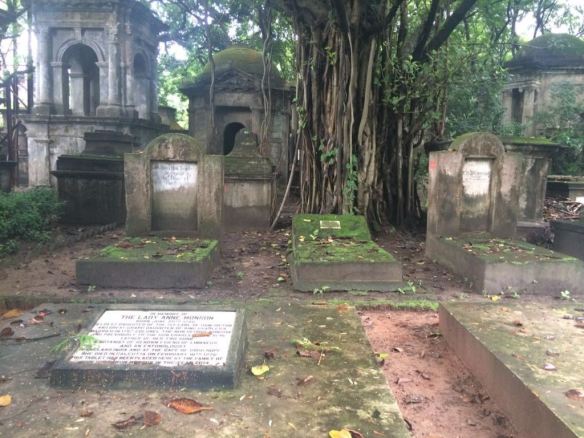
Walking through this cemetery, which dates to the late 18th and early 19th centuries, was a trip. I didn’t realize that there was an entire scale of grandiosity between your run-of-the-mill cemetery and places like the Ming Tombs or the Pyramids at Giza. While there were a few normal-sized monuments (as seen in the picture below, tombs under a banyan tree), most of the mausoleums were gigantic.
It would be interesting to know what led to this trend at that time. I know these were all wealthy British gentry, but, still. Possibly because the mausoleums were so huge, the cemetery filled up in a narrow time span. (i.e. Most of the tombs I saw were dated in the first decade of the 1800’s, but there were some from the late 1700’s as well.) It’s like the occupants learned of the Pyramids and were like, “I’ll be damned if some Pharaoh is going to outdo me.”
 Taiheiki by Helen Craig McCullough
My rating: 3 of 5 stars
Let me be blunt, “The Taiheiki” isn’t a book you pick up to read a gripping story. While it’s considered a work of fiction, it reads like a history. In some sense, it is a history. It does follow the broad brush strokes of the events in Japan in the early 14th century. However, there are way too many characters to keep track of, or to remember who is on the side of whom, or even to know whether a given individual is worth remembering or whether they’ll soon die an ignominious death. If you don’t believe me, here are the words of the book’s translator and editor, “In short, the ‘gunki monogatari’ [the war tales of which ‘The Taiheiki’ is one] are not great literature. But the best of them are worth reading.”
I agree with McCullough’s point about these books (and this one in particular) being worth reading, but I would add an “if.” “The Taiheiki” is worth reading, if you have an interest in medieval Japan, samurai, or civil war life. The time period in question was fascinating, and it was characterized by war and intrigue. The Hōjō clan was ousted. (They were the military clan that administered the government.) A compromise had been in effect in which the mantle of Emperor was to be alternated between two opposing lines. However, an ambitious Emperor Go-Daigo refused to relinquish the title, and this led to a war between the courts. It’s a story of both warriors of legendary loyalty (most famously, Kusunoki Masashige) and those of shifting loyalties.
While the book is too fractured to form a clear and interesting story overall, that doesn’t mean it isn’t filled with intriguing episodes of battles, espionage, siege warfare, and even the occasional ghost or goblin story. There are many interesting individuals that are dealt with in sufficient detail to make them intriguing—the aforementioned Kusunoki Masashige stands out among them. The book offers insight into the medieval Japanese mind and to some degree the modern mind as well. There are discussions of philosophy and strategy worked into the narrative that help one to understand from whence the individuals were coming.
The book has a few features that help non-expert readers. The first is an extensive introduction written by Dr. McCullough that serves to provide background for the book and the era in which it took place. The second is frequent footnoting. There are also several plates of artworks and photos interspersed throughout the book. These help the reader visualize the environs and how these individuals would have looked.
If you have an interest in medieval Japan, in samurai, in ninja, or even in pre-modern war generally, I’d recommend this book. (If you’re looking for a gripping tale of intrigue set in 14th century Japan, not so much.)
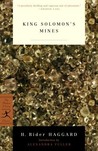 King Solomon’s Mines by H. Rider Haggard
My rating: 3 of 5 stars
A wealthy aristocrat (Sir Henry Curtis) seeks out legendary hunter, Allan Quatermain, to help him find a brother who went missing while in search of the diamond mines of King Solomon. That’s the premise that propels this story. Quatermain leads an expedition that will strike out into in the dark heart of Africa where lives will be repeated put on the line.
This novel was written at a time when lost world stories seized the imagination. With exploration still in progress, it wasn’t fantastic beyond imagination that a new civilization would be stumbled into that was unlike any known. The stories of real life explorers (e.g. Livingston, Burton, Speke, and Stanley) engrossed the public, and people were captivated by the myriad ways to die in Africa. Haggard’s novel echoes the terrors of those real world works, but with emphasis on the more visceral (e.g. warring tribes and wild animals) and less emphasis on the more blasé paths to one’s demise (e.g. being abandoned by one’s porters / supply theft, or contracting a severe case of the shits.)
Overall, I enjoyed this book. It’s readable, particularly for a work of the 19th century. It has enough adventure to maintain tension and keep one reading. That said, it’s not a flawless execution.
The biggest twist is toward the middle, and the ending resolves itself in a disappointing manner. [Remainder of paragraph is vaguely spoilery.] However, one may not notice this on the first read, if one becomes engrossed in the immediate details. To elaborate: the protagonists are put in a dire situation, and to get through it they have to pass through a scary environment. If you are caught up in the feeling of being in that environment, you may not notice the deus ex machina of being there in the first place. Also, the issue of Sir Curtis’s brother feels like it’s handled as an afterthought. If the book was written today, I’d suspect that the author had forgotten all about his inciting incident altogether until an editor told him it was too big of a loose-end to ignore.
I’d recommend this book for readers of adventure and lost world stories.

Taken on July 3, 2016 in Kolkata


This square in Kolkata was previously named Dalhousie square for the British Governor General of that name. B.B.D. is short for Benoy-Badal-Dinesh, three gunmen who assassinated the Inspector General of Prisons in a gunfight in a prominent building nearby (i.e. the Writers’ Building.) All three of the men committed suicide rather than be captured (Badal via Potassium Cyanide and the others by self-inflicted gunshot wound.)


Taken on July 2, 2016 in Kolkata; Taken by Lilla Gourley

Taken in Kolkata on July 4, 2016


 that I could find, and by all accounts the man led a fascinating life. Lichtenfeld is most famous for founding the Israeli martial art known as Krav Maga. For those unfamiliar, Krav Maga is a self-defense system that prides itself on using as much of the human body’s natural instinct as possible in defense. It eschews the fancy and unrealistic techniques widely found in martial arts in favor of simple and direct tactics. However, it’s not the founding of Krav Maga that makes Lichtenfeld’s life so intriguing. (Believe me, there are plenty of founders of martial arts whose lives would less than engrossing reads.) Lictenfeld was also a Holocaust survivor / resistance fighter, a circus performer, and a skilled athlete.<br><br>The good news for biographers is that there is still plenty of room for a bestselling biography of this man. There are two major problems with this book. I should point out that both problems result from the fact that this book is written by an apparently dedicated student of Krav Maga, and not by a professional writer, a biographer, or a master of creative nonfiction. I suspect the author did as good a job as he could, given that a proper primary source-based biography would take over a person’s life, is an art and science that must be learned, and—unfortunately—a lot of sources are now deceased / destroyed. <br><br>Anyway, back to the problems: First, it’s a translation that seems to have been done without the help of a translator or editor with native English competency. In fact, some of it reads like it was put through Babel Fish or Google Translate. As far as I know, the original Italian edition maybe a brilliantly written, if brief, biographical outline of Lictenfeld’s life. Second, the book is an outline of Lichtenfeld’s life, and it doesn’t offer enough detail to give the reader the visceral reading experience that learning about this man’s life should have been. There’s no in-depth research of the dramatic events in which Lichtenfeld was involved. Contrary to popular advice on writing, the author tells--not shows.<br><br>The book is actually a short biographical sketch of Lichtenfeld, followed by what might be considered a “biography” of Krav Maga, and that is followed by bio-blurbs of some of the more well-regarded students of Lichtenfeld. <br><br>On the positive side, the book is a cheap and quick read. It will give one some insight into Lichtenfeld, but—I fear—will leave many readers with a craving to know more. I wouldn’t recommend it for someone who wants a biography of Lichtenfeld, but, if you’re looking for a biographical sketch or are interested in the lives of prominent martial artists, it will probably serve your purpose.<br> <br/><br/> <a href="https://www.goodreads.com/review/list/6423134-bernie-gourley">View all my reviews</a>)