Boxless Box [Free Verse]

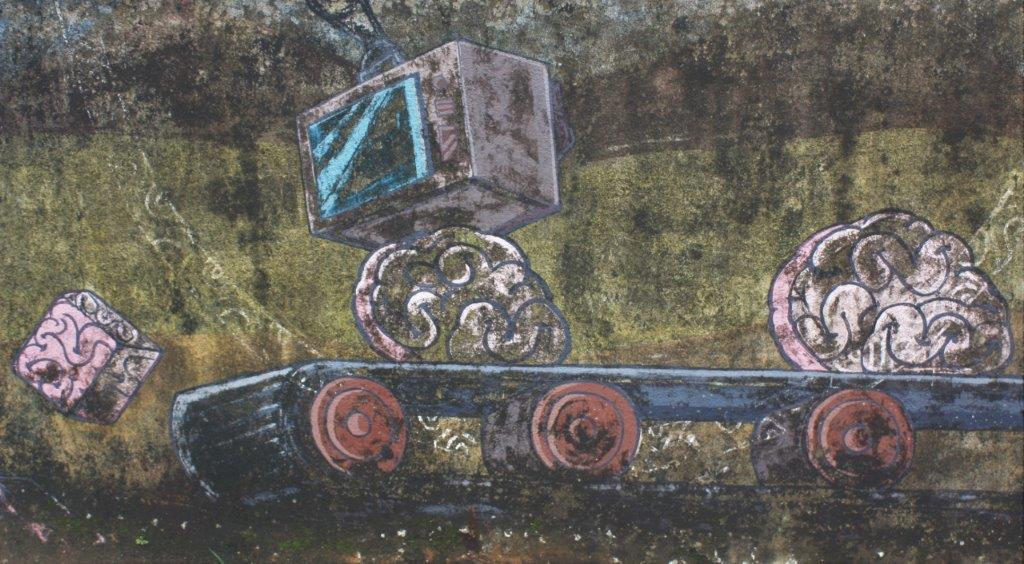
There you sit
in a boxless box --
 
unmoving,

but thinking 
about moving.

Then, stretching 
one trembling hand
out to its fullest extent,

you feel fingers
press into nothing, 
but a hard kind of nothing.

Falling Leaf [Free Verse]

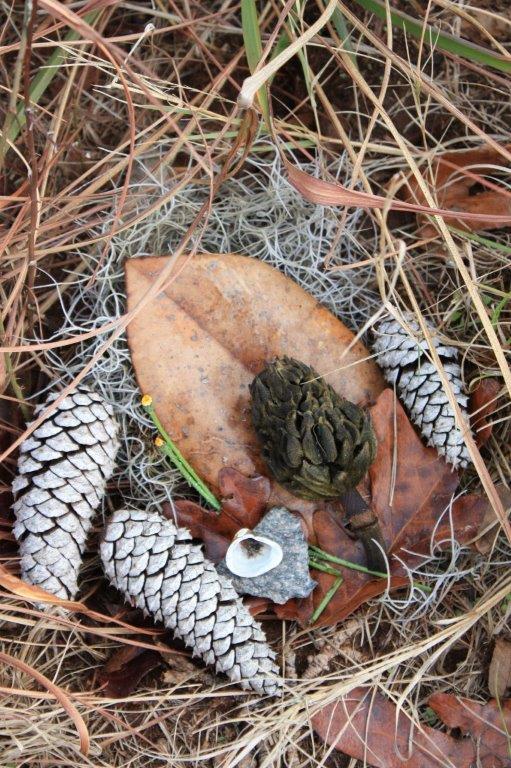
A falling leaf is my teacher.

It craves nothing.
It fears nothing.

It surrenders itself,
 but does not submit.

It will not be hemmed in
for long,
for its patience is infinite.

DAILY PHOTO: Scenes from Oslob

Museo Oslob; Taken in August of 2018
Cuartel Ruins; August 2018
Cuartel Ruins & Our Lady of the Immaculate Conception, Oslob; August 2018
Seawall Oslob; August 2018

BOOK REVIEW: Lysis by Plato

LysisLysis by Plato
My rating: 5 of 5 stars

Amazon.in Page

This early Socratic dialogue addresses friendship and love — philia to the Greeks. In it, Socrates questions Lysis and Menexenus (two young friends) on the basis of friendship, whether it can be unrequited, and whether like or different individuals are better matched. The interrogation of Lysis illuminates Socrates view of the basis of friendship, wisdom. He questions Lysis about those things the boy’s parents won’t allow him to do, and those things for which they’d seek him out, ultimately suggesting that one’s wisdom is what attracts others to one, as friend or otherwise.

Later, Socrates questions Menexenus about whether the good befriend the good or are better suited to befriend the neutral individual. [The presumption that the bad are friends to no one takes them out all equations.] Socrates, with Menexenus’ consent, briefly concludes that friendships develop best between good and neutral individuals, but the dialogue ends with Socrates being skeptical of his own conclusion – perhaps feeling the weight of problems that a listener might contemplate (e.g. the idea that there are good, bad, and neutral people – rather than all of us being a melting pot of good, bad, and ugly.)

It’s not dissatisfying that the dialogue ends without an answer. Its value lies in triggering readers to contemplate the question. For my part, I considered the poor analogy between how people view relationships between doctor and patient, versus between friend and friend. The doctor isn’t put off by a patient seeking a practical benefit from them (improved health,) but many a friendship has died from one side seeking personal gains. [And yet, I still draw no conclusion because clearly there is some benefit each half of a friendship perceives, if not one as coldly rational a Socrates describes.)

This dialogue is worth a read to trigger contemplation of friendship.

View all my reviews

BOOK REVIEW: Jesus: A Very Short Introduction by Richard Bauckham

Jesus: A Very Short IntroductionJesus: A Very Short Introduction by Richard Bauckham
My rating: 4 of 5 stars

Amazon.in Page

This book explores the life of Jesus, the historical context of that life, his approach to teaching, the nature of his identity, the story of his death, and concludes with the origins of Christianity. The book rests on a couple of controversial ideas, the most influential of which is that the four gospels of the New Testament are valid historical sources and that they’re more useful than competing sources (e.g. the Gnostic Gospels.) Rather than asking the reader to take this as a given, Bauckham does present his argument in the second chapter.

I found this book to be intriguing and worth reading – surprisingly, once I realized it was written by a theologian, and not a Religious Studies scholar or historian. (Theologians have skin in the game of religious teachings, whereas Religious Studies scholars and historians are expected to be more objective with regards to religious claims.) It’s telling that I didn’t realize Bauckham was a theologian right away; he does generally present the material with the dispassionate objectivity of a scholar. However, eventually, he slips into the proclivities of a theologian, such as the stance that in the absence of strong evidence either way one might as well accept the truth of religious teachings. Also, he gives Jesus a free ride on shady behavior (as when Jesus compares a Gentile to a dog – which Bauckham calls “almost rudely negative” before rationalizing away said negativity.)

For me, the discussion of Jesus’s teaching style (Ch.5) was the book’s strongpoint. That chapter shows the reader how Jesus became such a big deal. Believer or not, one will come away impressed with Jesus as a teacher.

If one is looking for a book that considers the gamut of views about Jesus, this isn’t the book you’re looking for – e.g. Chapter 6 on Jesus’s identity doesn’t give time to the view that he was just a smooth-talking preacher whose followers likely absconded with his body – let alone that he was a fiction. That said, there is a great deal of interest in the book, and I found it well worth reading.

View all my reviews

DAILY PHOTO: Gejjala Mandapa, Hampi

Taken at Hampi in 2020

BOOK REVIEW: A Natural History of the Future by Rob Dunn

A Natural History of the Future: What the Laws of Biology Tell Us about the Destiny of the Human SpeciesA Natural History of the Future: What the Laws of Biology Tell Us about the Destiny of the Human Species by Rob Dunn

My rating: 5 of 5 stars

Amazon.in Page

Out: November 9, 2021

Maybe you’ve seen “Save the Humans” bumper stickers. They came about due to twin realizations. First, the desire to save whales proved too remote to spur humanity into better behavior. Second, the sci-fi subtext that humans don’t need other species and that we can survive any form of cataclysm [including those that kill off everything else] is wrong on both counts.

Dunn’s book explores what changes Earth’s lifeforms can expect of the future. As one might expect, these changes are heavily influenced by climate change, but Dunn also looks at the effect of other factors – notably the growing resistances that results from heavy use of biocides (e.g. pesticides, antibiotics, etc.)

Dunn investigates the effect of islands on evolution and speciation, and goes on to show that not all islands are surrounded by water. (By geographic definition they may be, but in terms of constraints that restrict the movement, interactions, and well-being of lifeforms there are many besides water.) This is important because climate change will drive species to attempt migration to areas that present the conditions to which the species is evolutionarily adapted. Some will fail and may go extinct. Some will succeed, but will upset the ecological applecart of the location into which they’ve moved.

Chapter nine discusses a crucial principle: being able to break a thing doesn’t mean one can readily fix it. Dunn describes plans to use robotic drones to replace the extinct bee pollinators that play a crucial role in our ecosystem, as well as the ways the drones are likely to fail to live up to their predecessors.

I found this book to be immensely thought-provoking. One can argue whether the author is too gloomy about human future (“human future” because Dunn is clear that life on the planet will go on), but it’s impossible to ignore that challenges exist.

View all my reviews

Kathmandu Limerick

A proprietor of old Kathmandu
epitomized the spirit can-do,
selling hippies and monks
neckties and swim trunks,
and even sold ascetics kazoos.

Crab Phalanx [Haiku]

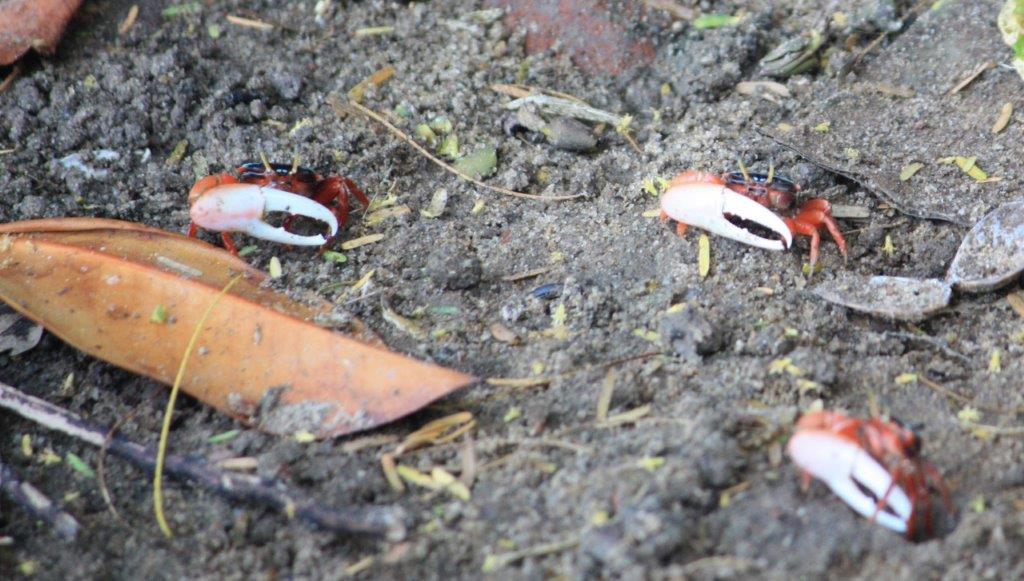
fiddler crabs
form a phalanx;
claws ready

DAILY PHOTO: Candelabra Bush, Arikamedu

Taken at Arikamedu, India in 2019