STORY: The Most Inaccessible Place of All

I ran across this little story quoted in an academic paper while I was doing research for a writing project. It was written by Dorothy Gilman in a book called A Nun in the Closet. At any rate, I found it clever and thought you might as well. [I’m assuming that Gilman made this story up, rather than borrowing an old folktale–but that–as with all assumptions–could be wrong. Please feel free to correct me if you know otherwise. If she did come up with it from scratch, she perfectly captured the folktale.]


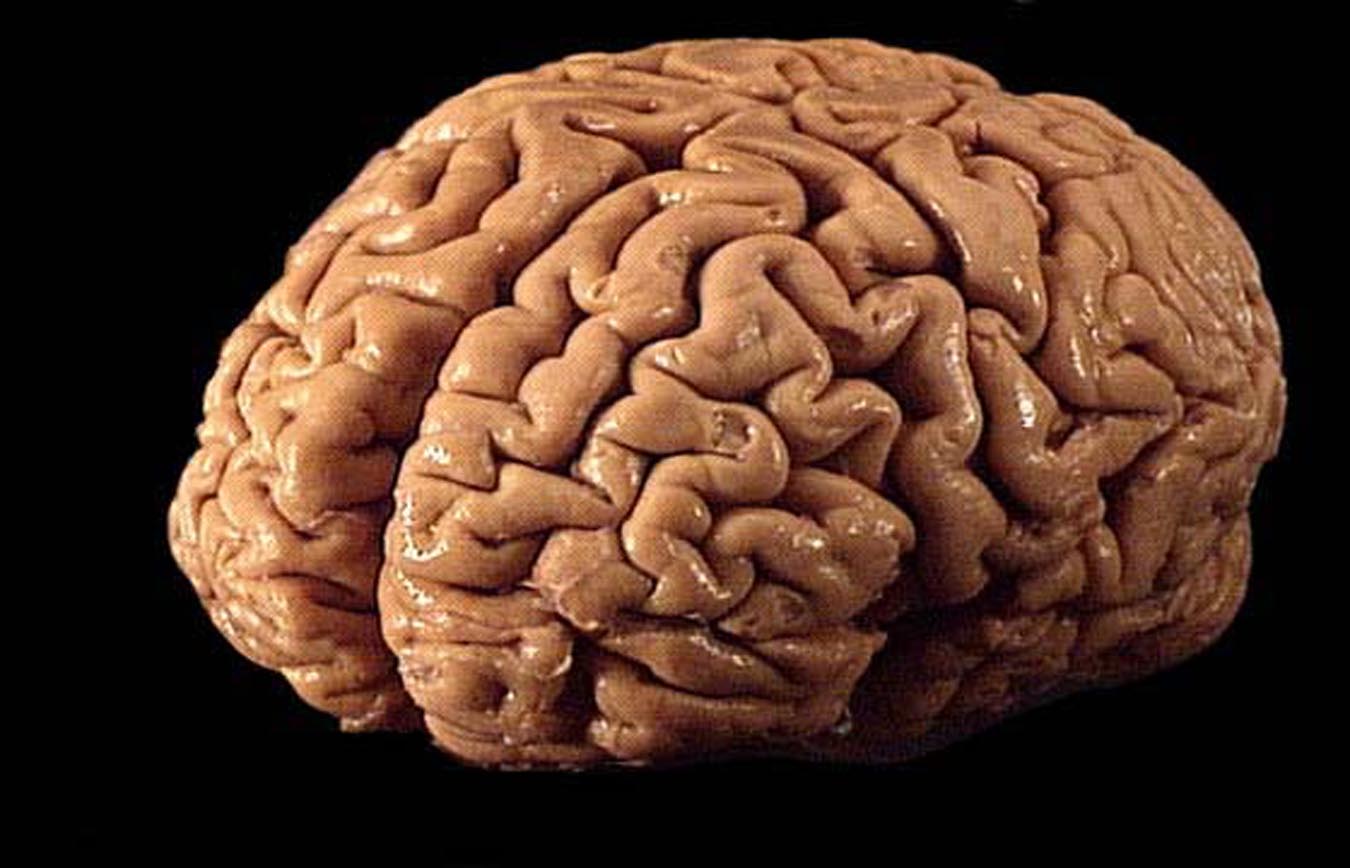
brain


“Once upon a time, [Bhanjan Singh, a guru-like character in the book] said, when God had finished making the world, he wanted to leave behind Him for man a piece of His own divinity, a spark of His essence, a promise to man of what he could become, with effort. He looked for a place to hide this Godhead because, he explained, what man could find too easily would never be valued by him.


“Then you must hide the Godhead on the highest mountain peak on earth,” said one of His councilors.


God shook His head. “No, for man is an adventuresome creature and he will soon enough learn to climb the highest mountain peaks.”


“Hide it then, O Great One, in the depths of the earth!”


“I think not,” said God, “for man will one day discover that he can dig into the deepest parts of the earth.”


“In the middle of the ocean then, Master?”


God shook His head. “I’ve given man a brain, you see, and one day he’ll learn to build ships and cross the mightiest oceans.”


“Where then, Master?” cried His councilors.


God smiled. “I’ll hide it in the most inaccessible place of all, and the one place that man will never think to look for it. I’ll hide it deep inside of man himself.”

The Jujutsu Murders, Plus Some Brain Science

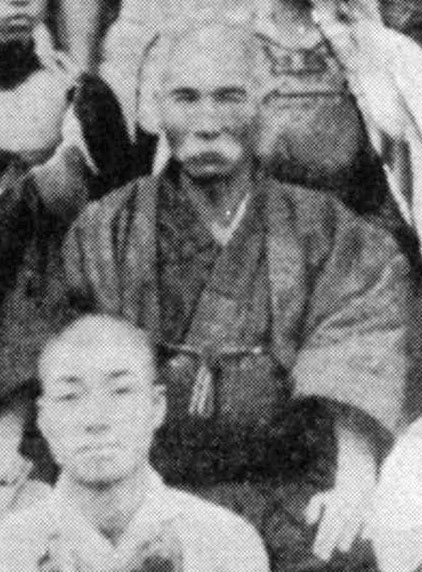
Jujutsu

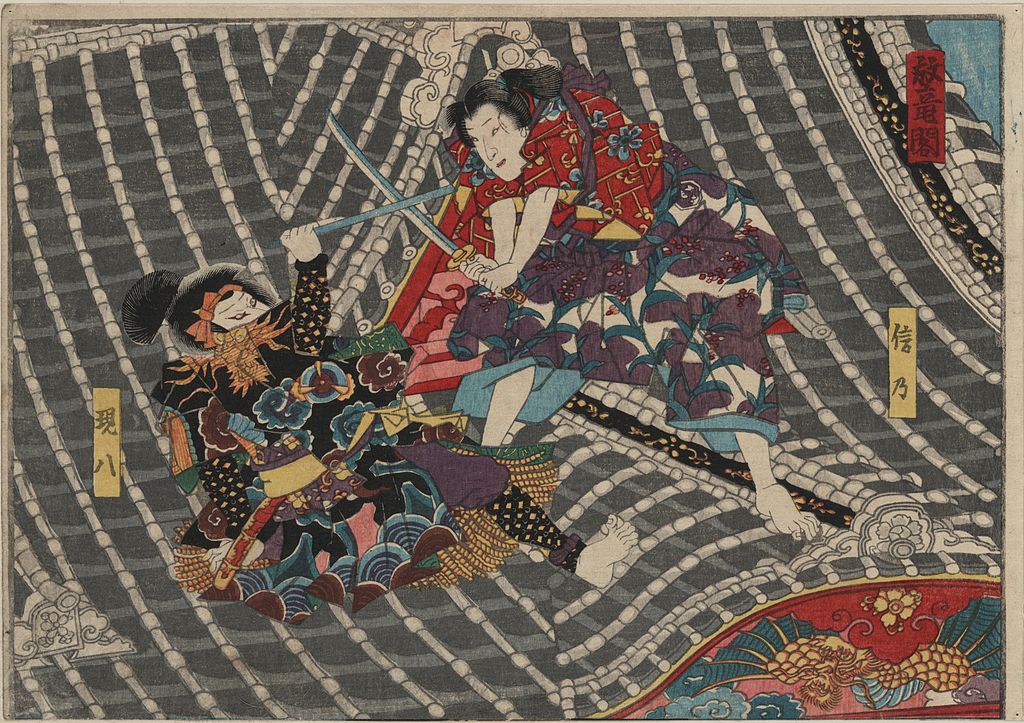
Imagine you’re a detective in Edo Period Japan (1603-1868), and you’re told to investigate a case in which three highly-trained practitioners of one of the most well-respected jujutsu schools have been stabbed to death. Each of the three bodies has only one mark on it–the lethal stab wound. The wound is on the right side of the abdomen in all three cases. There are no signs of a prolonged struggle, despite the fact that each of the three had many years of training and none of the men was an easy victim. The stabbings happened independently, and there were no witnesses to any of the killings. So, who or what killed these three experts in jujutsu?


Nobody knows who killed them, but a rigid approach to training contributed to what killed them. As you may have guessed, the killer took advantage of knowledge of the school’s techniques, i.e. their “go-to” defense / counter-attack for a given attack. It’s believed that the attacker held his scabbard overhead in his right hand, and his weapon point forward in a subdued manner in his left. All three of the defenders must have instinctively responded to the feigned downward attack as the killer stabbed upward from below with the unseen blade.


It’s a true story. I read this account first in Jeffrey Mann’s When Buddhists Attack. That book offers insight into the question of what drew some of the world’s deadliest warriors (specifically, Japan’s samurai) to one of the world’s most pacifistic religions (i.e. Buddhism–specifically Zen Buddhism.)  Mann cites Trevor Leggett’s Zen and the Ways as the source of the story, and Leggett’s account is slightly more detailed.


This story intrigues because it turns the usual cautionary tale on its head. Normally, the moral of the story would be: “drill, drill, drill…”


Allow me to drop some brain science. First, there’s no time for the conscious mind to react to a surprise attack. The conscious mind may later believe it was instrumental, but that’s because it put together what happened after the fact and was ignorant of the subconscious actors involved. (If you’re interested in the science of the conscious mind’s stealing credit ex post facto [like a thieving co-worker], I refer you to David Eagleman’s Incognito.)  Second, our evolutionary hardwired response to surprise is extremely swift, but lacks the sophistication to deal with something as challenging as a premeditated attack by a scheming human. Our “fight or flight” mechanism (more properly, the “freeze, flight, fight, or fright” mechanism) can be outsmarted because it was designed to help us survive encounters with predatory animals who were themselves operating at an instinctual level. (If you’re interested in the science of how our fearful reactions sometimes lead us astray when we have to deal with more complex modern-day threats, I refer you to Jeff Wise’s Extreme Fear. Incidentally, if you’re like, “Dude, I don’t have time to read all these books about science and the martial arts, I just need one book on science as it pertains to martial arts,” I just so happen to be writing said book… but you’ll have to wait for it.)


So where do the two points of the preceding paragraph leave one?  They leave one with the traditional advice to train responses to a range of attacks into one’s body through intense repetition. Drill defenses and attacks over and over again until the action is habitual. This is what most martial artists spend most of their training effort doing. A martial art gives one a set of pre-established attacks or defenses, and it facilitates drilling them into one’s nervous system.


Of course, the astute reader will point out that the three jujutsu practitioners who were killed had done just what was suggested in the preceding paragraph, and not only didn’t it help them but–arguably–it got them killed. I should first point out that the story of the three murder victims shouldn’t be taken as a warning against drilling the fundamentals. As far as their training went, it served them well.  However, there’s a benefit to going beyond the kata approach to martial arts. One would like to be able to achieve a state of mind that once would have been called Zen mind, but–in keeping with our theme of modern science–we’ll call transient hypo-frontality, or just “the flow.” This state of mind is associated with heightened creativity at the speed of instinct. (If you’re interested in the science of how extreme athletes have used the flow to make great breakthroughs in their sports, I’d highly recommend Steven Kotler’s The Rise of Superman.) Practicing kata won’t help you in this domain, but I believe randori (free-form or sparring practice) can–if the approach is right.

BOOK REVIEW: Wired for Story by Lisa Cron

Wired for Story: The Writer's Guide to Using Brain Science to Hook Readers from the Very First SentenceWired for Story: The Writer’s Guide to Using Brain Science to Hook Readers from the Very First Sentence by Lisa Cron

My rating: 5 of 5 stars

Amazon page

There are countless books offering advice to writers. Some are good. Some are not. Good, bad, or ugly, few of these books offer anything new beyond particularly artful (e.g. humorous or poetic) explanations or superior examples. In other words, if you’ve read five writer’s guides you’ve read five thousand. Cron’s book is the rare guide worth a read even if you’ve read a hundred other such books. It’s not that Wired for Story offers radical or novel advice on story building (its writer’s tips are orthodox.) It’s the way this book couches the arguments for what can admittedly be hackneyed advice. As the title suggests, Cron’s book is about how our brains are wired to love stories–as long as said stories contain certain attributes that the brain finds appealing. (Conversely, there’s a reason why books that go wildly off the reservation with “experimentalism” are doomed.)

While I’ve read many a book on writing, I picked up Wired for Story more out of an interest in the subject of the neuroscience of story. The book doesn’t delve deeply into the science, but it does cite leading thinkers in the field as well as providing a good layman’s overview of the neuroscientific principles that inform the book’s tips. Cron’s background is in publishing and her bona fides to write this book are as someone who came from a career reading and rejecting / accepting manuscripts. However, I believe she did a good job of laying out science.

The central idea is that humans love stories because the narrative structure allows people to simulate a nasty chain of problems without suffering the real world consequences. The brain loathes uncertainty and randomness, and loves whenever it can learn about how to face a problem or make sense of the world. This is why we love conflict, tension, and an unrelenting unfolding of worst case scenarios in our stories even though we tend to hate those characteristics in our own lives. This results in both the tried advice to keep putting the protagonist through the wringer, and the qualifications that a writer should do so in a way that is believable (our brain’s BS-detector is ever on) and which will eventually force the protagonist to change. Cron offers a definition of story that has the usual elements: “A story is how what happens affects someone who is trying to achieve what turns out to be a difficult goal, and how he or she changes as a result.” As with many guides, the definitions of plot, the protagonist’s issue / goal, theme, and tone are elaborated at length—as well as being differentiated because these topics tend to be confused by neophytes—often resulting in a failure to clarify one or more of them.

Stories also give us an opportunity to anticipate what others will do, and forecasting the behavior of others gives one a nice little dopamine dump. The ability to foresee what others will do has always been a powerful evolutionary advantage, and those who did it better passed on their genes more than their oblivious counterparts. Owing to this idea, there is a great deal of advice about what should be in the book (only what is relevant), and how it should be revealed (in a way that eschews attempts to play “gotcha” with your readers.)

One may wonder why I’m so pleased with a writer’s guide that gives common advice about writing–just because it explains said tips in terms of evolutionary biology. The answer is that it’s far easier to keep these lessons in mind when they’re held together by a logic rooted in what all readers have in common (e.g. conscious and unconscious minds, emotions, instinctual drives, etc.) For example, knowing why readers hate an overly simple resolution for a problem that’s presented as insoluble (i.e. robbing them of dopamine reward for figuring it out) helps one better recognize this pitfall in all its forms and to avoid it. Such an approach allows for a deductive approach and is far more useful than having memorized “avoid deus ex machina” as a disparate tip that’s attached to a specific example. In short, it’s both easier to remember and broadly implement these ideas when one understands the rationale from the ground up.

Beyond the reason in the last paragraph, I enjoyed this book for reasons that have little to do with its advice to writers. While I now know that there are other books on the evolutionary biology of story that deal with the subject more from a scientific perspective (while I haven’t read it yet, you might try this book), this was the first book that I stumbled across on that topic. And, it’s a topic that’s well worth understanding whether you’re a writer or not. No matter what one does, understanding the universal appeal of a story can be beneficial, whether it’s in the context of teaching, parenting, or business.

I’d recommend this book for writers—particularly those who think about the world in scientific terms. Beyond writers, if you have cause to construct or use stories in your life—or suspect you should—you can benefit from this book.

View all my reviews

A Third Roti: A Story with an Elephantine Moral

IMG_0047I went to a talk at the Rangoli Metro Arts Center last night entitled, Foresters’ Elephants. The talk was hosted by a group called “Friends of Elephants,” and the panel of speakers were all Conservation Officers in South India who were responsible for public lands home to Elephants.

The discussion offered some intriguing insight into state and local politics in India. But the best explanation of the night came from the Chief Conservator of Forests for Kodagu in a story that could be titled “A Third Roti.”

The Conservator explained that, as a junior forest officer, he’d been assigned to a remote station. His housing took the form of an old decrepit colonial era building. This house had a vermin infestation, and the hungry rodents would get bold as he and his wife slept and would nibble at their fingers and toes. Of course, this made for sleepless nights. To solve this disconcerting problem, the Conservator took to getting a third roti with his meals. [For my India-inexperienced readers, a roti is a circular flat bread that’s a common element of meals in many parts of India.] Putting the third roti out for the rodents negated the rat’s need to engage in the mutually terrifying act of nibbling on the forest officer or his wife.

I don’t know if the story is true, and–if it is–whether it’s truly the Conservator’s story. It doesn’t matter. What’s important is that it’s a great use of story to make a point. The point in this case is that a solution often needs to take into account the fundamental needs of the “adversary.” In other words, regulation and punishment can’t always provide the solution–especially when basic needs are not being met. One could try to scare the rodents away or one could set traps (potentially at risk to oneself), but if the rats are driven  by hunger they might find the risk worth taking. The problem that he was addressing was the need for wood for fires, fence posts, and other needs. This caused people to enter public forests, putting themselves at risk of running into wild elephants.

The idea of trying to find a third roti for problems really resonated as an approach to creative solutions.

The Tongue-Cut Sparrow: A Japanese Folktale

800px-Tree_Sparrow_Japan_Flip[This is a well-known Japanese folk tale. There are many versions and translations of it, but the gist of the story remains the same from one to the next.]

Once upon a time, an old man was married to a shrew. The couple lived in the countryside on the edge of a mountain forest. They had no children, but the man befriended one of the sparrows that resided in the adjacent forest. The old man fed the sparrow, offering whatever he had to the small bird.

Over time, the man and the sparrow grew almost inseparable. However, one day the man had to go into town to buy provisions. It may have been that the man chose that particular day for his errand because his horrid wife was most ill-tempered on laundry days, and that was a laundry day.

While the husband was away, the sparrow came around. Seeing a pile of starch, the sparrow pecked at it. Infuriated, the old woman snatched up the bird in one hand and a scissors in the other, and she snipped part of the bird’s tongue out. Then as she tossed the sparrow free, she said, “Away with you. That’ll teach you to get into my starch.”

The bird flew deep into the mountains.

When the husband returned, he inquired as to whether his wife had seen the bird. The sparrow was usually around the homestead at that time of day.

The hag proudly told the husband of her actions and how she’d punished the insolent bird.

The old man lost no time in trudging out into the forest to try to make sure his friend was alright. He called out to the sparrow, but there was no response. He feared his wife had wounded the bird even more than she’d boasted. Eventually, exhaustion forced the old man to give up his search. He prayed that the little bird would be alright, but he couldn’t keep looking for it.


A couple of years later, the  man was foraging for mushrooms in the forest when he ran into the sparrow. The sparrow invited the man back to his home.

The sparrow offered the man food, refreshments, and even accommodations as they took several days to catch up on the events of each other’s lives. The sparrow now had a family and was doing well.

After a few days of catching up, the old man decided that he must get back, but he promised to come back around to visit occasionally. (The sparrow was reasonably reluctant to visit the man at his home with the vile woman around.) The sparrow family offered the old man a choice of parting gift, they presented two woven baskets. The baskets appeared identical, but one was light and the other was heavy. The old man didn’t feel deserving of a gift, but he took the lighter basket. He had to take one to avoid offending his host, but he didn’t wish to be greedy.

When the man got home, he was berated by the shrew for being away so long. She then interrogated him about the new basket. The man told his wife the entire story, including about how the sparrows offered him two baskets, and how he’d taken the lighter one.

His wife snatched the lid off of the basket and investigated its contents. She found that the reason the basket was so light was that it contained just a few precious jewels and several gold coins. By weight it wasn’t much, but its value was considerable.

The wife thought, Hm. I’ll go visit the sparrows. I’ll make a little apology for snipping at the bird’s tongue, and when they offer me my parting gift, I’ll be smart enough to take the heavy basket. Just imagine the riches it must contain.

The wife tricked her husband into giving her directions, saying she wanted to make a heartfelt apology. She then went to visit the sparrow family. She made a half-hearted apology for injuring the sparrow, claiming she’d only meant to scare him but the scissors had gotten away from her. The meeting was awkward and the sparrows were relieved to have the woman going on her way.

They offered the woman a choice of parting gifts as well. The woman lifted both baskets. Just as her husband had said, one basket was light and the other was heavy. She lugged the heavy basket up on her back, and without even saying her good-byes she sped toward her home as quickly as her legs would carry her. She had fantasies  about what she would do with her new-found wealth.

It wasn’t long before she needed a break because the basket was heavy and her legs weren’t used to such a burden. Standing on the forest trail, the couldn’t resist peaking at her riches.  The woman tugged the lid off and dove her head into the mouth of the basket to see what precious jewels, gold, and silver would greet her. However, what lurched out was an evil ogre, enveloped in a mist of demon spirits.

Clutching her chest, the old woman had a heart attack in the face of the horrific contents of her basket, dying where she had stood.

POEM: Midnight Neon Glow

Caught in a midnight neon glow
Neurons firing in slo-mo
As blue and red dance on the wall
I felt the footsteps in the hall


A jagged game of cat and mouse
Ends, spied by a mattress louse
An ominous knock near at hand
Me, without the will to stand


This story started days ago
Me, without a need to know
Just a lackey in a suit
Who took a case from a coot


What’s in the case? You want to know?
Oh, they’re here. It’s time to go…

Are Action Movies Dazzling Us Stupid?

AvengersJust like everyone else, when I first watched The Avengers, I was awed. As I digested the experience, however, I realized how appallingly flawed the story was. Can a film that is visually impressive enough dance over the hard parts of story?

Alright, it’s not just being visually impressive. If it were, then the Transformers movies (I’m thinking particularly of the second one) wouldn’t be so sucktacular. No. Filmmakers also need clever quips. This feeds an inexplicable urge of young people to repeat the witty remarks of movie characters ad infinitum. (Confession: I’ve always longed for an excuse to say, “I’m your Huckleberry,” as per Doc Holliday’s words to Johnny Ringo in Tombstone.) It’s not just that the Hulk bashes a marble floor to dust using Loki’s lanky frame, but that he delivers that witty, two-word rejoinder. Together the CGI and the quip seal the scene in one’s mind.

[Spoilers ahead] If one looks up deus ex machina in the dictionary, one learns that it means: “someone or something that solves a situation that seemed impossible to solve in a sudden and unlikely way, especially in a book, play, movie, etc.” If one’s dictionary is online, one would then probably be treated to a video clip of the scene in which Professor Selvig is knocked on the head, becomes unenslaved, and consciously realizes that his subconscious built a backdoor that will allow him to shut down the portal that were previously told can’t be shut. The clip could then continue through the end of the movie (minus the post-credit shawarma scene.)  The following are key incidents of deus ex machina in this film:

-a bump on the noggin releases one from the mind-control of a god (A “puny god,” indeed.)
-a conscious mind (in a waking and non-meditative state) knows in great detail what happened in the subconscious
-an attack on the mothership disables all troops on the ground, Independence Day style (worst command and control ever.)

One may be thinking that I’m just one of those douches who picks nits, but I’m really not. These flaws are fundamental to how the story is resolved. They are cheats that make everything that happened leading up to the climax irrelevant. Think about it; if the Professor had gotten knocked on the head 20 minutes earlier, the massive Avengers battle through Manhattan would never have been necessary. They could have called the movie “Professor Selvig’s Magical Mind” and left the Avengers out of it all together.

I’m willing to sustain disbelief about the small things. There are plenty of critics who get into the minutiae of continuity gaffes and the like. A couple of my favorites are below.

Lest one think that I’m picking on The Avengers, that’s only because it’s the third highest grossing film ever and first in the superhero genre. If you’re spending hundreds of millions on a film, you’d think you could throw some chump change into good story-building.  I realize that filmmakers have a jaded audience to contend with, and that they have to ramp up the peril to impossible heights to impress. Maybe they are forced to then throw away the resolution of story. Those who read my recent review of The Wolverine, will know that my criticism isn’t restricted to The Avengers.

Well, I’ve got nits to pick.

The Bullets that Bore no Name: or, the Burden we all Bear

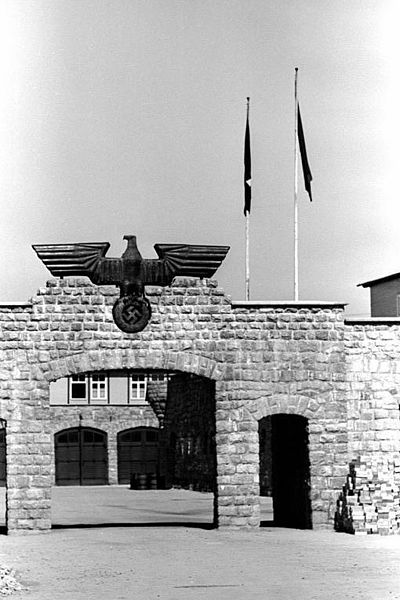
Attribution: Bundesarchiv, Bild 192-334 / CC-BY-SA

Mauthausen                     Attribution: Bundesarchiv, Bild 192-334 / CC-BY-SA

Thanks for joining me on the veranda. If you don’t know what I’m talking about, this post flows from a book review I did on Elie Wiesel’s Night, which can be seen here. But don’t wander off just yet.

I married into a family of holocaust survivors.

Being sufficiently narcissistic, I haven’t been able to avoid thinking of the profound impact this had on my life.  I am married to the most extraordinary woman in the universe [my apologies to all other women, I’m sure you’re someone else’s most extraordinary woman] by virtue of the strength of a man who wrestled his way to the top of a pile of corpses, bleeding profusely from multiple shrapnel wounds, clawing his way out of a pit, and cleaning the gashes with his urine. That man was married to a woman, tiny of body but colossal of mind, who was in the group force marched from Budapest to Mauthausen. After the war, they had a child–my mother-in-law. Yada-yada-yada. I have marital bliss.

Not being completely narcissistic, I’m reminded that every one of our lives have been shaped by strong people who lived through close calls. Each of us comes hither as a gift from men and women who passed through a hail of bullets that bore no name. Some, like my wife’s grandfather, were riddled by bullets bearing their name, and still refused to heed their deadly whisper.  Every holocaust survivor survived by a thin margin. Every battlefield veteran’s life is an execution order rescinded. Every prisoner of war was one germ away from an unmarked grave.

No pressure or anything, but that sounds like a heavy debt we  all bear.

Telling this story in greater detail is one of my bucket list tasks. It’s a project I’ve had on the back burner for far too long. There are several reasons for this. The most feeble of which is a hope to find the right timing. Sadly, there are so many such stories that I fear it will be lost amid a sea of sorrow.  Then there is my need to develop grace with language sufficient to do the story justice. In a way the two novels I have drafted, and whose mess I am now painstakingly trying to dance into shape, are practice exercises.  Wish me luck.

On the plus side, my wife’s uncle had the foresight to have her grandfather speak his story onto about 20 tapes before he died. With today’s technology, there’s no excuse for anyone’s life-altering story to go untold.  So I guess if there is a moral to my rambling post it’s this: don’t let anyone in your life with a spectacular story pass from this world without it being heard.

How to Kill a Rogue Yard Gnome, Part 3 of 4

Part I can be read here.

Part II can be read here.

[Notes: a.) Sorry, I meant to do this in three installments, but this one was getting long.  

b.) For the best reading experience, assume all of the continuity gaffes in the dream sequence are on purpose and intended to convey the capricious and surreal nature of a dream—most of them are ; ) .]

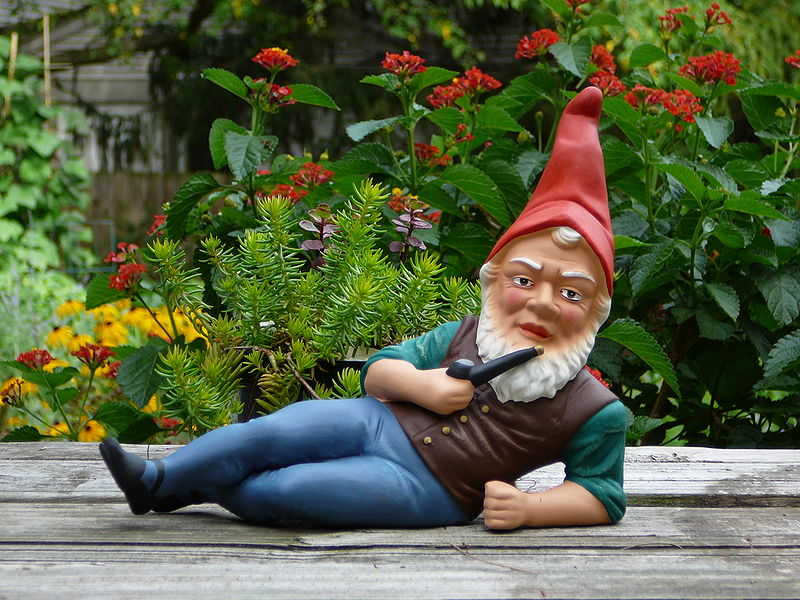
Attribution: Colibri1968

Attribution: Colibri1968

I cringed when I heard my voice on tape. I always thought I sounded sexier, less like Ferris Bueller’s teacher. But what brought on the nausea was hearing me describing events of which I had no recollection. It was difficult to fathom that such drama could unfold in my dreams without me having any memory of it.

I should take a step back to say that I’d sought therapy immediately after returning home to find the scowling gnome. It was a decision made after a sleepless night. I didn’t dare destroy the scowling gnome for fear I’d end up with a glowering golem in my front yard when I next came home.

Logically, I recognized two possibilities. The first was that someone was playing an elaborate hoax upon me. I couldn’t figure out how, but this was what I wanted to be true. But watching the tape repetitively had given me no clue about how the trick could be perpetrated. The vanishing gnome and the self-propelled gnome were tricks worthy of David Copperfield. The second possibility was that I was out of my mind— but in a manner that was localized to my front yard. That was equally hard to explain. The therapist was my attempt to explore all options, but I didn’t tell her the details.

My therapist said hypnosis would be a good idea, presumably because she’d just gotten her hypnotherapy license and needed the registration fee to pay for itself. As you might suspect, I was skeptical. Lying on a brown leather divan, fingering the brass upholstering rivets along its edge, I listened to fantastic words spew from my own voice as she played the tape back for me.

I’m standing in front of a mammoth mansion made of rough, gray stones. It looks like a castle—like something out of Bram Stoker’s Dracula. It’s dark out, but yet I can see. It’s as if the moon is shining bright, but yet it’s dismally overcast. So much so that I feel like I could jump up and touch the thick, gray clouds. I’m staring at an ornate carving on the door. It’s an elaborate mountain scene. How can I see it? There’s no porch light. Something is wrong here.

I don’t want to go inside, but inexplicably I know I have to. I hear bleating and cowbells. Turning around, I see a herd of goats strolling up the drive. I’m curious about the goats for a moment before a T-rex-like monster darts its head out of the tree line and clenches one of the goats in its jaws. The T-rex’s teeth puncture the goat like a bite into a wonton, and the beast shakes its head from side to side until the goat stops thrashing. I want to save the other goats, but even more so I don’t want to be eaten.

I watch the T-rex; he doesn’t seem to notice me; his chin is covered in crimson. The T-rex looks at the flock of goats like one might look at a box of sampler chocolates, searching out the most desirable morsel. He raises his head, sniffing the air, twisting his thick neck to point his face toward me, and then he begins to run at breakneck speed towards me. I realize that I am the last solid milk chocolate in a field of dark chocolate-covered marzipan.

I spin around and, losing all sight of politeness, begin to twist frantically at the doorknob. The cold, metal knob cuts into my palm, but doesn’t budge. I pound on the door with my fists.

“One moment, Sir.” A voice replies dully from inside. How he knows I am a sir, I don’t know.

“Help me. Please hurry.” I’m too scared to turn and look at the lurching beast, but I hear its footsteps getting closer as the tremors they create run together. I shake the door knob frantically, but the door doesn’t so much as rattle— it’s like a solid piece of wall.

I shut my eyes. I’m sure that the T-rex is now within lunging distance, and in a nanosecond I will feel agony followed by whatever lies beyond agony. I tense up, awaiting my demise. The tremor of a loud thud reverberates up through my feet. I stand there a minute in shock before realizing that all is silent.

I turn around to see the T-rex lying on its side, a gash torn through its throat. There’s a man, a knight, cleaning a large broadsword with a piece of cloth. He discards to cloth and it disappears into thin air. The knight wears chainmail armor under a tunic that has a red and green crest on the chest. I can’t make out the detail in the crest, though I’m looking right at it. It’s as if it has been pixilated, like news stations do to faces when they are talking to an endangered witness or basic cable does with boobies in movies.

“Thank you.” I say, adding, “Who are you?”

“I… I am your protector.” The knight says, looking himself over as though he were surprised to see that he is dressed thusly.

“Do I still need protection?”

“Probably. That remains to be seen.”

The door opens, and I find myself loomed over by a man who is tall, gaunt, and sallow. His black coat has tails like maestros, but there’s a small towel draped over one arm. I conclude that he’s a butler. I turn around to look for my protector, the knight, but he’s not there. Neither is the T-rex.

I turn back, almost surprised to see that the butler hasn’t abandoned me. He speaks, “Right this way, they are waiting for you.” He makes an ushering gesture with his hand as he steps aside inside the foyer.

I eagerly enter, still afraid the wounded T-rex might be around the corner. I start to ask a question, but pause when I realize that the servant’s unusual gait is due to the fact that he is stepping over vipers that are slithering across the rough stone floor. I can hear their hissing, but it doesn’t seem I should be able to.  

I stop, petrified, but the butler turns and waves me forward with what I recognize as uncharacteristic urgency. I walk onward slowly and with great care. I step over the black, shiny snakes, and they seem to take no notice of me. When I finally reach a snake-free patch of floor, I look around. The ceilings are high, and the windows are about two stories up. The moonlight breaking through the windows illuminates a row of gargoyles. I stare at them. I’ve never seen gargoyles on the inside of a building.

As I walk, looking upward, I suddenly feel a panic attack as it occurs to me that I might step on an errant snake. Just as I level my gaze, I run straight into the butler, who has come to a stop. Dust flies off his coat, which had earlier seemed impeccably clean.

“Pardon.” I say.

He glowers at me.

I ask, “Who’s waiting for me?”

He turns and walks silently onward. I can’t tell whether he is hostile or indifferent.

We walk past rusty suits of armor, each with a halberd, pike, or battle-axe positioned beside it as if it were being held upright. It occurs to me that there might be men in those suits, men who could swing those implements of death at will.  I moved closer to the giant butler.

Soon we are at the head of a stone staircase that spirals downward. It’s lit with flickering gas lamps. As we descend, it gets darker and the mustiness becomes more pungent. At the bottom of the staircase, I’m ushered through a large oaken door that is shaped like an inverted heraldic shield, which is to say flat on the bottom and coming to a point at the top. The butler leads me up onto a stage.

I look out into the auditorium and see the room is packed, but every audience member is wearing a goat’s head mask. It’s only then that I feel the cold air on my skin and notice that I’m completely naked. As if that weren’t bad enough, I realize that I have no idea what I’m supposed to speak to the creepy goat-man audience about. It’s like showing up to a test and realizing you forgot to crack the book. There’s no podium to hide behind, just a skinny mike stand center stage and a barstool that’s near the far wing of the stage. I approach the stool and notice that there’s a small remote on it. Turning around, I discover the bright white screen, and notice a harsh light is shining on to it. I consider doing shadow puppets to amuse the audience. They are now grumbling.

Instead I snatch up the remote and advance the slide, figuring that maybe I can wing the talk. Maybe it’s a topic that I know about, such as shadow puppetry. The audience is now laughing, and that doesn’t feel good when one is standing naked at the front of the room.

The first slide reads, “HOW TO GET AWAY WITH MURDER.”

I don’t have any particular expertise on this subject, and am a little dismayed that someone would choose me to deliver such a lecture. I figured there must be a mistake.

The knight strides across the stage, but he is no longer dressed as a knight, now he wears the same tux and tails as the gaunt butler. He extends a large overcoat out in front of him as a gentleman would hold a coat for a lady to slip into. I awkwardly wriggle into the coat and button a few strategic buttons. Now I just look like a flasher, which is—oddly enough— vastly preferable.

I whisper to the knight, “Do you know what I’m doing here? What am I supposed to talk about?”

“Furk wants to plant a murderous seed in your mind, but you should not let him.” The knight-butler says.

The audience stops laughing and grumbling, and makes a bleating sound like “mehhehhehhe!” I assume that this is the sound a goat makes. I consider whether the angry goat sound is preferable to laughter or not.

I turn back to my self-proclaimed protector, but he has once again vanished into thin air. A bell rings and it gets quiet as a grave and I know that I am supposed to start talking.

Keeping in mind the words of the knight-butler, I begin, “Obviously, this is not to be taken literally.” I gesture to the projected slide. “You shouldn’t commit murder, and you can never count on getting away with it.”

The stuttered goat cries become louder and louder. I don’t know how I’ve inherited knowledge of the emotional lives of goats, but somehow I know they’re getting angrier.

I continue, “I mean, imagine that I shoot a person,…”

A chorus of goaty cheers rises up.

“I’ll always be caught and punished.”

The audience turns on me.

Stalling, I advance the slide. In big block letters, it reads, “HOW TO DECIDE WHO YOU SHOULD KILL!” and then a subtitle in smaller letters, “sometimes it’s harder than you think.”

I couldn’t help myself, my notoriously ill-timed sense of humor came through, “Some key questions that you might consider are: Is your potential victim a lawyer, a bureaucrat, or a teenager? Does your victim contribute to society, or is he or she a politician? Would killing that one person lead to the need to kill again, as in the murder of a member of a boy band?” I notice that while I am amusing myself, I am whipping the crowd into a frenzy. The fun dissolves as I see myself as a warmongering dictator, stirring up hatred among a frothy-mouthed constituency.

I say, “I’m kidding, of course, one shouldn’t murder anyone.”

They turn on me once again. This time they’re really raging, as if I had led them on with my little joke. There’s a moment of stillness before the crowd charges the stage. I turn to run, but don’t know where to go. I look over my shoulder, and– as the first few of the audience members leap onto the stage— I can see that they have actual goat heads, not goat masks.

I freeze, but then I’m yanked by the arm. I turn to see the knight-butler, but now he’s dressed in a police uniform. He says, “Come with me; you are in grave danger.”

I’m pulled behind a curtain that skirts the back of the stage, and I see there is another door shaped like an inverted heraldic crest. I move through it. The police officer shoves it closed. A couple hooved appendages get caught in the door, but he slams his body into them and then lets up just enough for the wounded goat-men to retract their injured forelimbs. As they do, he closes and bars the door. There’s clawing, scratching, and knocking from the other side of the door.

The policeman lights one torch off another, and hands one to me. I don’t know how either of the torches materializes. The corridor extends into the distance farther than the torches illuminate. It looks like a sewer tunnel, but the stone floor is only damp, as are the walls. Beyond the torch light lies an inky shadowland that is only held at bay by the precarious, flickering light. We march into that claustrophobic unknown.

“Who is Furk?” I say, remembering the man’s earlier words.

“Furk is the one bringing you this nightmare. He is one of your yard gnomes,” the policeman says.

“Who are you?”

“I’m another gnome.”

“Why is one gnome trying to kill me and another to save me?”

“That’s a long story.”

“Was Furk the gnome by my driveway?”

“No that was me.”

 “Should I wake myself?” It doesn’t come as a surprise to me that I’m dreaming. Maybe I knew it all along.

“Unless you intend to never sleep again, that won’t solve your problem.”

“What if I get rid of the bad gnome?” I ask.

As we quicken our pace, he answers, “You won’t remember to do that when you wake up. We are in the deepest recesses of your subconscious mind. It is a part of your mind that you are not aware of on a conscious level at all.”

I stop. “Wait a minute, if this is a dream, it doesn’t matter what happens—particularly if I’m not even going to remember it.”

“Unfortunately, that’s not so. Future behavior and moods often originate in the subconscious. Haven’t you ever been in a bad mood for no apparent reason, or, alternatively, been happy for no good reason?” he says, stopping for just a moment.

We resume walking, and I say, “I guess I have.”

From behind me, I hear a series of loud thuds. It sounds like they have a battering ram. I turn to look over my shoulder but can’t see the door anymore. We quicken our pace again. Soon I hear splintering. The policeman breaks into a sprint. I follow suit. I soon get winded and can’t figure out why I need air in a dream. More than burning lungs, it feels as if there is a belt tightening around my chest.

The imagined belt tightens further as I hear the echoed clack of hooves on the cobblestones down the corridor.

“You need to try to thin the herd.” The policeman says.

“What?”

“Only one of those goat-men is Furk, the rest are all projections of your mind. Furk may have conjured them, but they are dependent on your mind.” He says without breathing hard in the least.

“Oh, cool.” I say, and I stop and turn toward the onslaught of goatmen pursuing down the pitch black corridor. I concentrate. I will them to disappear. The hooves keep coming, unabated.

When the first faces break into the torch light, I turn and run, screaming, “It didn’t work. It didn’t work.”

“Yeah, I didn’t think it would.” The policeman says, his voice well ahead in the inky distance; he never stopped – some protector.

“What do you mean… you… didn’t think… it would?” I said, gasping as I ran hard to close the gap.

“This part of your mind is like a river that runs underground below your property, just because you own it doesn’t necessarily mean you can stop, or divert, it at will.” The protector says. He is not winded at all.

A door lies ahead. If we can just get through it, I can catch my breath. It occurs to me that I have no idea what will confront us on the other side of the door. Maybe there’s something worse than a flock of goatmen. The hoof clomps sound as though they are closing on us.

The two of us shoot through the door, slamming it shut, putting our backs up to it. Wherever we are, it’s bright. The sunlight assaults my eyes. I squint, trying to glean something about our new environs. The nameless police impersonator produces a heavy wooden beam that fits into metal hardware on the doorframe to form a bar. How he conjures such items, I don’t know. We are supposedly in my mind, and yet I seem impotent.  

“So why did you tell me to try to eliminate them if you didn’t think I could?”

“It was worth a try.”

We are at the base of a hill in grassy prairie lands, the knee high grass is tousled by a breeze. At the top of the hill is a big oak tree, it’s perfectly shaped and stands strong, the iconic tree of life. I turn around and the door from whence we emerged is nowhere to be seen.

“Are we safe here?” I ask.

“It’s your mind.” He responds.

We instinctively walk toward the tree. The ground shakes. The earth splits open. I am falling.

TO BE CONCLUDED (this time for real)