BOOKS: “The Varieties of Religious Experience” by William James

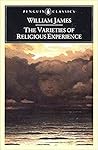
The Varieties of Religious Experience: A Study in Human NatureThe Varieties of Religious Experience: A Study in Human Nature by Dr. William James
My rating: 5 of 5 stars

Project Gutenberg — Free Online

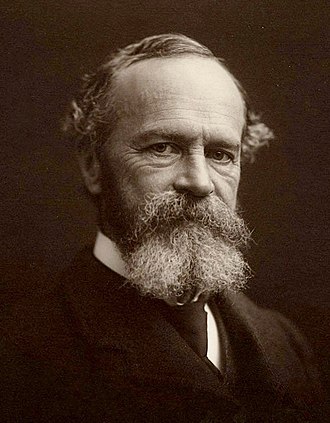
This book is now more than 120 years old and yet is still widely read and is still provoking thought about the nature of religious experiences and how they should be considered by academia. The book is a write-up of a series of twenty lectures that the famous American Philosopher-Psychologist, William James, delivered at the University of Edinburgh in 1901-02.

There are a few things that impressed me about this book. First, James was skilled with language and clever in conveying ideas, resulting in a good bit of quotable material and stimulating ideas.

Second, James’s writings about Eastern practices and philosophies were impressively clear and faithful. In those days, there wasn’t a lot translated from Sanskrit, Pali, etc. and what had been translated was frequently done by outside academicians with no firsthand experience with Eastern systems — e.g. Hinduism or Buddhism. This meant that the writings about Eastern Philosophy and practices from those days were often contorted by a Western / Abrahamic frame in a way that distorted the true nature of those traditions. James seems to have gained at least some of his understanding from someone with enough practical experience to produce accurate descriptions. Furthermore, James avoids spewing myths and misapprehensions by being humble in stating what is merely his understanding. It should be noted that James does write much more about Abrahamic traditions (as one would expect given his direct experience,) but it’s hard to plumb the depths of mysticism without looking to the East where such practices reached such advanced states.

Finally, I was impressed with James’s ability to walk the line of believer and scholar in a way that was fair both to religion and the religious but also to the scientifically-minded rational sceptic. So much of what I read on the subject takes a vitriolic tone of strict opposition and often unfairly depicts the positions of the other side (to be fair, usually this seems to be because the critic doesn’t understand the views of the other side and so produces an interpretation of the opposing ideas conforming to their own worldview, rather than just lying to win.) [As was attributed to James as well as others, “…people think they are thinking when they are merely rearranging their prejudices.”]

I’d highly recommend this book for readers interested in philosophy of religion and the psychology of religious experience.

View all my reviews

PROMPT: Perspective

Daily writing prompt
How do significant life events or the passage of time influence your perspective on life?

I’m getting more at ease with Death by the day. In a broader sense, it’s progressively easier to not get worked up over the everchanging and unpredictable nature of the world.

BOOKS: “Moonwalking with Einstein” by Joshua Foer

Moonwalking with Einstein: The Art and Science of Remembering EverythingMoonwalking with Einstein: The Art and Science of Remembering Everything by Joshua Foer
My rating: 5 of 5 stars

Author’s Book Site

This fascinating work of immersion journalism offers insight into the human memory at its best (and worst,) and throughout the book one follows the author’s experience in preparing for and competing in the American and World Memory Championships. A central theme of the book is how humanity’s attitudes toward (and approach to) memory have changed over time. The tactics that allow competitive mnemonists to perform astounding feats of memorization were well-known in the ancient world and Middle Ages but began becoming less practiced from the dawn of the printing press, becoming almost unheard of by the general population in this, the internet age. Questions such as whether education’s shunning of memorization is, indeed, a sound move are explored. (The mnemonists argue that memorization is done poorly by our educational system, but — if it was done correctly — it would offer tremendous value.)

I found this book to be quite compelling. Foer pulls no punches when presenting individuals who are (or appear to be) charlatans — though in a way that is fair and doesn’t deny things are not always straightforward. (Most of the mnemonists he talks to are clear that they do not have particularly good memories but rather are well-practiced in a set of techniques — e.g. the “memory palace” — that allow even mediocre memories to memorize stacks of cards, chains of random numbers, or even poems at lightening speeds.) Hence the author, with no such background, can learn the skills well enough to be competitive in the US national competition after practicing about a year.

The author speaks to semi-celebrities such as Kim Peek (whom Dustin Hoffman’s character in “Rain Man” is very loosely based upon,) and self-help guru Tony Buzan. But he also interviews a man who has no long-term memory (except from his childhood) and speaks to experts in optimal human performance.

I’d highly recommend this book. It is intensely readable. The stories are riveting and sometimes humorous and the throughline of Foer’s preparation and competition just add icing to the cake.

View all my reviews

BOOKS: “Introducing Freud Wars: A Graphic Guide” by Stephen Wilson & Oscar Zarate

Introducing the Freud Wars: A Graphic Guide (Graphic Guides)Introducing the Freud Wars: A Graphic Guide by Stephen Wilson
My rating: 4 of 5 stars

Publisher’s Website

I’ve always been fascinated by a question about Sigmund Freud. I can’t think of another scholar in modern times who managed to become not only a household name but virtually synonymous with his discipline while being so spectacularly wrong on so many levels. Sure, if you go back to ancient times, you have individuals with similar name recognition (e.g. Plato and Aristotle) who made some major league intellectual boners, but that was ancient times — pre-scientific method and in an age when employment of any rationality at all set one apart. The question of interest is: How did Freud pull it off?

This book helps one better understand the issue, and to answer a crucial related question: “Did the establishment, in Freud’s day, swallow his ideas hook line and sinker?” The answer is “no,” and that is the central theme of the book, the opposition faced by Freud in his day. Wilson frames the debate, presenting both sides. (And sometimes three sides, for there were a number of “super-Freudians” who felt that Freud didn’t lean hard enough into his own ideas about childhood sexuality being the key to an individual’s adult psychology.) It should be noted that this series has a book that is on Freud and his work. I haven’t read that book, but presumably it focuses less on Freud’s detractors and the nature of their criticisms and more on the entirety of Freud’s ideas (not just the most intensely refuted among them.)

This book focuses heavily on Freud’s controversial sex-centric ideas, particularly those involving infant sexuality, the Oedipal complex, transference, penis-envy, and hysteria. It does touch upon other Freudian ideas, such as dream interpretation and the “Superego,” but these are much less intensely explored, probably because they were less controversial. (Which is not to say they were correct, but that they were less potentially damaging.)

I found this book interesting, and believe I had a better grasp of Freud and his ideas and even had a more sympathetic view of him by the end.

View all my reviews

PROMPT: Bothered

Daily writing prompt
What bothers you and why?

The second half of the question is quicker and simpler to answer. Things bother me because I — through conditioning and petty impulses — allow them to bother me. I neither blame external circumstances, nor accept that said externalities can be responsible for my state of mind. I could remain unbothered by the things that bother me, with enough work to break engrained patterns. I should also note that I could choose to be bothered by a great many happenings that don’t bother or offend me in the slightest.

As for what bothers me, the list — sadly — remains many. That said, I don’t think it’s wise to broadcast the things that get under one’s skin out into the universe. Just like I wouldn’t announce if I had a gimpy knee or a weak jaw to a general audience that might include those who wish me ill. It just seems strategically unwise.

BOOKS: “Improv Wisdom” by Patricia Ryan Madson

Improv Wisdom: Don't Prepare, Just Show UpImprov Wisdom: Don’t Prepare, Just Show Up by Patricia Ryan Madson
My rating: 4 of 5 stars

Publisher’s Website

One might expect this to be a book about how to perform improvisational comedy, but it’s better described as a philosophy of life that employs lessons from improv. There are books that take a much more tailored approach to building an improv act. This one, rather, broadens its target demographic from those interested in theater and comedy to everybody. It discusses applying lessons such as default to positivity (the famous “Yes, and…” of improv) both on and beyond the stage.

Each of the thirteen chapters is built around a maxim that might be heard in an improv theater or troupe. The crux of the matter is building the confidence and sense of freedom to be able to behave spontaneously in an environment that’s stressful and somewhat chaotic. Most of the lessons approach an aspect of the problem of surrender and free response action, though there are broader lessons such as the benefits of gratitude and helpfulness. While I call the book’s content a philosophy of life, the author doesn’t spend a lot of time drilling down into established philosophies, with the exception of Buddhism — specifically of the Zen variety. As one might imagine, Zen — with its emphasis on non-attachment and avoidance of overthinking — has a substantial overlap with the approach to living that Madson is proposing.

“Improv Wisdom” is set up as a self-help book, featuring not only lesson-based organization but also offering a few exercises in each chapter.

This is a quick read and might prove to be of great benefit to those who have never thought much about the challenges and lessons of improv. The book can’t be said to be groundbreaking in terms of the lessons it presents, but its focus on what improv elucidates about these lessons is interesting and unique.

View all my reviews

BOOKS: “Forensic Psychology: A Very Short Introduction” by David Canter

Forensic Psychology: A Very Short IntroductionForensic Psychology: A Very Short Introduction by David Canter
My rating: 4 of 5 stars

Publisher site

This book discusses the many roles that psychologists play in the criminal justice system: e.g. as expert witnesses, as consultants to police and prosecutors, and as therapists to prisoners. The big takeaway is that forensic psychology is much messier than we have been led to believe. In the 1980’s, a wave of pop psych books suggested that a clever psychologist could build a detailed profile that would tell the authorities all they needed to know to winnow a suspect pool down to one. Fascination with this Neo-Sherlock Holmesian notion resulted in it spilling over into popular culture, most famously in the excellent movie, “The Silence of the Lambs.” The only problem is that it’s largely BS. Humans are too complex and varied for such easy policing to be achieved.

The book begins with an examination of how criminals are made, and this – too – is largely a disputation of the overly simplified single-source arguments: nature, nurture, etc. Instead, the suggestion is that it is a range of factors and their interactions that lead one down the road to crime, and that said factors can be very circumstantial. The rest of the book explores the specific roles that psychologists play in criminal justice and their limitations, therein.

I found this book to be interesting and an eye-opener.

View all my reviews

PROMPT: Brands

What are your favorite brands and why?

The ones that offer the best value for the money at a given time. I have no brand loyalty, and — in fact — find it to be an absurd concept. It’s corporate hacking of humanity’s proclivity for tribalism in service of profit-maximization.

BOOKS: “Play” by Stuart Brown

Play: How It Shapes the Brain, Opens the Imagination, and Invigorates the SoulPlay: How It Shapes the Brain, Opens the Imagination, and Invigorates the Soul by Stuart M. Brown Jr.
My rating: 4 of 5 stars

Amazon.in Page

Why does biology encourage play? Why does it stop encouraging play at some point? Should play end, or should one maintain a dedication to play throughout life? These are principal questions addressed by this book.

Brown explores the advantages of leading a playful life, and he doesn’t restrict himself to childhood play. In fact, the book doesn’t restrict itself entirely to human play, but also presents insights derived from the study of other playful species. One of the most profound lessons from the book comes from a story about a sled dog that has repeated playful interactions with a polar bear — a hungry polar bear, at that.

The book is presented more like an essay or a collection of essays than the usual popular science or pop psychology book. That is to say, it is not annotated and lacks a bibliography. The author sites the occasional book or study in the text, but it’s in the manner one would see in journalism or essays. This approach has its advantages, but the flipside of those advantages are the disadvantages. On the positive side, the author is able to communicate more freely, including the ability to discuss more speculative possibilities than one would expect from scientific reporting (with its usual “just the facts” approach.) Of course, the extensive speculation will be frustrating to readers who want to know what evidence has been produced for the proposed benefits. Furthermore, it often feels like the speculation in question is of the “when you’re a hammer every problem is a nail” nature — i.e. when one is a play researcher, one may be inclined to see play as a panacea for all the ills facing humanity (it surely is for some, but probably not all.) [To be fair, the book is almost fifteen years old, and I suspect it was / is probably harder than pulling teeth to get academic funding for play research outside of early childhood development, and so part of what the book was probably trying to do was build enthusiasm for supporting this kind of research, which necessitated talking about possibilities that were outside the known.]

The book does have a chapter on “the dark side of play.” It deals with compulsive behaviors like gambling and video game playing addiction (i.e. not people who like playing video games once in a while, but those who go 48 hours without sleep and who live in cave-like darkness to limit screen glare.) Much of the chapter argues that, while those problems are real and of concern, the activities aren’t play, not as per the definition presented early in the book.

This book does make a sound case for a number of benefits of play and for not abandoning play in one’s youth. If you’re interested in how play can help one to cope in a world of uncertainty, to keep one’s mind and body healthy, and to maintain or grow one’s capacity for imagination, this book is well worth reading.

View all my reviews

Psychoanalyst Limerick

There once was a renowned psychoanalyst
Who found childhood events were always the catalyst.
A patient who lived happily
'Til a recent tragedy,
Learned it all stemmed from thoughts as a neonatalist.