Winter Fields [Haiku]

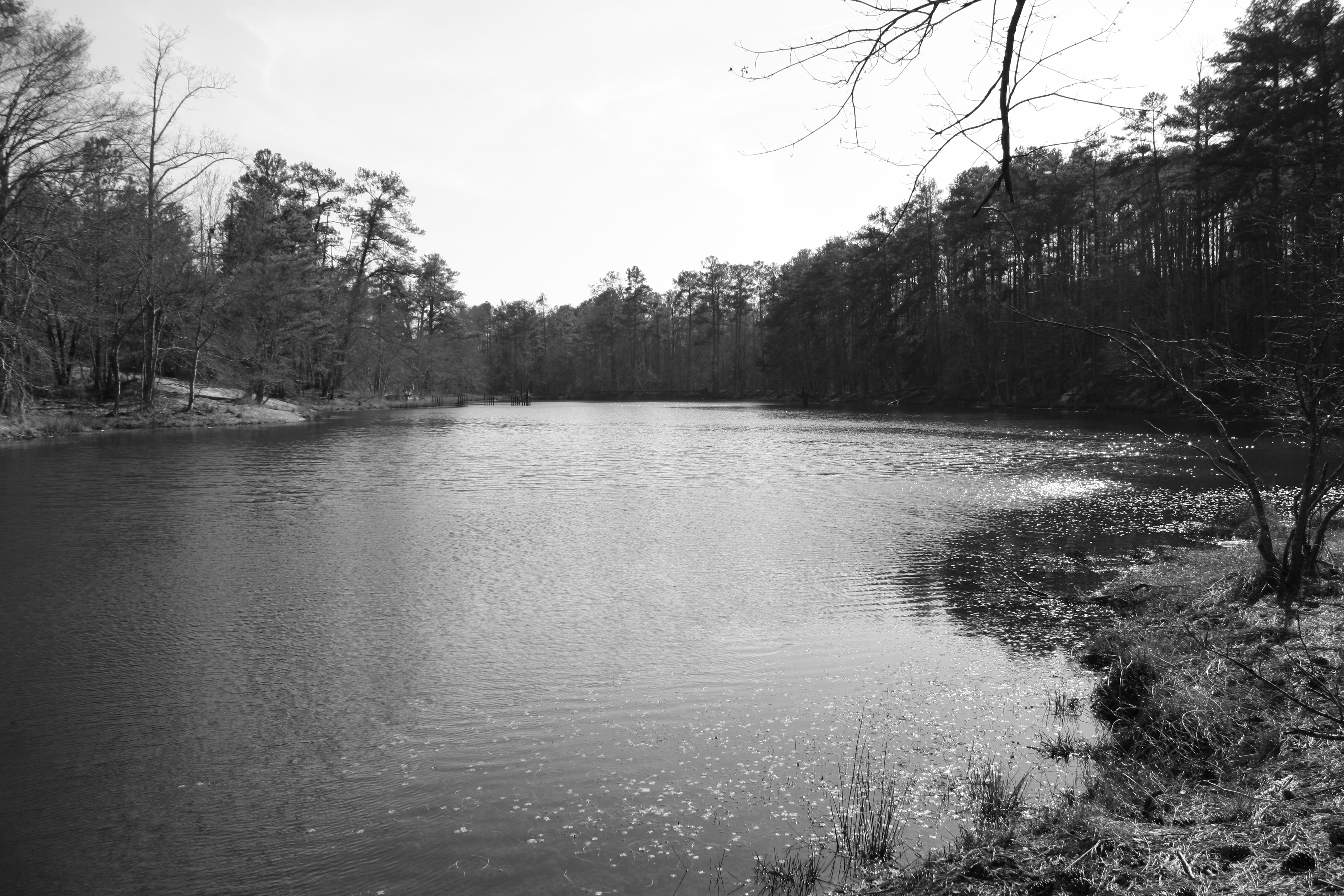
tawny grain stalks,
unkempt, like mussed hair;
a bird flies out.

“Song of the Open Road” (15 of 15) by Walt Whitman [w/ Audio]

Allons! the road is before us!
It is safe -- I have tried it -- my own feet have
tried it well -- be not detain'd!

Let the paper remain on the desk unwritten,
and the book on the shelf unopen'd!
Let the tools remain in the workshop! let
the money remain unearn'd!
Let the school stand! mind not the cry of
the teacher!
Let the preacher preach in his pulpit! let the
lawyer plead in the court, and the judge
expound the law.

Camerado, I give you my hand!
I give you my love more precious than
money,
I give you myself before preaching or law;
Will you give me yourself? will you come
travel with me?
Shall we stick by each other as long as we
live?

Beautiful Menace [Haiku]

bougainvillea
spill over a wall:
beautiful menace.

BOOKS: “Hungarian Poetry” trans./ed. by Frank Veszely

Hungarian Poetry (Folk, Classical and Modern) in English: 1000 yearsHungarian Poetry (Folk, Classical and Modern) in English: 1000 years by Frank Veszely
My rating: 5 of 5 stars

Author Site

This anthology of Hungarian poetry translated into English presents some interesting and evocative examples of Hungarian poetry, ranging from anonymous folk poetry of early kingdoms to 20th century pieces by still-living poets. I can’t speak to how the translations compare to the originals, but I will say that they were a pleasure to read and employed metering and rhyme to maintain some of the feel of the originals. This book introduced me to many poets with whom I was only familiar from names on subway stations, city squares, and parks, having traveled extensively in Hungary (plus a few of whom I’m sure I’ve never heard. Note: poetry is huge in Hungary, but because the Hungarian language is not broadly spoken, it remains largely a secret to outsiders.)

That said, the anthology is not so broad ranging as one might expect from its subtitle. The nineteenth and twentieth century selections take up the bulk of the volume. It does make sense that there is a much larger (and more likely to have survived) selection from recent times. However, there also aren’t as many poets included as one might expect. Ostensibly, one reason for this is that Veszely doesn’t shy away from including lengthier pieces. Whereas an anthology like this would often favor short pieces and / or excerpts (and, thus, might include more voices,) this one contains many multi-page poems. That said, while most of the biggest names seem accounted for (e.g. Vorosmarty, Csokonai Vitez, Arany, Petofi, Jozsef Attila, etc.,) there are conspicuous absences of prominent and important poets (and, perhaps, of categories of poets as well.)

Short bios of each of the contributing poets make this an introduction to many interesting figures scarcely known to non-Hungarians, as well as it is a sampling of their poetry. Each of the four sections also has some background historical information. This history is useful because there is a lot of nationalistic / jingoistic poetry in this volume, particularly among the nineteenth century poets (as was the style of the day.)

I should point out that some will find this book excessively nationalistic. (A book titled for the state can be expected to have some superpatriotic pieces, but this goes a bit beyond that.) For my part, I was not troubled by the poetry content, knowing that nineteenth century Hungarian poetry was notoriously nationalistic. Also, once one gets into the twentieth century poetry it gains much more diversity of content, e.g. nature, art, etc. My own concern about nationalism was more about the Part Four introduction, which paints Hungary as an innocent little lamb, always being victimized. Taking history from this introduction, one might think that Hungary was forced into the Axis and struggled to get free of it from the onset. This view would be more defensible if the invasion of Nazi Germany to firm up the Hungarian alliance had occurred in, say, 1941, instead of the spring of 1944 (when everyone knew the Third Riech was on its death bed.) In point of fact, Hungary’s leadership seem to have had their own ambitions (not to mention their own rampant antisemitism) going into this alliance.

I enjoyed these translations immensely, and felt I learned about the poets and the times in which they lived. That said, while I did like that Veszely included some longer pieces in full, it might have been nice to see a bit more diversity in the selection as well.

View all my reviews

“Song of the Open Road” (14 of 15) by Walt Whitman [w/ Audio]

Allons! through struggles and wars!
The goal that was named cannot be
countermanded.

Have the past struggles succeeded?
What has succeeded? yourself? your nation?
Nature?
Now understand me well -- it is provided in
the essence of things that from any
fruition of success, no matter what, shall
come forth something to make a greater
struggle necessary.

My call is the call of battle, I nourish active
rebellion,
He going with me must go well arm'd,
He going with me goes often with spare
diet, poverty, angry enemies, desertions.

Sunfall [Haiku]

mountain sunfall:
vivid tree afore; painted
backdrop behind.

Karst [Free Verse]

Dissolving mountains.

Craggy & rugged outside.
Stone pock-marked & pitted,
Deformed natural bonsai
growing out of the cliff.

Hollow on the inside.
Amorphous caves tunnel
under those rocky tops,
Smooth lumpy cave floors
and walls,
Rough & gritty stalactites
overhead.

How long does it take to dissolve
a mountain?

“Song of the Open Road” (13 of 15) by Walt Whitman [w/ Audio]

Allons! to that which is endless as it was
beginningless,
To undergo much, tramps for days, rests of
nights,
To merge all in the travel they tend to, and
the days and nights they tend to,
Again to merge them in the start of superior
journeys,
To see nothing anywhere but what you may
reach it and pass it,
To conceive no time, however distant, but
what you may reach it and pass it,
To look up or down no road but it stretches
and waits for you, however long but it
stretches and waits for you,
To see no being, not God's or any, but you
also go thither,
To see no possession but you may possess it,
enjoying all without labor or purchase,
abstracting the feast yet no abstracting
one particle of it,
To take the best of the farmer's farm and the
rich man's elegant villa, and the chaste
blessings of the well-married couple, and
the fruits of orchards and flowers of
gardens,
To take to your use out of the compact
cities as you pass through,
To carry buildings and streets with you
afterward wherever you go,
To gather the minds of men out of their
brains as you encounter them, to gather
the love out of their hearts,
To take your lovers on the road with you,
for all that you leave them behind you,
To know the universe itself as a road, as
many roads, as roads for traveling souls.

All parts away for the progress of souls,
All religion, all solid things, arts,
governments -- all that was or is apparent
upon this globe or any globe, falls into
niches and corners before the procession
of souls along the grand roads of the
universe.

Of the progress of the souls of men and
women along the grand roads of the
universe, all other progress is the needed
emblem and sustenance.

Forever alive, forever forward,
Stately, solemn, sad, withdrawn, baffled,
mad, turbulent, feeble, dissatisfied,
Desperate, proud, fond, sick, accepted by
men, rejected by men,
They go! they go! I know that they go, but I
know not where they go,
But I know that they go toward the best --
toward something great.

Whoever you are, come forth! or man or
woman come forth!
You must not stay sleeping and dallying
there in the house, though you built it, or
though it has been built for you.

Out of the dark confinement! out from
behind the screen!
It is useless to protest, I know all and expose
it.

Behold through you as bad as the rest,
Through the laughter, dancing, dining,
supping, of people,
Inside of dresses and ornaments, inside of
those wash'd and trimm'd faces,
Behold a secret silent loathing and despair.

No husband, no wife, no friend, trusted to
hear the confession,
Another self, a duplicate of every one,
skulking and hiding it goes,
Formless and wordless through the streets of
the cities, polite and bland in the parlors,
In the cars of railroads, in steamboats, in the
public assembly,
Home to the houses of men and women, at
the table, in the bedroom, everywhere,
Smartly attired, countenance smiling, form
upright, death under the breast-bones,
hell under the skull-bones,
Under the broadcloth and gloves, under the
ribbons and artificial flowers,
Keeping fair with the customs, speaking not
a syllable of itself,
Speaking of any thing else but never of
itself.

Gold [Free Verse]

I wonder how the Buddha 
would feel about always being
depicted in Gold?

If the desire that he warned
about had color, surely
it would be Gold.

Nobody has ever murdered
over teal or mauve or cornflower
(heated words with
contractors notwithstanding)
but Gold's body-count is staggering.

Helen's puny thousand ships have
been multiplied over by orders
of magnitude for the cause of Gold.

I think the Buddha, looking at his
reflection in one of those well-
polished Gold statues would say,
"Did I teach you nothing?"

Gnarled [Free Verse]

Mostly, the dead decay:
they crumble
or rot to goo.

But some trees
turn steely
hard & smooth --
fibers showing like
rigid sinews.

Bare of bark and leaves
and flowers,
but unyielding of
girth and substance.

But even those trees
give way --
perhaps in geologic time
rather than biologic time,

But still the tree will become
someone & something else.