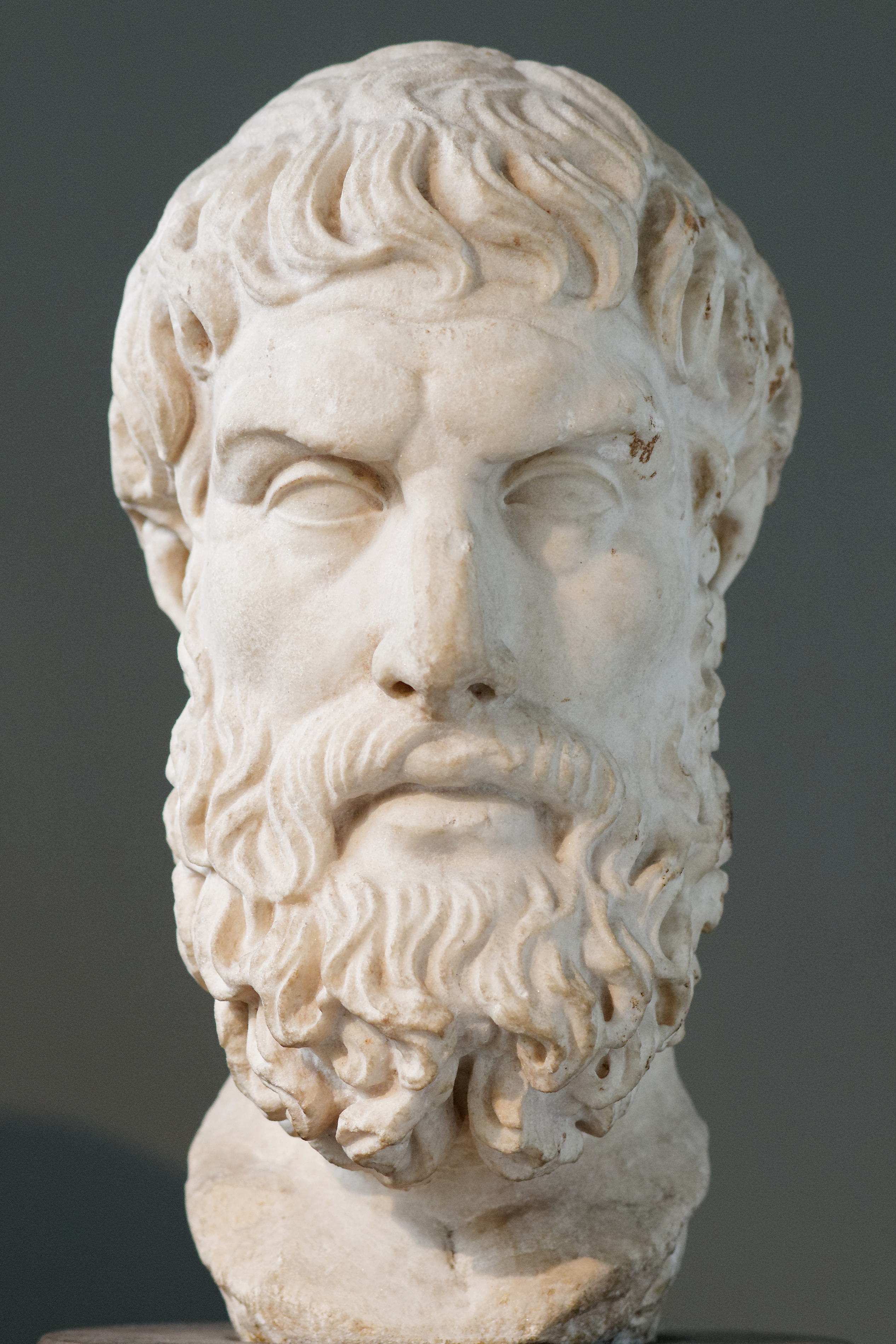
Five Wise Lines from Epicurus

Death is nothing to us, because a body that has been dispersed into elements experiences no sensations, and the absence of sensation is nothing to us.

principal doctrines – No. 2

Nothing is enough to someone for whom what is enough is too little.

Vatican Sayings – No. 68

Of all the means which are procured by wisdom to ensure happiness throughout the whole of life, by far the most important is the acquisition of friends.

Principal Doctrines – No. 27

Don’t spoil what you have by desiring what you don’t have; but remember that what you now have was once among the things only hoped for.

vatican sayings – No. 35

No pleasure is a bad thing in itself, but some pleasures are only obtainable at the cost of excessive troubles.

Principal doctrines – No. 8

And Five Honorable Mentions:

[T]here are an infinite number of worlds, some like this world, others unlike it.

Letter to Herodotus

Dreams have neither a divine nature nor a prophetic power, but they are the result of images that impact upon us.

vatican sayings – No. 24

It is pointless for a person to pray to the gods for that which he has the power to obtain by himself.

vatican sayings – No. 65

But one must not be so much in love with the explanation by a single way as wrongly to reject all others…

Letter to pythocles

Let no one be slow to seek wisdom when he is young nor weary in the search thereof when he is grown old. For no age is too early or too late for the health of the soul.

Letter to Menoeceus

SOURCE: Epicurus. 2021. The Fundamental Books of Epicurus: Principal Doctrines, Vatican Sayings, and Letters. Trans. by: Robert Drew Hicks & R. Medeiros. Independently published on Amazon. 45pp.

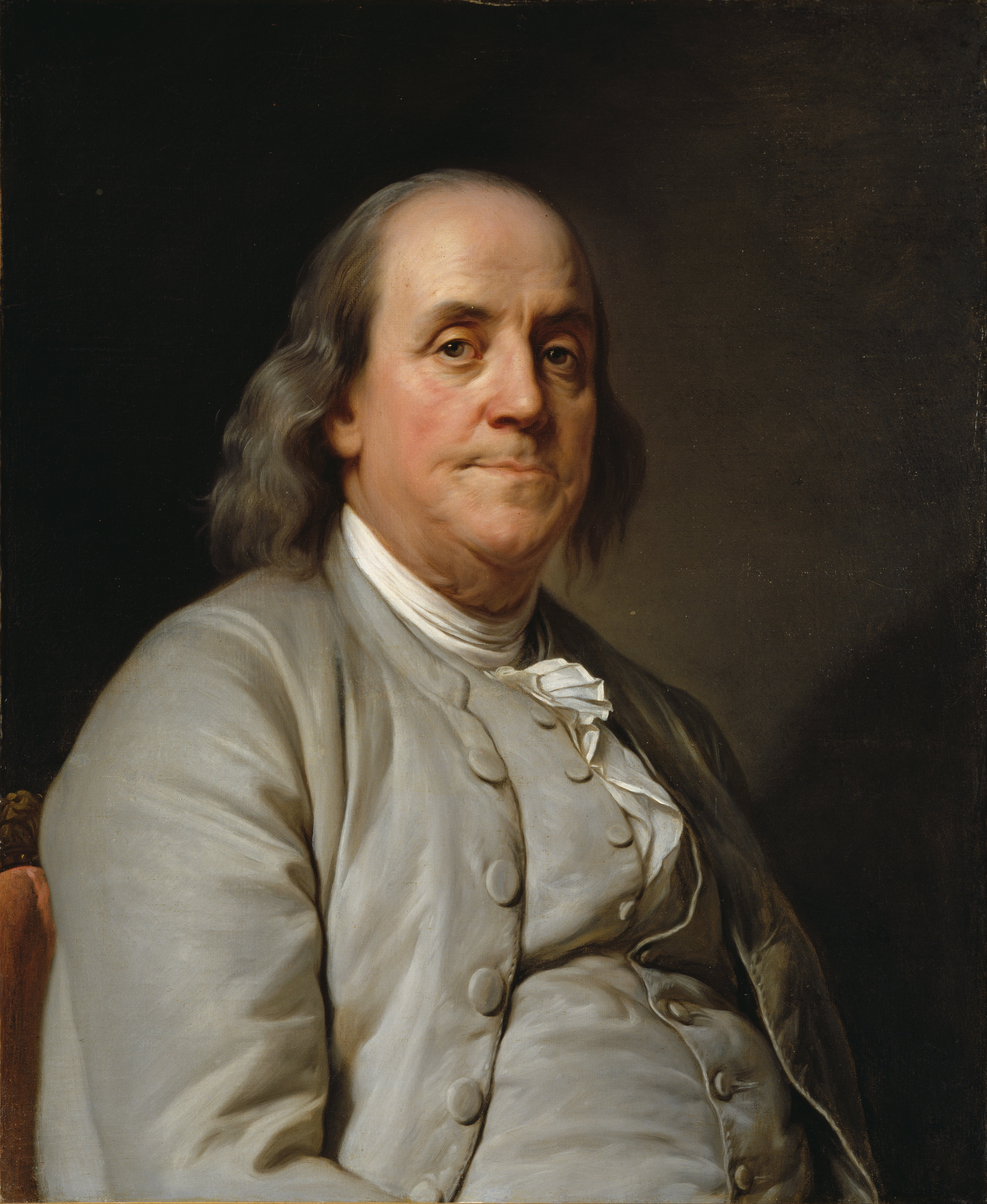
Five Wise Lines from Ben Franklin

Either write something worth reading or do something worth writing.

Never ruin an apology with an excuse.

In wine there is wisdom, in beer there is Freedom, in water there is bacteria.

Many people die at twenty five and aren’t buried until they are seventy five.

Never confuse Motion with Action.

And Five Honorable Mentions:

Three may keep a secret, if two of them are dead.

How many observe Christ’s birthday! How few his precepts!

It is the first responsibility of every citizen to question authority.

If all printers were determined not to print anything till they were sure it would offend nobody, there would be very little printed.

Tis a great confidence in a friend to tell him your faults; greater to tell him his.

PROMPT: Topics

Which topics would you like to be more informed about?

I’d love to know why the fundamental equations and constants that govern the universe appear to be tailor-made to generating life?

I’d love to know whether there is other intelligent life in the universe, and – if not – why not? (And, if so, have they visited, are they visiting, do they intend to visit, and – if none of the above – why not?)

I’d love to know whether there is meaning to life other than moving energy to higher states of entropy in a Sisyphean fashion (and any other meaning that one independently chooses for one’s self?)

But I’m doubtful any of that will be clarified in my lifetime, so I guess I’ll have to stick to more down to earth topics, such as: “Is ‘a good life’ a meaningful statement, and – if yes – how does one go about pursuing one.”

PROMPT: Lesson

Share a lesson you wish you had learned earlier in life.

The world as experienced through my mind is not a true reflection of the world. The mentally-experienced world is malleable and can be painted beautiful.

All things are impermanent, so nothing is worth great angst.

There are two ways to live life: take everything seriously or take nothing seriously.

PROMPT: Traits

What personality trait in people raises a red flag with you?

When a “grown man” makes life / wellbeing decisions based on what others will think of him, one of the words in quotation marks is in question. So, I guess… conformity.

BOOKS: Travels with Epicurus by Daniel Klein

Travels with Epicurus: A Journey to a Greek Island in Search of a Fulfilled LifeTravels with Epicurus: A Journey to a Greek Island in Search of a Fulfilled Life by Daniel Klein
My rating: 5 of 5 stars

Amazon.in Page

With the wave of renewed interest in Philosophies of Life lately, it’s nice to see a book that puts Epicurus at the fore. In a number of ways, I believe Epicurus was the most advanced of Ancient Greek philosophers, and yet he doesn’t get much attention compared to Plato, Aristotle, and the Stoics. (In part this is because the vast majority of Epicurus’s writings were lost, and in part it’s because little-“e” epicureanism [i.e. being culinarily hedonistic] has become much more familiar to people than big-“E” Epicureanism [i.e. a materialist philosophy that values pleasure, but not in so hedonistic way as to lose sight of virtue and the countervailing costs of pursing pleasure.] While adjectival forms have done a number on Cynicism and Stoicism as well, the former is – for all intents and purposes – dead and the latter has become much more well-known to present-day people from a pile of podcasts, books, and vlogs.)

I should point out that Klein doesn’t solely focus on the philosophy of Epicurus, he also tells readers what other schools of philosophy teach us about how to age well (and to not turn into a curmudgeon) — most notably: Buddhism, Stoicism, and Existentialism. That said, it’s fair to call Epicureanism the backbone of this book.

One who reads the title might wonder whether this is a pop philosophy book on aging or a travelogue. It’s definitely both, but the philosophy part dominates. I would call it 70/30 pop philosophy to travelogue (maybe 65/35.) The book uses the individuals Klein interacts with on Hydra (and elsewhere in Greece) as examples of how people age well, and in the process shows the reader [textually] a beautiful part of the world. But the core of the book is about philosophy as it pertains to such topics as play, perception of time, idleness, and changing views of spirituality.

I will warn the reader that, while the book offers many great thoughts for a philosophy of aging well, I didn’t agree with everything in the book. Klein contrasts his philosophy for living well into old age and for adapting one’s life to changing roles to the people he calls the “forever young” crowd. I wouldn’t put myself in the “forever young” category as I don’t believe I’m grasping at youth and all its blessings and pains. However, I suspect Klein would put me in that group because I work out intensely, watch what I eat / manage my vices, and am trying to work things so that my heart explodes while I’m still physically and mentally capable — i.e. before I become decrepit or senile. My point is, I’m not sure Klein’s dichotomy is that useful or reflective of reality, and that being health-conscious should necessarily be contrasted with enjoying the pleasures of age. [Truth be told, I’d say the biggest driver for people being more health-conscious into old age is seeing earlier generations live longer, but with a decreased quality of life through that period of increased longevity — See: Being Mortal by Atul Gawande.]

Still, overall, the book is quite readable and offers much excellent food for thought, and I’d recommend it for anyone who is interested in moving into advanced age in a way that isn’t misery filled.

View all my reviews

PROMPT: Ideal Home

Daily writing prompt
What does your ideal home look like?

It should be small enough that I won’t acquire new things without asking whether they are necessary, and whether their value exceeds their spatial cost. [And, also, such that it encourages spending time outside.] Besides that, it should be an environment within which one can live healthily.

BOOKS: The Creative Act by Rick Rubin

The Creative Act: A Way of BeingThe Creative Act: A Way of Being by Rick Rubin
My rating: 5 of 5 stars

Amazon.in Page

This book offers Rick Rubin’s philosophy of creativity and art. For those unfamiliar with Rubin, he’s a ZZ Top-looking music producer who contributed to a lot of successful albums, ranging from hip hop to the rock-n-roll of Tom Petty. He was a major player behind the Run DMC cover of Aerosmith’s “Walk This Way” that blew peoples’ minds in the 80’s. Interestingly, Rubin is neither a musician nor a technologist, and I heard him say in an interview that his great value-added was having an extremely high level of confidence in knowing what he liked. Rubin has a persona that is as much guru as music producer, and this book reflects this broad insight and wisdom.

In the book, Rubin lays out his view of the creative process and the mistakes people make with it, but along the way he offers insight into such interesting questions as why some artists only seem to have one major work in them. While Rubin’s experience is mostly with music (though he also worked with comedian Andrew Dice Clay on Clay’s albums,) his book is broadly targeted towards all artists, and he seems to use as many examples from literature and graphic arts as he does from music.

Rubin does sound a bit woo woo here and there, but I found that many statements — e.g. those that spoke of the universe’s role in artistry — could be interpreted in a way that wasn’t necessarily superstitious. While woo woo sounding statements often get on my nerves, I felt Rubin’s use was poetic and spoke to a broader truth.

I’d highly recommend this book for artists and creative types, regardless of field.

View all my reviews

PROMPT: Curiosity

What are you curious about?

Everything. But I have learned to be less obsessed with the grand metaphysical questions for which no one has any defensible answers – just rank speculation. Socrates convinced me it’s not worth worrying about abstractions while one is still struggling with fundamental questions of how to be human.

Agents of Wear [Free Verse]

Sun, Rain, Wind,
   & other agents of wear
 that tear down ancient stones
   one grain at a time,

eroding symbolic rocks
   carved with symbols 
   that meant something
   to people in days of yore.

And they mean something
   to people today,
   but whether those meanings 
   match is another question...

Because our understanding 
   of past perspectives 
   is ever eroding:
   just like those rocks,
 but - unlike rock - 
   thoughts and beliefs
   were wisps writ in a
   malleable art: language.

We cling to traditions & lineages,
    but everything is erased.