BOOK REVIEW: Buddha’s Brain by Rick Hanson

Buddha's Brain: The Practical Neuroscience of Happiness, Love, and WisdomBuddha’s Brain: The Practical Neuroscience of Happiness, Love, and Wisdom by Rick Hanson
My rating: 4 of 5 stars

Amazon page

This is one of those books whose title leaves one unclear as to the book’s nature. The title has religious connotations, but its subtitle, The Practical Neuroscience of Happiness, Love, and Wisdom suggests a secular and rationalist work. The subtitle might clear things up if it weren’t for the fact that there are so many New Agey, spiritualist types who like to glom onto scientific terminology—presumably in an attempt to lend credibility to ideas that are “out there.” Thus, one may reasonably wonder whether this is just another Biomechanics of Chakra Fluffing style book—actually, I made that one up, but if you can see why such a title would be oxymoronic you know where I’m coming from. Without further ado, let me state that this book is rooted in the science of the brain, and, while it uses its fair share of concepts from Eastern religion as pedagogic devices, it doesn’t presuppose need to believe in anything [or anybody] for which there is no evidence. [What remains less clear is whether this book is properly considered self-help or pop science?] This issue with the title may be why Hanson came out with the more secularly-titled Hardwiring Happiness book a few years later that seems to cover similar territory (though, I’ve not yet read the latter.)

The central premise of Buddha’s Brain is that the brain’s neuroplasticity allows one to change the way one experiences life by changing the way one perceives and responds to life’s little trials and tribulations. Over time, one can become happier, more loving, and wiser—i.e. one can have a brain more like the Buddha’s. “Spiritual” matters are always at the periphery of what Hanson is discussing because this type of practice has historically been in the bailiwick of religious traditions—specifically Eastern (and other mystic) traditions that focus on looking inward to be a more virtuous person. However, where said traditions have often relied on assumptions unsupported by current science—such as the existence of a unitary (i.e. universally interconnected) consciousness, Hanson considers the issue from the perspective of our current understanding of the brain. In particular, he focuses on the fact that we are capable of training our brain to respond more positively to events.

Evolution, beautiful and elegant as it may be, has made us pessimistic and prone to disproportionately focus on the negative. This is because survival depended on being ready for worst case scenarios. So we imagine what that worst case is, and endlessly replay scenarios to prepare ourselves for how to deal with said worst cases. While this approach may have enhanced our ancestor’s survival probability, it can easily get out of hand and for far too many people it has. In the book, Hanson proposes three evolutionary strategies (i.e. creating separations [us / them, I / you, etc.], maintaining stability, and threat avoidance / opportunity seizure) that often end up tainting our worldview, raising our stress levels, and causing declining health and well-being. The book does get into the mechanics of stress reduction as well as how to change the way one experiences the world so as to be exposed to less stress.

Rick Hanson is a psychologist who holds a Senior Fellowship at a center at the University of California at Berkeley. He also founded his own center called The Wellspring Institute for Neuroscience and Contemplative Wisdom.

The book is organized into 13 chapters arranged in four parts. The four parts are: I.) The Causes of Suffering, II.) Happiness, III.) Love, and IV.) Wisdom. These parts are preceded by front matter which includes the first chapter which lays out the basics of the brain in layman’s terms as well as discussing the evolutionary survival strategies that sometimes fail to serve us well in modern living. More detailed discussion of the brain is introduced throughout the book at is relevant to the discussion at hand, but the level of this discussion should be approachable to all readers. Each chapter is divided into many subsections to make the reading easily digestible. One of the nice features of this book is that each chapter has a bullet point summary at the end. Actually, the author uses bullet points prominently throughout the book. There is one appendix which explores questions of nutrition for brain health. There is an extensive reference section containing largely scholarly references, as one would expect of a science book.

I mentioned earlier that I wasn’t certain whether to classify this as a self-help or popular science book. In many ways it’s both. It does give a great deal of practical advice about what one can do to change one’s life. On the other hand, it offers more background into the science than your average self-help book—though always at a layman’s level.

I’d recommend this book if you are interested in self-improvement, the science of the mind, or both.

View all my reviews

7 Stress Fighting Tips with Relevant Monty Python Song Interludes and Book Recommendations

In writing this post, I realized that Monty Python provides the I-Ching of life wisdom. If they don’t say it, it may not need being said. So I’ve let them expound upon my points wherever possible.


1.) Always  Usually look on the bright side: Our brains are programmed to constantly be on the look for potential problems and ruminate over solutions. This isn’t without its advantages. However, as your brain takes flight with this problem anticipation mode, it can begin to taint how one sees the world.

My high school psychology teacher told us a story of what he called the “gestalt of expectations.” The story goes like this: One is driving across southwestern America and there’s a gas station coming up, but one still has half a tank. Being from the East, one doesn’t realize how rare service stations can be in the desert, so one passes it by. Of course one runs out of gas (it wouldn’t be much of a story otherwise.) As one is walking back toward the service station, one begins to obsess over how the service station attendant is going to screw one over. After all, the unknown individual knows one is in a desperate situation. The more one walks under a burning sun, the more one inflates the gas station attendant’s ill-intentions, and one suitably escalates one’s mentally rehearsed response. Finally, disheveled and weary, one reaches the service station. A concerned-looking attendant bursts out of the station to meet one, saying, “Geez, you look beat, what can I do for you?” And that’s when one punches him right in the nose.

BuddhaBrainThe good news is that one can gradually train one’s brain to take a more positive perspective. A neuroscientist, Rick Hanson, has written a few books on how one can go about this cognitive rewiring. Buddha’s Brain is probably the most well-known of these books. The book lays out the science behind the brain and negative thinking in particular, and then goes on to present suggestions as to how one can change this cycle and yield the benefits of a more positive outlook. While the title of this book makes it seems like a religious tract, it’s really secular and scientific. If you’re still concerned, you might check out the more secularly titled Hardwiring Happiness.


2.) Make rest part of the process–and an essential one at that: Duh?  Yeah, it sounds self-evident, but  too many people think of rest as the slacking off that one does between doing “useful stuff.” What isn’t valued is given short shrift. Don’t think of rest as a necessary evil. Equating rest with goofing off results in two problems. First, the obvious one, people don’t get as much rest as they should. Second, while one thinks he or she is resting, one may be under chronic stress (the bad kind) as one’s minds churns over what they should be doing and the adverse impacts of not doing it. Just as one should have rests built into one’s workout for maximal effect, one should have rest times built into the day, week, and year.


3.) Find your bliss, and just do “it”: You probably think that by “it” I’m referring to sex. Actually, sex isn’t a bad “it,”  as its go, but it’s not the only it. Exercise, work the heavy bag, do a vinyasa (yoga flow sequence), go to work solving the problem at hand, or practice your Silly Walk. This also sounds like a “duh!” kind of statement, but far too many people wallow when they feel overwhelmed. What do they wallow in? Negative feelings. They worry that they can’t possibly hit the deadline or find the perfect solution. They worry that they’ll let someone down. They get angry at other people, the world, or a god or gods for putting them in their present predicament. They bristle at the unfairness of the universe. All of this snowballs into a stress monster–to mix my metaphors up nicely. If one can’t meditate or keep one’s mind on one’s breath, one may find relaxation in exhaustion. It’s all about inertia. It’s hard to get moving when one thinks one’s world has gone to shit, but that movement will make one feel much better–even if it doesn’t seem it can solve the problem at hand. One might need to change one’s life’s course altogether and become a lumberjack.


4.) Don’t create false monsters:  Remember what Michel de Montaigne said, “My life has been full of terrible misfortunes most of which never happened.” As this is really just expanding on a point in item #1, instead of elaborating, I will offer you this Monty Python skit to consider.


5.) Exhale: Each exhalation trips the “rest & digest” circuit (i.e. the Parasympathetic Nervous System [PNS])  just a little. Granted, this subtle relaxation effect is easily overwhelmed by the countervailing forces of stressors and even the antagonistic effect of inhalation with its–also minute–fight or flight mode (of the Sympathetic Nervous System [SNS.]) Still, if you don’t know what to do, controlling your breath while elongating each exhalation is a good start. This will help in two regards. First, it helps the PNS gain a little ground. Second, it’ll break your conscious mind’s obsession with the problem (or potential problem) at hand. One’s mind will wander and one will lose track of the breath, but the more one practices quietly returning one’s attention to the breath the better off one will be. Becoming frustrated with these diversions only strengthens the stress monster–so don’t do it.

Relaxation ResponseThe bible of the rest and digest mode is Herbert Benson’s Relaxation ResponseThis book was first written over a quarter of a century ago, but it remains readily available. It’s telling that Walter B. Cannon’s work on “fight or flight” mode predates Benson’s work by such a long time. In other words, the medical and scientific community were researching the body under stress for decades before it ever occurred to anyone to think in terms of rest mode as a state that could be studied and advanced–as opposed to just being the normal state of affairs. This should give one an insight into how the human mind goes about considering problems.


6.) Recognize that stress is like cholesterol–there’s a good kind as well as the bad: Acute stress can serve one well during instances of danger. We have this response for good reason. The problem is chronic stress. When one’s body is in a stressed state, it’s not taking care of general maintenance tasks like healing itself. That’s fine in a short term, but problems compound over time. Chronic stress brings a high likelihood of illness because the body isn’t dealing with its run of the mill chores as it should be.

ZebrasUlcers_SapolskyThere are a number of books that expand upon this issue and which offer advice for keeping one’s stress of a healthy type. Robert Sapolsky’s Why Zebras Don’t Get Ulcers is among the best. It’s a long book and goes into great detail, but Sapolsky’s sense of humor helps to continue reading when the scientific minutiae might seem overwhelming. Another book on this topic that I found to be quite informative was Lissa Rankin’s Mind Over Medicine.  Rankin is a medical doctor, and so she offers a little different perspective from that of Sapolsky. (The latter is a biologist / neurologist.)


7.) Realize that you are a speck in a vast universe and, so, how big or long-lasting can your problem be?: Yeah, it’s a double-edged sword because it’s–in a way–a demoralizing thought as well as a comforting one. Therefore, one should first watch this bit of Monty Python wisdom:


But then one can keep things in perspective through the realization that one is not yet dead.

BOOK REVIEW: Extreme Fear by Jeff Wise

Extreme Fear: The Science of Your Mind in DangerExtreme Fear: The Science of Your Mind in Danger by Jeff Wise
My rating: 4 of 5 stars

Amazon page

Extreme Fear examines the science behind fear—particularly the fear of life and death situations. In doing so, the author presents findings from scientific research as well as cases that demonstrate the concepts behind those findings. People are often so close to their fears that they take them for granted, and feel that there’s nothing to be done about them. However, there’s a great deal to be learned about how fear operates and how one can improve one’s performance in fearful situations. By replacing the lens of shame with one of science, one can see what fear is objectively, and make the emotion more of a help and less of a hindrance.

A central idea in the book is that fear evolved to maximize one’s chance of survival against the age-old threats facing mankind. These pre-historic threats were relatively straightforward: saber-tooth tiger attacks, clubbing by members of warring tribes, fire, famine, flood, etc. Ancient threats often called for hauling ass, freezing in place, or getting stabby. The problem is that our present-day threats often call less for gross motor skills (run, kick, or throw) and more for creative or nuanced solutions to technological problems (i.e. sliding cars, falling planes, or malfunctioning assault rifles.)

Motor learning is one means by which this mismatch between what our brain tells our body to do in a stressful situation and what is called for in our modern world. Take the case of the infantryman with the jammed rifle. Without training, he might pick up the rifle like a club, intending to use it to unleash blunt force trauma. That is, if he’s still alive then the enemy gets into cudgeling range. Alternatively, the soldier may drop the rifle and run for his life. However, because he had a drill sergeant who made him practice clearing his weapon over and over, his body can go to that behavior while his conscious mind is blinking out.

Still, motor learning only takes us so far. Sometimes creativity is called for, and that’s a tall order in the face of where our body / brain want to put limited resources. In fact, Wise begins the book with the story of a pilot who was flying an old plane when the wing support broke and the wing flipped up, threatening to rip off. Somehow the pilot figured out—based on a vague memory and lots of experience—that he could flip the plane over and fly it upside-down and the wing would snap back into place. Then he had to figure out how to land: a.) upside-down crash, or b.) try to flip the plane over at the last second. The brain systems that this pilot smoothly accessed are among those that one doesn’t expect to be operating in life or death situations—e.g. those involved with long-term conscious memory and abstract problem solving.

The question of how some people can keep their wits about them, as the above pilot did, while others crash and die is the one that Wise really wants to answer. It turns out that it’s not such and easy question. During World War II, the military conducted studies to try to determine which soldiers could be counted on under life and death stress. The answer didn’t readily present itself. Among the problems in finding an answer is that courage and fearfulness aren’t as unitary or straightforward characteristics as one might think. Wise presents the case of Audie Murphy as a prime example. Murphy was at once one of the most decorated American soldiers in World War II—a man who’d taken on a company of Germans single-handedly—and a man of great social anxiety.

The book’s 13 chapters are divided into three parts. The first part presents fear and its effects. The middle section deals with various forms, aspects, and facets of fear, including: social v. life-and-death fear, choking behavior in sports, and fear of fear v. fear of an outcome. In the last part of the book, Wise suggests how one might achieve better performance in the face of fear.

I found this book to be informative and interesting. Wise did a good job of picking cases to illustrate the concepts discussed in the scientific literature. I’d recommend this book for individuals who are interested in the science of the brain and the ways to achieve ultimate human performance.

View all my reviews

BOOK REVIEW: Faster, Higher, Stronger by Mark McClusky

Faster, Higher, Stronger: How Sports Science Is Creating a New Generation of Superathletes—and What We Can Learn from ThemFaster, Higher, Stronger: How Sports Science Is Creating a New Generation of Superathletes—and What We Can Learn from Them by Mark McClusky

My rating: 4 of 5 stars

Amazon page

McClusky’s book tells us how advances in sports science and technology are producing a new class of elite athlete. More usefully, it discusses which practices of high-level athletes can reasonably be emulated by amateurs. One may think that what’s good for the goose is good for the gander. In this case, not so much. If shaving a hundredth of a second off your time isn’t going to affect your life’s course, there are many activities of elite athletes that simply aren’t worth the cost (in whatever terms.) For example, the loss of friendships due to rampant flatulence resulting from consuming large quantities of baking soda isn’t worth it if you just want a little bit stronger Sunday cycling ride. (Baking soda [sodium bicarbonate] counteracts blood and muscle acidification during exercise and makes it possible to keep moving strongly when fatigued would normally degrade performance. Incidentally, this practice has been shown to be effective only for events that last between one and seven minutes.) On the other hand, some of the lessons of sports science are relatively low-cost and high benefit, and might be just what one is looking for to improve one’s performance. (e.g. Replacing a pre-workout stretching routine with one of rolling out the muscles.)

Faster, Higher, Stronger consists of twelve chapters, each addressing a different aspect of the application of science and technology to sport, including: training methods, genetics, nutrition, recruitment, practice, performance enhancing substances (legal and illegal), elevation training, and the limits of performance.

One question that has always been of great interest is how much of a top athlete comes from his or her genes? In other words, can anyone can do it–given a willingness to work like a maniac of course. As with many other questions about heredity, it was once thought that there would be a precise answer to this question in the wake of the decoding of the human genome. However, the success of the human genome project showed only that the situation was vastly more complex than we’d imagined. It turns out that having certain genes isn’t the end of the story because there are many factors that influence which genes are expressed. Attempts have been made to put numbers to the influence of genetics. For example, one scientist is quoted as claiming that 50% of oxygen processing capability (i.e. VO2 max) is heritable. This translates to the fact that, while the average Joe has a reasonable chance of engaging in athletics at some level, only a 0.1 to 0.3 % can summit the pinnacle of elite level athletics.

In many ways, science has encouraged coaches, trainers, and recruiters to think outside the box—and to look beyond the traditionally engrained approaches. One fascinating story was that of how the British national rowing team held tryouts based only on height, with experience with the sport being not required. They ended up with a champion rower who’d first entered a boat only four years before. This is part of the evidence that controverts the once popular 10,000 hour rule that was popularized by Malcolm Gladwell–though Anders Ericsson is more properly considered the father of the idea. It turns out that 10,000 hours of practice aren’t required for most activities if one goes about it right.

McClusky spends a considerable amount of space on the questions of what athletes should and shouldn’t consume. In emulating elite athletes many amateurs are working at cross purposes. This is readily seen with the issue of sports drinks. If you’re guzzling down a Gatorade or snacking on Cliff Bars after your run, you may only be ensuring that you continue to gain weight despite working out. On the other hand, you may decide that chocolate milk or beet juice are good choices for you.

I’d recommend this book for those interested in the heights of human performance.

View all my reviews

BOOK REVIEW: What If? by Randall Munroe

What If?: Serious Scientific Answers to Absurd Hypothetical QuestionsWhat If?: Serious Scientific Answers to Absurd Hypothetical Questions by Randall Munroe

My rating: 5 of 5 stars

Amazon page

If you like the tv show Mythbusters and snarky and / or silly humor, you’ll love Randall Munroe’s What If?: Serious Scientific Answers to Absurd Hypothetical Questions. Munroe gained internet fame (still not the same as real fame) drawing the popular webcomic xkcd. The book’s subtitle says it all. Munroe solicited questions from his web-legion (not the same as a real legion) of fans, selected a collection that he found intriguing, and answers them with a mix of science and humor. Munroe’s bona fides to answer questions of a technical nature include a degree in physics from Christopher Newport University and a brief career as a roboticist for NASA—though he’s fond of pointing out that he’s just a web-cartoonist whenever his answers might be wrong.

Each chapter presents a detailed answer to one of the absurd hypothetical questions. Most of the chapters are just a few pages long and feature the same variety of stick-figure cartoon that grace the xkcd website. He covers 60-ish questions in the book. Scattered throughout the book are sections called “Weird (and Worrying) Questions” which usually don’t receive answers but merely cartoons that mock the demented mind that came up with said question. (If that seems harsh, keep in mind that many of the questions he does answer are pretty warped (e.g. setting off a nuke in a hurricane or whether steady rising would result in death by freezing or suffocation).)

Like the Mythbusters, Munroe does an excellent job of selecting questions that have unexpected answers. For example, the author addresses the question of what would happen if one went swimming in a spent fuel pool (nuclear fuel rods are stored underwater for a long time after they come out of the reactor before they can go to dry storage.) The answer: Nothing if one swam near the surface, but if you swam down and touched the casks, you’d die in minutes. Munroe also takes liberty to find the more interesting unintended consequences embedded in some of the questions. For example, he dismissively answers the old question about whether every human on the planet standing as close together as possible and jumping so as to land simultaneously would have any effect on the planet. Instead, he takes on the questions of the logistics of getting everyone to one place, how much space humanity would take up, and how / whether people could get out of this state of shoulder-to-shoulder proximity alive.

Some of the questions are impossible to answer with certainty but Munroe takes them on when he can offer reasonable, scientifically-based speculation. For example, what will the area that is currently New York City look like in a million years? His answer is more or less: Who cares? Humans will be long gone and veins of plastic in past landfills will be the only evidence that we ever existed. Another such question is how much power can Yoda achieve through application of the Force?

Besides the many physics question (e.g. What’s the fastest speed at which one can hit a speed bump and live?), there are others that involve mathematics, chemistry, and biology. Mathematics questions include calculations of the likelihood that one would find his or her soulmate if each person really only had one soul mate. (My Indian friends might be pleased to know that we’d all be screwed if that were the case.) There are actually many questions that hinge on mathematical calculations.

One of my favorite chapters is in the domain of chemistry, and it answers what would happen if one tried to make a wall by collecting together blocks of all of the elements in the periodic table in the relative position in which they exist on the table? Answer: Nothing good. There are a few biologically centered questions as well. Munroe takes on the question of how much computing power human brains collectively have—and the more interesting unasked question of how human “computing” is different from that of machines.

I’d highly recommend this book for science lovers. In fact, even people who don’t care for science may find this book palatable because of its humor and the fascinating questions it addresses.

View all my reviews

6 Science Books That Martial Artists Should Read

When one has a passion for an activity,  it’s easy to get tunnel vision and miss out on the many avenues of information by which one might improve oneself.  I’ve done many posts on martial arts books, but I thought it might be useful to do one about books that aren’t about martial arts per se, but which have none-the-less contributed to my thinking as a martial artist.


1.) On Killing: The Psychological Cost of Learning to Kill in War and Society by LTC Dave Grossman

OnKillingWhat it’s about? Psychologically, it’s a lot harder to kill another human being than one might think. Even when one is a combatant in a just war, the reluctance to kill–even one’s sworn enemy–is intense. Grossman examines the roots of this reluctance, what methods have been employed to get soldiers over it, and what the cost of doing so is.

The book also goes into a topic one might find surprising: video games. Not to give too much away, but military researchers discovered that getting infantrymen to kill required conditioning them to shoot targets that look human. This resulted in moving from bulls-eye targets to silhouettes, pictures of humans, and even Firearms Training Simulators (i.e. FATS, systems that run shoot / no-shoot scenarios on a screen, like an interactive movie.) It turns out that shoot-em-up video games may contribute to a child’s conditioning to be willing to shoot another human being.

Why it’s a good read for martial artists? Martial arts vary radically in realism and relevance to combative situations, but it’s easy for students of the martial arts–even martial arts that seem “hardcore” and self-defense oriented–to have unrealistic notions about the realities of combat. As François de La Rodefoucauld said, “One cannot answer for his courage when he has never been in danger.” By reading this book one might, perhaps, begin to rethink one’s assumptions, and change how one prepares to defend oneself and others.

Further reading on related topics:  I’ve heard good things about the works of Rory Miller–particularly Facing Violence and Meditations on Violence, but I haven’t gotten around to reading his books yet. If you have, please feel free to comment with your thoughts.


2.) The Rise of Superman: Decoding the Science of Ultimate Human Performance by Steven Kotler

RiseOfSupermanWhat it’s about? Kotler examines a state of mind that is widely call “flow,” and how extreme athletes are tapping into flow to achieve unprecedented advances in performance. There are a number of ways by which this state of mind can be defined, e.g. neurochemically (i.e. a neuro-cocktail of serotonin, anandamide, endorphins, dopamine, and norepinephrine), neuroanatomically (transient hypofrontality), neuroelectrically (high theta / low alpha wave–i.e. between meditation and resting wakefulness), or psychologically (intense concentration on a challenge that’s just beyond one’s present skill level.)

Kotler proposes that risk is an important trigger for entering a deep state of flow, and that this is why extreme athletes are proving so much better at achieving these states (and translating them into radically increased performance) than many other groups who seek to master flow.

Why it’s a good read for martial artists? It should be noted that not only is flow not a newly discovered state of mind, but it sounds a lot like the state of mind that martial artists have sought for centuries in the practice of their arts–often in conjunction with disciplines such as Zen or Vajrayana Buddhism. What is new, which makes this book worth reading, is an understanding of the science behind flow states. By moving beyond the hazy mix of truth and falsehood embodied in systems of spirituality, one may be able to find a way to more reliably increase one’s performance.

Further reading on related topics:  Flow in Sports: The Keys to Optimal Experiences and Performances is a book that is co-authored by the granddaddy of flow research Dr. Mihaly Csikszentmihalyi.


3.) Becoming Batman: The Possibility of a Superhero by E. Paul Zehr

Becomingbatman

What it’s about? (Arguably, this is a martial arts book, but I’m including it because one wouldn’t get that from the title or blurb.) This book’s central question is whether a real life person could achieve the level of crime-fighting bad-assery that is the Batman, and–if so–what combination of genetics, training, and conditioning would be required. It also addresses what would be the cost in terms of wear and tear on one’s body and how long one could be expected to maintain said abilities. (Also, for the martial artists of feminine persuasion, how Batgirl or Catwoman might fair in combat against Batman.)

Why it’s a good read for martial artists?   There is tons of great information relevant to martial artists about the toll of extreme practice and regular fighting on one’s body (e.g. concussions, broken bones, etc.), what the limits of human performance are, by what means those limits are approached, and how realistic it is to have an unreciprocated policy prohibiting lethal weapons.

Further reading on related topics: Actually, if you know of any books on related topics, I’d love to hear about them. There are a number of such books, but they’re on textbook pricing (i.e. insanely expensive.)


4.) Extreme Fear: The Science of Your Mind in Danger by Jeff Wise

ExtremeFear

What it’s about? This book is about the mental and physical effects of mortal peril, and why some people’s performance excels under dire threats while other people just let themselves die while cowering in a fetal ball. The book asks what we can all learn from those people who manage to keep their heads about them when death seems certain.

In the interest of full-disclosure, as of this writing I’ve not completed this book. I just started it and am only in the second chapter. However, so far it’s been both informative and interesting.


Why it’s a good read for martial artists? Much like On Killing, I think this book may be valuable because there are many martial artists with daydream-induced misconceptions about how they will perform in dangerous situations. This book may help one evaluate one’s true state of preparedness, and discover how to go about making changes to improve one’s level of preparedness for a worst-case scenario.

Further reading on related topics:  If you want a scholar’s account, the book Anxious by Joseph E. Ledoux may be more your style. (Wise is a popular science writer.) I see that Ledoux is cited a lot in books I’ve been reading as of late, but I can’t say I’ve read any of his books yet. However,  I know he’s widely regarded as one of the foremost experts on fear. It looks like his book isn’t so much on mortal peril as Wise’s book, and covers all kinds of anxiety and fear.


5.) Faster, Higher, Stronger: How Sports Science is Creating a New Generation of Superathletes–and What We Can Learn from Them by Mark McClusky

FasterHigherStrongerWhat it’s about? The super-long subtitle says it all. It’s about how athletic performance is being improved by bringing scientific methods to the study of sports, and–as the second half of the freakish subtitle suggests–it explains how amateurs can put this information to good use. There are some methods used by elite athletes that aren’t at all suitable to the run-of-the-mill martial artists (e.g. don’t consume mass quantities of baking soda.) However, there are other approaches to nutrition and training that are readily translated to amateurs without much downside.

Why it’s a good read for martial artists? You may or may not think of yourself as an athlete. I can hear some martial artists saying, “I don’t practice a sport, I’m a martial artist. I deal in lethal combat, not games. yada, yada, yada…” Maybe so, but fitness, nutrition, and conditioning matter. If you want to be able to hold your own against more skilled opponents, you need to improve your capabilities and capacities. Fitness matters. If you think technical proficiency will get you through any situation, you haven’t run up against someone who is both technically skilled and highly fit–and when you come up against said person, your disillusionment will be swift.

Further reading on related topics:  As with the Becoming Batman book, most of the books on this subject are textbooks and are outrageously priced. If you know of other books in this vein, I’d love to hear about them.


6.) Buddha’s Brain: The Practical Neuroscience of Happiness, Love, and Wisdom by Rick Hanson et. al.

BuddhaBrainWhat it’s about? This book turns the lens of modern science on the serene, immovable state of mind that martial artists have historically sought out through Buddhist and yogic systems. It discusses how Buddhist practices help people to be more cognitively effective and less prone to emotional manipulation or disturbance.

Why it’s a good read for martial artists?  If one reads the works of warriors–ancient and modern, one will discover that the greatest warriors place a premium on the importance of the mind.

Consider the famous swordsman Miyamoto Musashi. Musashi was exceedingly successful in defeating his enemies by making them angry. He would show up late and behave disrespectfully, and he would make his own mind imperturbable. This allowed him to easily defeat warriors who were considered at least his equal in terms of technique.

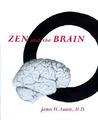
Further reading on related topics: There are many books that look at similar questions.  Zen and the Brain is probably a better book in terms of the amount of information / insight provided, but it’s a much more daunting read. I wouldn’t put the latter in the category of “pop science” as much as just “science.”  (Zen and the Brain is also a much older book.)


These are my recommendations, I’d love to hear about yours in the comments section.


BOOK REVIEW: Becoming Batman by E. Paul Zehr

Becoming Batman: The Possibility of a SuperheroBecoming Batman: The Possibility of a Superhero by E. Paul Zehr

My rating: 5 of 5 stars

Amazon page

[Note: This book is about sport and exercise science, particularly as they pertain to the martial arts. If you’re a martial artist or are interested in fitness and movement arts at the extremes of human capacity, you’re in the right place. If you’re interested in the comics and an overview of topics including how many billions Bruce Wayne needs and what technologies Batman must master, those aren’t questions addressed in this book. Such readers may find the book delving into depths they aren’t interested in on biological science. There are articles on the web that deal with topics like the “Cost of being Batman.”]

Next summer an eagerly awaited movie entitled Batman v Superman: Dawn of Justice hits theaters. Who knows how much screen time will involve the fight between the titular characters, but the same battle has played out a number of times in the comics, and its appeal is clear. What are the limits of human capability given training, technology, and sufficient smarts? Can a man really defeat an alien that’s faster than a bullet and more powerful than a locomotive? A popular fanboy mantra is, “I like Batman, because I could be Batman. Batman has no superpowers.” So, yes, if you were a billionaire, genius, with the physique of a Greek god, and knew 127 martial arts, you too could be Batman. Or could you? That question is at the heart of Zehr’s book.

Becoming Batman is arranged into sixteen chapters divided among five parts. It begins logically with the question of whether Bruce Wayne needs to begin at any particular point to achieve success in transforming himself into Batman? (At the extreme, one probably can’t imagine Bruce Wayne becoming Batman if he was born with one leg a foot longer than the other and with a Quasimodo hump, but given a Bruce who is starting out “average,” what are his limitations.) In other words, how much does genetics come into play. In the first part, Zehr introduces a character, Bob Wayne, who doesn’t appear in the comics. Bob is Bruce’s twin, and is used throughout the book for comparison purposes, i.e. to convey what Bruce Wayne would look like if he didn’t train fanatically to be Batman. The question of how much of Batman is innate and how much is painstaking built by exercise and training is critical to determining how many of those fanboys really could be Batman.

There a series of chapters explaining the mechanism by which stressors result in a stronger, faster, more powerful, and more resilient Batman. The idea is that Mother Nature doesn’t over-engineer. The only way one gets stronger muscles is by overloading them, which triggers a process of rebuilding them bigger and better than before. Wolff’s Law defines the same concept for bones, i.e. bone density increases in response to increased loading. (Incidentally, the same is true of the mind. A more agile mind is achieved only by working it, and zoning out in front of the television results in a dumbening.)

The next section shifts from generic exercise science to questions of Batman’s martial arts training. What kind of martial arts (or arts) would Batman practice? There is an often quoted statement in the comics to the effect that Batman had mastered 127 martial arts. (This is ridiculous, but it does spur the intriguing question of how many systems does Batman need to learn to have a well-rounded skill-base without being a dabbler? Many will say one art—the right one–is enough, others will say that–given the varied cast of villains he must defeat–Batman needs a broader skill-set than any existing art provides.) More to the point, how many hours does one need to practice a technique to ingrain the movements into one (e.g. neurologically it takes repetition to optimize efficiency.) This is among the questions discussed in this book.

The fourth section deals with the ravages of being Batman, and how much any human could be expected to endure. In this section, one will learn about the cumulative toll of concussions, the likelihood of Batman avoiding broken bones and other injuries that would necessarily sideline his crime fighting, and the effect that working the night shift would have. (The latter might seem trivial in comparison to the former two topics, but—in fact—it’s not. It’s well established that night workers have higher incidence of some cancers and other ailments. Furthermore, as Bruce Wayne has to keep appearances up, it means not only fighting circadian rhythm issues, but also frequent sleep deprivation—the hazards of which are even clearer and occur in short order.)

There are a number of interesting topic that aren’t don’t pertain to the core question per se, but which are interesting for fans of the Batman canon and the character’s mythos. Famously, Batman doesn’t use guns or lethal force. This raises the question of how realistic it is to regularly fight hardened knaves and miscreants without killing them. One can only knock out so many of Gotham’s baddies before one doesn’t get up.

There’s a chapter about what a fight between Batman and Batgirl would be like. While strength would definitely be to Batman’s advantage, there are advantages that an equally skilled female fighter might bring to the fight? How would Batgirl (or Catwoman) need to fight to put those advantages to use? Finally, for those of us who are no longer spring chicks, there are chapters about how Batman could expect to age, and how long he could keep performing at a level at which he could defeat his enemies.

I enjoyed this book and found it both educational and interesting. It should be clear that Batman is just a teaching tool used to explore the limitations of the human body and its ability to endure a life of fighting. That said, references to the Batman comic books and movies makes for a readable text. Perhaps what I like most about this book is that most of the books that address these subjects are textbooks that are sold on the textbook pricing model (i.e. we have a limited but captive audience so let’s make them pay top dollar.) This is one of the few books that takes on these topics at the readability and pricing model of a popular science book.

I recommend it for those interested in the science of performance, martial arts, and injury.

View all my reviews

BOOK REVIEW: Free Will by Sam Harris

Free WillFree Will by Sam Harris

My rating: 2 of 5 stars

Amazon page

I had high hopes for Sam Harris’s book Free Will, but they didn’t pan out. It’s a very short book (less than 100 pages) on the subject of free will–or the lack thereof. While I’m normally a huge fan of brevity and conciseness, Harris could have put some more pages to good use. My two principal complaints regard the lack of information: a. substantiating the notion that free will is always and everywhere an illusion as Harris asserts; b. suggesting what logic is at the root of decision if our conscious thoughts are irrelevant. (If they were random synaptic firings our behavior wouldn’t be nearly so consistent. Self-preservation of genes? The hand of god? You won’t know from this book.)

Harris might claim that that’s not the purpose of this book, that one should familiarize oneself with the vast literature on the topic before getting to this book. In that case, my complaints remain two-fold. First, he shouldn’t take on such a bold and presumptuous title as Free Will (no subtitle) if he’s not going to educate us from the ground up on the titular topic. Second, if the reader has done all the scholarly reading on the subject, why should we care about Harris’s opinions?

I will say that if you liked Matrix Revolutions, the third Matrix movie, you will love this book. SPOILER: In that movie, we find out that Neo is the central element of an elaborate plan to fool people into thinking they have some control over their own lives. In Harris’s book, Neo is replaced by the conscious mind.

There’s a scientific literature supporting the notion that free will is an illusion–though Harris only touches on it. This conclusion has been reached by observing that subconscious parts of the brain involved with decision-making light up well in advance of the conscious parts of the brain. [On a note unrelated to the book: we also know that individuals with damage to the emotional centers in the brain become unable to make decisions because all options hold the same weight.] The most illuminating example offered is an experiment in which participants were asked to press a button to select a letter or number of their choosing from among a string of changing letters / numbers. Some subjects felt the scientists had mastered precognition (a class III impossibility according to physicists–i.e. impossible according to the laws of physics as we know them.) What was really happening was an exploitation of the lag between when the individual’s subconscious decided and when their consciousness became aware of their decision.

Harris briefly mentions a couple of these neuroscience experiments, but then expects that the reader will treat the free will illusion as law. That is, we are to accept that always and everywhere people’s subconscious minds decide some measure before their conscious minds. Maybe there has been a broad enough scientific investigation of the topic to safely conclude that free will is always and everywhere an illusion–but Harris does make this point.

Harris tells us about couple of studies in which, a.) there’s no cost differential between the different options; (i.e. is it possible that the mind treats decisions about picking a spouse or a house differently than picking a letter or number for which there is no objectively better or worse option?) b.) those studied are a random sample of individuals who have no particular expertise with their minds—probably mostly college undergrads. (If I drew a random sample of people and asked each to lift 300 lbs over his or her head. If no one could do it, would I be safe in concluding that lifting 300 lbs was something forever beyond the capacity of every member of the human race? In other words, what if exercising conscious control over decision-making requires training and expertise with the mind.)

There are a couple of red-flags for me about Harris’s approach to the subject. First, Harris scoffs at the suggestion that it might be that the conscious can overrule the subconscious, and seems to deem this as unworthy of study because it would just be the subconscious making a second decision instead of the conscious truly vetoing. Anytime a scholar is dismissive of another scholar’s attempts to further probe into a question signals that a pet theory has become a sacred cow.

Second, Harris suggests that anyone who truly studied his own mind in action couldn’t help but realize the fallacy of free will. People who can’t imagine that others see the world differently than them are also a point of concern when it comes to getting sound information. Could it possibly surprise Mr. Harris to learn that there are people who’ve spent far more time alone with their minds than he, who’ve concluded quite the opposite?

Alright, I may have overstated Harris’s position when I suggested the conscious mind is relegated to a Matrix Revolutions-style (and Rube Goldberg-esque) machine for tricking us into thinking we have choice and control over the direction of our lives. I suspect Harris would agree that evolution doesn’t over-engineer, and a conscious mind that is just part of a trick would be the vastest act of over-engineering in the history of the universe. (Unless the universe is a hologram, as some physicists are now suggesting–presumably based on the notion that their math works out in 2-D.)

I just don’t have a good idea of what purpose Harris thinks the conscious mind serves. His central point seems to be that we still need to keep putting rapists and murders in jail so they can be kept off the streets. We just shouldn’t bear any ill-will toward them because they had no control over their decisions. However, if we set a tone with our conscious thought stream, then whether the individual’s decision to act was conscious or not they would have culpability by virtue of stage-setting. If we don’t have any control over our conscious thought stream then there would be no benefit to courses of study that help one improve one’s state of mind, but there’s also a scientific literature showing that people who begin meditative practices, yoga, and the like do see tangible positive changes. (Not to mention that Harris should give all the money back for the books he has sold about meditation, i.e. Waking Up.) If we have conscious control of our thought stream, but that thought stream is irrelevant, then we should be walking around in a constantly perplexed state.

To add to the confusion, Harris uses the term “choices” to refer to his “decisions,” but according to his paper he doesn’t make any choices. He—like all of us—are slaves to some unknown–or at least unexplained–process. Black boxes aren’t persuasive.

I can’t say I’d recommend this book, unless you’ve read extensively on the topic and are rounding out your reading experience. This book isn’t the ideal starting point for engaging this subject—as it seems when you are reading the blurb–because you’re as likely to come away more confused than when you began reading.

View all my reviews

BOOK REVIEW: Gotham Writers’ Workshop: Writing Fiction by Various

Writing Fiction: The Practical Guide from New York's Acclaimed Creative Writing SchoolWriting Fiction: The Practical Guide from New York’s Acclaimed Creative Writing School by Alexander Steele

My rating: 4 of 5 stars

Amazon page

This workbook-style guide to writing fiction is put out by the well-known New York City creative writing school. With 11 chapters, it delivers lessons on all the elements of fiction including: character development, plotting, establishing point of view, honing description, building realistic dialogue, varying pacing, establishing voice, determining a work’s theme, and carrying out revisions. It also has a chapter that goes into the business of writing (as opposed to the craft of writing which is the bailiwick of the first ten chapters.)

There are a couple of features of this book that set it apart from the vast canon of writers’ guides. First, this isn’t a single author work, which means the reader has access to a much broader pool of experience than one would in a single author text. It also means that an author can be assigned a topic according to his or her strengths as a writer.

Second, across the chapters, they use Raymond Carver’s Cathedral as an example work, and they provide that story in an appendix for those who haven’t read it. It’s not that the authors exclusively use this short story for examples. But it’s useful to have a common story and to include it because there are so many great stories and novels available that no matter how well-read one’s readership, there will be works that some haven’t read. (e.g. Much as I should’ve, I haven’t yet read nor seen the movie Gone with the Wind–a common exemplary work because it’s a beloved book, a movie, and because pop culture references [e.g. The Simpsons] have made the gist of it available to even those slackers who’ve neither read the book nor seen the movie.) There’s a reason why writers’ book authors often use movies to describe story elements, because there are many fewer movies than books and vastly fewer good movies—thus a higher likelihood of a common experience. Yes, there are a few works common across most school curricula, but there’s no better way to ensure that a book doesn’t get read thoroughly than to assign it as required reading.

A third useful feature of this book–but not one that is in any way unique to it–is that it offers writing exercises throughout to help build one’s skills through practice. This is where the value of such a book truly lies. The advice such books offer are almost always the same—sometimes hackneyed but almost always valuable. (A lot of tired advice is tired because it bears repeating owing to the constant infusion of new writers who repeat the same errors.) A final useful element of the book—but also one that features in many similar guides—is a checklist in the appendices that allows one to rapidly consider the book’s key questions as they apply to one’s own writing project.

I’d recommend this book as one of the most useful writers’ guides that I’ve read.

View all my reviews

READING REVIEW: April 24, 2015

I completed three books this week. The first was Richard Wiseman’s Night School. I wrote a lot about this book in my last Reading Report. Night School examines what happens when we sleep, what happens when we don’t, and a host of events that happen in and around our sleeping life (i.e. nightmares, night terrors, sleep walking, etc.)  The notion that dreams and nightmares are our subconscious working out waking life problems is well established, but there was some interesting discussion of how to change one’s dreamscape (i.e. lucid dreaming) that was fascinating.

NightSchool


The second book I finished was Sam Harris’s Free Will. I had high hopes for this book, but they didn’t pan out.   It’s a very short book (less than 100 pages) on the subject of free will–or the lack thereof. There’s a well-established scientific literature supporting the notion that free will is an illusion. This conclusion was reached by observing that subconscious parts of the brain involved with decision-making light up well in advance of the conscious parts of the brain. The most illuminating example offered is an experiment in which participants were asked to press a button to select a letter or number of their choosing from among a string of rotating letters / numbers. Some subjects became convinced that the scientists had mastered precognition (a class III impossibility according to physicists–i.e. impossible according to the laws of physics as we know them.)  What was really happening was an exploitation of the lag between when the individual’s subconscious decided and when they became aware of their decision.

While I’m normally a big fan of brevity, Harris could have put some more pages to good use. First, he barely mentions a couple of the neuroscience experiments, and expects that the reader will treat this all as law. That is, we are to accept that always and everywhere people’s subconscious minds decide some measure before their conscious minds. Harris also scoffs at the suggestion that perhaps the conscious can overrule the subconscious. He seems to deem this as not worthy of study because it would just be the subconscious making a second decision. So we learn about a couple of studies in which a.) the decision-maker has no stake in the decision (is it possible the mind treats decisions about picking a spouse or a house differently than picking a letter or number in which there is no more costly outcome?) b.) those studied are a random sample of individuals who have no particular expertise with their minds. (If I drew a random sample of people and asked each to lift 300 lbs over his or her head. If no one could do it, would I be safe in concluding that lifting 300 lbs was something forever beyond the capacity of every member of the human race? In other words, what if exercising conscious control over decision-making requires training and expertise with the mind.) Maybe all of this has been studied (e.g. high stakes cases and cases with monks and meditators), and we can safely conclude that free will is always and everywhere an illusion–but Harris didn’t make this point. He concludes we will take it as a given just as he has. (Much like he suggests that anyone who truly studied their mind would understand this point already. Would it surprise Mr. Harris to learn that there are people who have spent far longer alone with their minds than he, who have concluded quite the opposite?)

Second, if the conscious mind is just a Matrix Revolutions-style (and Rube Goldberg-style) machine for tricking us into thinking we have choice and control over the direction of our lives (what happened to evolution not over-engineering?), what guides all of these “decisions?” Given that they produce, I might point out, a fairly orderly world. Harris doesn’t answer this. One might guess that he would point to Dawkinesque suggestion that it’s all about genes advancing their own agenda. (A proposition that seems to me has trouble explaining a corporeal who throws himself on a grenade to save his comrades.) I shouldn’t put words in the author’s mouth. Quite frankly, I have no idea whether he believes there are rules or some guide to these subconscious decisions, because he doesn’t tell us. (Maybe he thinks they are random neuronal firings, but I doubt it.) From what I’ve heard of his other books, he doesn’t think it’s a god making these decisions–a sentiment I share. However, there must be something underlying these decisions, and an author writing about this topic should at least make some effort to address it. Black boxes aren’t persuasive.

FreeWill


The final book I finished this week is entitled The Sensual Body. This is a book that discusses a number of systems of movement and bodily activity as means to increase bodily awareness. Among the systems included are Tai chi, Eutony, Kum Nye, running, Aikido, and massage. It’s an interesting overview, but without sufficient detail of anything in particular to be of practical value. It’s the kind of book one might read to see what kind of classes one should take or what more focused books would be of benefit.


Besides the aforementioned books, I spent most of my reading time on two books that look at two very different subjects from the viewpoint of neuroscience. The first is Wired for Story, and it’s a how-to book for writers that sets itself apart by explaining how humans are hardwired by evolution to love stories. Just as a few notes produce an infinite variety of music. There is an inherent limiting / shaping structure to stories that is ignored at the writer’s peril. Much of the advice offered isn’t that different from other books on writing or storytelling, but one gets insight into which advice one should really treat as inviolable because it touches upon something fundamental to our human nature.


Wired for Story


The other book is the only book I purchased this week. It’s entitled Brainwashing: The Science of Thought Control and is by Kathleen Taylor. So far the book is intriguing. The chapters I’ve read so far provide an overview of brainwashing and cults. The middle section of the book delves into the neuroscience behind brainwashing, and the final section gets into practical matters such as how one can make oneself resistant to thought control techniques.


Brainwashing_Taylor