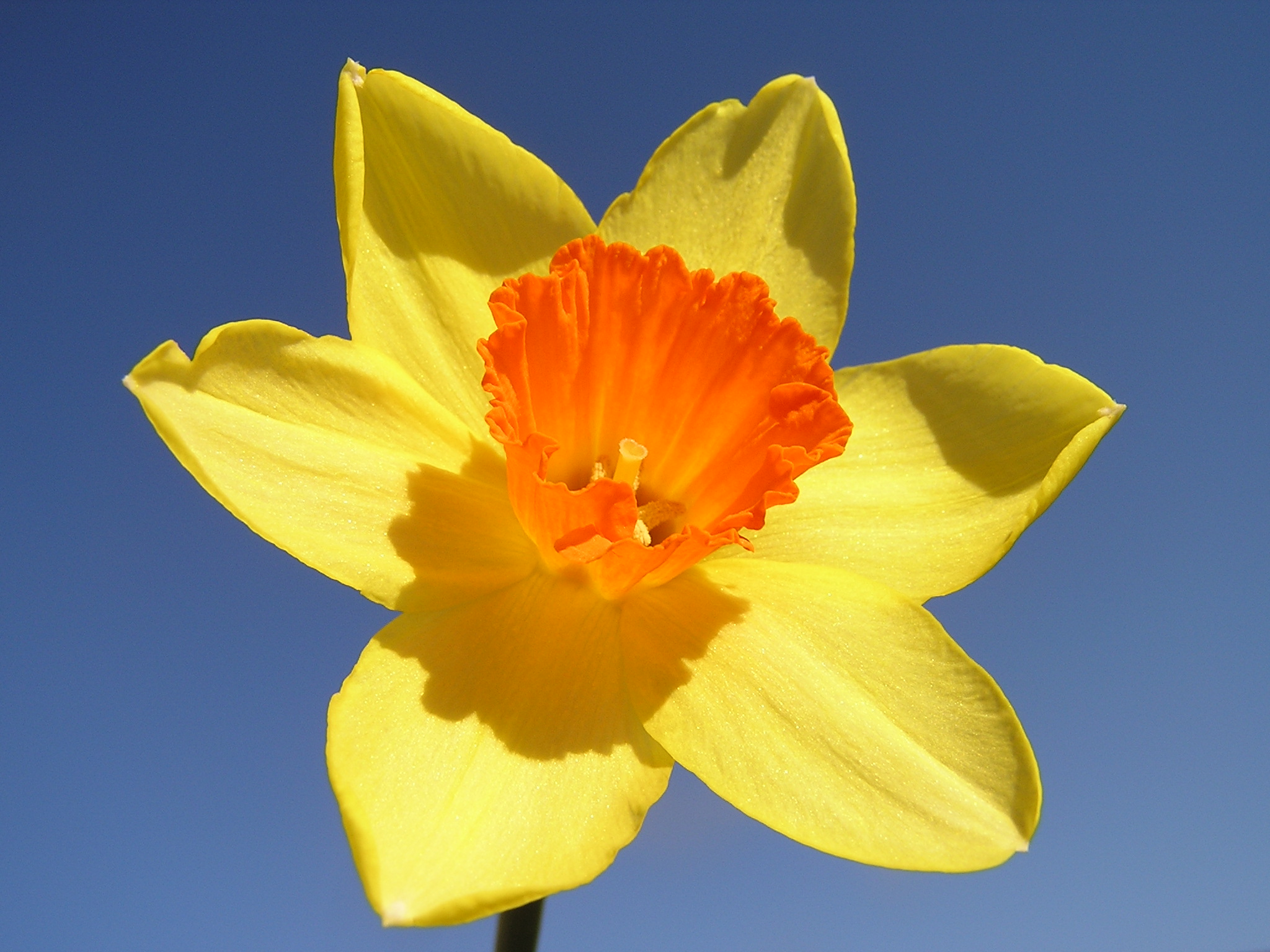
The Daffodils by William Wordsworth [w/ Audio]

Source: Wikipedia [Pub Dom Image]
I wandered lonely as a cloud
   That floats on high o'er vales and hills,
 When all at once I saw a crowd,
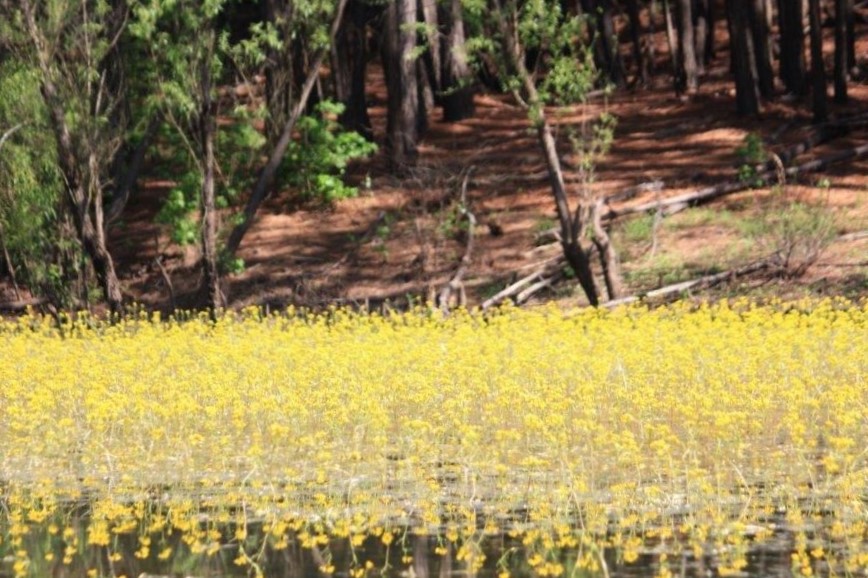
   A host, of golden daffodils;
 Beside the lake, beneath the trees,
   Fluttering and dancing in the breeze.

Continuous as the stars that shine
   And twinkle on the milky way,
 They stretched in never-ending line
   Along the margin of a bay:
 Ten thousand saw I at a glance,
   Tossing their heads in sprightly dance.

The waves beside them danced; but they
   Out-did the sparkling waves in glee:
 A poet could not but be gay,
   In such a jocund company:
 I gazed -- and gazed -- but little thought
   What wealth the show to me had brought:

For oft, when on my couch I lie
   In vacant or in pensive mood,
 They flash upon that inward eye
   Which is the bliss of solitude;
 And then my heart with pleasure fills,
   And dances with the daffodils.

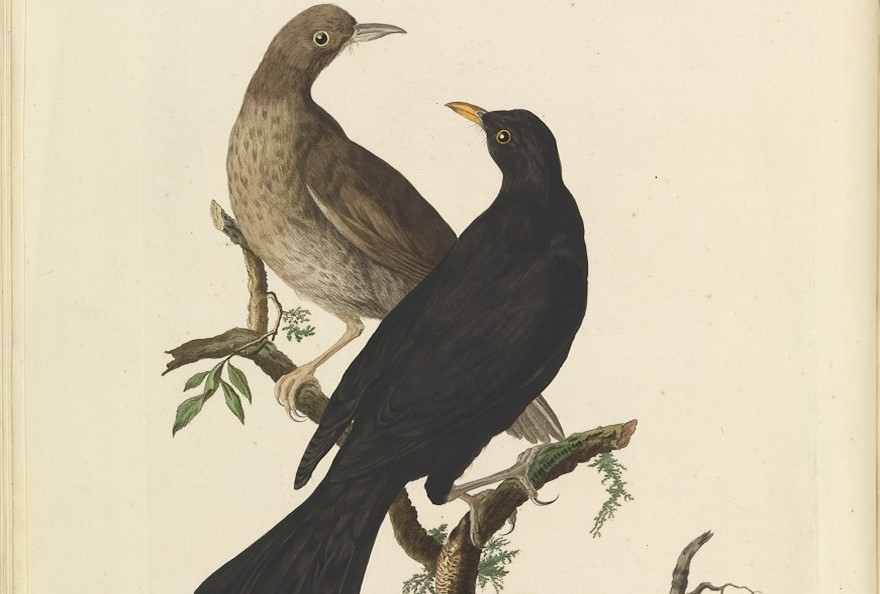
Thirteen Ways of Looking at a Blackbird by Wallace Stevens [w/ Audio]

I
 Among twenty snowy mountains,
   The only moving thing
  Was the eye of the blackbird.

II
 I was of three minds,
   Like a tree
  In which there are three blackbirds.

III
 The blackbird whirled in the autumn winds.
   It was a small part of the pantomime. 

IV
 A man and a woman
   Are one.
 A man and a woman and a blackbird
   Are one.

V
 I do not know which to prefer,
   The beauty of inflections
 Or the beauty of innuendoes,
   The blackbird whistling
     Or just after.

VI
 Icicles filled the long window
   With barbaric glass. 
 The shadow of the blackbird
   Crossed it, to and fro.
 The mood
   Traced in the shadow
     An indecipherable cause.

VII
 Old thin men of Haddam,
   Why do you imagine golden birds?
 Do you not see how the blackbird
   Walks around the feet
     Of the women about you?

VIII
 I know noble accents
   And lucid, inescapable rhythms;
 But I know, too,
   That the blackbird is involved
     In what I know.

IX
 When the blackbird flew out of sight,
   It marked the edge 
 Of one of many circles.

X
 At the sight of blackbirds
   Flying in a green light,
 Even the bawds of euphony
   Would cry out sharply.

XI
 He rode over Connecticut
   In a glass coach.
 Once, a fear pierced him,
   In that he mistook
 The shadow of his equipage 
   For blackbirds.

XII
 The river is moving.
   The blackbird must be flying. 

XIII
 It was evening all afternoon.
   It was snowing
 And it was going to snow.
   The blackbird sat
     In the cedar-limbs.

furu ike ya [Old Pond] by Matsuo Bashō

old pond,
 a frog jumps:
  "plop-splash!"

Original: 古池や蛙飛びこむ水の音; Romanized: furu ike ya kawazu tobikomu mizu no oto

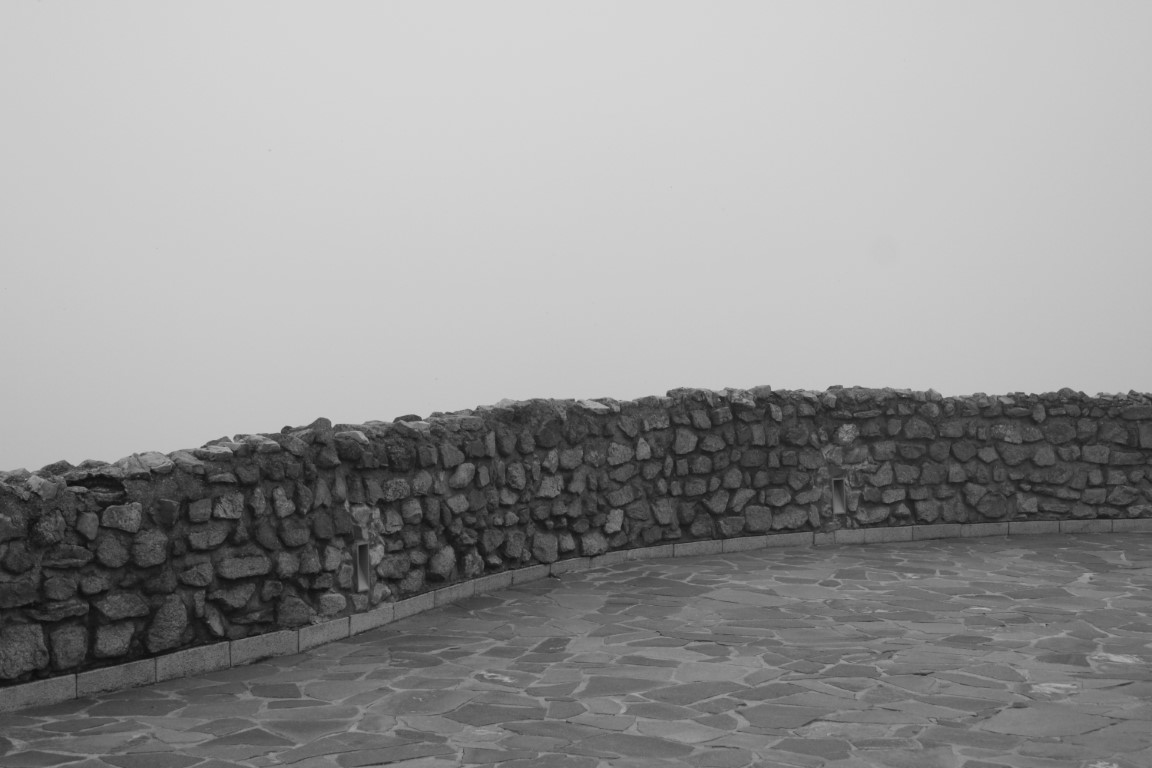
Fog by Carl Sandburg

The fog comes
 on little cat feet.

It sits looking
 over harbor and city
  on silent haunches
 and then moves on.

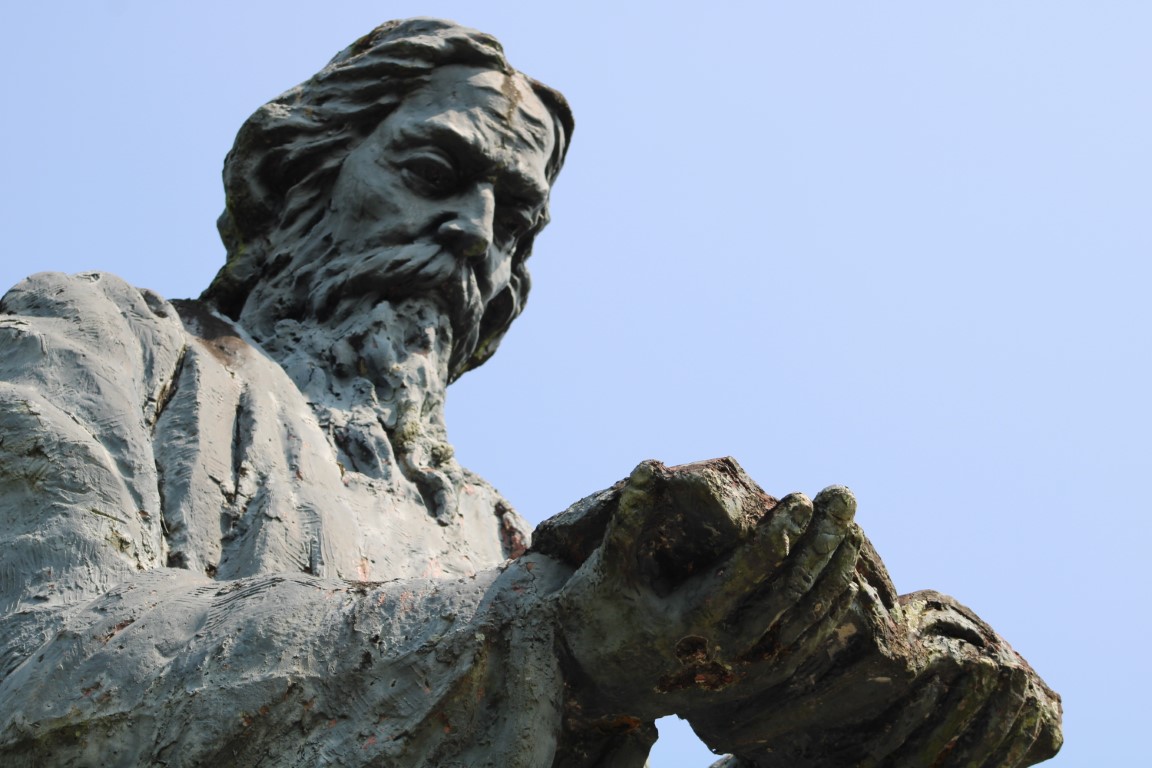
PLAYTHINGS by Rabindranath Tagore [w/ Audio]

CHILD, how happy you are sitting in the dust, playing with a broken twig all the morning.

 I smile at your play with that little bit of a broken twig.

 I am busy with my accounts, adding up figures by the hour.

 Perhaps you glance at me and think, "What a stupid game to spoil your morning with!"

 Child, I have forgotten the art of being absorbed in sticks and mud-pies.

 I seek out costly playthings, and gather lumps of gold and silver.
 
 With whatever you find you create your glad games, I spend both my time and my strength over things I never can obtain. 

 In my frail canoe I struggle to cross the sea of desire, and forget that I too am playing a game. 

BOOKS: The Crescent Moon by Rabindranath Tagore

The Crescent Moon : Poems and Stories [Paperback] [Jan 01, 2017] Rabindranath TagoreThe Crescent Moon : Poems and Stories [Paperback] [Jan 01, 2017] Rabindranath Tagore by Rabindranath Tagore
My rating: 5 of 5 stars

Available free at Project Gutenberg

Amazon.in Page

This is a collection of forty poems that are all connected by the theme of childhood. Many are in the voice of a child, but others are in a parent’s voice as he contemplates the nature of youth and how life has changed — or simply as he looks upon a sleeping infant. Some are brief stories or vignettes and others are scenes or philosophical reflections. Among the more well-known inclusions are: “Playthings,” “Paper Boats,” “The Gift,” and “My Song.”

This is Tagore at his most playful, but it retains his usual clever musing.

View all my reviews

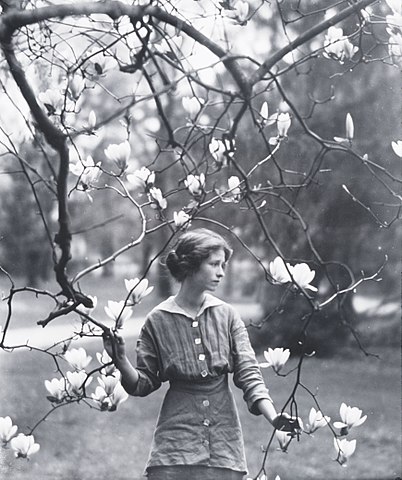
“What lips my lips have kissed, and where, and why” by Edna St. Vincent Millay

What lips my lips have kissed, and where, and why
   I have forgotten, and what arms have lain
 Under my head till morning; but the rain
   Is full of ghosts tonight, that tap and sigh
 Upon the glass and listen for reply,
   And in my heart there stirs a quiet pain
 For unremembered lads that not again
   Will turn to me at midnight with a cry.

Thus in the winter stands the lonely tree,
   Nor knows what birds have vanished one by one,
 Yet knows its boughs more silent than before:
   I cannot say what loves have come and gone,
 I only know that summer sang in me
   A little while, that in me sings no more.

The Second Coming by W. B. Yeats [w/ Audio]

Turning and turning in the widening gyre
   The falcon cannot hear the falconer;
 Things fall apart; the centre cannot hold;
   Mere anarchy is loosed upon the world,
 The blood-dimmed tide is loosed, and everywhere
   The ceremony of innocence is drowned;
 The best lack all conviction, while the worst
   Are full of passionate intensity.

Surely some revelation is at hand;
   Surely the Second Coming is at hand.
 The Second Coming! Hardly are those words out
   When a vast image out of Spiritus Mundi
 Troubles my sight: somewhere in sands of the desert
   A shape with lion body and the head of a man,
 A gaze blank and pitiless as the sun,
   Is moving its slow thighs, while all about it
 Reel shadows of the indignant desert birds.
   The darkness drops again; but now I know
 That twenty centuries of stony sleep
   Were vexed to nightmare by a rocking cradle,
 And what rough beast, its hour come round at last,
   Slouches toward Bethlehem to be born?

BOOKS: The Importance of Being Earnest by Oscar Wilde

The Importance of Being EarnestThe Importance of Being Earnest by Oscar Wilde
My rating: 5 of 5 stars

Amazon.in Page

This play is an amusing cautionary tale on the dangers of “Bunburying” and / or leading a double life. “Bunburying,” a term coined by Wilde in this play, is the act of concocting meetings with a fictitious friend to get out of tedious familial (and other social) obligations. Don’t want to go to Aunt Bessie’s potluck? Tell her that your friend with a plausibly absurd name (e.g. Bunbury) has ruptured a disc in his back and desperately needs your assistance. Bunburying is the specialty of one of the two bachelor characters this story is built around, a man named Algernon. The other, Jack, goes by the name Ernest when he is in London, and has to invent the story that he has a brother when his town and country dichotomy of personalities starts to be seen through by those other than Algernon.

This humorous tale revolves around both Algernon and Jack finding desirable fiancés while being tangled in the web of their own duplicity. Much of the humor comes from the interactions of Algernon and Jack, two men who are quite alike, though Jack thinks himself more respectable. Algernon is more at ease with his own scamp-like nature and plays a role similar to that played by Lord Henry in Wilde’s novel, The Picture of Dorian Gray. That is, Algernon offers many a quotable line that at least has the appearance of wisdom — if, often, a kind of nihilistic wisdom.

This play is definitely worth reading.

View all my reviews

I dwell in Possibility (466) by Emily Dickinson [w/ Audio]

I dwell in Possibility --
   A fairer House than Prose --
 More numerous of Windows --
   Superior -- for doors --

Of Chambers as the Cedars --
   Impregnable of eye --
 And for an everlasting Roof
   The Gambrels of the Sky --

Of Visitors -- the fairest --
   For Occupation -- This --
 The spreading wide of my narrow Hands
   To gather Paradise --