There was never a sound beside the wood but one,
 And that was my long scythe whispering to the ground.
 What was it it whispered? I knew not well myself;
 Perhaps it was something about the heat of the sun,
 Something, perhaps, about the lack of sound --
 And that was why it whispered and did not speak.
 It was no dream of the gift of idle hours,
 Or easy gold at the hand of fay or elf:
 Anything more than the truth would have seemed too weak
 To the earnest love that laid the swale in rows,
 Not without feeble-pointed spikes of flowers
 (Pale orchises), and scared a bright green snake.
 The fact is the sweetest dream that labor knows.
 My long scythe whispered and left the hay to make.
Stoop anywhere and pluck it up,
 But if you look 'round - it's not there.
 Any path may lead you to it.
A stroke of the brush becomes Spring,
 And the flowers are in full bloom. --
 It's like seeing a new year dawn:
 Snatch at it and you won't have it.
 Seize it by force and you'll be poorer.
Be like the old mountain hermit --
 Like duckweed gathered by stream flow.
Find calm amidst storms of feeling
 By knowing Heaven's harmonies.
NOTE: The late Tang Dynasty poet, Sikong Tu (a.k.a. Ssŭ-k‘ung T‘u,) wrote an ars poetica entitled Twenty-Four Styles of Poetry. It presents twenty-four poems that are each in a different tone, reflecting varied concepts from Taoist philosophy and aesthetics. Above is a translation of the tenth of the twenty-four poems.
Bent double, like old beggars under sacks,
 Knock-kneed, coughing like hags, we cursed through sludge,
 Till on the haunting flares we turned our backs,
 And towards our distant rest began to trudge.
Men marched asleep. Many had lost their boots,
 But limped on, blood-shod. All went lame; all blind;
 Drunk with fatigue; deaf even to the hoots
 Of gas-shells dropping softly behind.

Gas! GAS! Quick, boys! -- An ecstasy of fumbling
 Fitting the clumsy helmets just in time,
 But someone still was yelling out and stumbling
 And flound'ring like a man in fire or lime. --
Dim through the misty panes and thick green light,
 As under a green sea, I saw him drowning.

In all my dreams before my helpless sight,
 He plunges at me, guttering, choking, drowning.

If in some smothering dreams, you too could pace
 Behind the wagon that we flung him in,
 And watch the white eyes writhing in his face,
 His hanging face, like a devil's sick of sin;
 If you could hear, at every jolt, the blood
 Come gargling from the froth-corrupted lungs,
 Obscene as cancer, bitter as the cud
 Of vile, incurable sores on innocent tongues, --
 My friend, you would not tell with such high zest
 To children ardent for some desperate glory,
 The old Lie: Dulce et decorum est
   Pro patria mori.
NOTE: Dulce et decorum est pro patria mori is a line written by Horace in Latin that translates to: “It is sweet and fitting to die for one’s country.”
Thou wast that all to me, love,
   For which my soul did pine --
  A green isle in the sea, love,
   A fountain and a shrine,
 All wreathed with fairy fruits and flowers,
   And all the flowers were mine.

Ah, dream to bright to last!
   Ah, starry Hope! that didst arise
  But to be overcast!
   A voice from the Future cries,
  "On! on!" -- but o'er the Past
 (Dim gulf!) my spirit hovering lies
   Mute, motionless, aghast!

For, alas! alas! with me
   The light of Life is o'er!
  No more -- no more -- no more --
   (Such language holds the solemn sea
  To the sands upon the shore)
 Shall bloom the thunder-blasted tree,
   Or the stricken eagle soar!

And all my days are trances,
   And all my nightly dreams
  Are where thy grey eye glances,
   And where thy footstep gleams --
 In what ethereal dances,
   By what eternal streams.
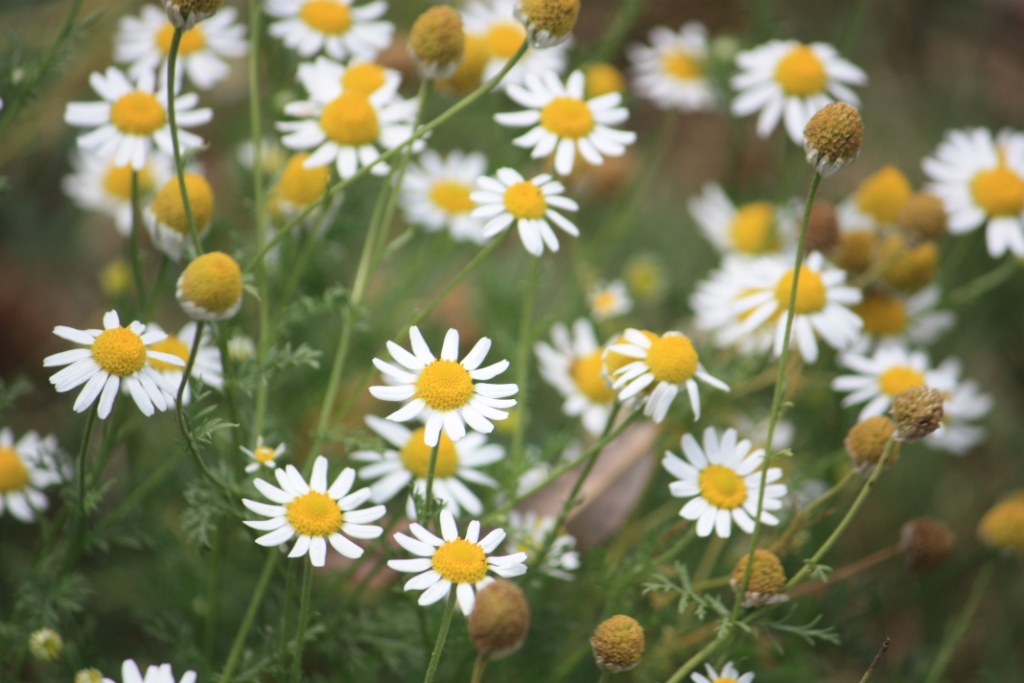
Spring rains spur roadside flower growth,
   and wildflowers creep to the mountain's base.
 Hiking deep up the valley along the stream,
   I see and hear hundreds of orioles.
Looking skyward, a cloud becomes a dragon or snake,
   But then breaks up, giving way to blue sky.
 Lying in the forest under hanging vines,
    I can't tell north from south.
Amazon.in Page
Until recently, I was only acquainted with Stevenson as a novelist, but I had a powerful experience with his poem “The Hayloft” (included in this collection.) I was intrigued by how a poem written by a nineteenth century Scot could prove so nostalgia-inducing for me, having been a 20th century American farm-boy. So, I read the collection, and found that “The Hayloft” was only one of many examples that had such an effect. Others include: “Land of Counterpane,” “Block City,” and “Land of Nod.” The nostalgic power of the poems derives from the fact that Stevenson does a phenomenal job of capturing a child’s enthusiasm for play, and in that regard I’m sure the collection will resonate more broadly than just I, or even than just farm kids.
Afterall, there’s a lot of Stevenson’s experience that is dissimilar to mine. Besides his era and his nationality, his mentions of nurses, gardeners, and cooks is surely much different from my own upbringing, being devoid of household staff. But the book only needs to draw upon that love of play and imagination to take one back.
For a work from the nineteenth century, this collection of 50+ lyric poems has aged well. There is the occasional word like “gabies” or “whin” to send one to a dictionary, but those archaic or obsolete terms are rarities. Furthermore, the lyricism of the poems makes them easily read or sung.
I’d highly recommend this collection for poetry readers, particularly children or those looking to reexperience childhood.
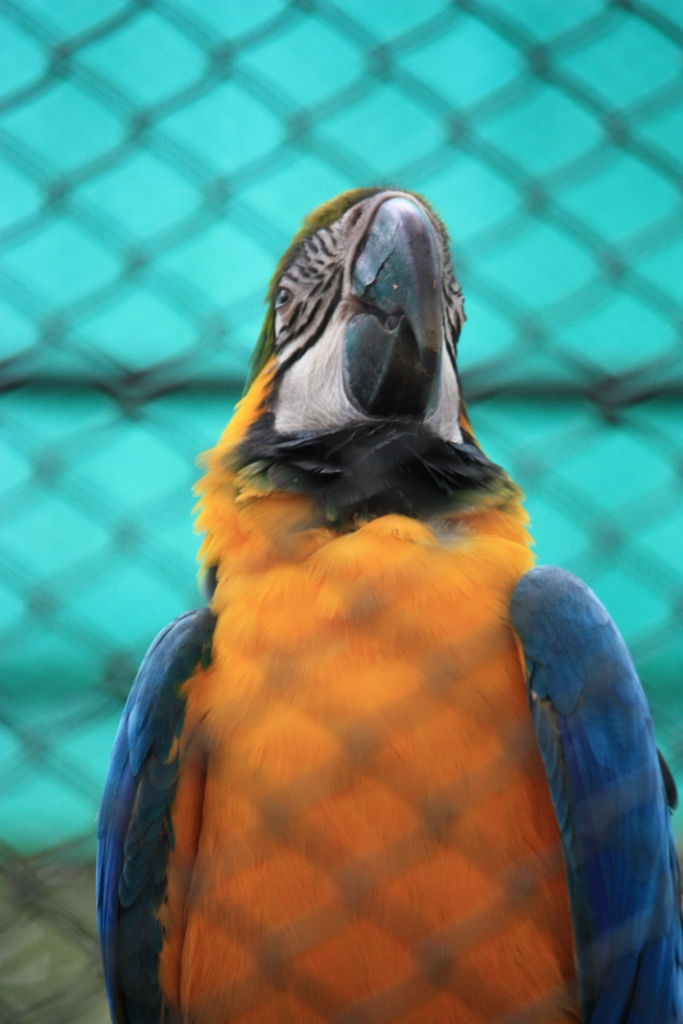
I know what the caged bird feels, alas!
 When the sun is bright on the upland slopes;
 When the wind stirs soft through the springing grass,
 And the river flows like a stream of glass;
 When the first bird sings and the first bud opes,
 And the faint perfume from its chalice steals --
 I know what the caged bird feels!

I know why the caged bird beats his wing
 Till its blood is red on the cruel bars;
 For he must fly back to his perch and cling
 When he fain would be on the bough a-swing;
 And a pain still throbs in the old, old scars
 And they pulse again with a keener sting --
 I know why he beats his wing!

I know why the caged bird sings, ah me,
 When his wing is bruised and his bosom sore, --
 When he beats his bars and he would be free;
 It is not a carol of joy or glee,
 But a prayer that he sends from his heart's deep core,
 But a plea, that upward to Heaven he flings --
 I know why the caged bird sings!










 Tiger Riding for Beginners