5 Books to Read If You Want to Live

Taken on the Annapurna Sanctuary Trail in Nepal.

Over the years, I’ve read many books about survival in extreme or unexpected situations. Here are five of my favorites.

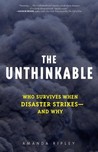
THE UNTHINKABLE by Amanda Ripley [Full Review]

What I like about this book: Ripley focuses heavily on the topic of mindset while exploring a wide range of survival situations from being stranded in a lifeboat to being in the Twin Towers on 9/11. It’s a fascinating – as well as educational – book.

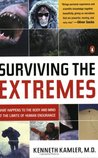
SURVIVAL AT THE EXTREMES by Kenneth Kamler [Full Review]

What I like about this book: This book focuses on surviving in all the places humans are not adapted to, places where one cannot live for long without ongoing technological support. These places include Mt. Everest (with which the author has personal experience,) the ocean, and the harshest of deserts. Kamler is a medical doctor and the book, therefore, does a good job of explaining the limits of human physiology.

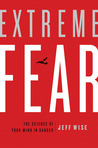
EXTREME FEAR by Jeff Wise [Full Review]

What I like about this book: Wise’s book examines how fear can work against us in challenging situations (e.g. causing one to freeze at the wrong time) and what methods have been developed to overcome such crippling or inappropriate fear responses. This book is not entirely about life-and-death survival, but it does have a lot to say that is relevant to the subject.

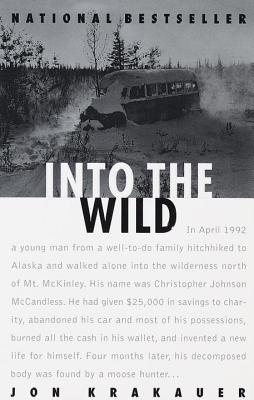
INTO THE WILD by Jon Krakauer [Full Review]

What I like about this book: This book is not like the others. There are no physical or mental techniques for survival described in it, nor discussions of physiology. Rather, it is an extremely well-written cautionary tale about a young man who goes out into the wilderness and gets in over his head. It is highly readable food-for-thought.

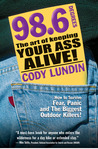
98.6 by Cody Lundin [Full Review]

What I like about this book: This is the closest thing to an actual survival manual on my list. But it’s written in conversational, folksy style that makes it easy to read, despite the daunting subject matter. As the title suggests, Lundin’s central premise is that one must keep the body burning at its appropriate temperature, or else…

BOOK: “How To Be The Best Improviser On Earth” by Will Hines

How To Be The Greatest Improviser On EarthHow To Be The Greatest Improviser On Earth by Will Hines
My rating: 5 of 5 stars

Amazon.in Page

This guide to performing improv comedy alternates chapters that explore various tenets of the art with chapters that present exercises to help one carry out said tenets in practice. So, it is both a philosophy of improv and a how-to manual. The tenets include: “be present,” “be changeable,” “be brave,” “be authentic,” and “be funny” — among others.

Being a neophyte to the subject, I knew nothing beyond the oft joked upon advice to always “Yes, and…” during a scene, a lesson intended to keep a scene moving and which also provides much material for wisecracks. This book doesn’t spend much time on that rule beyond discussing when one should break it, and how one can do so without bringing a scene to a halt. The key takeaways of the book were about pacing and the need for normality in contrast to the absurdity to make a scene funny. That is, one can’t just go to the whackiest place possible out of the gate and with all characters, instead it is the contrast between everyday conversation and the introduction of an absurd premise that makes a scene funny. As with the “straight man” of a comedic duo, one needs straight elements or characters.

I found this book to be informative. It’s a quick read and offers much food-for-thought that could benefit one offstage as well as on.

View all my reviews

BOOK REVIEW: The Art of the Tale by Steven James & Tom Morrisey

The Art of the Tale: Engage Your Audience, Elevate Your Organization, and Share Your Message Through StorytellingThe Art of the Tale: Engage Your Audience, Elevate Your Organization, and Share Your Message Through Storytelling by Steven James
My rating: 4 of 5 stars

Amazon.in Page

This is a fine book on storytelling, storytelling with a focus on business presentations and speeches. That said, this is a topic for which the market is glutted. There are many books available about storytelling, and while this one doesn’t distinguish itself by being exceptionally bad, neither does it distinguish itself as exceptionally good. It’s a decent book on storytelling, and if you’re interested in stories for work presentations or speeches and haven’t read other books on the subject, you might as well try this one. However, if you’ve studied up on the subject, I wouldn’t expect to discover anything profound or novel in this book.

The book does focus on some subjects more than do others. One of my favorite parts was chapter 11, “Warts and All…,” because it addresses an issue that books tend to overlook or gloss over, and that’s how to deal with the skeletons in one’s closet (or in the company’s closet.) It offers an intriguing look at the dark side of Henry Ford.

One of the strengths of this book is that it summarizes key lessons and repeatedly revisits core concepts (e.g. the StoryCube, which is these authors’ outline for presenting the fundamental elements of a story.) The book’s greatest weakness is probably oversimplifications and banal statements, particularly given that the authors critique the simplifying statements of others. For example, they offer a criticism of the common distinction between plot- and character-driven literature that misses that there is something fundamentally different between Joyce’s “Ulysses” and “The Hunger Games” that is worth understanding, and – to the degree their criticism is true – much of this book could be similarly criticized as oversimplification or false dichotomization / categorization.

Reading this book helped me think about the subject of storytelling, particularly the non-written variety of story, but I can’t say there was anything groundbreaking or of unmatched profundity.


View all my reviews

BOOK REVIEW: The Power of Podcasting by Siobhan McHugh

The Power of Podcasting: Telling stories through soundThe Power of Podcasting: Telling stories through sound by Siobhan McHugh
My rating: 5 of 5 stars

Amazon.in Page

This book is in part a how-to guide, and in part a history of podcasting’s rise, though a history that tries to look from within rather than from a distance as much as possible. The two major thrusts of the book are story and sound. Of the many varieties of podcasts that exist today, the focus of this book is on ones that are story-centric, be they non-fiction or fiction. [Of course, there’s an argument that all podcasts should employ story to some degree, even if they aren’t of a format that facilitates an overarching story.] McHugh, herself, uses stories and what I’d call meta-stories (i.e. the stories of how various podcast-delivered stories got told) extensively throughout the book.

With respect to sound, there’s a lot of background sound and music that makes the difference between a professional sounding podcast and one that’s not. This is a particularly difficult subject to grasp because – while one often experiences background sound and music drawing one deeper into the story (or – perhaps more accurately – one feels its absence as a vague sense of detachment,) one tends not to be aware of this background audio on a conscious level. Therefore, discussions that point out the thinking about background audio choices can be profoundly eye-opening for a neophyte, such as myself.

When I say that the book has a podcasting how-to aspect, I should emphasize it doesn’t get into the technical aspects (i.e. what kind of mic to buy and how to use it,) but rather it discusses such topics as scripting, interviewing, editing / reorganizing for effect, and starting out. The book also has chapters at the end about increasing diversity in what has been an extremely Caucasian-centric industry as well as offering insight into potential future directions of audio storytelling. Throughout. there are short interviews with individuals with expertise in the industry, and there’s an extensive appendix, listing podcasts and podcasting resources.

If you’re interested in starting a podcast or learning more about podcasting, I’d highly recommend this book.


View all my reviews

BOOK REVIEW: Funny on Purpose by Joe Randazzo

Funny on Purpose: The Definitive Guide to an Unpredictable Career in Comedy: Standup + Improv + Sketch + TV + Writing + Directing + YouTubeFunny on Purpose: The Definitive Guide to an Unpredictable Career in Comedy: Standup + Improv + Sketch + TV + Writing + Directing + YouTube by Joe Randazzo
My rating: 5 of 5 stars

Amazon.in Page

Get Speechify to make any book an audiobook

Former editor of the hilarious faux-newspaper, The Onion, (Joe Randazzo) provides a broad overview of the humor creation industry, and the many jobs, therein. Whether you’re interested in scriptwriting, performing stand-up, or starting a YouTube channel that provides color commentary of crippling skateboarding accidents, this book has tips and insight into how said job works, how to do the job, and how to avoid the pitfalls. And, as expected, the book offers humor throughout. That said, the first priority is educational, so one shouldn’t expect a laugh-a-minute humor extravaganza.

The book is divided into five parts. The first four parts delved into the various humor content creation jobs (writing, performing, making pictures, and making internet content,) and the last part is about the common business aspects like understanding intellectual property rights, knowing the difference between an agent and a manager, and learning how to get people to give you money for a product you don’t yet have.

One nice feature the book offers is brief interviews with various experts such as Judd Apatow, Weird Al, Joan Rivers, many people you’ve never heard of but I’m sure are good at what they do, and a few that you will have heard of if you have obsessive niche tastes in humor. The interviews are short, but it does help to have insight from someone whose life has largely focused on a particular dimension of humor creation. Randazzo has a diverse background, including writing, performing, and television and internet work, but there are fine insights to be gained from a specialist.

I got a lot out of this book and would recommend it for those interested in the humor content creation industrial complex.

View all my reviews

BOOK REVIEW: Good Writing is Like Good Sex by C. S. Johnson

Good Writing is Like Good Sex: Sort of Sexy Thoughts on WritingGood Writing is Like Good Sex: Sort of Sexy Thoughts on Writing by C.S. Johnson
My rating: 3 of 5 stars

Amazon.in Page

Sex sells. This book attempts to capitalize on that fact to achieve a foothold in the concise writing guide market, a class of books for which there is no shortage and whose entrants include established masters such as Stephen King, Ursula K. Le Guin, and Ray Bradbury. Given the nature of this market, having hinted at sexiness as a hook, it behooves the writer to boldly embrace that hook, but this isn’t done. I’m not suggesting the author needed to venture into pornographic territory, and I understand that the book is not about writing erotica, specifically [a point that is made quite clear.] However, the banal and disembodied references to sex make the material drier than it otherwise would be. In creating a book that could be read by, say, the Pope or the chairwoman of the Southern Baptist Convention Lady’s Auxiliary without so much as the hint of a blush, the book draws attention to just how much it’s failing to follow its own advice. [I would go as far as to say that if a person had a rare condition in which the slightest sexual arousal would cause his or her heart to violently explode, killing everyone in a ten-foot radius, I would feel safe sitting next to that person on the couch as they read this book.]

The book takes a soup-to-nuts approach, reflecting upon the usual range of topics including: prep work, characterization, tension building, and editing. The information is good, and it’s presented in a brief and readable fashion. That said, it would be a much better first guide than one for someone who has read extensively on the subject because there isn’t much that is novel, either in the advice or the way in which it’s presented. If you’ve read other books on writing, you’ve probably read this advice before – and, in many cases, read it stated in a much more interesting fashion. There are some odd inclusions. At one point the author discusses the parts of speech. If you don’t understand the parts of speech, no writer’s guide will help you, and you probably need to revisit elementary school.

In this kind of book, examples are essential, and, here too, some odd choices were made. One such choice was the author using her own writings. [If you’ve read writing guides by well-known authors, you’ll note that they don’t even use their own writing, and instead tend to use stories like “Macbeth” or folktales – works that are well known to the broadest imaginable readership.] Among examples that weren’t from her own writing, there was a mix of more and less obscure references. It’s not so much that insufficient information was presented to get across the author’s point, but rather that a kind of affinity is achieved with readers when they have familiarity with a story, and that is sacrificed when the couldn’t possibly.

The long and the short of it is this, I think the book was a fine concise writing guide. It presents the information clearly and in a logically arranged fashion. That said, choices were made that felt odd – mostly in using sex as a hook and then eschewing any sense of sensuality. If you’re looking for an introduction to writing, you could do worse than this one [but you could probably do better as well.]


View all my reviews

BOOK REVIEW: TED Talks Storytelling by Akash Karia

TED Talks Storytelling: 23 Storytelling Techniques from the Best TED TalksTED Talks Storytelling: 23 Storytelling Techniques from the Best TED Talks by Akash Karia
My rating: 4 of 5 stars

Amazon page


This is a brief guide to storytelling and story building, particularly as it pertains to public speaking. Its emphasis on TED Talks is just to capitalize on the popularity of that forum as well as to draw widely known examples. There are no novel insights offered in this book. It’s the same information one could find from many other sources. However, it’s concise, well-organized, and uses examples pulled from popular TED Talks, and so readers may get some synergies from familiarity with a given speaker’s delivery.

The book is organized into nine chapters. The first introduces the topic by explaining why stories are so much more effective than other approaches to public speaking. The second chapter is about hooks and conflict. The third chapter is about the twist or element that makes the story interesting—as opposed to a straightforward accounting of events. Chapters four through six are all related in that they deal with providing the sensory and other details necessary to make the story come alive for the audience member. Chapter seven is about the effectiveness of stories with a positive message. Chapter eight steps back and examines the overall flow of the story with key way-points of consideration. Chapter 9 is a summation of key points. It’s mostly a list of the 23 bullet points that were made throughout the book, each of which is also located at the end of its respective chapter.

I’d recommend this book for anyone preparing for a public speaking engagement. However, I should point out that the price seems to be higher at the moment than when I bought it. I wouldn’t recommend spending a lot on the book because the information is so widely available.

View all my reviews

BOOK REVIEW: Publish on Amazon Kindle with Kindle Direct Publishing

Publish on Amazon Kindle with Kindle Direct Publishing Publish on Amazon Kindle with Kindle Direct Publishing by Kindle Direct Publishing
My rating: 4 of 5 stars

KDP website


This is a short guide to self-publishing using Kindle Direct Publishing (KDP) that was put out by KDP. I’m not sure this particular e-book exists any more, though all the information in it will be on the KDP website. There are about a billion (exaggeration, maybe) Kindle books that have taken this information and made their own book, using similar names. I can’t comment on any of them. I’m sure some include helpful tips for increasing your sales and making your product more appealing, and some of those tips are likely much better than others.

This is a straight up guide to using KDP. It covers topics like how to set up an account, what formats are accepted (several) and which is best (HTML), royalty options (there are two, and the lesser royalty allows one greater freedom of pricing one’s book, i.e. if you want to sell it at cut-rate to get some sales volume or if you’re a narcissist who thinks their self-published masterwork is worth $200 USD per copy), and how / when payments are made (varies by EFT [electronic funds transfer] v paper check options.)

This guide provides all the information needed to get your book up on Amazon. However, if you want insight into other topics (how to market your book, covers, etc.) you’ll need to look elsewhere.

If you can find it, I’d recommend this handy guide. But it may be quicker to just go to the KDP website.

View all my reviews

BOOK REVIEW: Gotham Writers’ Workshop: Writing Fiction by Various

Writing Fiction: The Practical Guide from New York's Acclaimed Creative Writing SchoolWriting Fiction: The Practical Guide from New York’s Acclaimed Creative Writing School by Alexander Steele

My rating: 4 of 5 stars

Amazon page

This workbook-style guide to writing fiction is put out by the well-known New York City creative writing school. With 11 chapters, it delivers lessons on all the elements of fiction including: character development, plotting, establishing point of view, honing description, building realistic dialogue, varying pacing, establishing voice, determining a work’s theme, and carrying out revisions. It also has a chapter that goes into the business of writing (as opposed to the craft of writing which is the bailiwick of the first ten chapters.)

There are a couple of features of this book that set it apart from the vast canon of writers’ guides. First, this isn’t a single author work, which means the reader has access to a much broader pool of experience than one would in a single author text. It also means that an author can be assigned a topic according to his or her strengths as a writer.

Second, across the chapters, they use Raymond Carver’s Cathedral as an example work, and they provide that story in an appendix for those who haven’t read it. It’s not that the authors exclusively use this short story for examples. But it’s useful to have a common story and to include it because there are so many great stories and novels available that no matter how well-read one’s readership, there will be works that some haven’t read. (e.g. Much as I should’ve, I haven’t yet read nor seen the movie Gone with the Wind–a common exemplary work because it’s a beloved book, a movie, and because pop culture references [e.g. The Simpsons] have made the gist of it available to even those slackers who’ve neither read the book nor seen the movie.) There’s a reason why writers’ book authors often use movies to describe story elements, because there are many fewer movies than books and vastly fewer good movies—thus a higher likelihood of a common experience. Yes, there are a few works common across most school curricula, but there’s no better way to ensure that a book doesn’t get read thoroughly than to assign it as required reading.

A third useful feature of this book–but not one that is in any way unique to it–is that it offers writing exercises throughout to help build one’s skills through practice. This is where the value of such a book truly lies. The advice such books offer are almost always the same—sometimes hackneyed but almost always valuable. (A lot of tired advice is tired because it bears repeating owing to the constant infusion of new writers who repeat the same errors.) A final useful element of the book—but also one that features in many similar guides—is a checklist in the appendices that allows one to rapidly consider the book’s key questions as they apply to one’s own writing project.

I’d recommend this book as one of the most useful writers’ guides that I’ve read.

View all my reviews

BOOK REVIEW: How to Meditate by Lawrence LeShan

How to Meditate: A Guide to Self-DiscoveryHow to Meditate: A Guide to Self-Discovery by Lawrence LeShan

My rating: 3 of 5 stars

Amazon page

LeShan’s book offers a secular and scientific guide to meditation. By secular, I don’t mean to suggest that it’s devoid of mention of religion. On the contrary, How to Meditate delves into a wide variety of meditation styles that have roots in religion, and it quotes from spiritual teachers across a range of religions–including the mystic branches of Christianity and Islam. I mention the latter because the book seems tailored to bringing individuals into meditation that do not normally think meditation as being their bag, which could include atheists, secular humanists, or those whose religious practices don’t involve a mystical component. I just mean that the book is secular in that it doesn’t advocate a specific religion or suggest that one needs to hold any particular spiritual beliefs to benefit from meditation.

Also, by scientific I don’t mean to suggest that the book gets bogged down in the minutiae of EKG’s or the like. How to Meditate is readable to the general reader, except perhaps for chapter 11, which deals with using meditation in psychotherapy. [However, by the author’s own admission, one can skip that chapter with no great loss if you aren’t a therapist.] What I do mean to say is that LeShan takes an approach to meditation that is grounded in real-world, observable results. He tells the reader of the mental and physical benefits of meditation as they are discussed in the scientific literature.

In other words, if you think that meditation is only for hippie-types who believe in auras and astral planes, this book may convince you otherwise. On the other hand, if you’re one who believes in auras, astral planes, or the idea that only one true guru / path exists, you’ll probably be miffed by this book. There are a couple of chapters devoted to ideas that people believe that both have little evidence of grounding in reality and which detract from meditation. This includes ESP, auras, strange maps of reality, and guru-worship.

The core of the book is chapter 8, which explains how to do meditations of eleven different kinds. The book addresses single-point awareness, breath counting, thought watching, bodily awareness (specifically, Theravada Buddhist style meditation), word association (1,000-petaled lotus), mantra meditation, meditation on “I”, movement meditation (particularly Sufi-style), sensory awareness, safe harbor meditation, and unstructured meditation. The first ten are all types of structured meditation, and an earlier chapter is devoted to distinguishing structured from unstructured approaches to meditation. There is also an earlier chapter that discusses a broad taxonomy of meditation and sub-classes of meditation.

The book is logically arranged for the most part. It begins with a chapter on why one should meditate. This first chapter sets up two chapters that deal with the psychological and physiological effects of meditation. There is one oddity of organization. The core “how-to” chapter is bookended by a chapter on ESP and one on various pitfalls of spiritualism. It would seem these two chapters should go together as they both deal with things that detract from meditative practice, and not with the central chapter wedged between them.

The last couple chapters and the Afterword aren’t as beneficial for the general reader as the first 3/4ths of the book or so. One of those chapters is the aforementioned chapter for psychotherapists and the other deals with the social significance of meditation. The last chapter before those that I found superfluous, however, is one addressing the question of whether one needs a teacher to learn meditation. This pro and con discussion seems like a good way to end this book.

There is a long afterword by Edgar N. Jackson that adds a perspective on what we should take from LeShan’s book. I suspect that if page count were not a concern the book would have ended on the chapter that talks about decisions about a teacher. The last two chapters and the Afterword seem to have been added for the twin-fold purpose of hitting a target page count and to add a couple of niche audiences—namely students of psychology and fans of Edgar N. Jackson (i.e. Christians with an interest in mystical approaches to their religion.)

Overall, I’d recommend this book for those who are new to meditation, those who are seeking to expand their practice to new types of meditation, and those who are interested in the mind in general. As I mentioned, if you think of meditation as a route to see the glow of chakras or to commune with the dead, this probably isn’t the book for you—you’re likely to find its disregard for such otherworldly endeavors to be unappealing.

View all my reviews