BOOK REVIEW: Ninja: A History by John Man

Ninja: 1,000 Years of the Shadow WarriorNinja: 1,000 Years of the Shadow Warrior by John Man
My rating: 3 of 5 stars

Amazon page

The author, John Man, isn’t the first historian to fall for the siren call of ninja history only to plummet into a catch-22, but he’s the one I’m reviewing right now. So, while his book isn’t exceptionally bad, it’s tremendously flawed in a manner common across ninja histories. What is said catch-22? On the one hand, ninja excite the imagination and a half-way decent book on them is sure to sell. On the other hand, there’s very little known about the ninja. If the myth of the ninja is an elephant, the ninja as we truly know him is a grasshopper. [So much so that the first Westerner to write such a history, Stephen Turnbull, has now spun 180, proposing that the ninja never existed but were purely a post-Warring States construct.] While it would seem that Turnbull goes too far given the existence of manuals and vague mentions, what we don’t know about are the nitty-gritty details of ninja missions and those are the stories that the reader desires but which time and the ninja’s legendary secrecy have put forever beyond our reach.

What is in the book? If not tales of ninja stealing into castles to abscond with information or to assassinate an enemy General, and the effect of those actions on the outcome of wars? First, there’s a lot of information that is already widely available in other English language books, such as the influence of Sun Tzu’s chapter on espionage on the birth of the ninja (probably spurious given the centuries in between) and description of the seven types of disguises. Second, there’s a lot of general Japanese history that is necessary to some degree as background, but at some point one realizes the author has ventured beyond background into padding. Finally, speaking of padding, about a third of the book by page count (cleverly disguised as only three chapters) occurs long after the end of the ninja. Don’t get me wrong; some of the World War II material is fascinating, but it’s as if one were reading a biography of Blackbeard and—all of a sudden—one finds oneself reading about a Somali hijacking of container ships in 2011. (Even while you are fascinated, you can’t help but feel that you’ve been the victim of bait-and-switch.) In short, the book has a lot of repetition and padding, and not much that’s both new and on topic. (One of the reasons that I didn’t give the book too low a rating is that if it’s the first book you are reading on the subject, it’s readable and interesting.)

There’s one more flaw that comes from the dearth of information. The author cites everyone and anyone who has said something interesting on the subject, but we don’t really know how reputable said sources are. Some may be sterling and others full-of-shit. It’s easy to say something fascinating about the ninja; it’s much more difficult to say something that’s true and fascinating.

So what does the book do right? It’s well written in terms of being readable and offering frequent mind candy. The author does challenge a few statements as he reports them. My last paragraph may have led one to believe that Man just shot-gunned information out there, but he actually takes a suitably skeptical view for addressing such a murky topic. The problem is that we don’t know how serious to take claims he refutes or those he appears to endorse because he’s not an expert in the field. He is an Asianist historian with a list of books that is all over the map. [I did see just one factual error in which he refers to the companion sword of a samurai as a tanto. A tanto is a dagger, the companion to the katana is the wakizashi. But I don’t know how big of a deal to make out of that sin as I can’t say that I noticed any others (not that I necessarily would as I’m no expert either.) On the other hand, a little fact checking…]

If you’ve never read a history of the ninja before, you’ll probably find this one interesting. If you’ve read the other books out there, it’s less clear that you will. However, I did find the discussion of Iga no Ran (the battle of Iga, a campaign meant to crush the ninja of Iga) to be intriguing. At any rate, as long as you realize the last one-third of the book is off-theme and are alright with that, you should find it palatable.

View all my reviews

BOOK REVIEW: Legends of the Martial Arts Masters by Susan Lynn Peterson

Legends of the Martial Arts MastersLegends of the Martial Arts Masters by Susan Lynn Peterson
My rating: 4 of 5 stars

Amazon page

This book consists of 21 short stories from the lives of martial arts masters: some modern, some historical, and some anonymous folktales with unknown origins. The majority of the stories are about Japanese or Okinawan martial artists, but Chinese, Thai, American, and Koreans are also represented.

These stories can be roughly grouped by theme (though they aren’t organized in that way in the book and some stories cut across more than one of the themes.) The first theme is peacefulness, non-violence, or minimization of violence. This idea is central to the stories featuring Tsukahara Bokuden and his school of “no sword,” Yasutsune Itosu who invites an attacker for tea, Hisamori Takenouchi who is taught the folly of war by an old man, and Gichin Funokoshi who gives robbers cake.

The second theme is the power of an immovable mindset. This can be seen in the story of the sumo wrestler Onami who had to overcome a stint of choking, the parable of the tea master who is challenged to a duel and is advised by a swordsmanship teacher to take up the sword with the mindset with which he takes up his tea utensils, and the tale of the unbreakable prisoner Gogen Yamaguchi. There are also stories about the ability to win by preventing the opponent from achieving this mindset. This was most famously achieved by Miyamoto Musashi (on several occasions,) but it’s also seen in the story about an archer who is unable to make a shot from a perilous position even though the shot wouldn’t be a hard one for him from stable ground.

The third theme is the importance of the student/teacher relationship and the value of a teacher’s wisdom. This can be seen in the stories about American Karate founder Robert Trias and his experience with the master who wanted to trade him Hsing-I lessons for his own boxing lessons, about Morihei Ueshiba’s demystification of mysteries that perplexed his students, and about Chatan Yara’s reversal of a would-be student’s tactic.

The final story theme deals with the virtue of being diligent in one’s training. These include the amazing feats of the likes of Sokon Matsumura (an Okinawan fighter who fought a bull), Nai Khanom Tom (a Muay Thai legend who defeated twelve of Burma’s best fighters in rapid succession), and Mas Oyama who sentenced himself to training exile for what most would consider a minute infraction. There are other tales in this category such as how Duk Ki Song and other Korean students practiced secretly under a martial arts prohibition or how Yim Wing Chun got out of an arranged marriage to a cad through her diligent training.

This is a short book (about 120 pages) and most stories are only 4 to 6 pages. If you are a long-time practitioner of martial arts, you’ll probably have heard some of these stories, but you’re also likely to come across something new. There are obscure tales intertwined with one so popular it’s been made into multiple movies (e.g. Mu-lan.)

It should be noted that this is more of a collection of morality tales than historical accounts. One shouldn’t take these stories as established history as opposed to mythology or folktales. To her credit, Peterson leaves tales like the parable of the tea master and the tale of the three sons anonymous. Famous martial artists, like Miyamoto Musashi, are often cast into these stories either because people read a fictional account that borrowed from folktales, to lend more power to the story, or because the facts have become muddled in retelling. However, for example, the chapter on the Bodhidharma is most likely wrong. (The consensus view among historians is that Bodhidharma didn’t introduce martial arts to the Shaolin temple as is popularly thought, and that the popular myth is the result of revisionist history.) That doesn’t mean the story doesn’t have virtue—it’s got great hang time for some reason.

I’d recommend this book for martial artists who are interested in the philosophy and ethos of the martial arts. It’s a quick and easy read.

View all my reviews

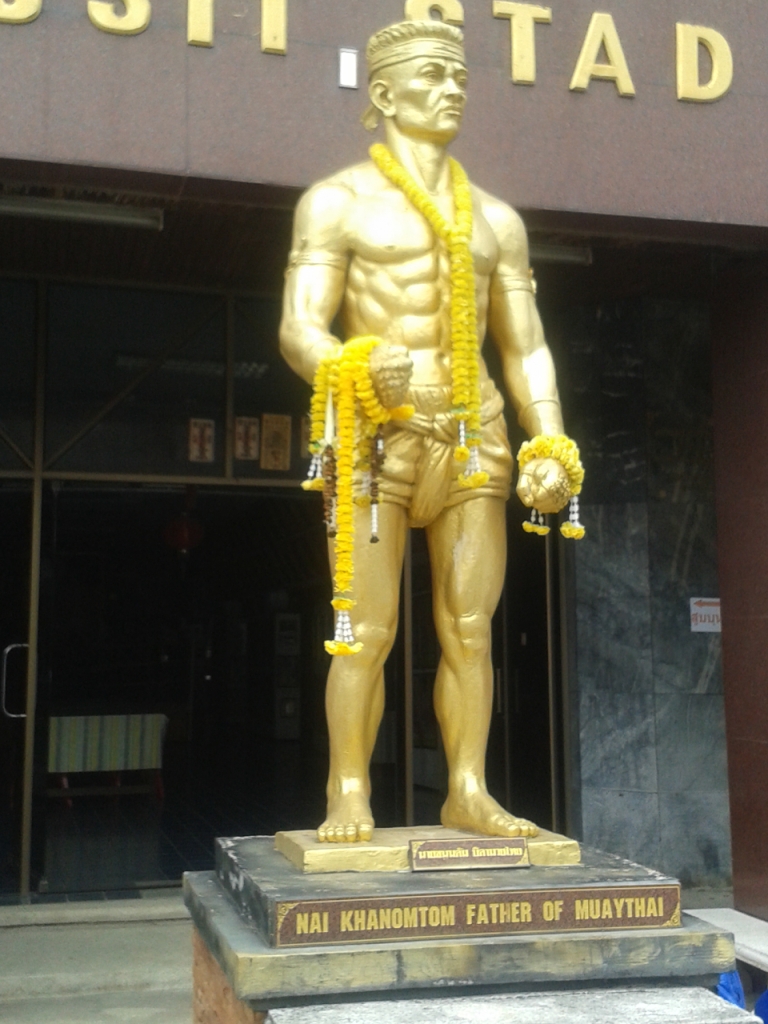
The Legend of Nai Khanomtom: Hero of Muay Thai

?????????????

Muay Thai Institute in Rangsit, Thailand

In 1767 the Ayutthaya Kingdom of Siam fell to the Burmese. Burma occupied Siam only briefly because Burma’s king, King Hsinbyushin (a.k.a. King Mangra), was forced to withdraw his troops to combat a Chinese invasion to his homeland. The Thais were fabled to be valiant fighters and even had a numeric advantage, but they were easily put into disarray by Burmese forces. Even King Mangra was said to have declared that he couldn’t have taken Ayutthaya had the leadership of the opposition been more effective. [Keep in mind that even if he did say this, it might have been more a dig at his Thai counterpart than an expression of his true feelings.]

The Burmese captured a many prisoners during their Thai campaign and true warriors were particularly coveted as prisoners. One such fighter was Nai Khanomtom (fyi: it’s also written Nai Khanom Tom.) Nai Khonomtom was renowned for his skill in Muay Boran, an early Thai fighting style related to Muay Thai. This made him a logical choice to headline for the Thais in a tournament that would pit Muay Boran against Thiang–i.e. the indigenous martial arts of Burma (e.g. Lethwei and Bando.) The tournament would be part of King Mangra’s seven day festival in honor of Buddhist relics, the festivities of which would also include plays, comedians, and sword fights.

Nai Khanomtom was pitted against a Burmese champion, a man who was clearly the audience favorite. Timed rounds didn’t exist in those days. Fights stopped when one of the fighters was physically unable to continue, and not before. The Burmese fighter wore a kind of sarong that was the usual attire for the men of Burma, and Nai Khanomtom wore a loin cloth tied up in the traditional Thai style (see the statue pic above.) Each fighter wrapped only ropes on their forearms and hands, and each may have had some padding over the groin–though not as insurance against an accident, but because crotch kicks were fair game.

Nai Khanomtom began with a Wai Kru, which perplexed the Burmese. Wai Kru is a pre-fight ritual that has several purposes, the most important of which is to show respect for one’s teachers, deities, and the audience. The practice can take several minutes and some variants of it can be physically demanding.

When the fight started, Nai Khanomtom charged over the fight space taking the fight to his opponent and laying down a barrage of kicks, knees, elbows, and punches. By some accounts, his victory was declared invalid by a judge, who’d been distracted by other festival events (and who–no doubt–wasn’t pleased by the swift defeat of the Burmese champion.) The decision was made despite the fact that the Burmese fighter had been knocked unconscious.

The King was thrilled by the fight and offered Nai Khanomtom his freedom if he could fight nine more Burmese fighters. Nai Khanomtom didn’t get breaks between these fights, and as soon as an opponent went down the next was queued up to come after the Thai fighter. And so it was that Nai Khanomtom took on the Burmese fighters in an ironman fashion. The last of his opponents was a famous martial arts master teacher from Rakhine, a coastal region in Burma’s southwest. Nai Khanomtom went after the Rakhine master with flurry of kicks. It’s worth noting that in those days Burmese fighters were said to have relied much more heavily on hand strikes than kicks, and so the kicks may have given Nai Khanomtom a range advantage while presenting his opponent with attacks that the Burmese fighter was less practiced at defeating.

At the fight’s end, King Mangra honored his agreement, and Nai Khanomtom was granted his freedom and provided safe-conduct back to Siam. There are varying accounts that say that Nai Khonomtom returned home with either two Burmese wives or a number of his fellow prisoners as an additional payment for providing a spectacle that the Burmese king found gripping. In these accounts, Nai Khanomtom is usually said to have turned down a cash payment.

There’s a quote that’s often attributed to King Mangra that goes, “Every part of the Thai is blessed with venom, even with his bare hands he can fell ten opponents.” [FYI-It should be noted that seeing the same words quoted by several sources isn’t proof of truth, because the quotes could have a common (and false) point of origin.  So take it all with a grain of salt.]

[Note: The details of this story vary. So you may hear–or have heard–a slightly different version of events. The exact details are likely lost to history and–when that happens–embellishment may creep in. That said, the variations that I’ve heard are neither great nor particularly significant. It’s also worth noting that these events are celebrated in Thailand every March 17th on what is called Boxer’s Day or National Muay Boran Day.]

The Jujutsu Murders, Plus Some Brain Science

Jujutsu

Imagine you’re a detective in Edo Period Japan (1603-1868), and you’re told to investigate a case in which three highly-trained practitioners of one of the most well-respected jujutsu schools have been stabbed to death. Each of the three bodies has only one mark on it–the lethal stab wound. The wound is on the right side of the abdomen in all three cases. There are no signs of a prolonged struggle, despite the fact that each of the three had many years of training and none of the men was an easy victim. The stabbings happened independently, and there were no witnesses to any of the killings. So, who or what killed these three experts in jujutsu?


Nobody knows who killed them, but a rigid approach to training contributed to what killed them. As you may have guessed, the killer took advantage of knowledge of the school’s techniques, i.e. their “go-to” defense / counter-attack for a given attack. It’s believed that the attacker held his scabbard overhead in his right hand, and his weapon point forward in a subdued manner in his left. All three of the defenders must have instinctively responded to the feigned downward attack as the killer stabbed upward from below with the unseen blade.


It’s a true story. I read this account first in Jeffrey Mann’s When Buddhists Attack. That book offers insight into the question of what drew some of the world’s deadliest warriors (specifically, Japan’s samurai) to one of the world’s most pacifistic religions (i.e. Buddhism–specifically Zen Buddhism.)  Mann cites Trevor Leggett’s Zen and the Ways as the source of the story, and Leggett’s account is slightly more detailed.


This story intrigues because it turns the usual cautionary tale on its head. Normally, the moral of the story would be: “drill, drill, drill…”


Allow me to drop some brain science. First, there’s no time for the conscious mind to react to a surprise attack. The conscious mind may later believe it was instrumental, but that’s because it put together what happened after the fact and was ignorant of the subconscious actors involved. (If you’re interested in the science of the conscious mind’s stealing credit ex post facto [like a thieving co-worker], I refer you to David Eagleman’s Incognito.)  Second, our evolutionary hardwired response to surprise is extremely swift, but lacks the sophistication to deal with something as challenging as a premeditated attack by a scheming human. Our “fight or flight” mechanism (more properly, the “freeze, flight, fight, or fright” mechanism) can be outsmarted because it was designed to help us survive encounters with predatory animals who were themselves operating at an instinctual level. (If you’re interested in the science of how our fearful reactions sometimes lead us astray when we have to deal with more complex modern-day threats, I refer you to Jeff Wise’s Extreme Fear. Incidentally, if you’re like, “Dude, I don’t have time to read all these books about science and the martial arts, I just need one book on science as it pertains to martial arts,” I just so happen to be writing said book… but you’ll have to wait for it.)


So where do the two points of the preceding paragraph leave one?  They leave one with the traditional advice to train responses to a range of attacks into one’s body through intense repetition. Drill defenses and attacks over and over again until the action is habitual. This is what most martial artists spend most of their training effort doing. A martial art gives one a set of pre-established attacks or defenses, and it facilitates drilling them into one’s nervous system.


Of course, the astute reader will point out that the three jujutsu practitioners who were killed had done just what was suggested in the preceding paragraph, and not only didn’t it help them but–arguably–it got them killed. I should first point out that the story of the three murder victims shouldn’t be taken as a warning against drilling the fundamentals. As far as their training went, it served them well.  However, there’s a benefit to going beyond the kata approach to martial arts. One would like to be able to achieve a state of mind that once would have been called Zen mind, but–in keeping with our theme of modern science–we’ll call transient hypo-frontality, or just “the flow.” This state of mind is associated with heightened creativity at the speed of instinct. (If you’re interested in the science of how extreme athletes have used the flow to make great breakthroughs in their sports, I’d highly recommend Steven Kotler’s The Rise of Superman.) Practicing kata won’t help you in this domain, but I believe randori (free-form or sparring practice) can–if the approach is right.

Tsukahara Bokuden Defeats a Braggart

[Note: There are many versions of this story, and these events have even been attributed to other warriors. The tale was likely passed around orally before it was written down myriad times in myriad different ways (most famously in the Kōyō Gunkan.) The details of the story aren’t important; it’s the overall moral of the story and that remains the same from one version to the next.]

Bokuden Boat

Tsukahara Bokuden listened to the braggart nauseating the ferry passengers with graphic details of his “exploits.” Bokuden would have happily ignored the young samurai, but the cocky youth seemed eager to take offense at the lack of interest in his tales of hacking people to bits and was looking for a fight. The other passengers on the boat were all commoners: an elderly man who was probably a craftsman or a small business merchant, and a mother with her young child.

“Do you doubt me? Do you have the audacity to call me a liar,” The young man said, having not received a suitably enthusiastic response to his stories. And he stood, one hand on his scabbard and the other brushing his sword’s hilt.

Tsukahara Bokuden said, “Easy, young man. No one is calling you a liar. These good people are just not used to such bloody stories.”

The young samurai turned to eye Bokuden, who had appeared to be napping in the back earlier. The braggart asked, “And who are you to challenge me?”

“I didn’t challenge you. I merely explained these people’s lack of enthusiasm for your yarns. But if you must know, I am Tsukahara Bokuden,” he replied, hoping his name might give the bragging samurai pause. Bokuden was well-known, having traversed Japan in musha shugyō (sometimes related to the European “knights errantry,”musha shugyō was a time in a samurai’s life–particularly in times of relative peace–when he traveled the land engaging in matches with individuals from other schools to increase his skill and notoriety–i.e. if he didn’t get killed, which was not uncommon, even when the fight was with wooden swords.)

“I’ve never heard of you. What’s your style?” the cocky samurai asked.

“Mine is the School of No-Sword,” replied Bokuden.

“I’ve never heard of that school, but it sounds weak,” the braggart said.

“I assure you, the technique is quite powerful,” Bokuden said.

“Are you suggesting that you could defeat me with this so-called ‘no sword’ technique?” the braggart said, his hand tightening on his scabbard.

“I said nothing of the sort. I would just like to enjoy the remainder of the ferry ride in peace,” said Bokuden.

“Are you scared to have a match to see who’s style is better?” the cocky youth asked.

“Not in the least, but I see no benefit in it either,” Bokuden replied.

“I’ve had enough of your lip, old man, prepare to defend yourself,” said the young samurai.

Bokuden sighed, “If you insist upon a match, let us at least do so where these good people’s lives will not be in peril. Surely you’ll agree that it would do no great honor to the samurai class if we were to injure or kill innocent bystanders.”

At this the braggart just harrumphed, “Who cares, but I’ll take you on wherever you wish.”

Tsukahara Bokuden said to the oarsman, “Sorry to trouble you, but would you mind diverting to drop us on that outcrop so that we can spare these people the swinging blades.”

The oarsman was readily agreeable. He didn’t want two samurai fighting on his ferryboat any more than Bokuden did.

He rowed them to a stony outcrop that jutted up out of the water. The uneven rocky ground wasn’t ideal for a match, but it would spare the other passengers and would provide a challenge.

When the boat’s bow ground up against the rock, the young samurai jumped out, twisting around in air, and landed on the rock. The braggart held his scabbard and hilt at the ready for a swift draw. The young man was eager to do battle, and it was clear that he was annoyed with Tsukahara Bokuden’s slow movement. The older swordsman took out both of his swords and asked one of the passengers to hold the swords. The oarsman and the passengers were surprised by this disarming behavior, but they’d heard him call his school the “school of no-sword.”

Tsukahara Bokuden then moved up to the boat’s bow as if preparing to move ashore.

“Might I borrow your oar, young man?” Bokuden said to the oarsman. The oarsman nodded and handed Bokuden the long oar with two hands, and with his head bowed. The general assumption was that the older samurai wanted to stabilize the boat against the rock so he could pass ashore smoothly.

Taking the oar, Bokuden drove one end into the outcrop, and grabbed the other pushing the boat away from the rock. The boat glided out from the rock in an accelerating fashion.

Lunging toward the water’s edge, the perplexed braggart called out, “What on earth are you doing, old man?”

To which Bokuden replied, “I’m defeating you with the school of no sword.”

By the time the young samurai could remove his swords and tug away his outer garment, Bokuden had rowed out to deep waters and returned the oar to the oarsman.


BOOK REVIEW: The Book of Ninja [The Bansenshukai] Trans. by Anthony Cummins and Yoshie Minima

The Book of Ninja: The Bansenshukai - Japan's Premier Ninja ManualThe Book of Ninja: The Bansenshukai – Japan’s Premier Ninja Manual by Antony Cummins

My rating: 4 of 5 stars

Amazon page

The Bansenshukai is a 17th century manual of ninja tradecraft and fieldcraft compiled by Fujibayashi Sabuji. If you’re doing related research or are a geek about historic warriors and / or spies, you’ll likely find this book intriguing–and parts of it even fascinating. However, it’s important to note that this translation’s title The Book of Ninja may conjure up expectations of stories of derring-do and assassinations set in medieval Japan. This isn’t that book. This book contains an extensive discussion of morals, guidance as to how commanders should employ ninja, how to don a disguise and impersonate your way into enemy territory, technical discussion of how to infiltrate long-obsolete fortifications, insight into how to pick medieval Japanese locks, and instructions for how to make torches and rope ladders. This book won’t teach you how to be a ninja. (a.) I suspect no book could do that, b.) This one holds back a lot of secrets, and c.) Most of the information is obsolete from a practical stand point. (However, it’s likely to have many ideas of a strategic or philosophic nature that one might find thought-provoking.)

Why is this book important and interesting (though–as I’ve suggested–some of its content seems patently boring)? We live in an era of information overload, and it’s difficult to fathom how little is truly known about the ninja of medieval Japan. We live during a time in which even the most secretive agencies document everything always (even if they sometimes manage to shred or burn that information.) In their heyday, the ninja weren’t big on writing down true and interesting information for fear it would fall into the wrong hands. Lack of documentation and false documentation were key elements of security. There are only a few manuals like this one in existence, and the Bansenshukai is considered by many to be chief among them by virtue of being the most extensive. (FYI- The other well-known manuals are the Shoninki and the Ninpiden, both of which also have English language translations available. Beyond these manuals, there are some surviving familial scrolls.) It should be noted that these manuals were written after the warring states period (though before the Meiji Restoration) when there was a fear that this information might be lost precisely because it was historically conveyed via word of mouth. And, it should be noted, throughout the work there are frequent statements to the effect of “there is an oral transmission”—meaning that key parts haven’t been written down and are only to be taught in person by hands-on instruction.

The Bansenshukai is organized into 22 volumes. The first volume is background and introductory information. The second and third volumes are more philosophical, dealing with achieving the “correct mind,” the former dealing with morality and the latter offering perspective on life and death.

The fourth through seventh volumes are designed to educate military commanders about how they might get the best use of ninja.

The next group of volumes (8 – 10) cover Yo-nin, which is the act of infiltrating enemy territory in the open through use of disguise and deception. The Japanese term yo is the same as the Chinese term yang, or sunny side—as opposed to yin (in in Japanese) which means the shady side. So these volumes offer advice for operating out in the open—in the light of day, so to speak. The previous volumes are contrasted with the next set of volumes (11-15), the In-Nin, which deals with covertly breaking into enemy houses and castles. Together the Yo-nin and In-nin chapters are likely to be the most interesting to the general reader–excepting the last of these (vol. 15, which deals with lock picking.) While I said that this book isn’t full of stories of legendary exploits, I don’t mean to suggest Fujibayashi didn’t use vignettes to reinforce his points (there are plenty of them)—just that these stories aren’t told to entertain but to educate.

The next two volumes are entitled Tenji I and Tenji II, and they discuss what the author considered the opportunities bestowed by heaven. The first of these chapters is mostly Chinese astrological hokum in painful detail. The second is a primitive primer on meteorology—which I suspect is a mix of good and bad advice based on the science of that time and place. (These people were exceptionally observant but the product of superstitious times, and so one can imagine fact and fiction being muddled together.) At any rate, I found the second chapter to have some quite interesting information of which I’d like to know more about the veracity.

The final set of volumes are on ninja tools (i.e. ninki.) These include chapters on climbing tools like rope ladders, water crossing devices like inflatable seats, breaking and entering tools, and many recipes for incendiary and explosive materials. Like the chapter on locks and lock picking, these chapters will mostly be of value to individuals with a heavy interest in the history of technology—with a particular focus on Japan and / or East Asia. In many ways the ninja were by necessity technologically advanced by the standards of that time in Japan’s history (keeping in mind that because of literally centuries of war, Japan wasn’t at the cutting edge of a spectrum of technology in the 17th century as they are today—though they made swords that at least rivaled if not surpassed those anywhere else in the world, but swords were on the way out or passé by that time in many places.)

There’s an additional text on strategy that forms an appendix to The Bansenshukai. To the front, there’s an explanation of Japanese locks of the time, written by a historian of such minutiae. There’s also front matter by the translator, providing valuable background material. Each chapter is heavily endnoted. These endnotes are generally explanatory in nature. While the text is quite readable given its era, there’s much that requires further explanation. Sometimes the notes elaborate on a statement in the text and sometimes they suggest that an explanation is unknown—either way that information can be quite beneficial. The graphics are simple drawings (I believe they come from the original text), and in some cases they wouldn’t be useful without the explanation of the text.

One will note a heavy Chinese influence in The Bansenshukai. There are frequent references to Sun Tzu and many of the vignettes use to illustrate points involve tales from China—though there are also many that feature Japanese warriors as well—e.g. Kusunoki Masashige, a samurai famous as a paragon of loyalty but who was also known for his use of ninjutsu and unconventional tactics, features prominently throughout the work—though it’s unknown how many of these tales are fact and how many legend.

If you’re still curious about the contents of this book after hearing what it is and isn’t, I’d highly recommend it. There’s a lot of thought-provoking information in the book, and if you’re doing research on the subject this book is essential reading. I should also point out that while I’ve suggested that much of the information is obsolete in the modern era, it’s not all so. There are some interesting perspectives on strategy, tactics, philosophy, and ethics in this book. [Plus, if you want to be the office ninja, it’s a must-read along with Machiavelli’s The Prince.]

View all my reviews

BOOK REVIEW: Yoga Body by Mark Singleton

Yoga Body: The Origins of Modern Posture PracticeYoga Body: The Origins of Modern Posture Practice by Mark Singleton

My rating: 3 of 5 stars

Amazon page

I was excited to stumble across this book because it proposed fresh insights into the history and development of posture-centric yoga. Singleton’s premise is that yoga as it’s practiced in studios around the world today (i.e. practices focused heavily on asana, or postures) has almost nothing to do with historic yogic traditions and is to a large extent European (or Western) fitness practices fed back to the world with a patina of Indian-ness instilled by a few Indian fitness teachers (e.g. T. Krishnamacharya and students.) This is a bold and stunning hypothesis. The problem is that Singleton leaves plenty of room to doubt his thesis. I’m not saying that I’m certain Singleton is wrong, but after reading the book I’m no more inclined to believe his hypothesis than when I first read the book blurb.

The book consists of nine chapters:
1.) A Brief Overview of Yoga in the Indian Tradition
2.) Fakirs, Yogins, Europeans
3.) Popular Portrayals of the Yogin
4.) India and the International Physical Culture Movement
5.) Modern Indian Physical Culture: Degeneracy and Experimentation
6.) Yoga as Physical Culture I: Strength and Vigor
7.) Yoga as Physical Culture II: Harmonial Gymnastics and Esoteric Dance
8.) The Medium and the Message: Visual Reproduction and the Asana Revival
9.) T. Krishnamacharya and the Mysore Asana Revival

One can see the flow of the book in this chapter listing. It begins by describing the ancient yogic traditions (e.g. Jnana yoga, Bhakti yoga, and Karma yoga.) Singleton then goes on to put immense weight on very few voices that were speaking globally about yoga in the late 19th century—largely European but notably including Swami Vivekananda. (This, by the way, is where I noticed the most glaring weaknesses of the book. There seems to be an assumption that what the most vocal people were saying during this time was the truth, the whole truth, and nothing but the truth.) One will note that the late 19th century is an arbitrary point to make the critical juncture for a study of yoga—this era’s sole importance seems to be in that that’s when Europeans started entering the scene (and documenting it in English and Western languages to a large extent.) I understand that there may have been a dearth of information previously; however, I’m also skeptical of equating the sum of truth with the sum of what is documented.

The book then shifts into the early 20th century when Singleton proposes the proto-postural yoga is beginning to coalesce with both Western and indigenous Indian influences. Singleton writes extensively about this period, and presents what he believes is the path by which postural practice evolved over a short time into modern yoga as we know it. The book ends in the mid-20th century with an extensive discussion of T. Krishnamacharya and his pack of brilliant students (i.e. B.K.S. Iyengar, Pattabhi Jois, T.V.K. Desikachar, and Indira Devi) who are responsible for a lot of how yoga is practiced today (for virtually all of modern yoga by Singleton’s reckoning.)

It should be noted that this book is put out by an academic press, Oxford University Press, and there’s all the front and post matter that one would expect of a scholarly press publication. This includes an introduction, notes, and a bibliography.

So, you might be wondering how I could have so much doubt about the veracity of the book’s central claim—a book written by a Cambridge educated scholar and published by Oxford University Press. It’s, after all, chocked full of facts that are designed to bolster Singleton’s argument. I’m certainly not suggesting that Singleton lied or presented false facts (however, I have–and will further–argue that he frames facts throughout the book to diminish those statements and facts that run counter to his argument while wholeheartedly accepting statements that validate his argument—even when the people whose statements he leaves unchallenged would seem to have their own agendas. I don’t know, perhaps T. Krishnamacharya was—as Singleton intimates though never explicitly accuses—lying when he claimed to have received his sequence and approach from a scripture he was taught by a Himalayan master. However, interestingly, he would be lying to minimize his role in the development of yoga rather than to increase his fame. This stands in contrast with the European authors who Singleton readily accepts who were seeking to build their bona fides as experts in the esoteric systems of India and the Himalaya, who arguably had a lot to gain from being seen as having a full understanding of these systems.)

The best way to understand the root of my skepticism is to tell a make-believe story. Imagine a race of aliens came down to Earth. For whatever reason, they want to understand (presumably among many other things) the Roman Catholic Church. One astute alien scholar notes that, after having reviewed not only the entire Bible but a vast canon of theologian discourse, there is scant mention of sitting or kneeling. However, when cameras came around, there came to be clear evidence of pews and kneelers in the church. The aliens conclude that Catholics had always stood during worship, but with the advent of the camera they began to sit and kneel. The aliens, having big and bulbous butts, conclude that the Catholics have become concerned that their own big, bulbous butts will be captured for posterity (pun intended) by the cameras and have, thus, opted to adopt postures that would more adequately provide cover. In the present day, sitting and kneeling are the bulk of what Catholics do with their bodies when [overtly] practicing their religion, and so it must be those postures–rather than abstract notions like achieving “grace” are now the most critical part of the practice. (Besides, the earliest photos of kneelers came from Protestant churches, so perhaps Anglicans taught Catholics how to kneel.)

If you haven’t figured it out, in my little scenario, the late 19th century Europeans who were writing the English language tracts that formed the heart of Singleton’s research material are the aliens with big, bulbous butts. I would propose that the Europeans aren’t viewing yoga completely objectively but through the lens of their own experience and desires. Furthermore, they are also only giving weight to what they see and hear (which may or may not be a full picture.) I would further argue that just like Catholics don’t devote much text to discussing sitting and kneeling in the documents of the Vatican library doesn’t mean there isn’t a long history of those practices. Postural practice is:

a.) not the critical end result that everyone is concerned with even if it takes up the bulk of one’s time in [overt] practice. It’s certainly true that there are a vast number of yoga practitioners whose only interest is in the fitness aspect of the practice. However, there are also many who spend most of their yoga reading time learning from Vedas and reading yogic philosophy even though the bulk of their practice time is asana.
b.) extremely difficult to convey via text but readily conveyed through demonstration and hands-on teaching. If you were a Catholic and wanted to teach someone kneeling, would you write them a three paragraph text description of the process, or would you just demonstrate how to kneel and correct any glaring (albeit unlikely) deficiencies in form.

At no point does Singleton get into the postural details of individual asana. He mentions another scholar that supposedly has done some of that work, but Singleton feels it’s not critical. However, it’s very hard to prove what he’s trying to prove without getting into that level of detail. Yes, there will be similarities between various systems of stretching because of the nature of the body. For example, European stretching systems had a forward bend that looks reminiscent of paschimottanasana (the body folds that way and stretching the hamstrings is one of the most important functions in any stretching regimen), and it shouldn’t be surprising or revealing if the first photograph of this posture was in a European gym (the fact that Scandinavians had cameras before Himalayan yogis isn’t a sound basis to conclude that Himalayan yogi’s learned to bend forward from Scandinavians.) A there are a lot of postures that two systems might reasonably independently discover, but one also can’t rule out that the Indian yogi taught the Europeans and not the other way around. (I know it’s hard to comprehend in the era of FaceBook, but failure to be documented does not equal failure to be true. The farther one goes into the past, the less of what happened is going to be documented, and some cultures are going to be more likely to document events than others. e.g. Would our aliens be right or wrong if they concluded that 85% of humans are females between the age of 12 and 24 years old because 85% of the selfies posted on the internet are among that group. )

Singleton’s book does have some graphics. They didn’t always help his case, however. I was struck by how few of the fine details of the European postures correspond to practice as we know them, while some of the very old paintings look almost exactly like present day asana. (If one accepts that the fact that they didn’t have the greatest grasp of capturing perspective back then isn’t indicative of how flat the postures and people were back then.) I’ll readily admit that I wouldn’t definitively count Singleton wrong on my subjective observation of the pictures, but it does leave me with a lot of room for doubt.

I suppose the next question is why I didn’t completely pan the book. Three stars isn’t a tragic rating. I thought the book contained a lot of good information and food for thought (even if it fell far short of proving its central hypothesis.) I particularly enjoyed the chapter on T. Krishnamacharya and his now-famous student body. I’ll also say that part of why I came away from the book with such a muddled perception of this history is that Singleton doesn’t hide facts that are damning to his case, but rather presents them and then tries to marginalize them. A prime example would be the Hatha Yoga Pridipika (HYP), a 15th century text that mentions a number of the asana considered classic yoga postures today (some of which form the core of a Hata practice)—though admittedly HYP emphasizes the importance of only four seated postures.

I can’t say that Singleton didn’t help give me pause to wonder about the truth of the received understanding of yoga’s evolution. I’ve practiced yoga in places as varied as India, the U.S., Thailand, and Hungary, and I found it shocking how similar the practice is around the world. This bodes well for the argument that yoga as it’s practiced today has coalesced recently. By way of contrast, there are many myths about how one martial art is the ancestor of another but the two systems often look nothing alike. (e.g. I’ve studied Kalaripayattu, which many believe was the ancestor art taken to China by Bodhidharma through Southeast Asia, but which today looks nothing like Kung fu or Muay Thai. Furthermore, Kung fu styles usually look quite unlike the Korean and Japanese martial arts that they are said to have inspired.) If the latter among these martial arts did come from the earlier, they evolved apart quickly. While the evolution into different martial art forms is quite possible, it raises the question of why yoga should be so similar internationally. A skilled yoga teacher would likely give a given student the same alignment adjustments for, say, Warrior I, regardless of whether the teacher was in Prague, Manila, Tokyo, or San Diego.

I can’t say that I’d endorse Singleton’s argument. It would take much more precise information for me to buy it (and it’s likely that said detailed historical information doesn’t exist.) However, if you’re interested in the history of yoga, you might want to check out this book. Your conclusions may differ from mine, but even if they don’t I suspect you’ll learn a thing or two of interest. Yoga Body was reasonably priced as a Kindle book when I bought it.

View all my reviews

READING REPORT: February 20, 2015

This week’s Reading Report will be short. I didn’t complete any books this week.


Most of my reading was divided between two books that I’ve mentioned in earlier reports. The first is Zen and the Brain by James H. Austin. This is probably the most expensive book that I’ve purchased since the ridiculously overpriced textbooks of college. While I’ve been known to pan decent books for being overpriced (e.g. most recently Zen Mind, Strong Body by Al Kavadlo), I will say that I’ve found this book to be worth it. There are vast numbers of books on the fascinating findings of neuroscience research. Also, there is a vast canon on Zen, meditation, and the quieting and mastering of the mind. However, there are only a small (though growing) number of books that deal with the intersection of these two subjects, and none covers the subject in as much depth as Austin’s work–as far as I’ve seen. The chapters I’ve been reading of late deal with emotions, visceral drives, and memories–all relevant issues for one who is seeking personal development in a scientifically-minded manner. The next chapter will deal with GABA. I’m looking forward to this because I know there is scientific evidence that yoga can reduce depression through its effect on GABA levels, and I look forward to having a better understanding of how this works.

Zen&Brain


The second book that’s consumed a lot of my time over the past week is The Pyjama Game. I’m about 2/3rd of the way through this book and will finish it in the upcoming week. It is in part a micro-history of judō and in part an account of what it’s like to be a practitioner of the martial art of judō. While the micro-history chapters are chronological, they’re interspersed with chapters that are more of a personal accounting of the author’s experience (and the experience of individuals with which he interacted with first-hand–i.e. other amateurs.)  The era that was covered in my reading of the past week was an interesting one. It chronicled judō’s shift from a time in which Japan completely dominated the sport to one in which Russians, Europeans, and Americans started to make headway and—in some ways–unique contributions to the art. This includes judō‘s rise to Olympic status, and how the sport has progressed since that time.

pyjamagame


There were another couple of books that I read substantial parts of as research for the novel I’m writing. The first of these is The Taiheikiwhich is–as was the style in medieval Japan–a mix of part history and part literature. It tells the story of Emperor Go-Daigo’s retention of power, largely through the efforts of valiant loyalist warriors–most notably the famous Kusunoki Masashige.

Taiheiki


The second research work is entitled Fighting Techniques of the Oriental World: AD 1200 – 1860As my novel takes place partly in 14th century Japan, China, and Southeast Asia, this reference comes in handy for learning about the activities of warriors across several nations.

FightingTechniquesOrientalWorld


I purchased three books this week. In a way, I was successfully (and happily) suckered. For those who haven’t realized, Amazon is very clever. If you look at a book once or twice, the price will often rise a little when you go back. This drives a few suckers to buy it at a higher price before it rises to some imagined peak price. I’ve noticed this on enough occasions to believe that it’s not just coincidence. Furthermore, as one trained as an economist, I know this is a sound pricing strategy. What I’d not yet experienced is that if one keeps periodically checking on the books–but not buying–the prices will creep back down to a new low, probably only a tiny bit under the first price you saw. I bought three books that I’ve been looking for both on Kindle and at my local bookstore, but which have stayed above my reservation price.


The first, and most expensive, was Buddha’s Brain, which is along similar lines to the aforementioned Zen and the Brain. The book is by a neuroscientist who specializes in neuroplasticity, and who examines how one can go about “rewiring” one’s brain to be happier and more well-adjusted.

BuddhaBrain


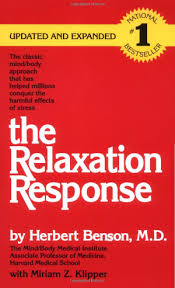
The second book is called The Relaxation Response. It was the cheapest book of the three and is much older than the book Buddha’s Brain. In it Dr. Benson (Harvard MD) describes the relaxation response as the body’s counterpoint to “fight or flight” mode. In this state of relaxation, the body–among other things–goes to work on repairing what ails it. There’s a lot of evidence that a human body can repair most of what can ail it if it gets enough rest–i.e. sufficient break from stress.

Relaxation Response


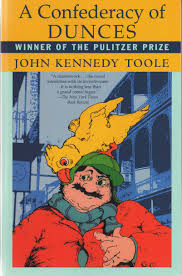
My final purchase was A Confederacy of Dunces. This book is considered to be one of the best comedic novels in American literature. It’s also a book that all depressed writers (which is to say all writers struggling to get things published) should read for the cautionary tale of the novel’s tragic back story. The author, John Kennedy Toole, committed suicide (at least in part) because he couldn’t get it published. His mother then took up the torch, shopping it around. It took her seven years, but she finally got it published after convincing the novelist Walker Percy to look at it, and having achieved his recommendation. In 1981 it won the Pulitzer Prize for fiction.

confederacy of dunces

DAILY PHOTO: Temple in the Sun

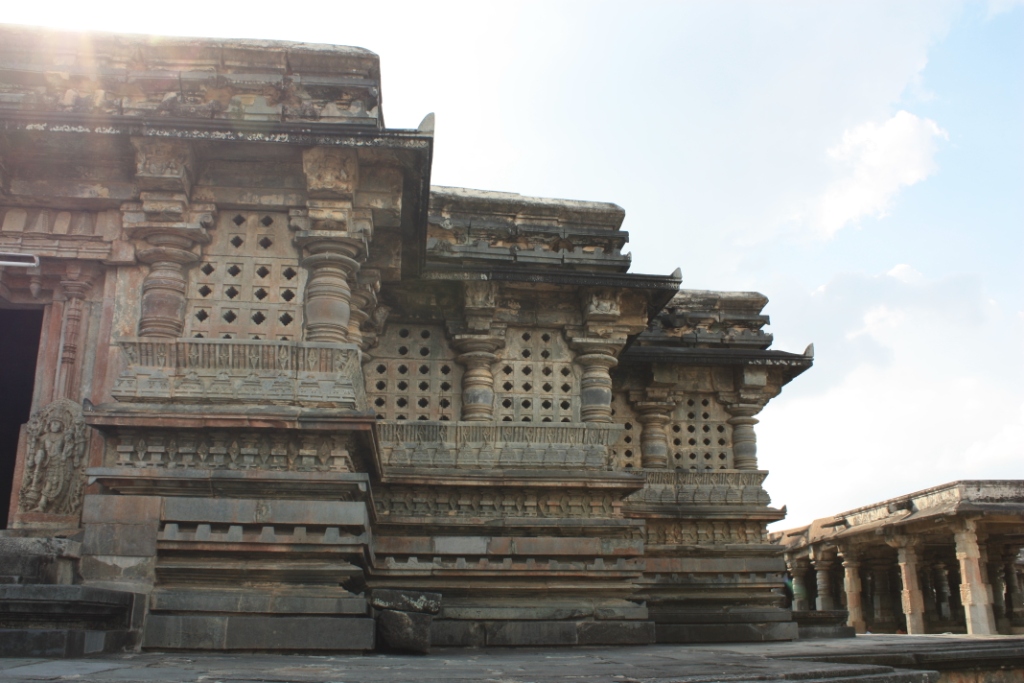
Taken in November of 2013 in Belur

Taken in November of 2013 in Belur

IMG_1429

The temples at Belur and Halebidu are among India’s most impressive–but least known–historical sites. Both cities were a capitals during the days of the Hoysala Empire, but are well off the major tourist path. If you’re spending some time in South India, these temples should be on your itinerary.

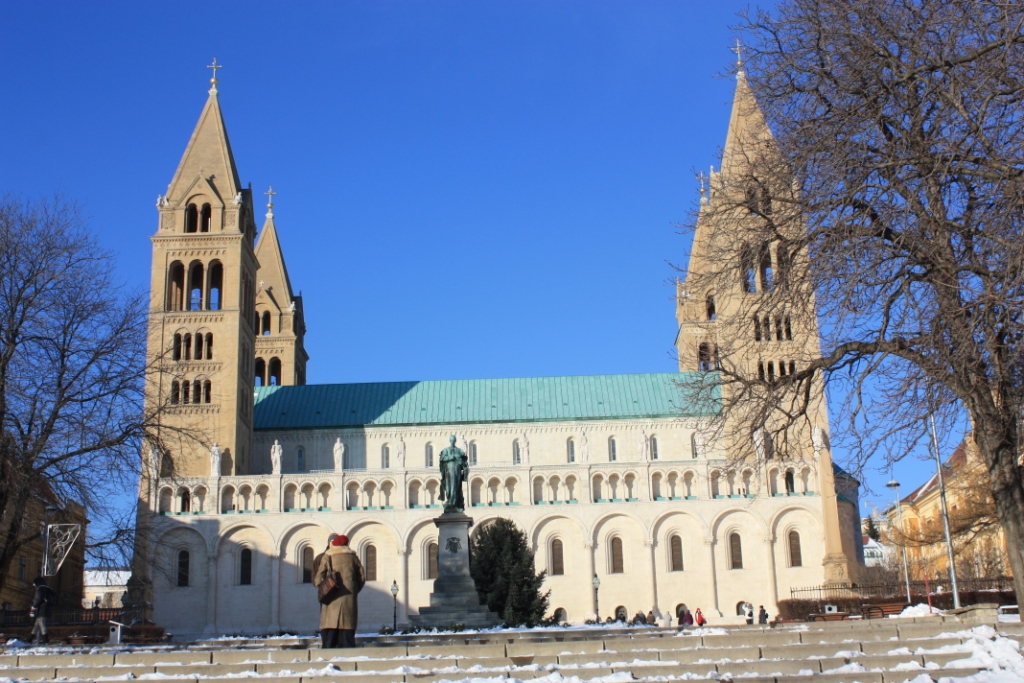
DAILY PHOTO: Cathedral of St. Peter & St. Paul in Pécs

Taken in December of 2014 in Pécs

Taken in December of 2014 in Pécs

This giant four-spired Cathedral is home of the Pécsi Roman Catholic Dioceses.  Pécs has held a diocese headquarters since the early 11th century. The town that is now Pécs predates Roman times.