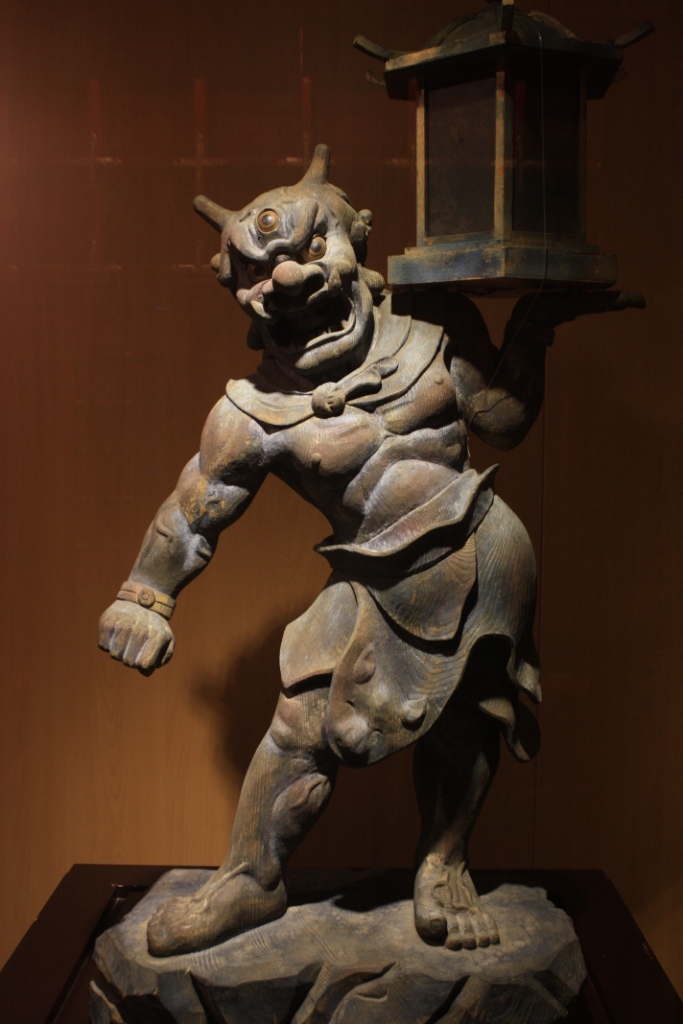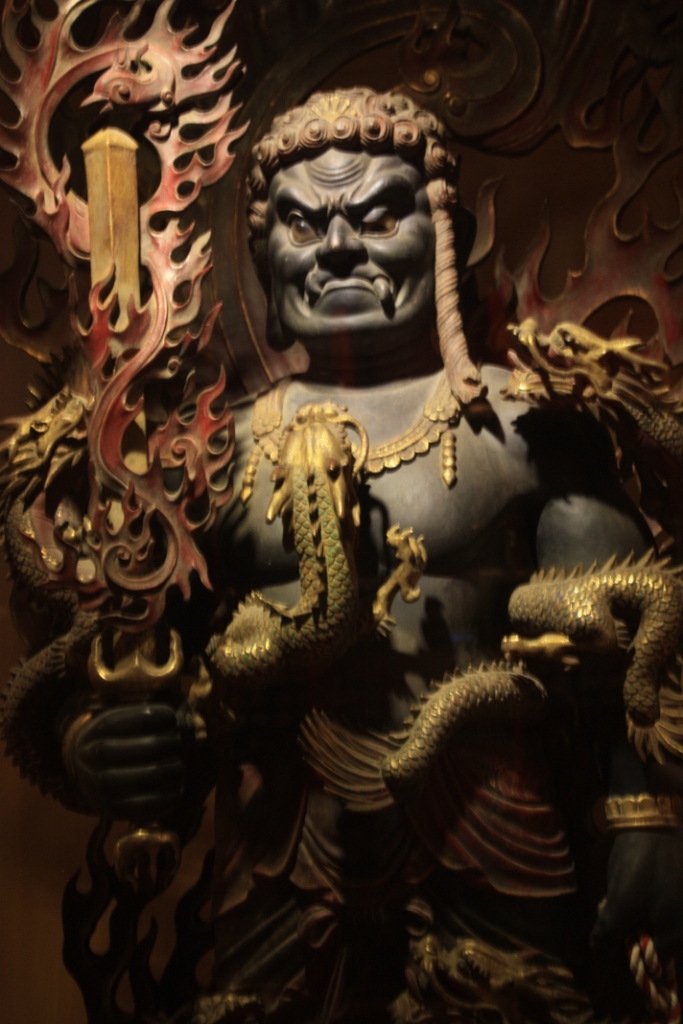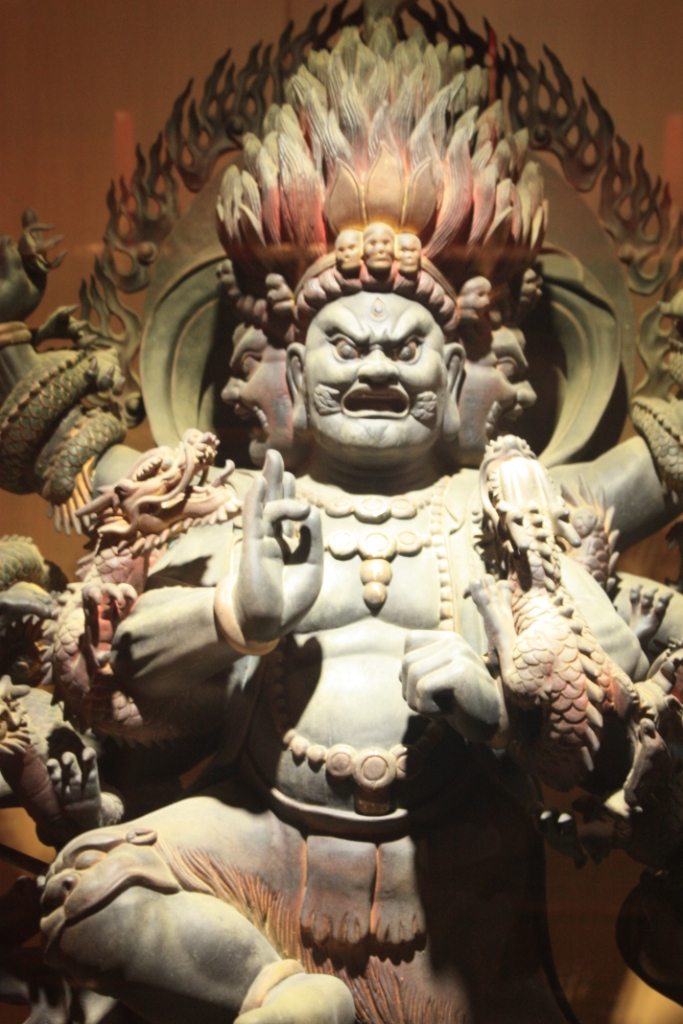
DAILY PHOTO: Oni Sculptures, Temple of the Tooth – Singapore

Dragons [Lyric Poem]

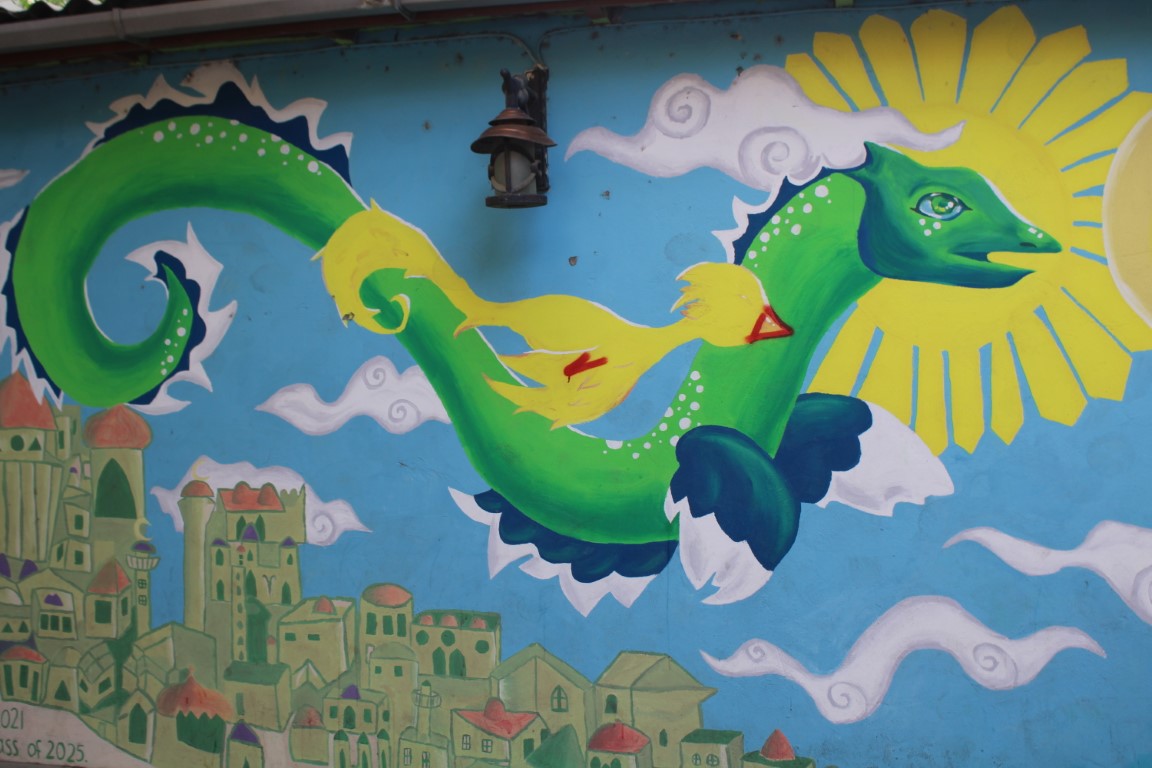
I see Dragons on the walls
Of temples and market stalls.
From Shanghai to London way,
I've seen them by night and day.
I've seen them skewered by St. George
And belching flame like a forge.
I saw one once in Baku,
But never saw one in a Zoo.

PROMPT: Animal

Daily writing prompt
Which animal would you compare yourself to and why?

A mythical one to be sure. Cobbled together and a product of pure imagination. Griffin, Minotaur, Dragon, Vietnamese Unicorn (not to be confused with the kind hung as posters on the walls of pre-teen American girls,) or something of that nature.

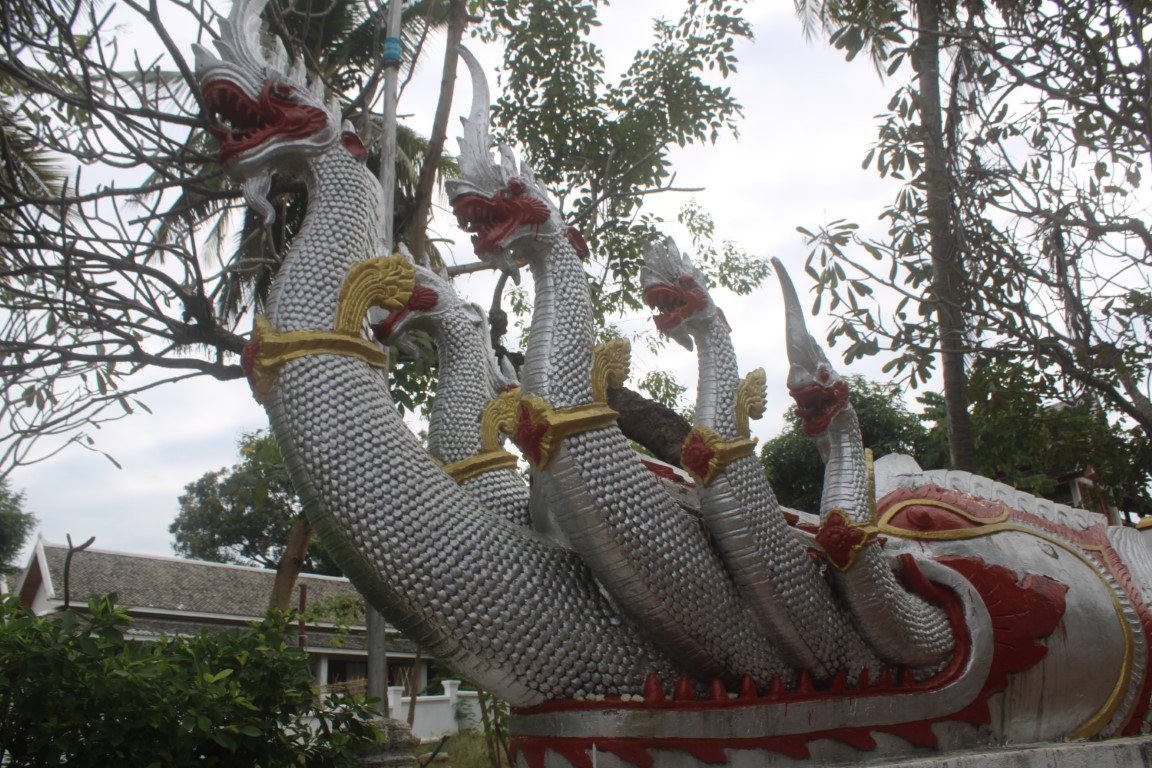
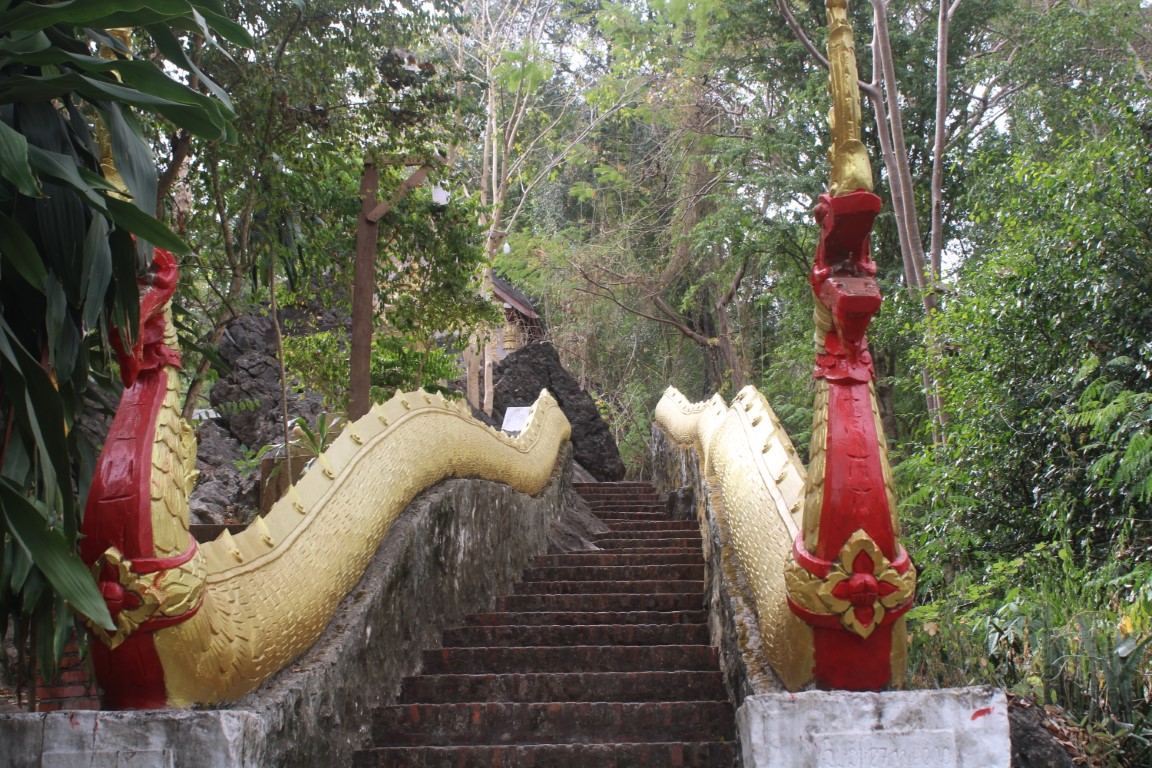
DAILY PHOTO: Guardian Serpents of Luang Prabang

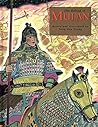
BOOKS:  木兰辞 [Ballad of Mulan] by Anonymous

The Ballad of Mulan: 木兰辞 (Simplified Chinese Characters with Pinyin)The Ballad of Mulan: 木兰辞 by Song Nan Zhang
My rating: 5 of 5 stars

Available online at YellowBridge

This is a short lyric poem (15-1/2 quatrain, or 62 lines) that tells the story of a young woman who disguises herself as a man and joins the military to fill a slot that would otherwise have required her aged and infirm father to serve. The tiny poem packs in ten-plus years, during which Hua Mulan serves with great distinction and then returns home to take care of her parents. It’s a well-known tale that emphasizes the importance of filial piety and sacrifice. Though outside of China (as well as Taiwan and other Chinese cultural enclaves,) many may know it from the Disney version which has been panned for ditching the Confucian values and replacing them with ones that were thought would resonate better with a Western audience.

The poem is mostly arranged in quatrains of five-character lines with alternate line rhymes.

It’s a quick read and there is no room for the detailed tales of heroism that are depicted in adaptations.

If one is looking for a culturally insightful telling of the story of Hua Mulan, this is the right place to look. I’d highly recommend reading it.

View all my reviews

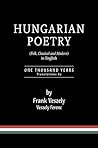
BOOKS: “Hungarian Poetry” trans./ed. by Frank Veszely

Hungarian Poetry (Folk, Classical and Modern) in English: 1000 yearsHungarian Poetry (Folk, Classical and Modern) in English: 1000 years by Frank Veszely
My rating: 5 of 5 stars

Author Site

This anthology of Hungarian poetry translated into English presents some interesting and evocative examples of Hungarian poetry, ranging from anonymous folk poetry of early kingdoms to 20th century pieces by still-living poets. I can’t speak to how the translations compare to the originals, but I will say that they were a pleasure to read and employed metering and rhyme to maintain some of the feel of the originals. This book introduced me to many poets with whom I was only familiar from names on subway stations, city squares, and parks, having traveled extensively in Hungary (plus a few of whom I’m sure I’ve never heard. Note: poetry is huge in Hungary, but because the Hungarian language is not broadly spoken, it remains largely a secret to outsiders.)

That said, the anthology is not so broad ranging as one might expect from its subtitle. The nineteenth and twentieth century selections take up the bulk of the volume. It does make sense that there is a much larger (and more likely to have survived) selection from recent times. However, there also aren’t as many poets included as one might expect. Ostensibly, one reason for this is that Veszely doesn’t shy away from including lengthier pieces. Whereas an anthology like this would often favor short pieces and / or excerpts (and, thus, might include more voices,) this one contains many multi-page poems. That said, while most of the biggest names seem accounted for (e.g. Vorosmarty, Csokonai Vitez, Arany, Petofi, Jozsef Attila, etc.,) there are conspicuous absences of prominent and important poets (and, perhaps, of categories of poets as well.)

Short bios of each of the contributing poets make this an introduction to many interesting figures scarcely known to non-Hungarians, as well as it is a sampling of their poetry. Each of the four sections also has some background historical information. This history is useful because there is a lot of nationalistic / jingoistic poetry in this volume, particularly among the nineteenth century poets (as was the style of the day.)

I should point out that some will find this book excessively nationalistic. (A book titled for the state can be expected to have some superpatriotic pieces, but this goes a bit beyond that.) For my part, I was not troubled by the poetry content, knowing that nineteenth century Hungarian poetry was notoriously nationalistic. Also, once one gets into the twentieth century poetry it gains much more diversity of content, e.g. nature, art, etc. My own concern about nationalism was more about the Part Four introduction, which paints Hungary as an innocent little lamb, always being victimized. Taking history from this introduction, one might think that Hungary was forced into the Axis and struggled to get free of it from the onset. This view would be more defensible if the invasion of Nazi Germany to firm up the Hungarian alliance had occurred in, say, 1941, instead of the spring of 1944 (when everyone knew the Third Riech was on its death bed.) In point of fact, Hungary’s leadership seem to have had their own ambitions (not to mention their own rampant antisemitism) going into this alliance.

I enjoyed these translations immensely, and felt I learned about the poets and the times in which they lived. That said, while I did like that Veszely included some longer pieces in full, it might have been nice to see a bit more diversity in the selection as well.

View all my reviews

BOOKS: “Strange Tales from a Chinese Studio” by Pu Songling [Trans. by John Minford]

Strange Tales from a Chinese StudioStrange Tales from a Chinese Studio by Pu Songling
My rating: 5 of 5 stars

Publisher Site – Penguin

This is a collection of short stories, almost entirely speculative fiction, dating from the Qing Dynasty (specifically, the late 1600’s to early 17oo’s.) Ghosts, folkloric creatures, and Taoist magic all feature prominently in the stories. The stories average about five pages, but with a wide deviation from stories scarcely longer than today’s micro-fiction to extensive pieces. The Penguin edition collects 104 out of a much larger collection of stories.

The best of these stories are clever and highly engaging, and there are many such tales. Being from Qing Dynasty China, the stories offer a perspective different from one’s typical horror and fantasy short stories. Many of the stories prominently feature eroticism, but not graphically so.

As for the weakness of the volume, even though it selects only a portion of Pu Songling’s original, there are many stories that blend together, failing to distinguish themselves. This is most notable among the fox-spirit stories, of which there are just so many. [A number of them are fantastically unique, but others are just variations on the same.] So, the book can seem a bit repetitive in that sense. However, before you get to the point where you feel you can’t read one more fox-spirit story, you’re quite likely to read a tale that blows your mind.

I greatly enjoyed many of the stories herein. Perhaps, the volume could have benefited from further abridgement, but it’s well worth the read.

View all my reviews

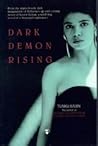
BOOKS: “Dark Demon Rising” by Tunku Halim

Dark demon risingDark demon rising by Tunku Halim
My rating: 4 of 5 stars

Author Site

On one level this is a folklore-based tale of horror, but – on another level – it is a commentary on tribal village life versus modern life in the super-tribal metropole.

The lead character, Shazral, comes from a long line of Shaman — medicine men. However, in the opening chapter we find that he has moved to the big city, Kuala Lumpur, and has become a successful lawyer. He has a nice office, a big salary, and a fashionable sportscar. He thinks he has it all. Then he’s called to return to the village to see his dying father. Son and father haven’t been on speaking terms because the father wanted Shazral to continue the Shamanic line, but Shazral wanted to escape the village and the strained familial situation that existed since his mother died during his youth. His return sets events in motion, events that will both show his beloved city life isn’t all it seems, as well as drawing him into the family business.

I enjoyed the story and think it was well-crafted and evocative. The backstory provides powerful motive, and the characters are distinctive and worthy of the reader’s consideration. There were a number of typos in the edition that I read (none were detrimental to understanding the story, but they could break the flow of reading.)

I’d recommend this book for readers interested in tales of horror rooted in folklore (in this case Malaysian folklore) and shamanism.

View all my reviews

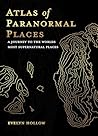
BOOKS: “Atlas of Paranormal Places” by Evelyn Hollow

Atlas of Paranormal Places: A Journey to the World's Most Supernatural PlacesAtlas of Paranormal Places: A Journey to the World’s Most Supernatural Places by Evelyn Hollow
My rating: 4 of 5 stars

Publisher Site

While I’m not much of a believer in the paranormal, I am always curious to learn more about the beliefs, folklore, and backstories of various destinations. Such information, even when immensely interesting, often remains hidden from the casual traveler. For example, had a not read this book I wouldn’t have known that Siquijor Island in the Philippines (a place I’ve been to) had a thriving witch market. I read this book not only because of an interest relevant to places I’ve been and also places I intend to go (e.g. Bhangarh Fort,) but — most importantly — to learn about new and fascinating locations that were not yet on my radar. The book did not disappoint.

The almost forty entries in this atlas are divided among six categories (ghosts, witches, sacred, mythic, nature, and cryptid/creatures.) It is a broad and varied selection of locations from around the world and will most certainly offer even vagabonds some new sites for their “to travel” lists.

I appreciated the thoughtfulness of this book. I noticed this with the discussion of Báthori Erzsébet, a Hungarian noblewoman who was accused of mass murder and – literal – blood baths. Many paranormal authors, either out of an intense need to believe strange things or because of a desire to sell more books, would ignore the extensive evidence that Báthori was framed for purely political motives. Hollow presents said evidence despite the fact that it kind of undercuts her argument that Cachtice Castle is a locus of supernatural happenings.

I found this book compelling, well-written, and illustrated with fine maps and photographs. If you’re interested in the folklore and ghost stories of various locations, I’d check it out.


View all my reviews

BOOKS: “The Song of Hiawatha” by Henry Wadsworth Longfellow

The Song of HiawathaThe Song of Hiawatha by Henry Wadsworth Longfellow
My rating: 5 of 5 stars

Project Gutenberg edition

This epic poem borrows from American Indian folklore and legend to build a fictional life story for the protagonist, Hiawatha. (There was an actual Hiawatha, but his life story apparently in no way resembles that of Longfellow’s Hiawatha, which is good because the fictional one had to deal with ghosts, tricksters, and deities.) The poem is part hero’s trials, part love story, and part tale of the supernatural, blending real world type tragedy with an otherworldly form.

The choice of trochaic tetrameter makes the poem rhythmically readable, while evoking a drumming sound that contributes to atmospherics.

When the poem came out in the mid-19th century, it faced some controversy. It was claimed that it was a knock off of the Kalevala of Finland. Longfellow’s reply was that he was influenced by that poem’s rhythm (the Kalevala is also trochaic,) but that all the plot events where from his conversations with American Indians and researchers, thereof, (or, presumably his own imagination,) and that any coincidence of events was owing to the broad brushstrokes of them both being heroic tales.

I enjoyed reading this poem and would highly recommend it for poetry readers and lovers of American Literature.


View all my reviews