BOOKS: The Importance of Being Earnest by Oscar Wilde

The Importance of Being EarnestThe Importance of Being Earnest by Oscar Wilde
My rating: 5 of 5 stars

Amazon.in Page

This play is an amusing cautionary tale on the dangers of “Bunburying” and / or leading a double life. “Bunburying,” a term coined by Wilde in this play, is the act of concocting meetings with a fictitious friend to get out of tedious familial (and other social) obligations. Don’t want to go to Aunt Bessie’s potluck? Tell her that your friend with a plausibly absurd name (e.g. Bunbury) has ruptured a disc in his back and desperately needs your assistance. Bunburying is the specialty of one of the two bachelor characters this story is built around, a man named Algernon. The other, Jack, goes by the name Ernest when he is in London, and has to invent the story that he has a brother when his town and country dichotomy of personalities starts to be seen through by those other than Algernon.

This humorous tale revolves around both Algernon and Jack finding desirable fiancés while being tangled in the web of their own duplicity. Much of the humor comes from the interactions of Algernon and Jack, two men who are quite alike, though Jack thinks himself more respectable. Algernon is more at ease with his own scamp-like nature and plays a role similar to that played by Lord Henry in Wilde’s novel, The Picture of Dorian Gray. That is, Algernon offers many a quotable line that at least has the appearance of wisdom — if, often, a kind of nihilistic wisdom.

This play is definitely worth reading.

View all my reviews

BOOKS: Wonderful Wonderful Times by Elfriede Jelinek

Wonderful, Wonderful TimesWonderful, Wonderful Times by Elfriede Jelinek
My rating: 5 of 5 stars

Amazon.in Page

If I said this book was A Clockwork Orange meets A Midsummer Night’s Dream it would be in some ways deceptive but in other ways, accurate. The book has none of the otherworldliness of those other stories and, instead, is set in a realistic 1950’s Vienna. Furthermore, those comparisons might confuse readers into not realizing this book is unambiguously a tragedy.

The book is set around four kids (Rainer, Anna, Hans, and Sophie) who like to beat up and rob adults, usually using a kind of catfishing scheme where they trick a middle-aged man into thinking he is about to have a getting lucky with Lolita moment before the other three gang up on the man in a moment of shock and awe. Here lies the “Clockwork Orange” comparison: youths enamored of violence as a means to combat the boredom and meaninglessness of their lives — possibly while passing on the abuse they receive in their own lives.

The “Midsummer Night’s Dream” part comes in with the book’s love geometry. Like that Shakespearean play, there are two boys and two girls and both boys are in love with the same girl (Sophie,) leaving the other girl (Anna) in a sad unrequited territory.

The book won’t be everyone’s cup of tea, and not only because it deals heavily in sex and violence. There are a couple factors that make the book feel strange. First of all, it is written in present tense. Secondly, it spends a lot of time in the minds of the characters and relatively little time with the action. Thirdly, the pacing of the conclusion and resolution of the book is abrupt and might feel forced — like the author was 245 pages in when the publisher told her that she had 250 pages, maximum, and that she’d better be wrapping it up. I didn’t find any of these factors to be problematic, but I can see how they would rub some readers the wrong way.

If the premise intrigues, you should definitely read this book – particularly if the previous paragraph’s warning didn’t turn you off.

View all my reviews

BOOKS: The Picture of Dorian Gray by Oscar Wilde

The Picture of Dorian GrayThe Picture of Dorian Gray by Oscar Wilde
My rating: 5 of 5 stars

Amazon.in Page

This is a book about what happens when you hollow out a person of all the complexity of the human condition and idealize them. At the beginning of the story, Dorian Gray is young, attractive, and preternaturally likable in a naïvely innocent kind of way. Almost to the novel’s end, through the magic of a wish made upon a portrait, Gray is still young and beautiful, though that naive innocence cracks under the strain of the impossible bifurcation of man and his soul. The artist, Basil Hallward, and Lord Henry (a man who will become a mutual friend of Gray and Hallward) cannot see Gray as a fully formed human being, but rather see him as an emblem of youth and beauty. But this unnatural ideal cannot hold, and a string of tragic deaths will be left in its wake.

The book is full of clever witticisms, albeit often of a nihilistic nature. These are almost all spoken by Lord Henry, who is the Polonius of the story – but a hipper kind of Polonius than Hamlet‘s. That said, it’s telling that toward the end of the book Gray does some of this epigrammatic philosophizing. (e.g. Such as when Gray tells Hallward, “Each of us has heaven and hell in him…”) One might dismiss this as Gray parroting Lord Henry, but I think that life has defrocked him of his naïveté, and he begins to think in ways that were impossible in his [true] youth.

This is a must-read. It’s interesting, thought-provoking, and well worth the time.

View all my reviews

BOOKS: A Double-Barreled Detective Story by Mark Twain

A Double Barrelled Detective StoryA Double Barrelled Detective Story by Mark Twain
My rating: 5 of 5 stars

Amazon.in Page

This novella is Mark Twain’s satirical jab at the whole Sherlock Holmes concept. In particular, it pokes fun at a detective who eschews everything supernatural in favor of cold rationality, but who produces results so impossible that they are themselves supernatural.

The story has two temporally disjointed parts that almost seem like independent stories until the very end when all is tied up. (Holmes only appears in the second part.) This works nicely for parody of Holmesian detective fiction as it’s an approach that was used by Sir Arthur Conan Doyle on occasion — e.g. in A Study in Scarlet. The first part tells the tale of a woman who is treated foully by Jacob Fuller, the husband she eloped with but who harbored resentment towards her father, a man Fuller believed felt wasn’t good enough for his daughter. The woman makes her son, named Archy Stillman, promise that he will track down Fuller and make the man’s life a living hell.

The second part revolves around a murder that seems to be independent of the case described above, the killing of a man named Flint Buckner. Here Sherlock Holmes, who happens to be in town visiting his nephew – Fetlock Jones, “solves” the case only to be shown to be entirely and humiliatingly wrong by Archy Stillman using only a superior sense of smell and basic observation of the facts (with no elaborated inductions.)

While I never had anything against the Sherlock Holmes stories — in fact, I enjoyed them all — I did find Twain’s satire amusing and compelling as a story. [And it’s true that Arthur Conan Doyle did regularly strain credulity — that’s what made Holmes an intriguing character.]

Well worth reading.

View all my reviews

BOOK REVIEW: A Boy Named Rose by Gaëlle Geniller

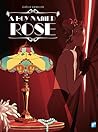
A Boy Named RoseA Boy Named Rose by Gaëlle Geniller
My rating: 4 of 5 stars

Amazon.in Page

Release Date: July 18, 2023

This is the story of a preternaturally likeable and enthralling young cabaret dancer, the titular boy named Rose. Rose’s entire life has been lived in the cabaret that his mother runs, and much of the story revolves around his introduction to the broader world as his fame grows.

It is eye-catchingly illustrated in a way that creates and facilitates a unique feel for the story.

As stories go, it’s not particularly emotionally rousing. I suspect that is partly because, as is common with literary fiction, it’s more character-driven than story-driven, and this presents a challenge for the graphic novel format in which the reader has more direct exposure to the characters’ external happenings. One may see a character being pensive, but without insight into that individual’s mental world one doesn’t feel it as intensely as one would with a novel that allows one some internal insight.

That said, a world is presented that is so foreign to most of us, life inside a cabaret, that it generates interest in that sense.

Overall, it was an enjoyable, light-hearted read.

View all my reviews

Five Great Yarns from Kahlil Gibran’s The Madman

The MadmanThe Madman by Kahlil Gibran
My rating: 5 of 5 stars

Project Gutenberg Page

The Madman is a collection of poems and short fiction (often micro-fiction) of a philosophical nature. The protagonist claims he became a madman when a thief broke into his house and stole his masks, the masks that people wear to fit into society and appear “normal.” Beyond the thread created by this mad character, the entries meander along, each with its own moral and with little discernible overarching plot.

There are many clever stories in this collection, offering food-for-thought on religion, philosophy, and psychology. I’ll discuss five of my favorites:

“The Sleepwalkers” A mother and daughter are both sleepwalkers. When they are somnambulating, they speak to each other in horribly cruel terms, but when they wake up, they display (at least a veneer of) love and affection. Besides demonstrating the nature of the aforementioned masks, the loss of which gets one designated “crazy,” this story encourages the reader to discern the differences between conscious and subconscious mental activity.

“War” This one presents an analogy for war in which a thief breaks into the wrong building, walks into a machine, pokes his own eye out, and then takes the building owner to court seeking “justice” for his lost eye. The craftsman / shop-owner says he can’t lose an eye because he won’t be able to do his work, but he knows a neighboring craftsman who could have his eye removed without great loss of productivity. This story builds upon the well-known “An eye for an eye…” Bible verse with the added absurdity of violence being doled out randomly and without concern for whether the victim had anything to do with the events in question.

“The Wise King” A disgruntled witch poisons a city well with a substance that makes drinkers insane. The King avoids the well water and is spared insanity. However, the townspeople begin to plot against the king because, in their insanity, they believe him (as one who acts differently) to be insane. The king eventually drinks the well water in order to come back into synch with his subjects. This entry speaks to the arbitrary nature of classification of sane and insane, an idea that has been discussed in modern times by mental health experts such as R.D. Laing.

“The Two Cages” A bird is caged next to a lion. The bird’s confidence provides the central lesson, knowing they’re both imprisoned separately, the bird refers to the lion as “fellow prisoner.” The power dynamic has changed from that of the jungle. Perhaps, the bird has even happily exchanged its freedom — either for safety or to tear the lion down a little.

“The Eye” In this story, the other sense organs mock the eye after it comments upon how grand a mountain is. The ear can’t hear the mountain and the skin can’t feel the mountain. Therefore, the other senses assume that the eye is either lying or is delusional. This tale speaks to the risk of denying something based on one’s own limited perception.

This book was originally published in 1918 and is in the public domain (most places.) It’s definitely worth the short time investment required to read it.

View all my reviews

BOOK REVIEW: The Rope Artist by Fuminori Nakamura

The Rope ArtistThe Rope Artist by Fuminori Nakamura
My rating: 5 of 5 stars

Amazon.in Page

Release Date: May 2, 2023

This is a hard-boiled detective novel centered around the mysterious death of a kinbaku artist, kinbaku is a Japanese art of tying up a person with rope, the practice sprung from the need to bind prisoners of war and criminals, but it came to be associated with the BDSM (Bondage, Domination / Submission, & Sado-Masochism) activities of kinky sex. The death of the rope artist, Kazunari Yoshikawa, is but the first of a few fatalities that are somehow connected, though the reader only learns how by following the story through to the end. There are several novel elements of the story that grab the reader’s attention, including: sex worker doppelgangers and a man with a missing finger and no known name.

I was engrossed by this novel. It captured my attention from the beginning. The psychology on display in the story is at once fascinating and bizarre. The story is told via three perspectives. The first is a junior detective, Togashi, who is a bit libido-driven and prone to ill-considered decisions. As a main character, one anticipates some of Togashi’s decisions because one knows what drives him, he’s a sucker for a pretty woman, but what the reader doesn’t know is when and how it will blow up in his face. The other main perspective is that of another detective, Hayama, who is the antithesis of Togashi. Hayama is immune to libidinous temptations and is solid as a rock where Togashi is nervous and neurotic. (The third perspective is Yoshikawa’s epistolary confession [no one has completely clean hands in this book.])

If you like crime fiction that’s a bit edgy, you may want to look into this book. That said, a warning for sensitive readers, it is sexually explicit and, while it’s not so sex-centered as to be primarily classified erotica, sex of various types occurs throughout the book.


View all my reviews

BOOK REVIEW: The Abolition of Man: Deluxe Edition Carson Grubaugh, et. al.

The Abolition of Man: The Deluxe EditionThe Abolition of Man: The Deluxe Edition by Carson Grubaugh
My rating: 4 of 5 stars

Amazon.in Page

Release Date [for Deluxe Ed.]: July 25, 2023

This is marketed as the first comic book illustrated by an AI. That makes it a very different beast from the usual graphic novel or comic book, and it means the purpose for reading it is entirely different. If I were to rate this for someone who wanted to read an entertaining story (the usual purpose of a graphic novel,) I would rate it “horrible,” “worst-ever,” “unreadable,” – zero stars. However, if you bothered to read the book blurb, you probably aren’t still considering this book for the purposes of entertaining story.

What other reasons might one have for reading this book? I can think of two: one major and one minor. The major purpose is to see what an AI does with illustrations, how it “thinks” (for lack of a better word,) and how it fails. For this purpose, I’d say the book was fascinating to peruse. As a complete neophyte to both AI and graphic arts, I was struck by the “glimpse-comprehensible / close look-grotesque” nature of the illustrations. That is, if one just took a quick look, there tended to be something that felt like it made sense in the panel, but then when you looked closer it was a cabinet of curiosities freak show.

The minor reason for reading this is because one has an interest in the philosophy of mankind in the modern world, a topic that informs the first and last issues (or the philosophy of information, which informs the appendiceal essays.) In this regard the book made some thought-provoking points.

The base text the AI was fed to come up with illustrations varied across the five issues. The first was the eponymous C.S. Lewis book — i.e. “The Abolition of Man.” While this didn’t present the Lewis text word-for-word, it was certainly the most readable portion of the book. The second and third comics drew on text from a comic written by Grubaugh. I assume the AI processed this text somehow because the text presented was often incomprehensible, was full of typos (or what seemed like them,) but had a couple amusing lines by virtue of what I can only assume was unintended sexual innuendo. The fourth issue is almost textless, but what few text bubbles exist were supposedly composed by AI (they don’t have much information value.) [FYI- this penultimate issue is the stuff of nightmares. In places, it looks like a guide to fatal birth defects.] The final issue is a philosophy essay on the role of human dignity in privacy expectations. It’s an interesting enough read, but the graphics are like a PowerPoint by someone who took, but failed, a course on PowerPoint graphic design.

If you’re curious about how close AI is to drawing graphic novels and have an interest in philosophy of humanity and / or information, you’ll find this book to be a worthwhile read. If you’re expecting an interesting story, you’ll be sadly disappointed. If you’re a budding Andy Warhol, looking for a way to make the next artistic breakthrough requiring little effort or creativity on your own part, you might see the next big thing.


View all my reviews

BOOK REVIEW: Crabwalk by Günter Grass

CrabwalkCrabwalk by Günter Grass
My rating: 5 of 5 stars

Amazon.in Page

This story is narrated by its lead character, Paul Pokriefke, a journalist who was on the ill-fated ship, the Wilhelm Gustloff, being born on a rescue ship immediately after his pregnant mother was among the small proportion of survivors to escape that most deadly maritime disaster in history. The sinking of the Gustloff is the book’s center of gravity, it’s around that event – and the events that led to it and that sprang from it – that the story swirls.

The strange title, “crabwalk,” can be taken in a number of ways. For example, the author uses the term when he advances the story by moving in some direction that isn’t chronologically forward. However, the central crabwalk is the failure of a segment of the German population to move forward in the aftermath of the Second World War. This is shown through the narrator’s son, Konrad Pokriefke, a neo-Nazi of sorts who has an obsession with the sinking of the Wilhelm Gustloff and the incident by which that huge ship got its name (Gustloff being a Swiss Nazi who was assassinated by a Jewish student named David Frankfurter.) For much of this story, Konrad’s obsession plays out on the internet, in chatrooms and on websites that Paul covertly monitors – Paul being estranged from his son, a misfortune that he often blames on his own fatherless upbringing.

One confounding element of the story is the apparent cold rationality of Konrad Pokriefke. To clarify, the young man doesn’t exhibit sound reasoning, but he has this rationale in his mind (nutty as it may be) and he is dispassionate about doing what he believes he needs to do. Konrad isn’t the red-faced, spittle-flying Neo-Nazi. At first, it felt implausible for Konrad to have such a set of views and to be so coolheaded about them. That said, I suspect the author wrote it that way intentionally, and eventually it came to feel true – if horrifying [i.e. the idea that this cold version of hatred might be more sustainable than the intensely angry variety and that it might also retain more hatred in the face of interaction with “the enemy” (it being harder to maintain generic hatred of people with which one has an up close and personal interaction.)]

I found this book, which mixes factual events with fictional characters, to be compelling and thought-provoking. It did have a slow burn at the start, but it makes up for it with greater intensity as the story climaxes.


View all my reviews

BOOK REVIEW: Public Domain, Vol. 1 by Chip Zdarsky

Public Domain Vol. 1Public Domain Vol. 1 by Chip Zdarsky
My rating: 4 of 5 stars

Amazon.in Page

This isn’t a superhero comic, but a meta-superhero comic. The central premise is similar to that of the popular novel “The Amazing Adventures of Kavalier & Clay,” by Michael Chabon, which is to say it’s about how comic book artists historically made work-a-day salaries while others (actors, executives, producers, etc.) became astoundingly rich off the creations of those artists. In this case, it’s the father of two middle-aged sons, one of whom has a gambling problem.

It’s a fine story, and the character development is well done. Of the two sons, there’s one that’s incredibly likable and the other makes you want to punch him in his stupid face, and – as a twist – the likable one is the man-child and the straightlaced one is the jerk.

If you’re interested in a story about comic book justice, you should check it out.


View all my reviews