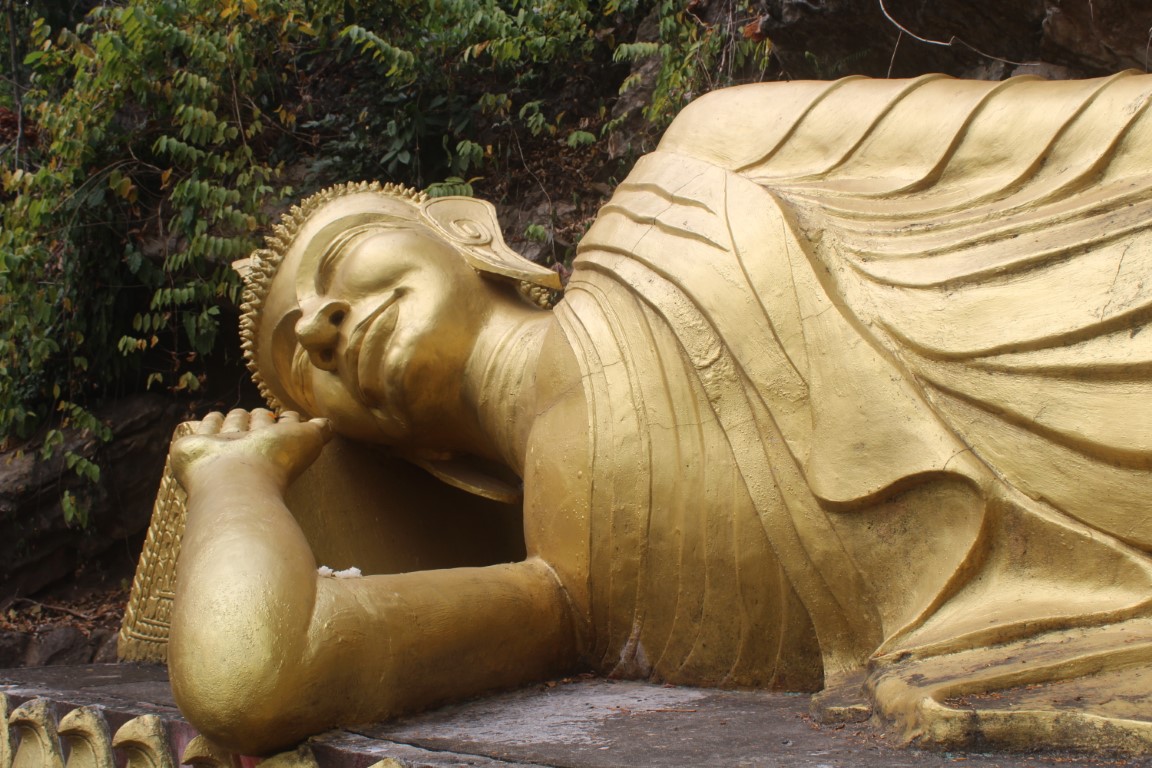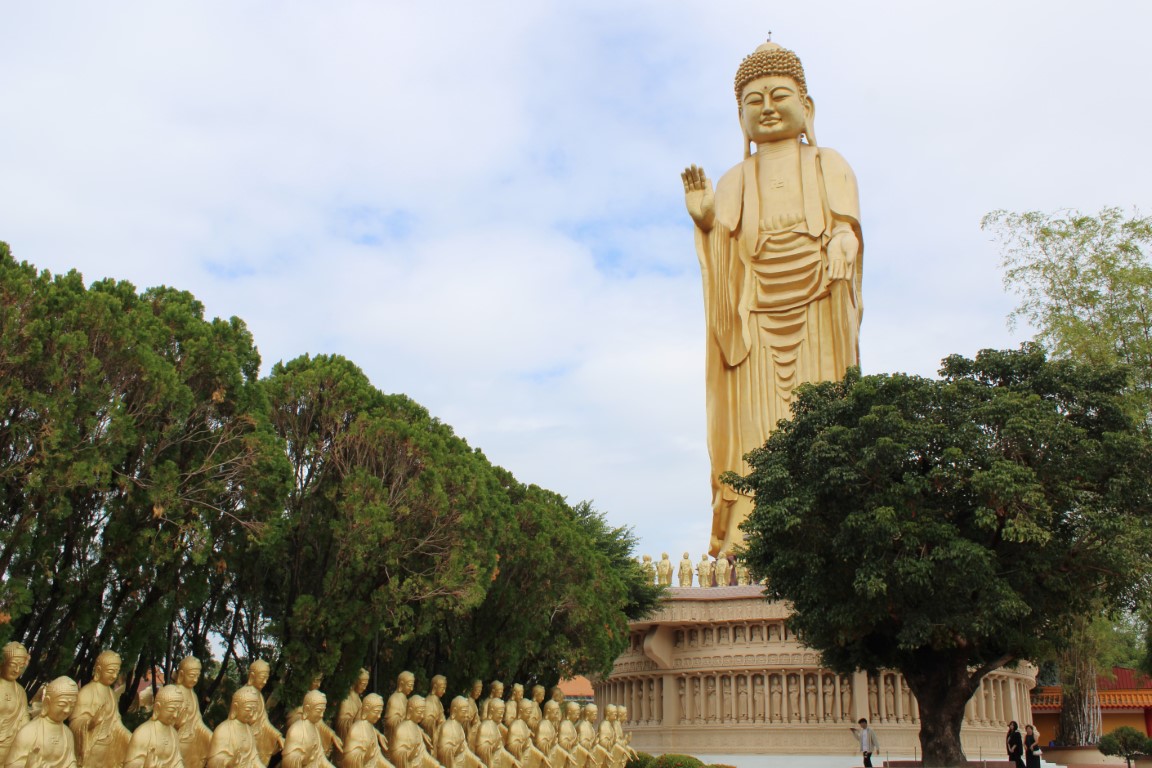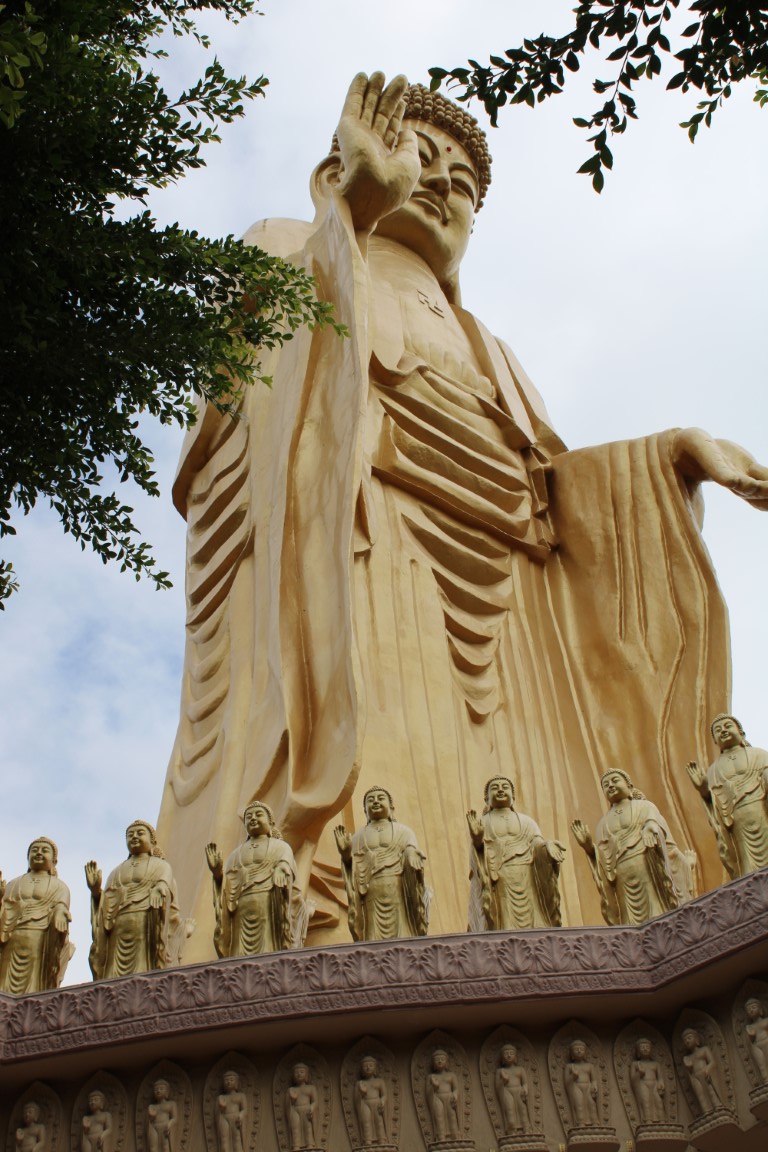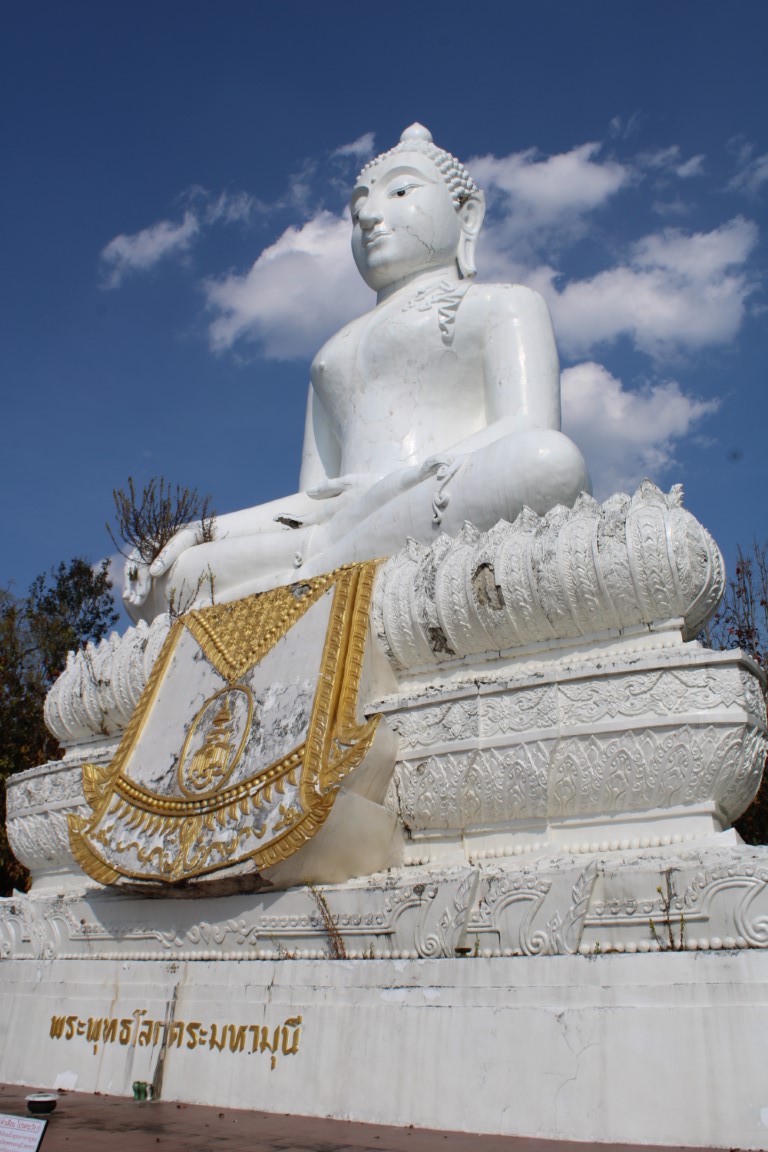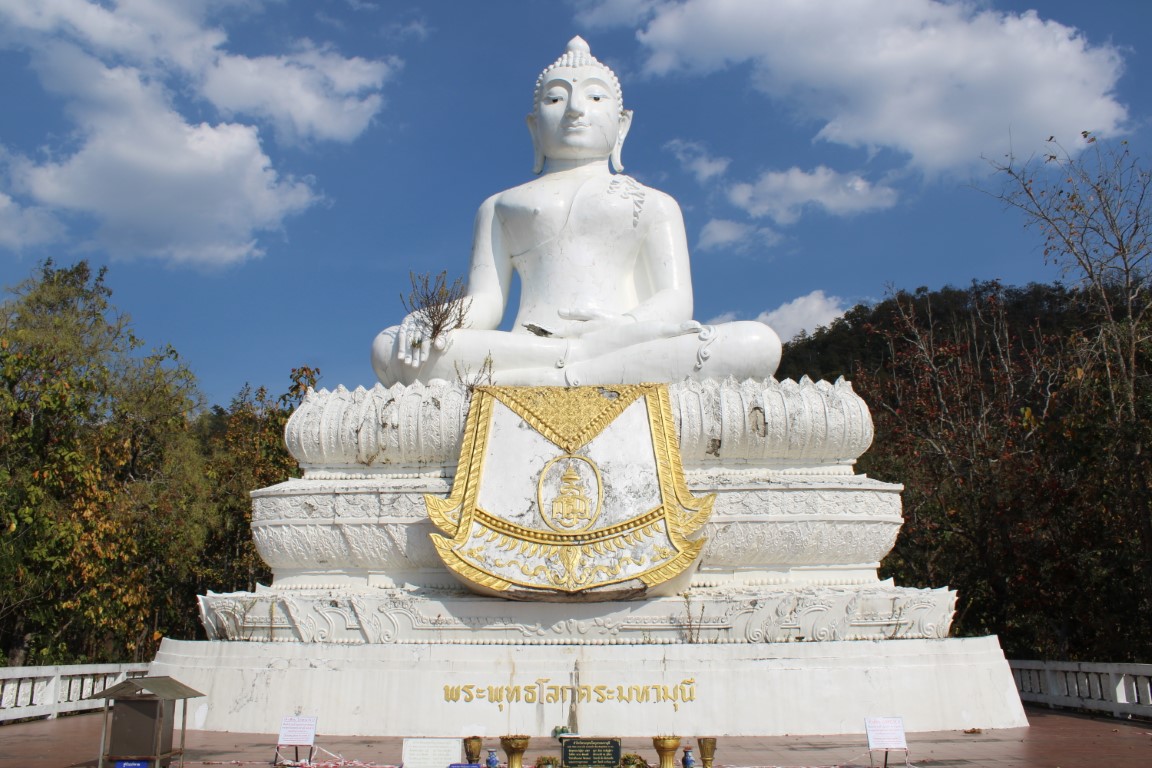


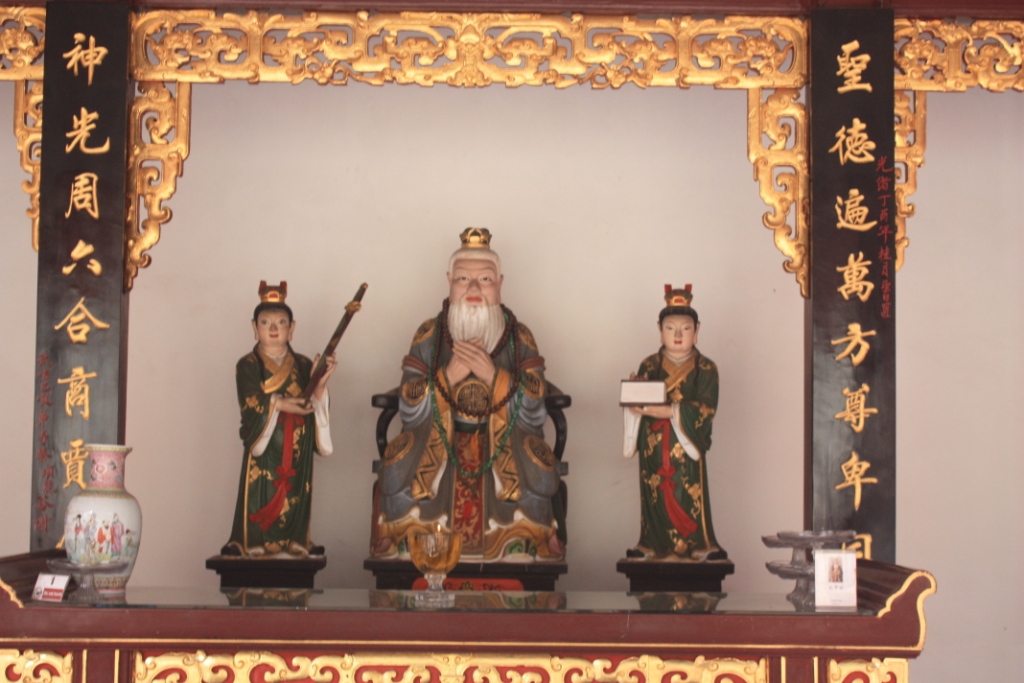
I wonder how the Buddha
would feel about always being
depicted in Gold?
If the desire that he warned
about had color, surely
it would be Gold.
Nobody has ever murdered
over teal or mauve or cornflower
(heated words with
contractors notwithstanding)
but Gold's body-count is staggering.
Helen's puny thousand ships have
been multiplied over by orders
of magnitude for the cause of Gold.
I think the Buddha, looking at his
reflection in one of those well-
polished Gold statues would say,
"Did I teach you nothing?"
Tag Archives: Buddhism
BOOKS: “The Secret of the Golden Flower” ed. / trans. by Thomas Cleary
The Secret of the Golden Flower: The Classical Chinese Book of Life by Lü DongbinMy rating: 4 of 5 stars

Online – Archive.org
This is a manual on Taoist inner alchemy practices, particularly a meditative practice called “turning the light around.” The book has been attributed to Lü Dongbin, said to be an immortal who lived during the Tang Dynasty, though there are differing views about the manual’s actual origins. While it is nominally a Taoist manual, it also discusses the Buddhist approach extensively (and Confucian ideas to a lesser extent) such that it could be considered a Buddhist teaching as much as a Taoist one.
The Cleary translation seems to exist not merely to provide an English translation of this Chinese manual, but to combat the misunderstandings perpetrated by the earlier English translation, that of Richard Wilhelm, a translation famously associated with the psychoanalyst Carl Jung. Neither Wilhelm nor Jung had any depth of understanding of Taoist and Buddhist methods and philosophy, and Wilhelm’s grasp of the Chinese language, itself, seems to have been fairly rudimentary. (At least the Chinese of the 1600’s, which is when the edition that Wilhelm is believed to have worked from is dated.) Thus, there is a lot of peddling of the notion that the ideas of this manual were in line with twentieth century psychotherapy in ways that were really not true — either because Wilhelm was mistaken or wanted them to be true or some combination, thereof.
The translation, itself, is quite short and makes up less than half of the text length of this book. More than half consists of extensive notes as well as an Afterward. While I have complained many times about publishers padding out pamphlet length publications to make them salable at book prices, in this case I believe the “ancillary” matter is helpful to achieving a better understanding of the text. The translation itself is not only sparse but features a bit of Taoist and Buddhist arcana that is likely to be unfamiliar — even to those with some understanding of the traditions. The notes and afterward help one to comprehend this book’s ideas much better.
If you’re interested in Taoist inner alchemy or Buddhist meditative practices, this book is worth checking out. That said, it can be a bit of a tedious read, flipping between the translation and the notes to make sense of ideas that don’t readily translate.
View all my reviews
“Without desire everything is sufficient” by Ryōkan Taigu
Without desire everything is sufficient.
With seeking myriad things are impoverished.
Plain vegetables can soothe hunger.
A patched robe is enough to cover this bent old body.
Alone I hike with a deer.
Cheerfully I sing with village children.
The stream under the cliff cleanses my ears.
The pine on the mountain top fits my heart.
Translation by Kazuaki Tanahashi and Daniel Leighton in Essential Zen (1994) HarperSanFrancisco.
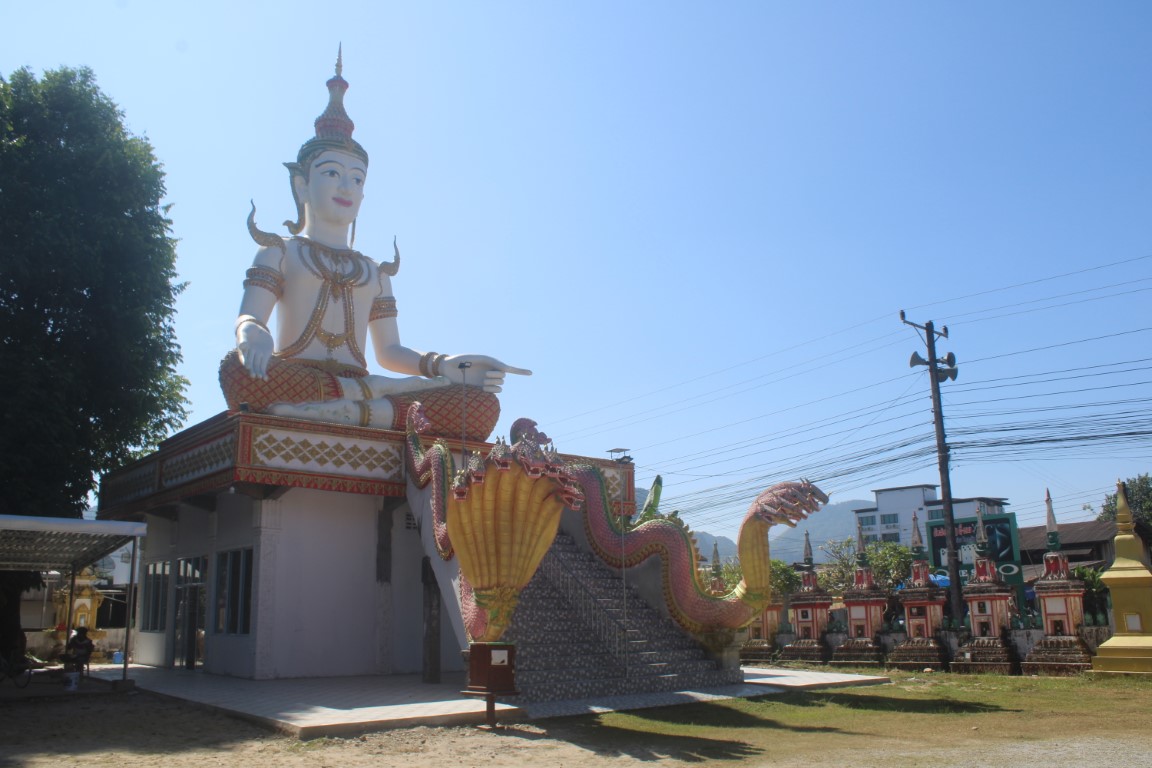
DAILY PHOTO: White Buddha, Blue Sky
FIVE WISE LINES [December 2024]
Today as in ancient times
Mei Yaochen in Poets’ Jade Splinters
it’s hard to write a simple poem.
To be undefeated lies with oneself;
Sunzi in The ART of War (孙子兵法)
to be victorious lies with the enemy.
A buddha is an idle person.
Bodhidharma; Bloodstream Sermon
He doesn’t run around after fortune and fame.
What good are such things in the end?
Not what we have, but what we enjoy, constitutes our abundance.
Epicurus
Take more time, cover less ground.
Thomas Merton
BOOKS: “Essential Zen” ed. by Kazuaki Tanahashi & David Schneider
Essential Zen by Kazuaki TanahashiMy rating: 5 of 5 stars
Google Books Page
This is a collection of short writings (poems, koans, and prose excerpts) on Zen Buddhism arranged into loosely themed sections. The writings tend toward the artistic, creative, and metaphorical, with relatively few straightforward descriptions of technique or philosophy. The writings range from those of Chinese and Japanese monks who lived hundreds of years ago to present-day poets and Zen practitioners. Among the more frequently drawn from sources are: Hanshan, Ikkyu, Dogen, Ryokan, Hakuin, Gary Snyder, Robert Aitken, Seung Sahn, John Daido Loori, Thich Nhat Hanh, and Peter Levitt. But there are many others, including some who have only a single piece included.
There’s a substantial “Notes” section that gives source, translation, and — in some cases — background information. Most of the translations (both Japanese and Chinese) are by the editors, Kazuaki Tanahashi and David Schneider. There are illustrations, but they are all ensō (circular brush paintings) and related forms.
This is a highly readable and insightful collection of short writings, and I’d highly recommend it for individuals interested in Zen or Eastern Philosophy more generally.
View all my reviews
Death Poem of Ikkyū [w/ Audio]
BOOKS: “Tranquil Sitting” by Yin Shi Zi
Tranquil Sitting: A Taoist Journal on Meditation and Chinese Medical Qigong by Yin Shih TzuMy rating: 4 of 5 stars
Publisher’s Site
This manual is an English translation of a work earlier published in Chinese. It is nominally on Taoist meditation and is written by a Taoist author, but it does include discussion of Buddhist practices as well (specifically Mahamudra.) Also, part of the author’s declared intent with this text is to write in a manner approachable to a wider audience, and because of this sect is rendered less important. So, for example, the book employs more scientific and physiological modes of explanation as opposed to meridians and other conceptual approaches from Traditional Chinese Medicine.
The book is presented in two parts. I found the first part much more beneficial and productive. Said first part is a general guide to meditation. It discusses fundamentals, theory, physiology, and how to align one’s living with a meditative practice (i.e. how diet, breathwork, sleep, etc. influence one’s practice.)
The second part consists of long and fairly detailed descriptions of the author’s experiences with both Taoist and Mahamudra meditation. I didn’t find this part useful, and I believe it may be counterproductive. Discussion of the author’s subjective experience may lead readers to get hung up on chasing identical experiences to the detriment of just practicing. It may give false ideas about “correct” and “incorrect” experiences of the meditation.
Overall, it’s a fine guide to meditation, particularly the first (i.e. larger) part. I can’t say that it breaks a lot of ground. A reader well-versed in meditation may not gain much insight from this book, but it’s as good as any to get started.
View all my reviews
“I’m Happy to Be a Free Yogi” by Drukpa Kunley [w/ Audio]
I'm happy to be a free Yogi,
growing evermore into inner happiness.
I can have sex with many women
as it helps them find the path of liberation.
Outwardly I'm a fool
and inwardly I live a clear spiritual path.
Outwardly I enjoy wine and women
and inwardly I work for the benefit of all beings.
Outwardly I live for my pleasure
and inwardly I do everything in the right moment.
Outwardly I'm a ragged beggar
and inwardly a blissful Buddha.
FIVE WISE LINES [October 2024]
If any thing is sacred the human body is sacred
walt whitman; Leaves of grass; “I sing the body electric”
Strong in their softness are the sprays of the wisteria creeper;
Saying of Master Jukyo as Translated by Trevor Leggett in Zen and the Ways
The pine in its hardness is broken by the weak snow.
When there is mutual ignorance, confidence indeed is king.
Trevor leggett; Zen and the Ways
Do not see the gate and think it is the house. The house is something which is reached by passing through and going beyond the gate.
YAgyu Munenori’s Art of War (As translated by trevor leggett in Zen and the ways)
Students of the Ways must see clearly that in an untrained man the intellect is like a barrister. It argues clearly and logically, but the aim is not truth, but to reach a predetermined conclusion.
Trevor Leggett; Zen and the Ways