BOOKS: “Sweet Hunter” by Teresa of Avila; Trans. by Dana Delibovi

Sweet Hunter: The Complete Poems of St. Teresa of Ávila (Bilingual Edition)Sweet Hunter: The Complete Poems of St. Teresa of Ávila by St. Teresa
My rating: 4 of 5 stars

Publisher Website

This is a bilingual collection of the poems of Teresa of Avila, one of history’s most influential Christian mystics, newly translated by Dana Delibovi. The collection contains about thirty poems, some ecstatic and some philosophic, in both English the original Spanish.

The book also offers an overall introduction and commentaries on each of the five sections by which the poems are grouped. This provides the reader, particularly a neophyte to the history and theology that inform these poems — such as myself — with background useful to better experiencing the poems. I do enjoy bilingual editions even when they are in a source language that I don’t read because they do allow some insight into rhyme, metering, and other considerations of sound. One can observe to what degree the translator emulates form, even if one remains ignorant of the degree to which meaning is captured.

I enjoyed this collection. If you are interested in the poetry of Christian mystics, I’d recommend you give it a read.

View all my reviews

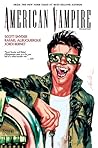
BOOKS: “American Vampire, Vol. 3” by Scott Snyder

American Vampire, Vol. 3American Vampire, Vol. 3 by Scott Snyder
My rating: 5 of 5 stars

Publisher site

The third volume of the American Vampire series advances the story into the 1940’s — World War II to be precise. The book contains two distinct storylines, both involving missions behind enemy lines. The first, “Strange Frontier,” is set in the Pacific theater and centers on the character of Henry Preston (the non-vampire husband of benevolent American Vampire, Pearl Jones.) In it, Preston is assigned to an elite fighting squad dispatched to investigate an island that turns out to be infested with a new strain of vampire.

The second story, “Survival of the Fittest,” takes vampiric vampire-hunter Felicia Book as its lead as she is dispatched (in partnership with agent “Cash” McCogan) to Nazi-occupied Romania to investigate claims of a “mad” scientist’s vampire-related research, only to find herself in a completely unexpected and daunting scenario.

I’m enjoying this series. The stories are satisfying and well-crafted, and the books somehow manage to not be just another set of vampire stories. Moving through time allows the stories to be self-contained while making it possible to continue with ever fresh material. (A tactic that works owing to the long lifespans of vampires.) The books also use genre mixing brilliantly, be it detective noir or — in the case of this volume — the war story. Snyder has breathed new life into the vampire story, and I’d highly recommend this series for comic book readers.

View all my reviews

BOOKS: “The Zen Teaching of Bodhidharma” Translation by Red Pine

The Zen Teaching of Bodhidharma (English and Chinese Edition)The Zen Teaching of Bodhidharma by Bodhidharma
My rating: 5 of 5 stars

Publisher’s Site

Bodhidharma was a Buddhist Monk who is credited with bringing an approach to Buddhism to China that would become Zen. This book presents four of his surviving lectures in their entirety: “Outline of Practice,” “Bloodstream Sermon,” “Wake-up Sermon,” and “Breakthrough Sermon.” It is a bilingual edition, featuring Traditional Chinese script juxtaposed with the English translation.

Bodhidharma was an intriguing and important character in the history of Buddhism, so much so that a legend has grown up around him that is in all likelihood substantially false. The most well-known element of the legend is that he taught monks the martial art that became Shaolin Kung Fu. (Historians refute the likelihood of this because there was no evidence of it in the documentation in the centuries immediately after Bodhidharma’s death. The story came along much later and caught on like gangbusters, so much so that it is routinely repeated today as if established fact. For elaboration, see Meir Shahar’s “The Shaolin Monastery.”) There is simply not a lot known about Bodhidharma (or even the extent which there was a Bodhidharma,) and what is known is not without controversy. Popular accounts put his homeland in Tamil Nadu, India, but dissenting accounts put it as far away as Persia (Iran.)

The reason I mention all this is because some potential readers may expect a kind of fabled story, full of kung fu and magic, and — in point of fact — these teachings offer a clear and straightforward approach to the practice of Buddhism. I’d highly recommend the book for readers interested in Buddhism, Zen, and meditational practices – generally. It is a clear and thought-provoking work. But, if you’re expecting a thrilling recitation of legend and woo-woo, this isn’t it.

View all my reviews

BOOKS: “Harlem Shadows” by Claude McKay

Harlem Shadows (AmazonClassics Edition)Harlem Shadows by Claude McKay
My rating: 5 of 5 stars

Project Gutenberg

This 1922 poetry collection is wide-ranging and beautifully composed. As the title hints, this is a product of that great literary and artistic movement known as the Harlem Renaissance.

The seventy-plus poems include sonnets and various other forms of poems, mostly lyric and rarely more than a couple pages in length. Besides being varied in form, they poems are also diverse of tone — from frank invectives on race to sweet love poems. They take New York as their home and tap into the verve of the day. The collection includes many of McKay’s best-known poems including: “If We Must Die,” “America,” and “Harlem Shadows.” Though bucolic beauties such as “Spring in New Hampshire” and “The Snow-Fairy” are not to be skipped over.

I enjoyed these poems and found them powerful and lyrical.

View all my reviews

BOOKS: “Mythos: The Illustrated Edition” by Stephen Fry

Mythos: The Illustrated Edition: The Illustrated Edition (Stephen Fry's Greek Myths)Mythos: The Illustrated Edition: The Illustrated Edition by Stephen Fry
My rating: 5 of 5 stars

Publisher Site

This book offers a humorous telling of many stories from Greek Mythology. One gets the well-known tales such as Prometheus, Sisyphus, and Pandora, but also the myths involving a number of lesser-known characters: god, demi-god, and mortal. As these myths are being told, there is also a substantial amount of nonfiction information presented by footnotes and such — e.g. how later authors (Shakespeare, for example) presented these myths or tales built upon them, how the myths inform popular culture and language to this day, and how Greek and Roman mythology related.

The art is nice, though I can’t say that it added much to the reading experience for me, personally. The art is done in a consistent style throughout and is colorful and visually interesting, though I couldn’t say much else about it in an intelligent fashion. It somewhat reminded me of William Blake’s art and somewhat of Soviet posters.

I enjoyed this book. It is light-hearted and even humorous without detracting from the tone of the myth and is a highly readable way to learn more about Greek Mythology.

View all my reviews

BOOKS: “Thirty-Six Stratagems” by Sun Bin [or Anonymous]

Thirty-Six Stratagems: Bilingual Edition, English and Chinese 三十六計: The Art of War Companion, Chinese Strategy Classic, Includes PinyinThirty-Six Stratagems: Bilingual Edition, English and Chinese 三十六計: The Art of War Companion, Chinese Strategy Classic, Includes Pinyin by Sun Bin
My rating: 3 of 5 stars

This is a collection of idioms on strategy with brief explanatory commentaries on each. The idioms, themselves, are thought-provoking and worth studying, but the book is problematic in a couple of regards. First, some of the work seems to either be plagiarized or has been plagiarized. Let me explain that accusation, because the actual thirty-six stratagems are clearly in the public domain, dating to the Sixth Century AD. However, while checking out the Wikipedia site to learn more about the author (incidentally, attribution of this work to Sun Bin is not accepted by consensus,) I discovered that the whole English translation of commentaries is verbatim the same as in Wikipedia. (Wikipedia has a tag on the article that it may contain original research and solicits further information.) I further noticed that the commentaries aren’t straight translations of the original Chinese text, but rather are reformulations written to be understandable to a present-day reader of English with no particular insight to Classical Chinese culture and history (which they are.) I can’t say whose work it is or whether it isn’t a misunderstanding that would be cleared up with additional information, but my point is that I wouldn’t recommend forking over any money to the publisher without knowing that the actual work (not the copy / pasting, but the intellectual work) either belongs to them or is in the public domain. Especially, given that it’s freely available on the internet.

That brings me to a second problem, a problem that is clearly on the publisher. There is a very limited sense in which this is a bilingual edition. Yes, the idioms themselves are presented in Chinese characters with pinyin as promised, but the commentary is wholly in English. The idioms, themselves, are largely Chengyu and other forms of Chinese idiom (so 4 characters, give or take, are all that is in Chinese for each.) So, if you’re purchasing this book to work on learning to read Chinese, it’s of limited benefit, and you’ll have to go elsewhere to get the Chinese commentary.

There is an appendix that explains a little about Classical Chinese. I can’t say whether this is original work or exists elsewhere on the internet. I can say that it also isn’t presented in a bilingual fashion either, excepting a few characters for some of the vocabulary. The appendix does have some interesting information.

My recommendation to readers would be not to buy this text when you can read both the Chinese and the exact English translation on Wikipedia for free. My recommendation to the publisher would be, if the commentaries are their original work, to put in a complaint to Wikipedia to pull it as copyright infringement. (And if they were the ones who lifted the text, to stop it already.)

View all my reviews

BOOKS: “Mother Tongue” by Bill Bryson

The Mother Tongue: English and How It Got That WayThe Mother Tongue: English and How It Got That Way by Bill Bryson
My rating: 5 of 5 stars

Publisher’s site

This is a humorous and readable overview of the English language. It examines the language’s history and evolution, as well as exploring some niche areas of interest such as swearing, wordplay, and naming conventions. Bryson takes on such questions as how a language that’s a train wreck of non-phonetic spelling and logical inconsistencies that made a career for comedian, Steven Wright (e.g. Why do we park in the driveway and drive on the parkway?) becomes the world’s most broadly spoken language. (At this time, it’s even the most spoken in absolute terms, but the book is fairly old now.)

Part of what one learns is that English isn’t so bad. Yes, our spelling is random and nonsensical (despite many failed attempts to improve it,) but in some ways English is grammatically simpler than many languages. English also has a history of embracing loan words and so there’s something familiar for all comers. Bryson does provide a number of fascinating points about other languages, largely by way of comparing and contrasting them with English.

Bryson was born in America, worked much of his life in Britain, and moved back to America. This bi-nationalism gives him unique insight into some of the book’s central questions — e.g. whether the language of these two hubs of English language will diverge or converge. There has been a concern that the English language would become so fractured that it would no longer be mutually intelligible to those on opposite sides of the Atlantic. However, increasingly, there is greater concern that people who watch both British and American versions of “The Office” may homogenize the language into one in which regional differences vanish.

I found this book to be both interesting and entertaining and would highly recommend it for anyone who wants more insight into the English language presented in an approachable manner.

View all my reviews

BOOKS: “The Song of Hiawatha” by Henry Wadsworth Longfellow

The Song of HiawathaThe Song of Hiawatha by Henry Wadsworth Longfellow
My rating: 5 of 5 stars

Project Gutenberg edition

This epic poem borrows from American Indian folklore and legend to build a fictional life story for the protagonist, Hiawatha. (There was an actual Hiawatha, but his life story apparently in no way resembles that of Longfellow’s Hiawatha, which is good because the fictional one had to deal with ghosts, tricksters, and deities.) The poem is part hero’s trials, part love story, and part tale of the supernatural, blending real world type tragedy with an otherworldly form.

The choice of trochaic tetrameter makes the poem rhythmically readable, while evoking a drumming sound that contributes to atmospherics.

When the poem came out in the mid-19th century, it faced some controversy. It was claimed that it was a knock off of the Kalevala of Finland. Longfellow’s reply was that he was influenced by that poem’s rhythm (the Kalevala is also trochaic,) but that all the plot events where from his conversations with American Indians and researchers, thereof, (or, presumably his own imagination,) and that any coincidence of events was owing to the broad brushstrokes of them both being heroic tales.

I enjoyed reading this poem and would highly recommend it for poetry readers and lovers of American Literature.


View all my reviews

BOOKS: “American Vampire, Vol. 2” by Scott Snyder

American Vampire, Vol. 2American Vampire, Vol. 2 by Scott Snyder
My rating: 5 of 5 stars

Publisher site

This six-issue volume, just like the first, intersperses the story of two American vampires, Skinner Sweet and Pearl Jones. For those who haven’t read Vol. 1, the American Vampire is mutated to have advantages of strength, speed, and UV resistance, but in vampire mode they are much more monstrous. The first four issues focus on a detective noir story set in 1930’s Las Vegas. Skinner Sweet could be said to be central to events in that arc, though not to be the lead character. (That would be the police detective trying to solve a string of gruesome murders.) The last two issues put the Pearl Jones story front and center. That arc is set during the same timeframe, but in Northern California. The first arc is tied up more successfully, but I suspect this has to do with the challenges of interspersing stories (the first arc also has twice as much space with which to work.)

There’s an interesting contrast between the stories. Skinner Sweet is villainous, was villainous before he became a vampire, and is even more so afterwards. The Pearl Jones story is more of a love story between Pearl and her human husband, Henry Preston — albeit a love story in which the couple is being hunted by nefarious forces and must fight to survive. She is trying to be free of the monster life as best she can.

I am enjoying this series. The journey through time and landscapes of America makes this not just another vampire story. If you enjoy comics that mix genres, I’d highly recommend this volume.

View all my reviews

BOOKS: “The Story of Chinese Characters” by Fang Zeng

Languages - The Story Of Chinese Characters: 汉字的故事 (Bilingual Chinese with Pinyin and English - Simplified Chinese Version) - Preschool, Kindergarten (Educational ... Books For Smart Kids: 聪明宝宝益智成长绘本 Book 2)Languages – The Story Of Chinese Characters: 汉字的故事 (Bilingual Chinese with Pinyin and English – Simplified Chinese Version) – Preschool, Kindergarten by Elite Panda book
My rating: 5 of 5 stars

Publisher’s YouTube Channel

This story book is apparently perfect for preschoolers and definitely is for someone newly learning Chinese. It is the tale of a man who goes hunting and his mild trials and successes. It’s not a gripping tale, but that’s perfect for those new to the language as it allows simple language and concepts. The language is grammatically and semantically straightforward. This bilingual book presents Chinese characters, pinyin with tone markers, and the English translation all on the same page.

The story teaches a few rudimentary Chinese characters (person, mountain, boat, bird, etc.,) particularly ones that are either pictographic or lend themselves to pictographic memory tricks. (For those unfamiliar with Chinese, it is a common misconception that all the characters are pictographic. In fact, about eighty percent of characters appear as they do because of their spoken sound quality [i.e. they appear similar to another character with the same sound, but often with an entirely unrelated meaning.]) The illustrations not only tell the story but invokes the shape of the character that is under study.

I found this book useful for learning to read in Chinese. A little more separation of the pinyin and characters might be nice so one could cover it up to focus on reading characters, but I was clearly not the intended demographic. I don’t see any reason why the book couldn’t work either way, i.e. for English learning Chinese speakers as well as English speaking Chinese learners.

View all my reviews