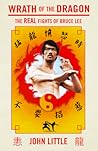
BOOK REVIEW: Wrath of the Dragon by John Little

Wrath of the Dragon: The Real Fights of Bruce LeeWrath of the Dragon: The Real Fights of Bruce Lee by John Little
My rating: 5 of 5 stars

Amazon.in Page

Release Date: September 5, 2023

There are many Bruce Lee biographies out there, from general bios (such as Matthew Polly’s Bruce Lee: A Life) to those that are much more narrowly focused (e.g. Rick Wing’s Showdown in Oakland about Lee’s fight with Wong Jack Man.) This book is somewhere in between in that it is theme-focused (Lee’s fights and matches,) but it does offer insights from Lee’s childhood through to his death as they pertain to these fights and sparring experiences. The book explores all of the known real-world scraps and matches, as well as some of the more telling sparring sessions. Fights range from Lee’s adolescent skirmishes as a punk kid through the challenge matches with extras on the set of Enter the Dragon as an astute (if still quick-tempered) master. When I say that the book includes sparring sessions, I’m not talking about every time Lee sparred, but rather those exchanges that offered particular insight into Lee’s prowess, such as his last ever sparring session with his old Wing Chun teacher, Wong Shun-Leung (a senior student of Ip Man’s) as well as those with athletes at the top of their respective combative sports.

The point of the book is to challenge a belief — widespread at times — that Lee was a blow-hard offering banal quasi-mystical Eastern philosophy and martial insights that were based only on a few Wing Chun lessons from Ip Man. In contrast, the book paints a picture of a broadly experienced fighter who was obsessive about his betterment as a martial artist. Lee was an innovator and trained with great endurance and intensity. The book portrays Lee as a martial artist of such speed and athleticism that even World Champion competitors were left in awe.

While reading, one does have to question how objectively the information is being presented. After all, Little is definitely a bit of a fanboy and he’s clearly taking a stance on Lee’s prowess. Furthermore, the fact that (at one point, I’m not sure about presently) Little was the only one with full access to Lee’s archived notes suggests his message was sufficiently on point for Lee’s family to feel comfortable with him. That said, I felt there was enough admission of Lee’s weaknesses and mistakes as well as a willingness to present competing statements when details were in question that I believe this is an honest attempt to get the details right (within the unavoidable constraints of memories of events being decades in the past and being seen from multiple perspectives — psychologically as well as geographically.)

I found this book to be fascinating from cover to cover, and well worth reading. In addition to the stories of the fights, the author discusses the lessons that Lee learned along the way. Even in winning, Lee was sometimes dissatisfied with his own performance, and this drove him to adapt and to develop new training methods. I’d highly recommend this book for those interested in the martial arts or who love a good biography.

View all my reviews

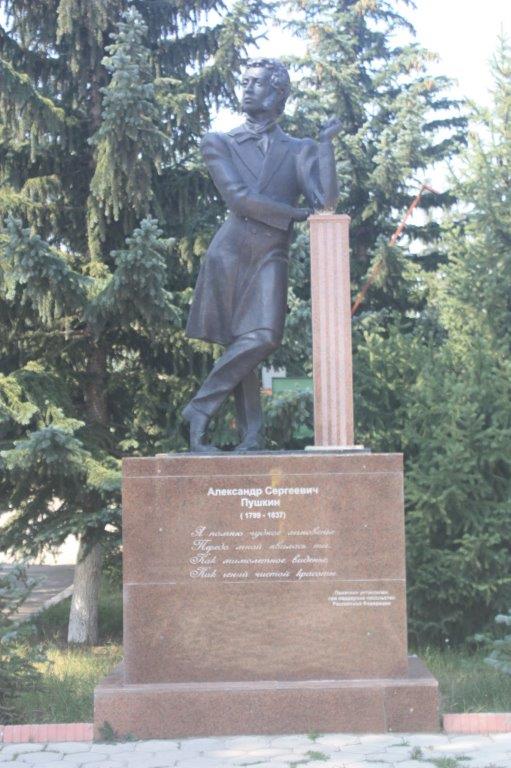
Pushkin Limerick

The poet Alexander Pushkin
 challenged twenty-one duels with no win.
 But just that one loss,
  put him under a cross.
 Perhaps, he'd have lived if his skin weren't so thin. 

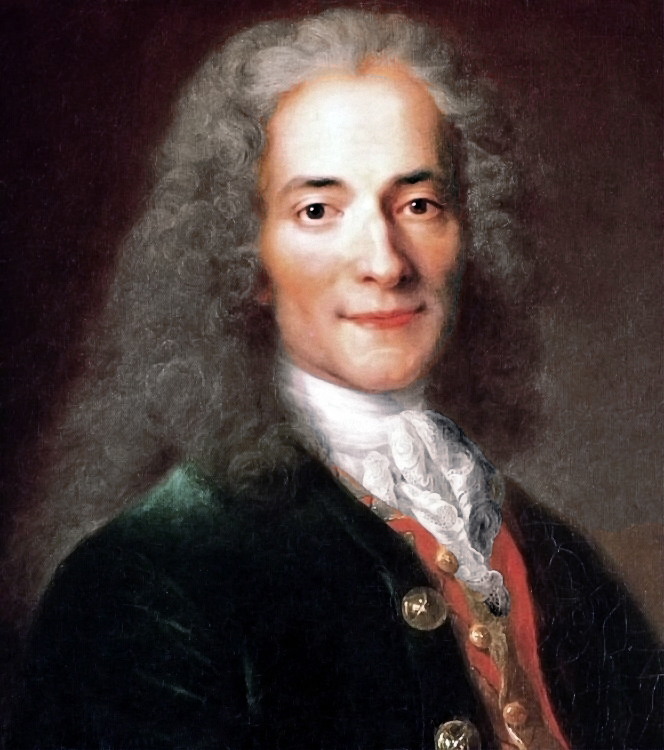
Voltaire Clerihew

The Enlightenment thinker called Voltaire
 beat the lottery to become a millionaire.
   To the man, he did stick it,
    by buying every ticket. 

BOOK REVIEW: By Water by Jason Landsel & Richard Mommsen

By Water: The Felix Manz StoryBy Water: The Felix Manz Story by Jason Landsel
My rating: 4 of 5 stars

Amazon.in Page

Release Date: March 21, 2023

Get Speechify to make any book an audiobook

This is a graphic novel-style biography of Felix Manz, a Protestant (Anabaptist) reformer from Zurich during the sixteenth century. Manz and his compatriots had a few beefs with the Catholic church, broadly classified. The first (and most religious / doctrinal) grievance was with respect to how the Church handled baptisms; specifically, infant baptism prevented baptism from being a free choice for the baptized. The second set of grievances involved the priesthood and how priests were moved around at the convenience of the Church and how much money they cost the citizenry. (i.e. They wanted local priests and not to be forced to pay a lot of overhead.) The third complaint was more an entire slate of complaints about resources. In that era, Swiss commoners couldn’t just go hunting in the woods or chop firewood as they needed because the land was under the ownership of the powers that be.

The story of Manz and his followers is intriguing, if one is interested in history. It’s kind of a strange topic to read in comic book form, but as history can be tedious in historical / biographic tomes, this makes for a quick and painless way to take in the story. There are a couple points where the book seems to shift into hagiographic territory (i.e. being difficult to swallow for the non-believer.)

The art is clear and neatly rendered, but I wondered how time-accurate it is. Maybe it is, but the inside of the houses looked pretty much like today (e.g. curtains and furnishings) and I found myself wondering whether its anachronistic or not. Ultimately, I have to give the artist the benefit of the doubt as I know virtually nothing about how Swiss commoners lived in the 1500’s. At the end of the book, there are some appendices that provide more information in prose text.

If you’re interested in European and / or Religious History, you may want to read this book.


View all my reviews

BOOK REVIEW: Rilke: The Last Inward Man by Lesley Chamberlain

Rilke: The Last Inward ManRilke: The Last Inward Man by Lesley Chamberlain
My rating: 5 of 5 stars

Amazon.in Page

This book surveys the influences on Rainer Maria Rilke’s poetry, and makes the argument that Rilke was the last vestige of a mystically spiritual [Romantic or Romantic-esque] poetic line. Poetry was becoming more political and more influenced by nihilistic philosophies that eschewed inward investigations of meaning and self-realization, constructs that were seen as artificial and empty. Rilke bucked the trend, and while he did become an important poet, Chamberlain believes he paid a price.

The book discusses the influence of sexuality, spirituality, and artistic obsessions on Rilke’s poetry in great detail. It also talks about his life as an influence, both his family life (or lack, thereof) and the key years he spent in Paris. The last couple chapters tie the story together by clarifying what Rilke achieved and how it contrasted with prevailing trends.

If you’re interested in understanding more about the philosophical and spiritual forces impacting Rilke’s work, this is an interesting read. It’s not a biography, strictly speaking, but does unavoidably discuss Rilke’s life in some detail (though always through a literary / philosophical lens.)


View all my reviews

BOOK REVIEW: Hendrix: Electric Requiem by Mattia Colombara

Hendrix: Electric RequiemHendrix: Electric Requiem by Mattia Colombara
My rating: 4 of 5 stars

Amazon.in Page

Release Date: September 6, 2022

This is a biography of the life of Jimi Hendrix in graphic novel form, from his youth in the Jim Crow South to his untimely demise. The book takes narrative license here and there, rather than being a just-the-facts scholarly or journalistic biography. This license is most extensively seen in the mystical and surreal dream and death sequences, but the back matter suggests that there was at least one event depicted in the book that didn’t happen in reality (or, at least, there isn’t evidence to support its occurrence.)

Hendrix’s life was so short and his death was now so long ago that few people know more than that he was a guitar prodigy with a penchant for playing in wild and unusual ways. The story digs into moments of poignancy and drama in the guitar phenom’s life as well as emphasizing his interactions with major artists of the day: e.g. Clapton, McCartney, and The Rolling Stones.

I found the book intriguing and valued the fact that there were notes and a bibliography in the back that help to clarify what’s well-supported and what events take creative license. The art is well rendered and colorful. If you’re interested in learning more about a rock-n-roll legend, it’s worth looking into this book.


View all my reviews

BOOK REVIEW: Stephen King by Bev Vincent

Stephen King: A Complete Exploration of His Work, Life, and InfluencesStephen King: A Complete Exploration of His Work, Life, and Influences by Bev Vincent
My rating: 5 of 5 stars

Amazon.in Page

Release Date: October 18, 2022

This book offers one-stop shopping for anyone who wants to know about the life and works of one of the most popular and prolific genre fiction writers ever, Stephen King. The book is built around decade-by-decade examination of the books that King published as well as the adaptations that those books spawned (film, tv, comic book, theater, etc.) It’s arranged in an encyclopedic fashion (though chronologically) with entries on all of King’s titles, and has many textboxes about niche subjects including: King’s side hustles (e.g. owning radio stations, playing in a rock bank, etc.,) major events in King’s life, fictional places and characters that grew lives of their own, adaptations other than film and tv [film & tv adaptations are presented in the body of the text,] and various other quirky King-related topics.

The book is illustrated with a large collection of photos of King from various time periods and engaged in various activities.

Many fascinating insights can be discovered throughout the book. I learned, for example, that the Richard Bachman alias resulted from King’s prolific nature (and because BTO was playing at the time.) Publishers thought that readers would only buy one or two titles from a given author per year, but King had a back log of unpublished material – so he started publishing books under the Bachman persona. King was ever experimenting with various approaches to publishing and that makes the book potentially interesting for those with a curiosity about publishing innovations. The book is forthright about King’s alcohol and drug addictions and the influence they had on his work.

Oddly, I’m not the target audience for this book. I’ve only read a couple of King’s books (and one of those was “On Writing,” his nonfiction guide to writing.) That said, I found the book quite interesting.

View all my reviews

BOOK REVIEW: Borges: An Introduction by Julio Premat

Borges: An IntroductionBorges: An Introduction by Julio Premat
My rating: 5 of 5 stars

Amazon.in Page

Jorge Luis Borges was a thinking person’s writer, his works are both global and local (of Argentina or, specifically, of Buenos Aires focus,) are philosophical and literary and cut across scholarly domains, and they can also be arcane and fragmented. It’s because of this — combined with the fact that Borges work remains well worth reading — that a volume like this is beneficial. While the book does -in part – simplify and elucidate Borges’ work, it also expands on the Borges canon as a way to present the reader food-for-thought about ways in which one might approach the thoughts of Borges, oneself. The book is divided into two parts, one on the man and the other on his writings.

While this book is subtitled, “An Introduction,” I would suggest it’d be beneficial if one has read some of Borges’ major works (e.g. A Personal Anthology, “Ficciones,” The Aleph and Other Stories, “Selected Non-fictions,” etc.) Premat does offer some relevant background information when he references texts in order to help clarify his points, but not always enough to get the full understanding and less and less as the book progresses – so as to avoid redundancy. Borges’ work (tending toward short [even micro-] writings across fiction, nonfiction, and poetry) is challenging enough for this kind of study. As opposed to a novelist who would have a few major works to discuss, Borges has a vast body of writings that are no more than a few pages each.

As a reader of Jorge Luis Borges, I found this book to be beneficial and thought-provoking, and would recommend it for others who want to expand the depths of their understanding of this Argentinian writer and his ideas.

View all my reviews

BOOK REVIEW: Adi Shankara by P. Narasimhayya

Adi ShankaraAdi Shankara by Anant Pai
My rating: 4 of 5 stars

Amazon.in Page

This short, comic book tells stories associated with the Advaita Vedanta sage, Adi Shankara. As it’s a comic book intended for children, it’s more occupied with mythology and magical tales than with describing Shankara’s philosophy or what real world events influenced said philosophy. That said, it’s a quick way to gain some insight into the mythology of Adi Shankara as well as a few sparse biographical details such as the places he traveled and people he met.

At the end, it does have a half-page box of quotes that offers a tiny bit of insight into what Shankara believed and what concepts he emphasized in his teachings.

If one reads it with the expectation that this is a book that is primarily going to offer insight into stories and fantasies bandied about, it’s certainly worth the limited investment of time and effort required to read the book. But it’s kind of boring in the way of Superman-type comic books –i.e. fantasies of a guy who does whatever he can imagine because he’s not bound by the physical laws of the universe. That is, it’s more intended as escape from reality than as education.


View all my reviews

BOOK REVIEW: A Stranger in Tibet by Scott Berry

A Stranger In Tibet: The Adventures Of A Wandering Zen MonkA Stranger In Tibet: The Adventures Of A Wandering Zen Monk by Scott Berry
My rating: 5 of 5 stars

Amazon.in Page

This book tells the story of a Japanese Zen Buddhist monk, Kawaguchi Ekai, who traveled to India, Nepal, Lo (now Upper Mustang,) Sikkim, and Tibet in the early years of the twentieth century in search of Buddhist scriptures and teachings. His ultimate goal was Tibet, which he’d heard had the complete Buddhist canon in Tibetan. However, at that time, Tibet (like some of the other nations he traveled through) was xenophobic and strictly controlled / prohibited movements of foreigners, sometimes under penalty of death. This necessitated Kawaguchi first spending a year-and-a-half in Darjeeling to become fluent in Tibetan, and then using a range of disguises to facilitate travel. There was a book published after Kawaguchi’s trip entitled, “Three Years in Tibet,” but there are reasons why one might prefer Berry’s work, reasons that will be addressed below.

Kawaguchi was an interesting figure, a skilled polyglot, a fast thinker, and an iron-willed pursuer of truth. He was also bigoted and held uncompromising moral beliefs upto which few could live. The travelogue is sometimes comic, sometimes tragic, but always interesting. Sometimes Kawaguchi comes across as a Buddhist Don Quixote, but other times he’s a valiant scholar / adventurer.

As for why one might enjoy reading Berry’s account better: first, “Three Years in Tibet” is rather bloated and wasn’t written directly by Kawaguchi but rather by way of journalists. Second, Berry explores the truth behind some of the intolerant and sectarian views of Kawaguchi. Third, Berry offers broader context into the intrigues and geopolitics of the times that led to the shunning of foreigners in the first place.

This book delves into a fascinating time in a little-known part of the world, and it’s a compelling read throughout. I’d highly recommend it for those interested in learning more about the region and its past.


View all my reviews