
Taken in September of 2017 near Ahmedabad

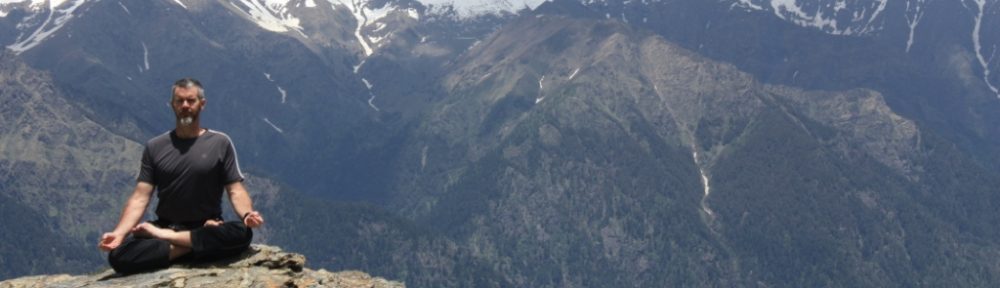

Taken in December of 2014 in Pécs

by Thomas Phillips, oil on canvas, 1807
box of virtue, or box of sin
which one does this act go in?
and why put each one in a box?
to sell the sins down by the docks?
Blake the madman, Blake the pious
the difference reflects your bias
wedging each act into a crate
dilutes the evil and the great
all so the vain can extricate
themselves above the ones they hate

Taken in August of 2016 on the road to Pangong Tso in Ladakh

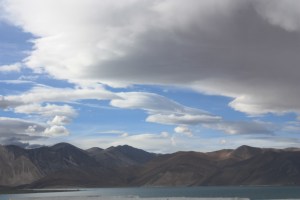
painted skies
make mountains puny
by contrast
in thin air
poor sleep paid in
grand skies
Pangong Tso
seen as by the prisoner
from Plato’s cave

Taken in July of 2014 at Barachukki Falls
 Two Saints: Speculations Around and About Ramakrishna Paramahamsa and Ramana Maharishi by Arun Shourie
My rating: 5 of 5 stars
I suspect this book is extremely controversial for many, though it echoes many of my own views. The central premise of the book is that there is a middle ground position between: a.) true believers who insist that gurus and god-men hold superpowers and can perform miracles, and b.) rational skeptics who hold that god-men are inherently frauds and their followers are necessarily either shills or dunces.
What is this middle way? First of all, it denies the existence of the supernatural and rejects the premise that certain men and women — through great virtue or intense practice — can circumvent the laws of physics. (Which isn’t to suggest that great virtue and intense practice can’t have profound impacts on a person and the community in which he or she resides.) Secondly, on the other hand, it acknowledges that scientific findings (or at least feasible hypotheses) on matters such as out-of-body experiences (OBE,) hypnotic trances states, hallucinations, epileptic seizures, the placebo effect, and near-death experiences (NDE) can offer insight into how rational, intelligent, and good-natured individuals might develop a belief in the supernatural. There is a third premise that is implicit throughout Shourie’s discussion of the life and works of these two great teachers (also which I share), which is that a lack of superpowers in no way detracts from what these two great gurus achieved.
As the subtitle suggests, the author is merely speculating as there is no way to put these ideas to the test, given these individuals are long deceased and (unlike, say, the Dalai Lama) would be unlikely to show an interest in such explorations even if they were alive. However, Shourie seeks to systematically demonstrate connections between the events described by the holy men and their followers and what scientific papers have described with respect to studies of unusual phenomena like OBE, NDE, and hallucinations. (e.g. it’s long been known that with an electrode applied to the right place on the brain a neuroscientist can induce an OBE in anyone. The widespread accounts of this feeling /experience that one is rising out of one’s body, often by respectable individuals of impeccable character, is one of the reasons for believing there must be an immaterial soul that is merely carted about by the body.)
The titular two saints that Shourie makes the centerpiece of his inquiry are the Bengali bhakti yogi Sri Ramakrishna and the jnana yogi from Tamil Nadu, Sri Ramana Maharshi. [For those unfamiliar with the terms “Bhakti Yogi” and “Jnana Yogi,” the former are those whose practice emphasize devotion and worship while the latter are those whose practice emphasize self-inquiry and study. The third leg of the stool being “Karma Yogis,” who focus upon selfless acts is the core of their pursuit of spirituality.] These two teachers were both born in the 19th century, though Sri Ramana lived through the first half of the 20th century. Besides being widely adored and seen as holy men of the highest order, they also serve as a kind of bridge between the ancient sages who lived out simple lives of spirituality in destitution and the modern gurus who often have vast commercial enterprises ranging from hair-care products to samosa mix all run from ashrams that are similar to academic universities in scope and grandeur. Some might argue that Ramakrishna and Ramana were the last of their kind in terms of being internationally sought after as teachers while not running an international commercial enterprise. Another way of looking at it is that they are modern enough that the events of their lives are highly documented, but not so modern as to have the taint modernity upon them.
The book is organized over sixteen chapters, and is annotated in the manner of scholarly works. The early chapters delve deeply into the life events of these two men, and in particular events that are used as evidence of their miraculousness. Through the middle, the author looks at how events in these individual’s life correspond to findings in studies of subjects such as the placebo effect (ch. 10,) hallucinations (ch. 7, e.g. given sleep or nutritional deprivation,) and hypnotic suggestion (ch. 9.) Over the course of the book, the chapters begin to look more generally at questions that science is still debating, but which are pertinent to spirituality – e.g. what is the nature of the self (ch. 12), what is consciousness? (ch. 13), and what does it mean for something to be real (ch. 15.) The final chapter pays homage to these two saints.
I found this book to be highly thought-provoking and well-researched. Shourie is respectful of the two teachers, while at the same time insisting that it’s not necessary for them to be super-powered for them to be worthy of emulation, respect, and study. I’d highly recommend this book for anyone interested in the questions of mystical experience and the scientific insights that can be offered into it.
 Fungi: A Very Short Introduction by Nicholas P. Money
My rating: 4 of 5 stars
Bear with me. Fungi might sound like the most brutally boring topic on the planet, but hopefully by the end of the review you’ll be convinced it’s worth learning at least 125 pages about the basics of these unexpectedly powerful organisms. Regardless of whether you agree with people like Paul Stamets who suggest that if the planet is to be saved, the solution will no doubt hinge on fungi, (FYI – Dr. Money, author of this book, explicitly urges caution about such grand hopes) there’s no denying that these musty denizens of the forest floor (and almost everywhere else) are profoundly important to humanity. From taking out the trash in their role as decomposers to serving as the key ingredient in medicines to helping us digest foods to allowing us to make beer and bread, fungi can be greatly beneficial. They can also be legendarily deadly.
This book gives an overview of fungi with special emphasis on their interaction with the world. The book consists of eight chapters. The first three of these chapters look at the members of the Kingdom more or less in isolation, and the rest of the chapters delve more into how fungi interact with ecosystems and other organisms. Chapter one discusses what fungi are exactly, and what defines members of this kingdom. Given that most people only think of the fruiting bodies of certain kinds of fungus (e.g. the button or shitake mushrooms they get at the supermarket), being explicit about what separates fungus from other organisms is useful. This leads into the second chapter, which explores the huge diversity of this kingdom. The third chapter explores the genetics and life-cycle of fungi. All of these chapters are limited by the fact that there are far too many varieties of fungi to dive into specifics, given how wildly divergent they can be.
The other five chapters explore how fungi interact, and these chapters also move from more general interaction to those specific to mammals in general and to humans, specifically. Chapter four is entitled “Fungal Mutualisms” and it introduces how fungi interact with other species. Specifically, the chapter focus on interactions that are mutually helpful or at least not harmful to either party. Parasitic relationships, in which one participant (specifically plants) is damaged by the relationship, are saved for their own chapter — five. Chapter six investigates the role that fungi are perhaps most known and beloved for, decomposition.
The last two chapters deal with fungal interactions with animals, with specific emphasis on how they benefit or hinder humans. Chapter seven considers how fungi contribute to health or illness in animals. The reader learns about the good (e.g. contributions to digestion), the bad (e.g. infections) and the trippy (psychedelic mushrooms and derivatives – e.g. LSD comes from ergot fungus.) The final chapter explores edible mushrooms and the fungal role in biotechnology, including: pharmacology, fermentation, and bio-fuel production.
The book has many graphics that consist mostly of line drawings but include a few frames microscope photography. There is also a brief “Further Reading” section that suggests other books as well as websites.
I’d recommend this book as a first step to learning more about fungi. It won’t help with things like identification, but it’s a nice overview of a surprisingly broad topic for a neophyte. As is common with this series from the Oxford University Press, there’s not a lot of room for long stories that might make the reading more entertaining, and so it’s probably not the most engrossing book one can find on the topic, but it’s likely one of the most concise and accurate.


