5 Melancholic Works of Nonfiction You Should Read

5.) Man’s Search for Meaning by Viktor Frankl: Deep life lessons learned inside a Nazi death camp.


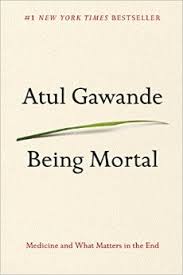
4.) Being Mortal by Atul Gawande: A medical doctor discusses how living longer doesn’t necessarily mean living better, and what that can mean for one’s final years.


3.) When Breath Becomes Air by Paul Kalanithi: Contemplations on the meaning of life from a doctor who was dying from a terminal illness, and who succumbed before completion of the book.


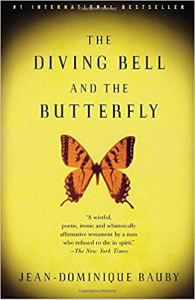
2.) The Diving-Bell and the Butterfly by Jean-Dominique Bauby: The story of a man who developed Locked-In Syndrome in the wake of a severe stroke and couldn’t move a muscle, save one eyelid.


1.) First They Killed My Father by Loung Ung: The title captures the family level tragedy of Pol Pot’s rule, but the book conveys something of the national tragedy as well.

DAILY PHOTO: Chinese Shrine in Mumbai

Taken in July of 2018 in Mumbai


DAILY PHOTO: Kashmiri Campsite

Taken in August of 2016 along the Naranag – Sonamarg Trail [i.e. The Kashmir Great Lakes Trek]

DAILY PHOTO: Bird on a Rock, Kashmir

Taken in August of 2016 on the Naranag – Sonamarg route

BOOK REVIEW: Mr Penumbra’s 24-Hour Bookstore by Robin Sloan

Mr. Penumbra's 24-Hour Bookstore (Mr. Penumbra's 24-Hour Bookstore, #1)Mr. Penumbra’s 24-Hour Bookstore by Robin Sloan
My rating: 5 of 5 stars

Amazon page


The book’s lead, Clay Jannon, takes a job as night clerk at a 24-hour bookstore, having found himself jobless in the wake of a recession that sealed the fate of the tech startup for which he’d been working. The job is easy enough, but the workplace is an enigma. It attracts few paying customers, and mostly exists to serve a regular clientele who come in to borrow very old books that aren’t for sale. Working the night-shift, and with little real work to do, Jannon starts trying to make sense of the riddle of the bookstore, and ends up neck-deep in a world of secret societies and medieval encrypted codices.

The book is an entertaining read. There are certainly things about the story that are a little too easy, such as Jannon having a circle of friends that have the perfect set of resources and capabilities to carry out the story’s arc. This allows Clay to be presented as a scrappy underdog character, but he never has to be constrained by that status because he has a wealthy friend who will buy him anything he needs and a girlfriend from Google with the chops to gain him access to unlimited computing power. All that said, the book is more fantasy than strict realism, and so this isn’t really a problem for the reader who wants to lose him- or herself in an intriguing story. It’s also true that Clay is gregarious and likable and so one can imagine him easily building friendships – though, with a notable exception, he already has these friends before the story starts. But the characters are all distinct, and generate the desired state of liking or loathing.

[When I say “fantasy,” I should clarify that while there are hints about the possibility of the supernatural, readers don’t see real evidence of it. So, it’s realism in the sense that it’s a world limited by the same constraints as ours. However, it’s a world that features a secret society, The Unbroken Spine,” that stretches back almost to the Middle Ages, and which has been striving to decode a book produced by one of the earliest printers because they believe it may hold secrets of a supernatural nature. So, it feels like an urban fantasy / down the rabbit hole kind of story though, strictly speaking, it’s not.]

I enjoyed this book. The story is gripping even if it does feature some deus ex machina Hail Marys. The characters are likable and interesting. I’d recommend it for readers who like mystery and intrigue in the stories they read.

View all my reviews

BOOK REVIEW: The Diving-Bell and the Butterfly by Jean-Dominique Bauby

The Diving Bell And The ButterflyThe Diving Bell And The Butterfly by Jean-Dominique Bauby
My rating: 5 of 5 stars

Amazon page


If it had been written under ordinary circumstances, this would be a fine book. It offers some beautiful imagery and language, and – more importantly — is heartfelt, touching, and nakedly honest. But it wasn’t written under ordinary circumstances, which makes it an astounding book. Its author suffered a severe stroke that, after leaving him in a coma for a time, resulted in a condition called “Locked-In Syndrome,” which resulted in his inability to move any part of his body save his left eyelid. It was by moving this eyelid that he painstakingly dictated the book. As one might suspect, the book is concise and sparse in tone, but it read like that could have been a stylistic choice, rather than a necessity.

The title becomes less nebulous once you know it’s about a man with Locked-In Syndrome. The diving-bell represents his body, a clunky cumbersome entity that limited his perception to narrow slices of the world. The butterfly is his mind, which remained free to go anywhere and create anything he could imagine. Some of what I found most fascinating about the book was the author’s discussion of the mental world he created. Though the book deals even more extensively with how the condition changed his interaction with people. Loneliness is a central theme. Because of the severity of the condition, he is restricted to a special facility and can only see his children on weekends. While his children are the most important to him, he also reflects back to people that he worked with in his role as a magazine editor or who he counted as friends.

The organization is not strictly chronological, and I felt this was beneficial. By presenting flashbacks to before he was injured and, eventually, to when he had his stroke, he broke up the tragedy to keep it from becoming overwhelming.

I found the book to be extremely powerful. I would highly recommend it for all readers.

View all my reviews

BOOK REVIEW: Story of the Eye by Georges Bataille

Story of the EyeStory of the Eye by Georges Bataille
My rating: 4 of 5 stars

Amazon.com


This story follows a couple through a destructive series of events as they chase sexual hedonism. They aren’t a couple in the romantic sense so much as friends who share in common both intense sex drives and also a particular psychology. It’s a psychology commonly associated with rebellion against a repressive upbringing. This rebellion manifests both in a longing for perverse and taboo activities, and also in an urge to debauch the virtuous. This love of depravement is first seen in the pair’s actions with a conflicted girl of their own age, Marcelle, and in the climax and conclusion with a young priest in Seville. In yet a darker turn, the two also conflate violence and sexual arousal.

Character development is not particularly strong in this book, and without the requisite background, the actions of the unnamed male narrator and his companion, Simone, can seem hard to believe at times. (To be fair, the book is more surrealism than realism.) While lack of character development and character complexity are a common problem in erotic literature, this book is also smothered in Freudian belief about how strange sexual drives always and everywhere exist in the subconscious in a struggle to break free. In other words, Bataille may not have felt he needed to set up the reader for the bizarre behavior of the narrator and Simone because he saw the pair as not as unusual, but merely as how most people would behave if they were a bit braver and less inhibited.

Marcelle is the most multi-dimensional character. We see her on a teeter-totter that balances primal urges and constraining morality, or shame and abandon. But we don’t get much depth of her either because she is treated largely as a puppet or plaything for the lead characters.

The novel shares some tendencies in common with the works of Marquis de Sade, but it also displays some differences. The eroticizing of degrading virtuous characters is a theme that holds over. It might also seem that the involvement of a Catholic priest is a continuation of Sade’s philosophy as well. However, there’s a difference. In Sade’s work (and similar works of erotic political philosophy) the priests are lecherous and are villains in league with the aristocracy. Bataille’s priest is a man minding his own business, who would like to be virtuous, but the young priest just doesn’t have the inner strength in the face of a strong-willed debaucher.

From the discussion above and the comparison with the works of the Maquis de Sade, it should be clear that there is a great deal of graphic sexual activity and even a little bit of graphic violence in this book. For readers who aren’t disturbed by that, and who are amenable to a bit of bizarre and surreal activity, the book is intriguing both as a story and for its psychological insight. If you read horror, and aren’t disturbed by fetish sexual activity, you’ll probably enjoy this book.

View all my reviews

POEM: Split Personality

i am sender and receiver
of the
voiceless voice

i am projector and audience
of
movies of the mind

i am perpetrator and victim
of
pleasure and pain

i am a human brain
stacked on a
mammalian brain
stacked on a
reptilian brain,
and all at odds

and then
I am

DAILY PHOTO: Vibrant Colors

Taken in October of 2016 in the Gardens by the Bay in Singapore

POEM: Block of Time

some say time is a block —

a finished work,

not full on one side of the present and empty on the other —

all causes and effects are settled —

except the causeless first cause

and the effectless final cause

we worm our way through time

like a worm chomps through an apple,

rather than building a future along time’s arrow