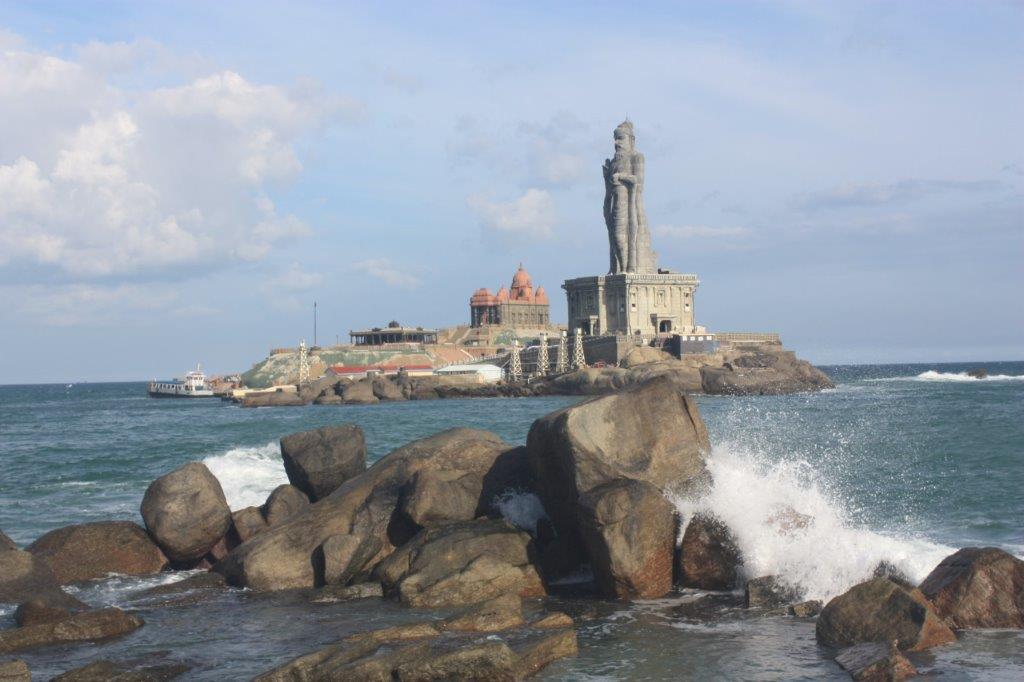
DAILY PHOTO: Rocky Kanyakumari

Taken in Kanyakumari in December of 2020

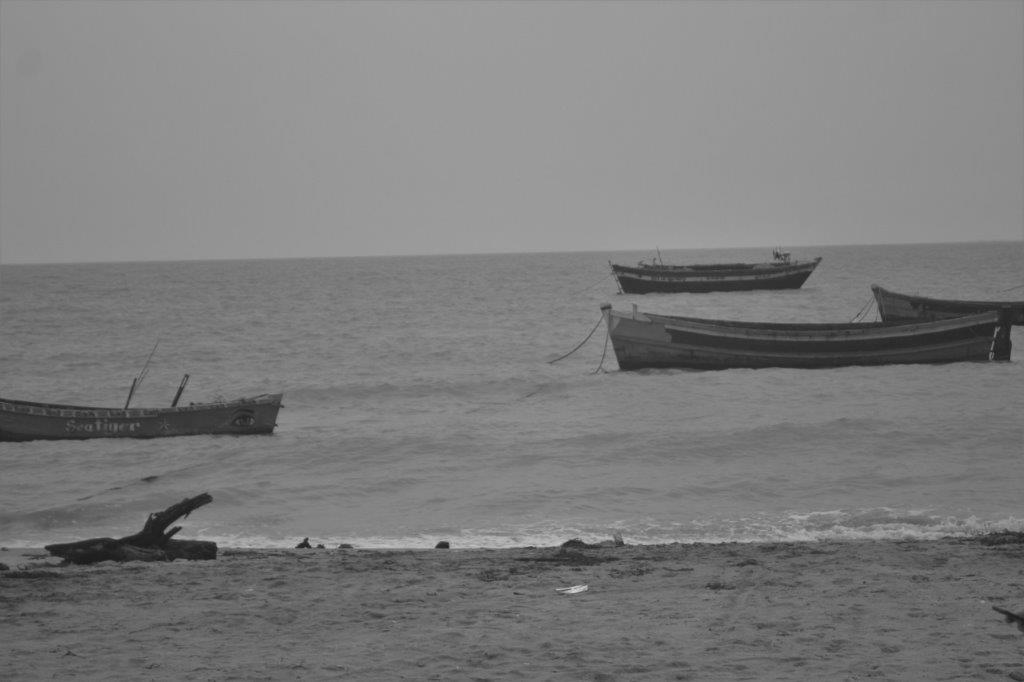
Soulless Voyager [Free Verse]

I am the soulless voyager
cut loose from the dock
in a rudderless craft

Kicked this way and that
by angry winds that greet
all flat surfaces, and --
having met a surface --
pushes it away with maximum effort

Where will my ghost ship take to land?

After all,
every voyage must end -- 
be it purposeless or purposeful

A craft can only circle 
(having been caught in the currents)
for so long before it's whipped
off into sand or rock or 
some unlikely port

That's the great mystery,
the mystery by which life
is made worthy of living
 
one never knows whether 
one will be tossed to a port or a rocky shoal,
a shoal whose rocks will rip open the ship,
like a deer dressed by a poor hunter,
being torn at jagged angles
so as to be unworthy
to be called a ship or boat or even 
"thing that floats,"
becoming a rusty structure,
resting at an odd angle
near the shore

but maybe this ghost ship 
will be tossed roughly against 
the rubber bumpers of a dock,
coming to rest 
such that what remains
can be offloaded

DAILY PHOTO: Yellow Cosmos

Taken in 2009 at Reynolds Nature Preserve in Morrow, GA

The Thoreau Life [Common Meter]

What a way to live one's life, in
a cabin made of wood;
never to be governed by: "I
have to! I must! I should!"

To set one's sights on the day's needs
as one's only master,
and not be told, "you move too slow,
you must live life faster." 

To start the day by a cue from
rays of the rising sun.
To end the day when the day ends,
not only just've begun.

BOOK REVIEW: Humour: A Very Short Introduction by Noël Carroll

Humour: A Very Short IntroductionHumour: A Very Short Introduction by Noël Carroll
My rating: 4 of 5 stars

Amazon.in Page

As both Mark Twain and E.B. White made abundantly clear, humor is like a frog; dissection kills it and few are interested in watching that happen. Which isn’t to say that dissection isn’t useful. But it does mean that readers who are looking for a book that’s a laugh-riot are looking in the wrong place. Most of the example jokes were ancient when the book was first published eight years ago. (They’re good jokes. Bad jokes don’t become old jokes, they die ignominiously.) All that aside, this book provides an intriguing look into such questions as: 1.) why do we find things humorous in the first place? (We take humor for granted, but – think about it – there’s no rationale for things being funny that automatically springs to mind;) 2.) how, if at all, does humor relate to our broader emotional experience; and 3.) when, if ever, is humor unethical?

This concise guide has three parts. In the first part, we learn the various theories of humor, and learn that the author favors Incongruity Theory (i.e. humor is – first and foremost – a recognition of and response to incongruities.) In the second, the author discusses the debate over whether humor is an emotional experience, or something else. Finally, we learn about the value of humor and, in particular, the ethics of humor. There’s a continuum from those who believe that humor – in and of itself – is always ethical to those who think that it’s virtually always unethical (unless one can find a joke without a butt,) with many nuanced variations, in between.

I found this to be an intriguing guide to the philosophy and psychology of humor, and – if that’s what you’re in search of – you should check it out.


View all my reviews

BOOK REVIEW: Karate Science by J.D. Swanson

Karate Science: Dynamic MovementKarate Science: Dynamic Movement by J.D. Swanson

My rating: 4 of 5 stars

Amazon.in Page

When I picked up this book, I did so with the hope that it would be to striking as Jiichi Watanabe’s excellent book “The Secrets of Judo” [now sold as “The Art and Science of Judo”] is to grappling. That didn’t turn out to be the case. If Watanabe’s book has a fifty / fifty split between science and judo, Swanson’s book is about 80 percent Karate manual and 20 percent science. It’s a fine book about karate techniques, but if you want to understand biomechanics and how to optimize your movement, I think you can do better (particularly, if you would like insights that apply beyond Okinawan Karate.)

The book had two failings, keeping it from living up to its potential. First, it didn’t use graphics as well as it could have to help the reader visualize what is being said, or to point out the subtleties under discussion. Second, it generally presents the science at a shallow level. I’d been pleased to see that there was a chapter on breath, because I think that’s one of the most important and under-discussed factors in any system of movement (martial or otherwise.) However, I was disappointed to see that there wasn’t much to it besides some philosophizing about ki-ai.

There were a few valuable tid-bits here and there, points about which the book adds to one’s scientific / bodily understanding. The best example of this is probably the discussion of Intra-Abdominal Pressure (IAP,) which is where the book most shines with respect to offering some food for thought.

If you study Okinawan Karate and are looking for discussions about the difference between how various schools perform techniques, this may be the book for you. However, if you’re expecting some science in a book entitled “Karate Science,” I suspect you can do better.


View all my reviews

Lantana [Tanka]

two flaming umbels
of yellow-orange lantana;
but my eye
moves to the bud cluster
that sits in the background
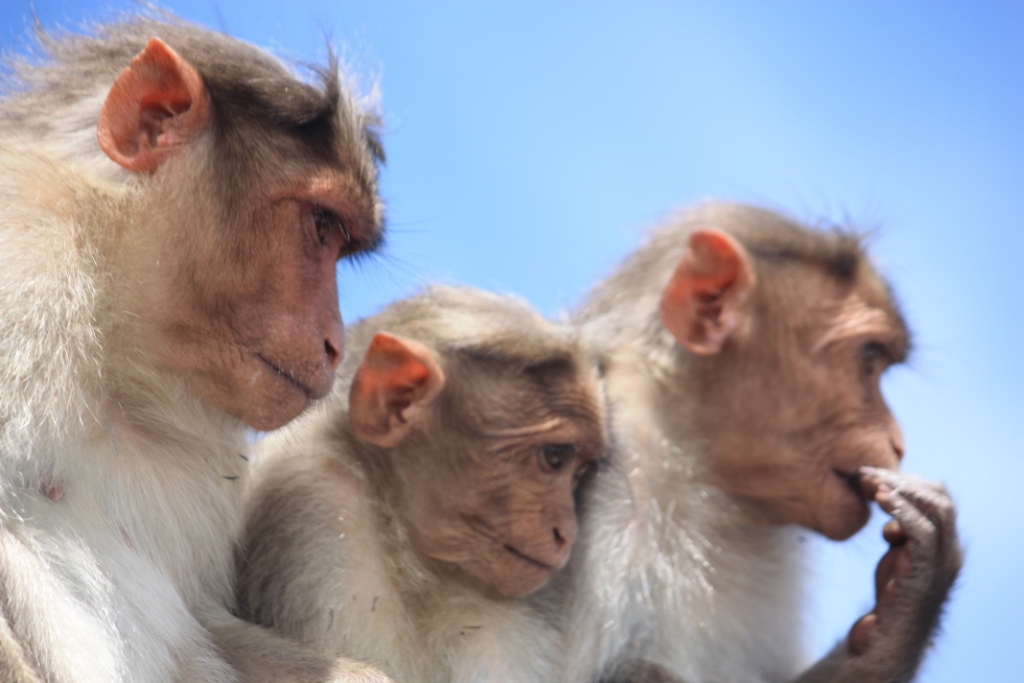
Wheel of Watching [Haiku]

watching monkeys 
watch humans, watching monkeys;
ad infinitum
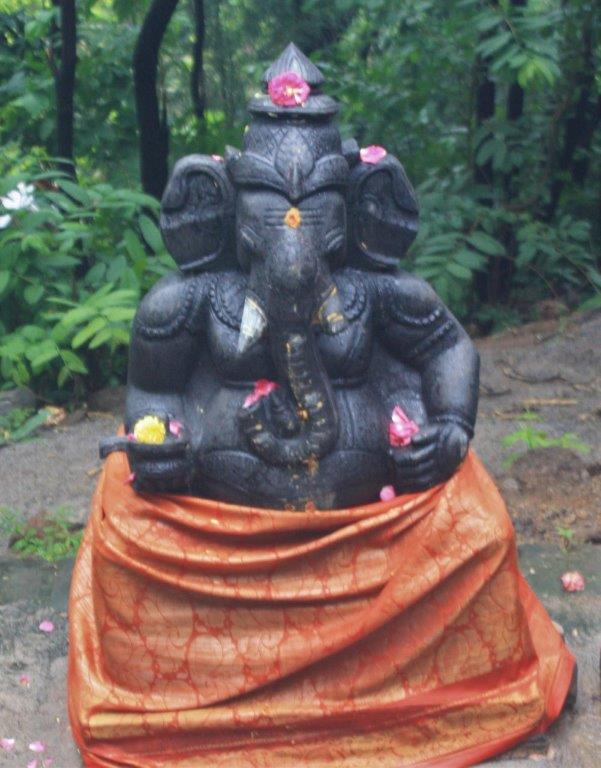
DAILY PHOTO: Ganesh in the Woods, Vellore

Taken in September of 2021 in Vellore

BOOK REVIEW: St. Mercy by John Zuur Platten

St. MercySt. Mercy by John Zuur Platten
My rating: 4 of 5 stars

Amazon.in Page

Out: March 1, 2022

This graphic novel combines a Cowboy Western with backstory featuring Incan mythology from pre-Colonial Peru, the latter adding a supernatural element to make a kind of “Unforgiven” meets “Dawn of the Dead” mashup.

It thought the Western narrative was quite well done. The villains were villainous. It’s nothing particularly novel, but the story and characters are skillfully crafted. The Incan story portion forms the origin story for the main character and offers a supernatural element thrown into the gritty realism of the Western. This part of the story is intriguing as well, but there are a couple things I should point out. First of all, I know nothing about Incan gods and monsters lore. Therefore, I can’t say whether the author and artist did their homework, or whether they just made up a generic demon and zombified beings out of nowhere. Secondly, I don’t think the link up of the two storylines was as seamless as it could have been. I found myself unsure of who was whom among carry over characters, and didn’t feel its relevance was sufficient to go back in the middle of what was otherwise an intense story in order to figure it out.

I think the story suffers from two common problems among comic books. First, the mindset of “you can smash any two good things together and make a great thing.” People love Westerns. People love zombies and monster. How could thrusting them together miss? Well, it misses because the visceral emotional quality of the gritty Western tanks in the face of magic and monsters. It misses because the smartly developed Sheriff character is squandered to get him out of the way. Second, this comic suffered from the “cool idea” problem. That’s when someone says “wouldn’t it be cool if…” And then there’s this idea that’s floating out there that you can either do a lot of work to fit into the story so that it makes sense organically, or you can cram it in there willy-nilly and hope the reader says, “cool,” instead of being befuddled by needless complication. I found myself more with the latter.

With a little thought and focus I believe this could have been an excellent story, but – as it is – it’s a bit muddled because it tries to mash together disparate story elements and genres in a way that robs its own thunder.


View all my reviews