BOOK REVIEW: The Chimpanzee Whisperer by Stany Nyandwi w/ David Blissett

I Am Stany: The Life and Loves of a Chimpanzee WhispererI Am Stany: The Life and Loves of a Chimpanzee Whisperer by Stany Nyandwi
My rating: 5 of 5 stars

Amazon.in Page

Out: February 22, 2022

These are the memoirs of a man who made a career from his ability to read and interact with chimpanzees. However, lest one expect a Gerald Durrell-style book filled with amusing animal anecdotes and witty lessons on how to build a zoo, one should note that Stany Nyandwi faced poverty and many a tragedy in his life that make this animal-interest book also a human-interest story from cover to cover. [Note: There are many chimpanzee stories and insights into how sanctuaries and reserves are run, but they are interspersed with visceral tales of calamity and sorrow.]

The book tells of Stany’s youth in Burundi, a country that would fall into a vicious civil war as he came of age and then got the first job that might pull him out of brutal poverty (into regular poverty,) working as a laborer at a chimpanzee sanctuary. It wasn’t long before the sanctuary had to be shut down because of the dangers of the war between Tutsis and Hutus. Because his work ethic and talent with chimps had begun to show, he was offered jobs first in Kenya and then in Uganda. Traveling with the sanctuary chimps would separate him from his family (a wife and children, not to mention his parents and siblings) during the worst years of the war, leading him down a self-destructive path for a time, but then things seem to improve. Always when one thinks his life is settling into a healthy stability, there’s a spanner into the works. Yet, the author keeps finding the bright side, and being saved by that positivity and his gift for working with chimpanzees, a gift which makes him a man in demand despite his lack of education or resources.

This book is an emotional roller-coaster ride, but throughout we are saved by the author’s indefatigable positivity and humanity – perhaps, the traits that allowed him to get along so well with the chimpanzees. I’d highly recommend it for all readers.


View all my reviews
Sunflower [Haiku]

a sunflower.
the spiral of its florets
claims perfection

DAILY PHOTO: Evergreen Trees on the Mountain

Taken in the summer of 2019 at the Kolsai Lakes in Kazakhstan

Sacrifice Play [Common Meter]

A prayer was made at the altar --
a prayer no one could hear.
A sacrifice had been promised
of someone all held dear.

But not one soul would take the knife,
and do the wicked deed:
to take that life, an unearned life
and speak the evil creed.

They dragged the victim to the rim
of an old volcano.
Just one kick would be all it took;
still, they all said, "Hell no!"

What kind of beastly deity
could fault them for failing?
The kind whose sense of right and wrong
is fucked beyond ailing.

BOOK REVIEW: Life at the Extremes by Frances Ashcroft

Life at the ExtremesLife at the Extremes by Frances Ashcroft
My rating: 5 of 5 stars

Amazon.in Page

Anyone interested in the limits of human physiology will find this book fascinating. Technically, its subject matter is broader than that, considering the environmental limits of living creatures, generally. However, all but the last chapter focuses on how humans react to (and adapt to) extreme conditions. Chapters one through six explore the challenges and limitations of humans under extreme conditions of elevation (ch. 1,) of pressure [underwater] (ch. 2,) of heat (ch. 3,) of cold (ch. 4,) of intense physical activity [running-centric, but deals with strength and power as well] (ch. 5,) and in space (ch. 6.) Then, each chapter reflects upon examples of species that are extremely well-adapted to said conditions, and why. (e.g. After learning about how and why humans have to acclimate to survive high elevation treks, one learns about the bar-headed goose, a bird that can go from sea level to flying over Everest – all in the same day.)

The final chapter (ch. 7) is a bit different in that it discusses extremophiles, creatures that can survive in a wide range of conditions (e.g. acidity, temperature, lack of moisture, lack of oxygen, etc.) that would be certain death not only for humans but for any animals. Most of the species discussed are either single-celled creatures or tiny multi-cellular life (e.g. Tardigrades.) With respect to humans, there is a discussion of the limits and present understanding of suspended animation.

This book offers an intriguing look at life at the extremes. While written by a Professor of Physiology, it’s highly readable for a general audience. It mixes narrative examples in with the discussion of physiology to make the material approachable and engaging. I’d highly recommend this book.


View all my reviews

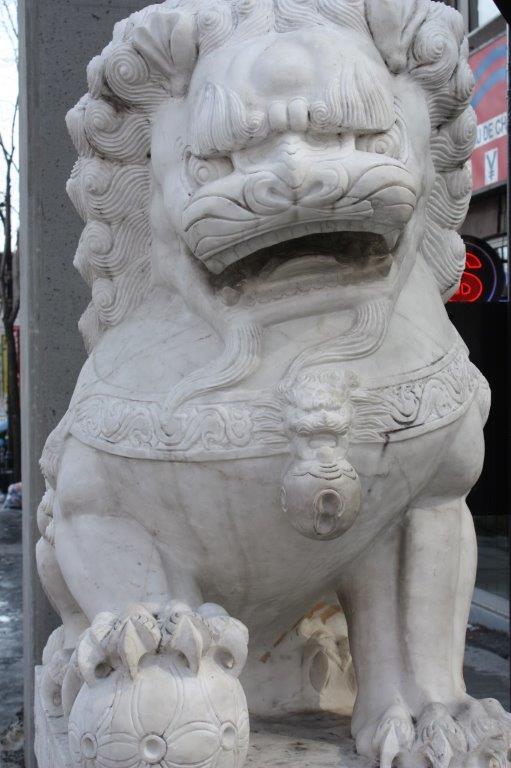
DAILY PHOTO: Tạ Trường Du, Huế

Taken in December of 2015 in Hue’s Imperial Citadel

BOOK REVIEW: After Lambana by Eliza Victoria & Mervin Malonzo

After Lambana: A Graphic Novel: Myth and Magic in ManilaAfter Lambana: A Graphic Novel: Myth and Magic in Manila by Eliza Victoria
My rating: 5 of 5 stars

Amazon.in Page

Out: May 10, 2022

This urban fantasy takes place in a Manila where magic exists and mythological creatures live. The story follows two young men as they travel around the city. The two seem to be new and casual friends. One is an ordinary human (Conrad) though with a terminal illness that seems not of this world, and the other is an expat from the magic realm (Ignacio) who’s going to great efforts to help Conrad. The hook is the question of why this casual acquaintance seems so important to the too-cool-for-school Ignacio. Conrad seems to be along for the ride as a distraction in his last hours, but Ignacio has an objective – benighted as it may be. The story unfolds to reveal what’s really happening and to offer backstory.

I love works that incorporate mythology and folklore, and think it’s a wise move for writers of speculative fiction because there’s such a rich and engaging field of stories and characters / creatures – all ripe for the picking. This is particularly true of a mythology, such as that of the Philippines, that isn’t widely known and, thus, offers a whole slate of creatures and alternate worlds with which most readers aren’t familiar. In this book, Filipino mythology is most prominently seen via the “Sirena,” which bear some resemblance to Greek Sirens – except being in the form of mermaids (though able to walk on legs under certain conditions.) I think more could have been done with Filipino Mythology, though there are a few other magic elements in the book that may or may not have mythological origins.

In found this to be a compelling story, and the art was colorful, while still capturing a little noir feel for late night Manila. If you’re interested in speculative fiction graphic novels, this one is worth investigating.


View all my reviews
BOOK REVIEW: The Sirens of Titan by Kurt Vonnegut

The Sirens of TitanThe Sirens of Titan by Kurt Vonnegut Jr.
My rating: 5 of 5 stars

Amazon.in Page

This classic Vonnegut novel stresses the existentialist notion that whatever meaning is to be had in life is up to the individual to find. (And they’re likely to find that it’s to love whoever is around to love.) Vonnegut rejects the entrenched view that a human is master of his/her domain and that we exist as part of a deep and well-reasoned plan. Vonnegut’s protagonist, Malachi Constant (a.k.a. Unk,) spends much of the story, literally, being controlled by unknown forces via the combination of a brain-shocking device and memory erasure.

The book is as humorous as it is philosophical, though it’s dark humor, e.g. the humor of an invading army that suicides itself without realizing that’s what it’s doing. [i.e. a bit like Monty Python’s Black Knight sketch, but on a planetary scale.]

The backstory of the Tralfamadorians in this book offers a great metaphor for the book’s theme. (Note: the Tralfamadorians morph a bit between the various books that they appear in, or at least different information is revealed as is relevant to the story at hand. In “Slaughterhouse-Five,” the emphasis is on the fact that this alien race sees all time simultaneously.) While the Tralfamadorians here still see all of time simultaneously, what is emphasized is that they’re a species of robots that came about when the original (biological) Tralfamadorians kept off-loading less meaningful work to robots. But biological Tralfamadorians would always come to believe that whatever work remained didn’t feel sufficiently meaningful. When they finally asked an AI to calculate the absolute most meaningful work there is, they were told that there is no meaningful work, and so they have the robots end their existence.

Vonnegut’s wild creativity can have the flipside of being challenging to follow. Fortunately, understanding of this novel doesn’t rest on understanding the workings of the “chrono-synclastic infundibulum,” but rather on much simpler and more humorous concepts. Like “Cat’s Cradle,” I found this novel easier to follow than Vonnegut’s time-jumping masterwork “Slaughterhouse-Five.”

This is a hilarious and thought-provoking book. I’d highly recommend it for all readers.


View all my reviews