BOOK REVIEW: 999 ed. by Al Sarrantonio

999: Twenty-nine Original Tales of Horror and Suspense999: Twenty-nine Original Tales of Horror and Suspense by Al Sarrantonio

My rating: 4 of 5 stars

Amazon page

999 is a collection of 28 short stories and one novella that are all in the genre of horror and dark suspense. The collection includes some superstar authors such as Stephen King, Joyce Carol Oates, Neil Gaiman, and David Morrell, but all of the authors are established writers and most will be familiar to readers in this genre.

I won’t go into each story in-depth, but will list and briefly describe each. A few of the stories stuck with me, while others were quite forgettable—so I’ll point out which were which. Your results may vary.

1.) “Amerikanski Dead at the Moscow Morgue” by Kim Newman: This is a Cold War Zombie story. It was intriguing.
2.) “The Ruins of Contracoeur” by Joyce Carol Oates: The family of a disgraced Judge move to a remote area to stay out of the limelight, and faceless monster sightings ensue. How bad could a Joyce Carol Oates’ story be? It’s solid and well-written. It wasn’t among my favorites.
3.) “The Owl and the Pussycat” by Thomas M. Disch: An “inanimate” stuffed owl and plush-toy cat converse about their wicked, spouse-abusing owner. Creepy, but not one of the strongest entries. The stories in this collection range from realism to far-fetched speculative fiction. This work is toward the latter end of the spectrum.
4.) “The Road Virus Heads North” by Stephen King: A mutating “killer” picture is obtained at a yard sale. This is among the stronger stories.
5.) “Keepsakes and Treasures: A Love Story” by Neil Gaiman: About a collector of the “exotic.” While Gaiman is my favorite author of this bunch, I can’t say this is story was among my favorites of the collection. I will say that it has some of the cleverest wording of any of the stories (as one would expect of Gaiman), but maybe that humor works at right-angles to the story. You decide.
6.) “Growing Things” by T.E.D. Klein: About a husband / Mr. Fixit and his following of advice columns on a growth. This is a short piece, but not among the more memorable stories. It’s innovative, but not the least bit intense.
7.) “Good Friday” by F. Paul Wilson: A vampire story set in a convent. A good story, but obviously not particularly innovative. However, if you like the idea of nuns battling vampires, here’s your story.
8.) “Excerpts from the Records of the New Zodiac and the Diaries of Henry Watson Fairfax” by Chet Williamson: A swanky dinner club that rotates hosts and each host tries to outdo the last in the presentation of “exotic delicacies.”
9.) “An Exaltation of Termagants” by Eric Van Lustbader: I’ll have to be honest; this was the least memorable of these stories. When I flipped back through to write this review, I found that I’d completely forgotten the piece. I think its lack of memorableness speaks for itself. It’s about an unappealing man and his sucky life that’s tied to his poor relationships with women. I think the problem is two-fold. First, it’s one of the longer stories in the collection. Second, unlike Joe R. Lansdale’s “Mad Dog Summer,” it’s a long short story without memorable characters or a taut story arc. In short, if you’re going to go long, you’ve got to give us characters we can either love or despise, and you’ve got to give us a pace that keeps us intrigued. This story does neither. I know it’s all subjective, but I think this collection without this story would be improved.
10.) “Itinerary” by Tim Powers: A mysterious caller asks the protagonist to tell an unknown woman caller that said caller “just left” in response to her inquiry. From there the story meanders into personal tragedy before bringing it all back together in the end. It was so-so. I liked the premise, but it didn’t have that x-factor in execution.
11.) “Catfish Gal Blues” by Nancy A. Collins: A river catfish mermaid story. This was a weird but highly memorable story.
12.) “The Entertainment” by Ramsey Campbell: Man thinks he’s checked into a hotel, but it’s really some sort of asylum. Not the most memorable, but not the least either.
13.) “ICU” by Edward Lee: Man awakes in an ICU, and is informed that he’s a gangster involved in pedophilia and other hardcore taboo pornography. Vivid and well-crafted.
14.) “The Grave” by P.D. Cacek: A young woman with a horrible mother discovers a grave in the woods that she’s never seen before. This one is eery and visceral.
15.) “The Shadow, The Darkness” by Thomas Ligotti: About a tour group promised “the ultimate physical-metaphysical excursion.” This paranormal story is just OK.
16.) “Knocking” by Rick Hautala: Remember Y2K? It was the idea that the entirety of the world of computing would come to a screeching halt because their little (inadequately programmed) computer minds would be blown by a date starting in “20?” This story is based on that notion.
17.) “Rio Grande Gothic” by David Morrell: A cop keeps finding shoes left in the same section of road, and eventually begins to wonder if someone isn’t trying to tell him something. This story does a good job of capturing one’s curiosity and keeping one’s attention.
18.) “Des Saucisses, Sans Doute” by Peter Schneider: This is one of the shorter stories in the book, and it’s also an almost absurdist dark piece. You may laugh or you may vomit, either way the writer had an effect.
19.) “Angie” by Ed Gorman: This story is white-trash gothic. It’s about a couple that are “stuck” with this kid, and are concerned that the child has learned their dirty, little secret and will turn them in. It was one of the stories that stuck with me most intensely. The unlikable character development is exceptional.
20.) “The Ropy Thing” by Al Sarrantonio: A couple of kids in a neighborhood assaulted by a thing that is… well, ropy (rope-like.) Not one of the better pieces, but it has the virtue of being short.
21.) “The Tree is My Hat” by Gene Wolfe: A man befriends an outcast on island in the South Pacific. It’s a solid piece.
22.) “Styx and Bones” by Edward Bryant: A cheating man comes down with a mysterious ailment. This is a well-executed story.
23.) “Hemophage” by Steven Spruill: Another vampire story, this one set inside a detective story.
24.) “The Book of Irrational Numbers” by Michael Marshall Smith: It’s about a guy from Roanoke, Virginia who is obsessed with numbers. As there aren’t many math short stories, if you are a big fan of math fiction you may find this interesting. The writing style is fun. If you aren’t a math fan, you may lose the story.
25.) “Mad Dog Summer” by Joe R. Lansdale: A man recounts a story of murder from his youth living in a rural community. This is one of the strongest stories in the collection. It’s also one of the longest, but the author does an outstanding job of keeping one’s attention throughout.
26.) “The Theatre” by Bentley Little: A clerk at a bookstore ventures into a forbidden floor above the store to find a creepy theater that will change his life. It’s a good, creepy story.
27.) “Rehersals” by Thomas F. Monteleone: I don’t know that I would have put this in the same genre as the other stories, but it’s an excellent story—and so I can see why the editor was eager to include it. It is speculative fiction, as opposed to being realist, but I wouldn’t count it as either horror or suspense. It’s about a man handling props in a community theater who is given glimpses into what his life could have been like if he’d stood up to his abusive father. It’s one of the best stories in the collection.
28.) “Darkness” by Dennis L. McKiernan: A man moves into a beautiful house willed to him by an eccentric uncle. The problem is that the lights in the house are so bright as to be an assault on the eyes—leaving not a shadow or dark space in the house. The lights are wired to be either all on or all off. It doesn’t occur to the nephew that the lights might be that way for a reason.
29.) “Elsewhere” by William Peter Blatty: This is the longest piece–a novella / very short novel and not a short story. It’s about a realtor who’s trying to sell a house that’s haunted. She brings together a writer and a couple “experts on the paranormal” to debunk the haunting so that the house will become salable. But everything is not as it appears.

This is a good collection of stories. Some are better than others, but the best are extraordinary. I’d highly recommend it for anyone who likes horror, dark suspense, or the macabre. Within that genre, it’s an eclectic mix of stories in form, substance, and style.


View all my reviews

DAILY PHOTO: Budapest Parliament in Black & White

Taken in December of 2014 in Budapest.

Taken in December of 2014 in Budapest.

The Non-shopping Firang

20140316_160803With the notable exception of books, I hate shopping. There are few endeavors more painfully tedious to me than wandering through stores looking for clothes, tsotchkes, knick-knacks, bric-a-brac, widgets, or doo-dads. I do go shopping, in part because I like to eat, and in part because societal conventions require that I wear clothing (you’re welcome.)


Were I not married, I’d be a complete fashion nightmare because I have only three questions when shopping for clothes. 1.) Does it look like it fits? 2.) Does it look comfortable? 3.) Is the price reasonable? (i.e. given that I’m a cheapskate for which stylishness and/or trendiness mean diddlysquat.) If the price of two shirts of the same size is identical, I will buy the one that’s closest to the cash register–or which will otherwise get me out of the store the quickest.


You’ll note, I didn’t include the question: “Does it match?” Correct. I’m not even sure I know what that means. If it’s a shirt, it matches pants because you wear them together, right? A shirt would not match another shirt, unless one could wear one over the other? If you can’t wear the two items at the same time, they definitely don’t match, but that doesn’t come up often. (I know all the bits that need covering, ergo, I can succeed at picking a group of garments that covers all the essential anatomical area.)


I also didn’t include “Does it look good?” It had to look good to someone–they made the damn thing. Who am I to say my taste is better than theirs? I think we’ve already established that I know not thing-one about being fashionable. Now, if it has feathers or a cape, I wouldn’t buy it on the grounds of lack of functionality (have you ever gotten your cape caught in an elevator or escalator?), but I don’t judge on taste. There but for the grace of my wife, go I… looking like non-sparkly Elton John.


So where am I going with this, you may ask? What’s intriguing is that, despite the fact that I hate shopping, I get asked if I want to be taken to a market, mall, or commercial district about four times per day (fyi, that’s roughly the number of times I go shopping per annum.)


Imagine a white person walking down the sidewalk wearing a t-shirt and sweatpants, said person has a full duffle-bag on their shoulder that is long enough to accommodate a standard size yoga mat when rolled up. Where is this person going?

A.) He /she is going to the yoga studio.

B.) He /she is going to a gym.

C.) He / she is going to a martial arts studio.

D.) There isn’t enough information to determine between A,B, or C.

E.) He /she desperately wants to go shopping.


If you answered “D” you’re a keen and astute observer. If you answered A, B, or C, you have drawn a reasonable conclusion, but did so too quickly and without sufficient information for that degree of specificity.  If you answered “E,” you drive an autorickshaw (tuk-tuk) for a living.


For a while, I thought that this was just blatant ignorance, as all forms of racism are. Could these drivers truly not fathom–despite all evidence to the contrary–that I (i.e. whitey) spent my time doing things other than shopping? Did they really think that my days were divided between counting infinite piles of cash and spending it on crap for which I had no real need?


Then I realized that it was tenacious hope that drove these inquiries, and not biases. I came to this conclusion as I was watching a few of the recent Superbowl ads. If I don’t get enraged at Madison Avenue, I can’t really get mad at the aforementioned driver. Advertisers and that driver are both just trying to persuade me that something that I don’t need and have no interest in is somehow pursuit-worthy.


The driver knows that I’m going to yoga or kalari or a funeral (or wherever the evidence might suggest I’m headed at the moment), but they’re just holding out the thin hope that I can be diverted from that funeral to go buy some gee-gaw from which they can obtain a commission. In a way, they’re like the guys (or girls, to be non-discriminatory) who hit on a person who is way out of their league. It takes a lot of confidence to suffer repeated crushing rejection with such low probability of success. There’s a guy in the building where I get both my haircuts and Tibetan thukpa, who invites me into his carpet shop every single time I enter the building–despite the fact that the first 100 times I’ve shown zero interest. As long as said persistent wooer doesn’t resort to stalking, it’s kind of endearing. (Of course, it’s a thin line into stalker territory, and then it becomes instantly intolerable.)


There’s another reason I’ve discovered I shouldn’t hold this persistence against the drivers. That’s that they’re stereotyping isn’t without basis. Most of my expat compatriots do love themselves some shopping. I’m very curious about the root of this behavior. I suspect that it’s the vestigial evolutionary programming of hunter/gatherer behavior carried over into people who don’t like to get their toes muddy, to have to touch anything “icky,” or–in general–to be outdoors.


However, I’m a little out of my league, because I only have this compulsion to shop for books. I’m sure that’s residual hunter / gather behavior, but there’s a goal that can be understood. Through book shopping, I’m searching for a kind of nourishment–not the kind that ends hunger pangs, but the kind that’s an assault on my stupidity. I still don’t have a theory for how this applies to Hello Kitty stickers, Chia Pets, a second (or 403rd) pair of sneakers, or any of the other inane crap the people really–but unbelievably–purchase.

IMG_2160

DAILY PHOTO: Blue Danube

Taken in December of 2014 in Szentendre.

Taken in December of 2014 in Szentendre.

BOOK REVIEW: The Key Muscles of Hatha Yoga by Ray Long

The Key Muscles of Hatha YogaThe Key Muscles of Hatha Yoga by Ray Long

My rating: 4 of 5 stars

Amazon page

This is a handy anatomy reference for yoga teachers and practitioners. The bulk of the book describes major muscles, or—when relevant—muscle groups. For each of the key muscles it gives the insertion, origin, innervation, agonists, synergists, and depicts the muscle in color drawings. The book also shows typical yoga postures in which the muscle is engaged or stretched. This gives one some idea of how the muscle is affected by changes in attitude and state of contraction.

True to the title, this isn’t a general anatomy and physiology book for yoga. It specifically deals with the muscular system. That being said, it does have some opening matter on the skeletal system, the various types of joints, and other fundamentals that one must understand to grasp how muscles create movement and change bodily alignment. It also has a few brief chapters at the end that deal with important issues like breathing and bandhas. However, if you’re looking for a book with substantial coverage of the anatomy and physiology of breath or nervous system activity, you’ll likely need to look elsewhere. The book also addresses the concept of chakra, which seems out-of-place in an otherwise scientific book, but it will be appreciated by those who view the body in that way and is easily enough ignored for those who want a strictly scientific presentation of material.

While the book is limited in its focus, it does a good job of giving a lot of information in a concise fashion. The graphics are easily interpreted and one can readily distinguish the muscles in question. I found the book to be well-organized and easy to use.

I’d recommend this book for any serious yoga practitioners, particularly teachers and those who need to be concerned about the minutiae of movement and alignment.

View all my reviews

DAILY PHOTO: Cathedral of St. Peter & St. Paul in Pécs

Taken in December of 2014 in Pécs

Taken in December of 2014 in Pécs

This giant four-spired Cathedral is home of the Pécsi Roman Catholic Dioceses.  Pécs has held a diocese headquarters since the early 11th century. The town that is now Pécs predates Roman times.

DAILY PHOTO: Wat Po Chedi

Taken in September of 2014 at Wat Po in Bangkok.

Taken in September of 2014 at Wat Po in Bangkok.

BOOK REVIEW: The Martian by Andy Weir

The MartianThe Martian by Andy Weir

My rating: 5 of 5 stars

Amazon page

If you like suspenseful science-fiction, humor, and are fascinated by science, you must read this book. I’m not kidding.

The premise is a simple cast-away story, except that it takes place on Mars—an environment in which a human can’t last for seconds without a lot of properly functioning technology. Astronaut Mark Watney is left for dead when a severe storm blows in, impaling him with a piece of metal, knocking out his vital statistics monitor, and blowing him into a drift. Having lost visual contact with Watney, showing no vital statistics, and facing the toppling of the crew’s escape vehicle by high winds, the mission commander decides that she can’t risk the lives of the entire crew to cart Watney’s body back home. The thing is; Watney isn’t dead.

The book is a rollercoaster ride of highs and lows associated with events that nearly kill Watney—either in an instant or by making his long-term survival impossible. The botanist / engineer must figure out how to survive for four years (until the next Mars mission is due—if it doesn’t get cancelled) with less than six months of supplies. (The mission was supposed to be one month but was aborted in the first week, but there were five other crew members whose rations were left behind.) If you think Tom Hanks had it bad in Cast Away, imagine having to produce food on Mars.

This book taps into the visceral feeling that works so well in the movie Gravity (but Weir does more homework on the science.) For tension, it’s hard to beat being adrift in space, utterly isolated from one’s species—or any species for that matter–and knowing you will die when your resources run out.

The main character, who is the only character for the first six chapters or so, is intensely likable. Mark Watney is funny, intelligent, self-deprecatingly humble, and can confidently problem solve in the midst of any crisis. If there’s a critique of the realism of this story (as sci-fi goes it is extremely realistic), it’s that Watney is preternaturally skilled at adapting to complete solitude. However, I don’t deduct for this, because if it showed him at the depths of despair that someone in his circumstance would inevitably go through, it wouldn’t be nearly as pleasing a book to read. If you’ve read a lot about sensory deprivation and / or what happens to prisoners over long stints in solitary confinement, I’d suspend the disbelief that might come from that knowledge and just accept that Watney is exceedingly good at saying, “Pity-party over. It’s time to make this work.” In short, humorous Watney is just a lot more fun to read than would be a despondent astronaut.

I think I’ve been clear that this is an outstanding book, and everyone should read it. I guess if you absolutely hate science (of any kind–because there’s botany, biology, physics, chemistry, engineering, etc. all rolled up into this book), you may find that it’s hard to stick with the glut of scientific / engineering discussions coming at you. Still, you shouldn’t hate science that much—what the hell is the matter with you. Weir writes in a readable style and the reader doesn’t get awash in minutiae. (For example, Watney even names the unit kilowatt-hour/sol [sol=a Mar’s day] the “Pirate-ninja” to make it more palatable and humorous.)

Read it. You’ll like it. Also, don’t wait because the movie is supposed to come out in the Fall.

View all my reviews

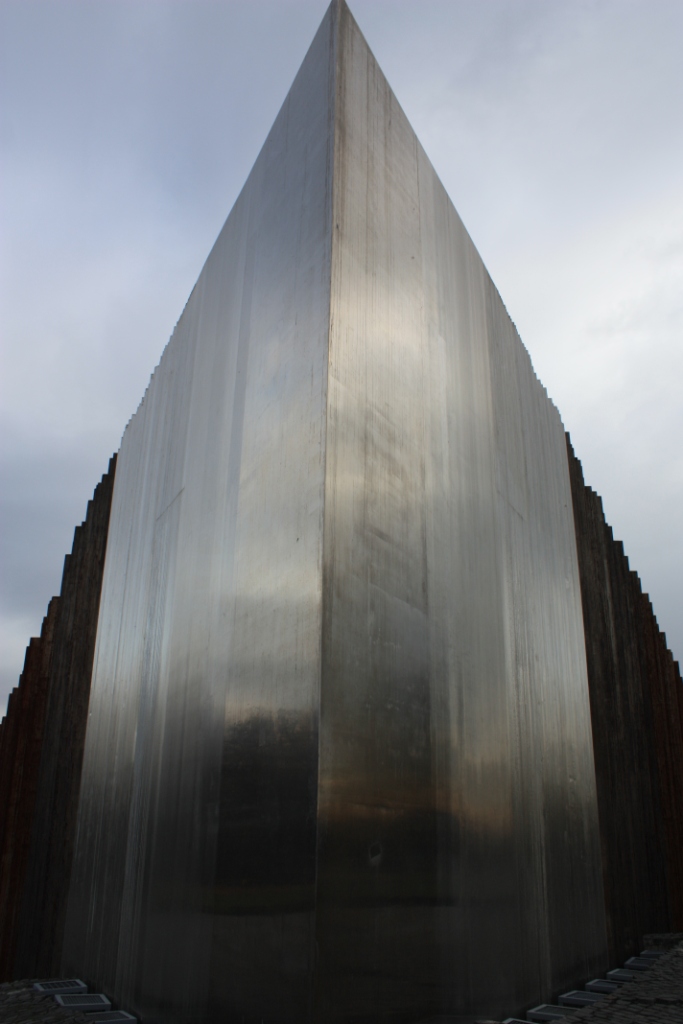
DAILY PHOTO: ’56 Memorial in the Városliget

Taken in Budapest in December of 2014

Taken in Budapest in December of 2014

This monument was dedicated in 2006, on the 50th Anniversary of the 1956 Revolution. In the autumn of 1956 there was an armed attempt to revolt against the Soviets and the puppet government they’d established in Hungary. After several days, Soviet forces withdrew, and–to wishful thinkers–it looked like the Soviet yoke might be thrown off. However, the Soviets came back with great duplicity and brutality and crushed the uprising.

From the side.

From the side.

From the back.

From the back.


READING REPORT: January 30, 2015

Welcome to my second weekly dispatch on what I’ve been reading. Owing to my weird approach to reading, I tend to finish books in clusters, and this week I polished off the novel The Martian, the horror short story anthology 999, and three nonfiction books (Principles of Tibetan Medicine, The Key Muscles of Hatha Yoga,  and How Pleasure Works.) The only one of these that I’ve completed a review on is Principles of Tibetan Medicine, but reviews of the others will be in the works in the upcoming week(s.)


The star of my completed pile was Andy Weir’s The Martian. It’s a spectacular science fiction read that’s engaging from beginning to end. Readers who love science will find it particularly fascinating and well-researched. For the yogis and yoginis out there, Ray Long’s book on muscles as applied to Hatha Yoga is well-organized, easy to follow, and easy to use.


The completion of several books this week creates openings in what fiction and poetry I’ll be reading on Kindle in the coming weeks. Drum-roll please… I will be starting the following books this week:


MoYan_LDWMO

1.) Life and Death Are Wearing Me Out by Mo Yan: Mo Yan won the Nobel Prize for Literature back in 2012, and this 2006 book is about a benevolent land owner who is killed on orders by Mao Zedong, and is subsequently reincarnated as a series of farm animals.


IHaveNoMouth

2.) I Have No Mouth And I Must Scream by Harlan Ellison: The title of this collection of short stories is also the title of the most prominent piece in it. The 1968 Hugo winning story is a post-apocalyptic tale of artificial intelligence run amok.


Aeneid

3.) The Aeneid of Virgil: I’m overdue to read this epic poem by the famous Latin poet written during the first century B.C.


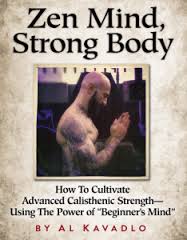
In nonfiction, I made an impulse purchase this week that I’m about half way through reading. It’s called Zen Mind, Strong Body and it’s by Al Kavadlo. I’m having minor buyer’s remorse, not because it’s a bad book, but because it turns out to be a collection of blog posts, and so I could have probably gotten all this for free by digging around the world wide web a little. (Moral: always read the fine print on the dust jacket. I wouldn’t mind, but it was a bit pricey for rehashed blog posts.) Kavadlo is a personal trainer and advocated of calisthenics and advanced bodyweight exercises, and he has many interesting ideas on both mind and body. It has provided some interesting food for thought, but I don’t really need the hundreds of pictures of the author with his shirt off.

ZenMindStrongBody


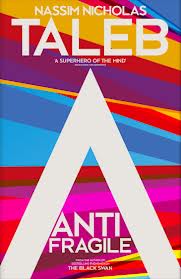
I’m about halfway through Nassim Nicholas Taleb’s latest book, Antifragile, and would like to make some headway on that in the upcoming week. While I’m a fan of Taleb’s work, I’ve gotten bogged down in this one because it keeps going and going and going on about a rather simple concept–i.e. that some things become stronger or more robust when exposed to stressors. I’m not sure the book needed to be this long. I suspect that Taleb is the kind to throw a world class tantrum if an editor took a hatchet to a word of his writing–and now he has the following to make it work. He’s a smart guy and raises many excellent points, but he seems like a major prima donna. At any rate, maybe he’ll surprise me in the second half with something novel and interesting–in lieu of endless restatement of his (admittedly fascinating) thesis.

Antifragility


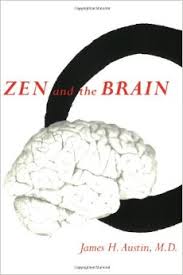
I also started a book a few weeks back called Zen and the Brain by James H. Austin that I’d like to get back to. It examines what science has to say about the practice of meditation from the perspective of a neuroscientist who’s also a Zen practitioner.

Zen&Brain


At the end of last year, I did a post about the Book Riot 2015 Read Harder Challenge. It’s a sort of scavenger hunt for readers. There are 25 categories of books, of which one is supposed to read at least one book each. If you can count the same book for several categories (I don’t see why not as long as they fit the description) then I have so far covered seven categories. (Not bad for the first month of the challenge.)

-Collection of short stories: 999: New Stories of Horror and Suspense

–Author of a different gender: Tears in Rain (Rosa Montero) and Principles of Tibetan Medicine (Tamdin Rither Bradley) [Both females]

–Science-fiction novel: The Martian

–Collection of poetry: Leaves of Grass

–A book recommended for you by someone else: The Key Muscles of Hatha Yoga

-A book originally published in another language: Tears in Rain  (Spanish)

–A book published in 2014: The Martian (Some might dispute this as it was self-published in 2011, but not picked up by a publisher until 2014.)