BOOK REVIEW: Brain Rules by John Medina

Brain Rules: 12 Principles for Surviving and Thriving at Work, Home, and SchoolBrain Rules: 12 Principles for Surviving and Thriving at Work, Home, and School by John Medina
My rating: 4 of 5 stars

Amazon page


As the title suggests, this is a book of guidance about how to get the most out of one’s mental life. Medina goes a mile wide, looking at twelve areas in which one can improve the performance of one’s brain, including: exercise, attention, memory, sleep, stress management, sensory integration, and visual acuity. It also has chapters that explain how evolution and gender affect the way in which one’s brain operates.

After an Introduction that sets up the premise of the book, there are twelve chapters. The first chapter explores the well-documented connection between exercise and mental performance, and offers insight into what type of exercise has been shown to be most helpful to the brain. The second chapter pertains to our brain’s evolutionary history. The conscious mind housed in the cortex is but the top floor of a multi-story enterprise, and understanding this has important ramifications for how one gets the most out of one’s brain. Chapter 3 explores the way brains are wired, which turns out to be flexibly and diversely. By flexibly, I mean that brains can be rewired by way of what is called neuroplasticity on the proviso that neurons that fire together wire together. By diversely, I mean that each individual’s brain is a bit different, and these differences can explain how someone gifted in one domain may be an idiot in other aspects of life. The next chapter deals with attention and explains why humans suck at multi-tasking (despite thinking they are the bomb) and why an extended ability to concentrate is essential to success.

The next two chapters both deal with memory, but with different types of memory—each having its own unique considerations. The first, chapter five, describes the peculiarities of short-term memory, that part of the memory that can hold a finite amount of data points at the forefront of our minds for a limited period. Chapter six deals with long-term memory, the part that holds vast stockpiles of information for extended periods (sometimes across a lifetime) but with lower fidelity and accuracy than we generally believe. While the rule offered for both forms of memory is simple—i.e. repetition is key—there is much to consider in the details. For starters, there are many other ways to divide up memory other than with respect to the short-term / long-term dichotomy (e.g. procedural v declarative) and differences in the way these types of memory work affect how they are both optimized.

The influence of sleep on mental performance is the subject of chapter seven. There is a vast pile of research on this subject, including a number of famous cases of extreme sleep deprivation—some of which are touched upon herein. It’s true that there is a great deal of variation in how people sleep (e.g. morning v non-morning people, and those who can power nap and those who can’t.) However, one thing remains unambiguous and that’s that we need sleep and must have full cycles of it in order to not suffer mental degradation. Chapter 8 is about how stress can kill mental performance. Of course, not all stress is the same. When one feels in control, short bursts of stress can be just the motivator one needs, but when feeling out of control stress can become crippling.

Chapters 9 and 10 are both about the senses. The first, nine, explains how one can obtain synergistic outcomes in a multi-sensory environment, and the second focuses on vision—arguably our most dominant sense. Our sensory experience is much more a product of the brain (and much less a pure representation of the outside world) than we tend to believe.

Chapter 11 reports on the gender differences that have been discovered with respect to brains. Before anyone lights a torch or sharpens a pitchfork, this isn’t the old “boys do math and girls do language” line. The differences are more nuanced, and it’s not clear in every case that the differences matter—or how. E.g. Men have bigger amygdala (involved in emotional response) and produce serotonin more quickly. While it’s not clear that these differences make a big difference, it’s know that men and women use their amygdala differently in times of stress, men activate the right amygdala and tend to remember more of the gist of events while women trip the left and remember more emotional details. The last chapter is about our human proclivity to explore, but it focuses heavily on infancy and childhood, during which the world is novel and the impulse to explore is at its height.

Each chapter ends with a summary box that both restates the rule and offers a few bullet points of key takeaway lessons, which may either be more specific guidance or summary of relevant research findings. There aren’t many functional graphics—by functional I mean as opposed to the ornamental drawings used throughout. I only remember one brain drawing. However, the reason for the dearth of graphics may be that there is a link to a 45 minute video that one can access, and the publisher probably thought that was a much more useful way to impart graphic information. It should also be noted that in the Kindle edition that I have, the references are also on-line.

I found this book to be useful. As I mentioned, it’s a broad overview. One can get books that dive more deeply into all of the topics addressed. But this is a nice mix of popular science and self-help. It’s readable, and the summaries and concise statement of rules help make the content stick more effectively.

I’d recommend this book for those who are seeking a book that covers a lot of ground, and which offers practical guidance as to how to put scientific discoveries on the brain into use in one’s own life.

View all my reviews

DAILY PHOTO: Pseudo-Trees at Gardens by the Bay

Taken November 1, 2016 in Singapore

Taken November 1, 2016 in Singapore

img_4510 img_4513 img_4514

BOOK REVIEW: Siddhartha’s Brain by James Kingsland

Siddhartha's Brain: Unlocking the Ancient Science of EnlightenmentSiddhartha’s Brain: Unlocking the Ancient Science of Enlightenment by James Kingsland
My rating: 5 of 5 stars

Amazon page


Kingsland builds his niche by connecting the dots between the teachings of the Buddha and scientific discoveries about meditation and mindfulness. There are many books that tell the life story of Siddhartha Gautama from various perspectives (e.g. famously the books by Hermann Hesse and Karen Armstrong.) There are also a number of books reporting the science of meditation (e.g. Herbert Benson and Sat Bir Singh Khalsa.) However, it’s not so common for the subjects to be overlapped.

There’s a reason that this middle path hasn’t been more widely studied. While Buddhism is arguably the most science-friendly of the major world religions, there’s always a gulf between spiritual and scientific thinking. The writer has to figure out how to chart a course through rocky waters. Books appealing to spiritual seekers are likely to come across as insubstantial fluff to the scientifically minded reader, and books appealing to skeptics are likely to feel materialistic and cold (and, perhaps, naive) to the spiritualist. The Buddha’s teachings about the need for the practice to be experiential, rather than faith-based, offers a unique opportunity to tread this tightrope. Furthermore, the Dalai Lama’s willingness to facilitate a dialogue between science and Buddhism has been crucial as well. One can easily set aside controversial issues like reincarnation and karmic law as they aren’t essential to the value of mindfulness.
The book consists of twelve chapters. The chapters generally begin with a story or teaching from the life of Buddha, and then go on to investigate the relevant lesson in more detail with particular emphasis on any relevant scientific discoveries that support said teachings.

The story of Buddha begins in a wealthy, high-caste household with young Siddhartha Gautama being kept from seeing the effects of aging, illness, and death. When the young Siddartha, nonetheless, sees these things, it is a powerful introduction to the concepts of impermanence and suffering that will play a central role in his future teachings. Chapter 1 starts this introduction and also offers an overview of the book. Chapter two continues it. In Chapter three, Kingsland describes a little of the known history of meditation, though its origins are lost to time.

Chapter 4 is entitled “The Second Dart” and it discusses the Buddha’s teaching of the same name—the second dart being one’s mental reaction to an event (i.e. the initial dart.) Chapter 5 investigates the question of whether there is a self—and, if so, of what manner. A core idea within Buddhism is that the self is illusory.

Chapter 6 gets to the heart of the matter by explaining the mechanism of mindfulness meditation and what has come to be known as MBCT (Mindfulness Based Cognitive Therapy)—a secular approach to the use of mindfulness to improve well-being. The next chapter tells the story of how a group of fire worshippers came to follow the Buddha after he made clear that everything (their senses, thoughts, and emotions) were aflame with craving, hatred, and delusion, and that springboards into a discussion of how mindfulness is used to reduce craving and addiction.

Chapter 8 tells the story of an attempt to kill the Buddha via an angry, drunk elephant, and the Buddha’s thwarting of the plot by way of calm and compassion. As one might have guessed, the chapter is about moderating emotions, just as the Buddha controlled his fear before the elephant.

Chapter 9 takes a jaunt into evolutionary biology to question how the mismatch between what humans evolved to do and what we do in the modern world causes mental illnesses and how mindfulness can help mitigate the problem. Chapter 10 is about metacognition, or the ability to observe and reflect upon our own mental experience—i.e. thinking about thoughts. Chapter 11 is about cognition and decision-making, and the role that meditation can play in improving our performance in this domain. The last chapter discusses the Buddhist conception of death and enlightenment. It isn’t until this point that there’s a major divergence between the Buddhist and scientific viewpoints. There is a discussion of the Buddha’s teachings emphasizing that belief in ideas from on high is not so important as experience.

Six of the chapters (2, 4, 6, 8, 10, & 11) are concluded with guided meditations to offer the reader an introduction into the basics of mindfulness. These are simple practices that many readers will already be familiar with in some variant or another. (e.g. breath awareness, bodily awareness, and mindful eating.)

There are only a few graphics (e.g. maps and diagrams—mostly of the brain) but there is no need for additional graphics. The book has references annotated.

I found this book interesting and thought-provoking. It uses the stories of Buddha as well as some stories from the present day to make the reading more engaging and approachable. The discussion of scientific research is easy for a neuroscience neophyte to follow.

I’d recommend this book for anyone interested in learning more about the science behind Buddhist practices.

View all my reviews

POEM:The Door

img_0939

The door:

rusty hinges

weathered wood

rhomboidal sag


The lock:

clunky brass

formidable

sturdy, shiny, and

out-of-place


Who puts such a sterling lock

on such a pathetic door?


Who could be blamed

for lifting the lock

to feel its heft?


But when the slightest touch

tore the rusty, pointy wood screws

out of the door frame’s rotten wood,

it felt like a burglary in process.


But what could be worth burgling

behind such a sad, worn door?


The only thing worth thieving was the lock,

but it had a rusty hasp & staple dangling from it.


And a lock without a key is a paperweight.

One needn’t turn to a life of crime for a paperweight.

For the defining characteristic of a

paperweight

is that it be able to sit in place

and not go wandering about.

Anything but a cat can be a paperweight.


The door creaked when I looked inside.

I had to look inside.


Who wouldn’t look inside

to see what was worth guarding

with a big brass lock?


Inside: pure darkness.

Except the back wall,

where light strained through

cracks & slats.


I took two steps into the inky murk,

and plummeted down my own personal rabbit hole.

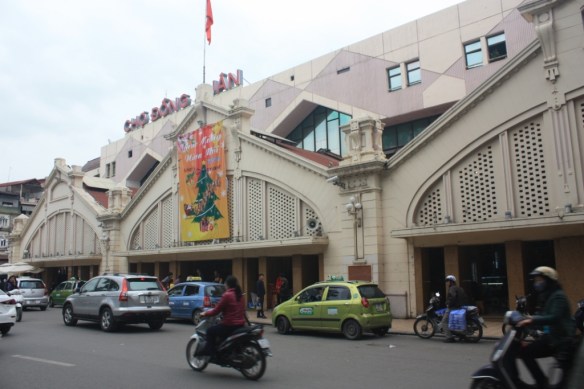
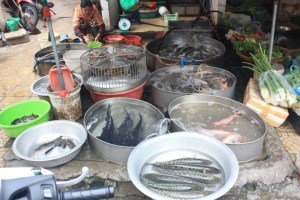
DAILY PHOTO: Scenes: In & Near Đồng Xuân Market

Taken in December of 2015 at Đồng Xuân Market in Hanoi

Taken in December of 2015 at Đồng Xuân Market in Hanoi


img_1541 img_1540 img_1538


img_1534
img_1537

POEM: Humpty’s Mechanics

the best minds of my time
were bottled by assembly line
and all the world paid the price
when we popped the top and took a slice


they put the sections under the scope
but found nothing to give them hope
brain of greatness, brain of shame
microscopically, they all look the same


we knew the greatness by its absence
the wise don’t set foot in a lab since
but then, of course, there were the quacks
who tried to glue brain slices back


sadly they couldn’t see their flaw
unacquainted with the Second Law
they thought it was mere devilry
while thwarted by rising entropy

DAILY PHOTO: Courtyard, Umaid Bhawan Palace

Taken in November of 2015 in Jodhpur

Taken in November of 2015 in Jodhpur

img_2372 img_2377


img_2375
img_2376

POEM: Deep in the Forest

img_3337

deep in the forest

spots of light

spatter in a spray

a disco ball pattern

tilting too slowly

to be seen

by humans

but a blur

to the trees

humans are to trees

as hummingbirds

are to humans

flitting too fast

to recognize

living too briefly

to seem useful

DAILY PHOTO: Day & Night Skating at St. Stephen’s Basilica

Taken in December of 2014 in Budapest, in front of St. Stephen's Basilica (i.e.Szent István-bazilika)

Taken in December of 2014 in Budapest, in front of St. Stephen’s Basilica (i.e.Szent István-bazilika)

img_2151

2016: Our Year in Photos

New Year's Day sunrise over Bai Tu Long Bay, Vietnam

New Year’s Day sunrise over Bai Tu Long Bay, Vietnam

JANUARY:

-Travel: returned from our December 2015 visit to Vietnam

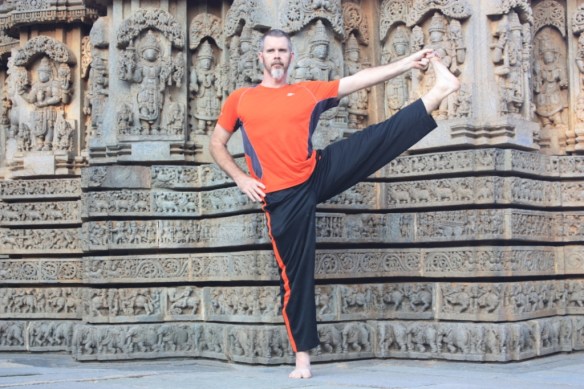
-Began RYT300 (Int / Adv) yoga teacher training at Amrutha Bindu Yoga

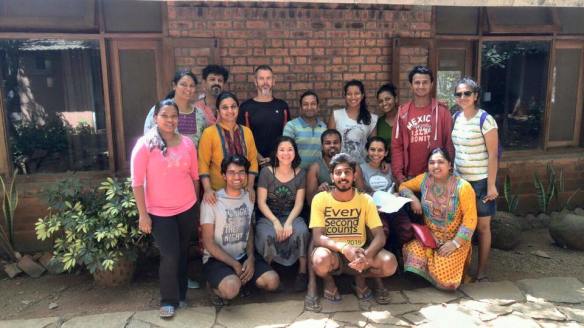
Taken at Kesava Temple in  Somanathapura

Taken at Kesava Temple in Somanathapura with the RYT300 class


FEBRUARY:

– RYT300 course continued

Teaching yoga at Socare

Teaching yoga at Socare

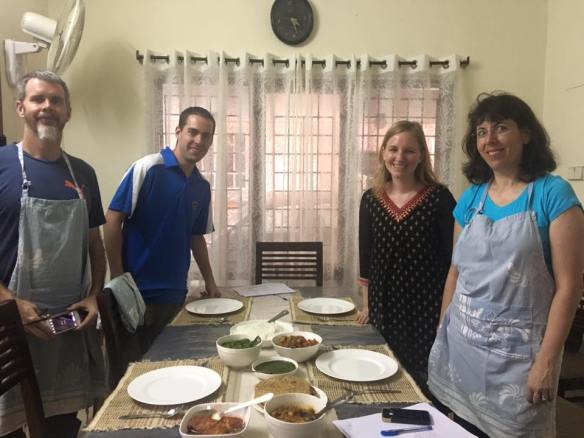
Learning to cook Indian food at Manju's

Learning to cook Indian food at Manju’s Cooking School


MARCH:

-Completed the RYT300 course to obtain my RYT500 certification

The RYT300 Class at Fireflies Ashram to learn Shatkarma

The RYT300 Class at Fireflies Ashram to learn Shatkarma


APRIL:

-Traveled to Varkala and Amritsar

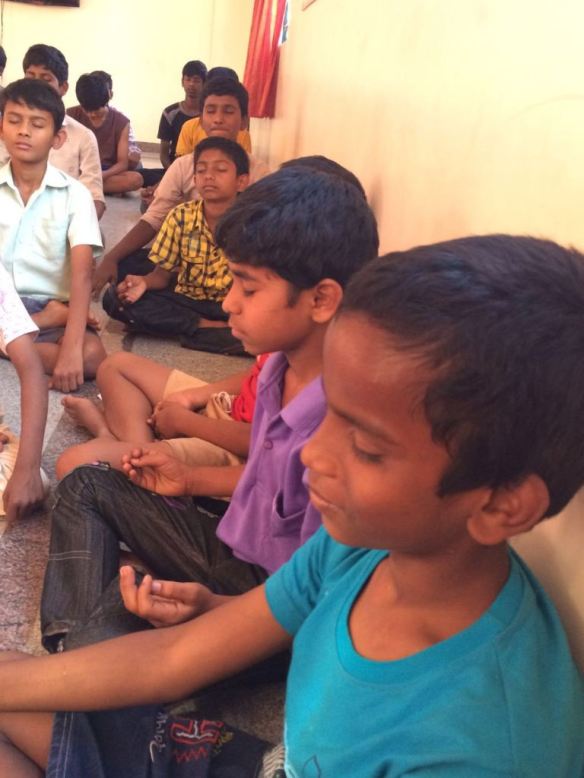
-Taught a two-week Kids Camp at a1000 Yoga, Kormangala

Varkala, Kerala in early April

Lilla in Varkala, Kerala in early April


Golden Temple (Harmandir Sahib), Amritsar

Lilla at the Golden Temple (Harmandir Sahib), Amritsar


MAY: 

-Travel: Thailand, Zambia, and Dubai

-Completed the Muay Thai 2 (Int.) at The Muay Thai Institute in Rangsit, Thailand

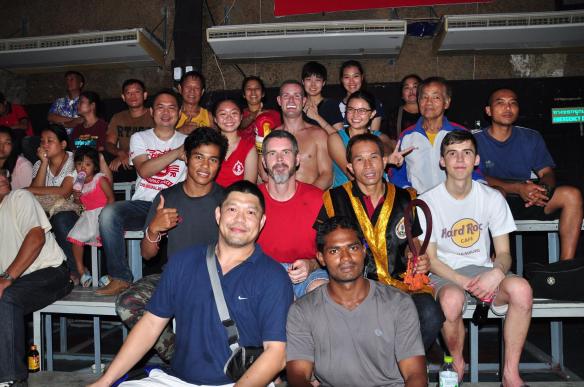
With MTI teachers and students after a successful fight by a German student

With MTI teachers and students after a successful fight by a German student (shirtless)


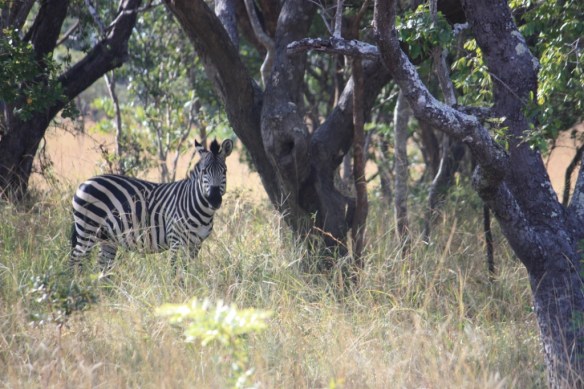
Zebra at the Chaminuka Game Reserve near Lusaka

Zebra at the Chaminuka Game Reserve near Lusaka


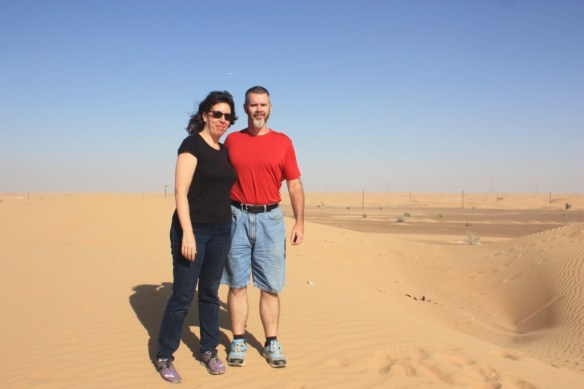
Lilla and I amid the dunes in the UAE near Dubai

Lilla and I amid the dunes in the UAE near Dubai


JUNE:

-Between travels and trainings, a quiet month in Bangalore

Back again with the kids at Socare

Back again with the kids at Socare


JULY:

-Travel: Kolkata and into Jammu & Kashmir for our August travels

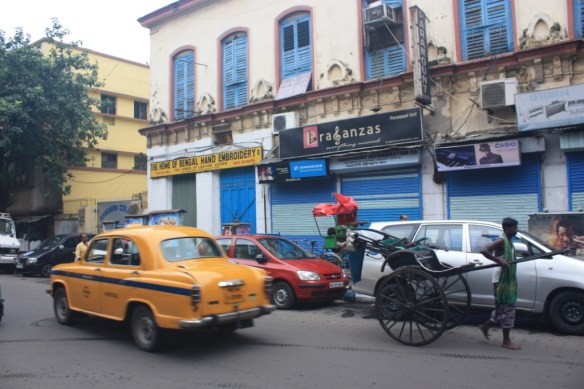
Quintessential Kolkata (Calcutta)

I’m afraid you can’t jam more Kolkata (Calcutta) into a photo than this


AUGUST:

-Travel: Jammu & Kashmir (Srinagar, Sonamarg, Great Lakes Trek, Leh, Nubra Valley, and Pangong Tso) and into Chennai for the beginning of my Vipassana Meditation course

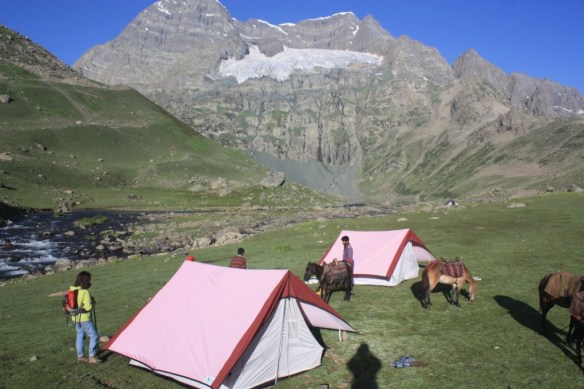
Lilla on our first night camp site on the Kashmiri Great Lakes trek

Lilla (green hoodie) on our first night camp site on the Kashmiri Great Lakes trek


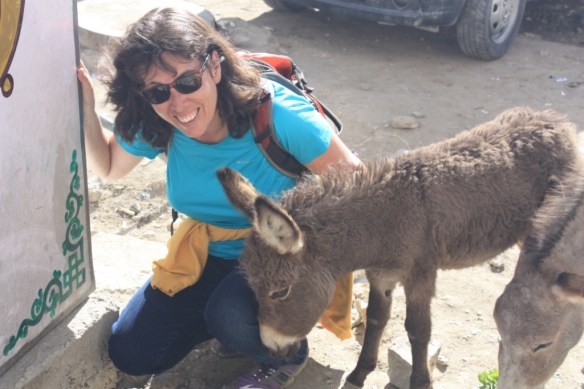
Lilla and Eeyore in Leh

Lilla and Eeyore in Leh


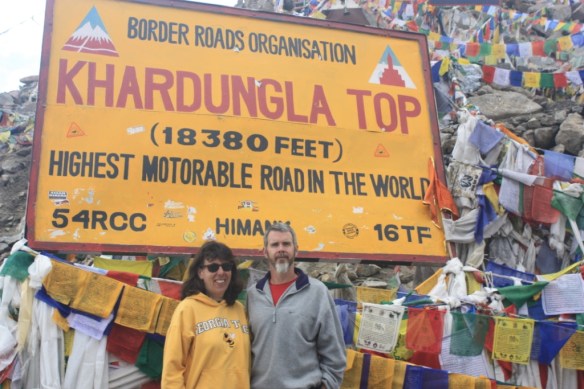
Lilla and I at the (reputed) highest motorable pass in the world

Lilla and I at the (reputed) highest motorable pass in the world


SEPTEMBER:

-Travel: 2 trips to Chennai; the first for my 10-day Vipassana Mediation Course, and the second for a wedding

Chennai (Madras)

Chennai (Madras)

Lilla henna'd and bangled for the wedding

Lilla henna’d and bangled for the wedding


OCTOBER:

-Travel: rainy season in Goa

-Anniversary month (22 yrs.)

-Took the 5th level test at Kalari Academy but promptly threw my back out–an injury from which I’m still recovering (although it’s down to a mild leg tingle) [I wouldn’t mention it but I think I’m obligated to by the rules of year-end / Christmas letters to mention any health issues.]

Lilla in front of the Se Cathedral in Old Goa (Velha Goa)

Lilla in front of the Se Cathedral in Old Goa (Velha Goa)


NOVEMBER:

-Travel: Singapore

Lilla in front of the Marina Bay Sands

Lilla in front of the Marina Bay Sands


DECEMBER:

-Travel: We’ll be in Hungary (fingers crossed) in the latter half of the month

-Finished a draft of the novel. I don’t know what version this counts as, but it’s the only one so far even close to having an ending that I can tolerate.

-I’ll probably have read about 100 books by the end of the year.

Here’s a pic from another winter trip to Budapest:

Budapest a few years back

Budapest a few years back

A more recent Budapest Winter pic; this was our most recent winter visit 2014

A more recent Budapest winter pic; this was our most recent winter visit-i.e. 2014