BOOK REVIEW: A Burglar’s Guide to the City by Geoff Manaugh

A Burglar's Guide to the CityA Burglar’s Guide to the City by Geoff Manaugh
My rating: 5 of 5 stars

Amazon page


This is a book about how people exploit the architecture and infrastructure of cities to abscond with other people’s property. Manaugh shows us both how the masterminds of burglary think outside the box “Ocean’s Eleven” style, as well as how the dim dull-wits and junkies botch burglaries in hilarious ways. In the process, the author also shines a light on the ways in which the law enforcement community has had to update its technological and tactical capabilities to counter these threats.

The book contains seven chapters. The first chapter lays the groundwork, particularly through discussion of the aforementioned extremes. On one hand, there is George Leonidas Leslie, an architect turned bank robber who would build accurate mockups in order to accurately rehearse robberies, and–on the other hand–there is the guy who used a ghillie suit disguise in a rock and mineral museum (which, not unsurprisingly, featured barren rock displays [down-playing vegetation] such that the guy stuck out like a guy in a ghillie suit in a rock display.)

Chapter 2 details what Manaugh learned about burglary and the fight against it through his interviews with law enforcement, and—in particular—the Los Angeles Police Department (LAPD) helicopter unit.

The next chapter focuses on how different types of buildings are violated by burglars, and apartment burglaries are prominent in the discussion. This isn’t just about how they breach the building, but how they discover when no one will be home.

Chapter 4 is entitled “tools of the trade” and it reflects upon the skill-set that Hollywood suggests is associated with burglars—i.e. lock-picking and safe-cracking–but which constitute a less common set of tactics than one might think. Burglars usually favor the messier / quicker approach of busting walls and locks.

Chapter 5 deals with a number of issues under the rubric of “inside jobs” but one of the most intriguing is its discussion of those who don’t break in at all, but rather who hide inside the target building awaiting closing time.

The penultimate chapter is about that ever-present concern of burglars, the getaway. And sometimes the secret is what Black Widow says in “Captain America: Civil War”: “The first rule of being on the run is walk, don’t run.” The final chapter is a wrap-up, including a conclusion to the George Leonidas Leslie story that was brought up in the first chapter.

There are notes and citations at the end of the book. There are no graphics. I think this book could have benefited from graphics. However, the author displayed such skill with language and story-telling that I didn’t seem to notice (or care) at the time of reading. I suspect Manaugh didn’t want to present too much detail for fear of being seen as an actual manual for crime, which this clearly is not.

I found this book fascinating, and think you would enjoy it if you have any interests in cities, security, civil engineering, architecture, or just have a healthy curiosity about how buildings and cities work.

View all my reviews

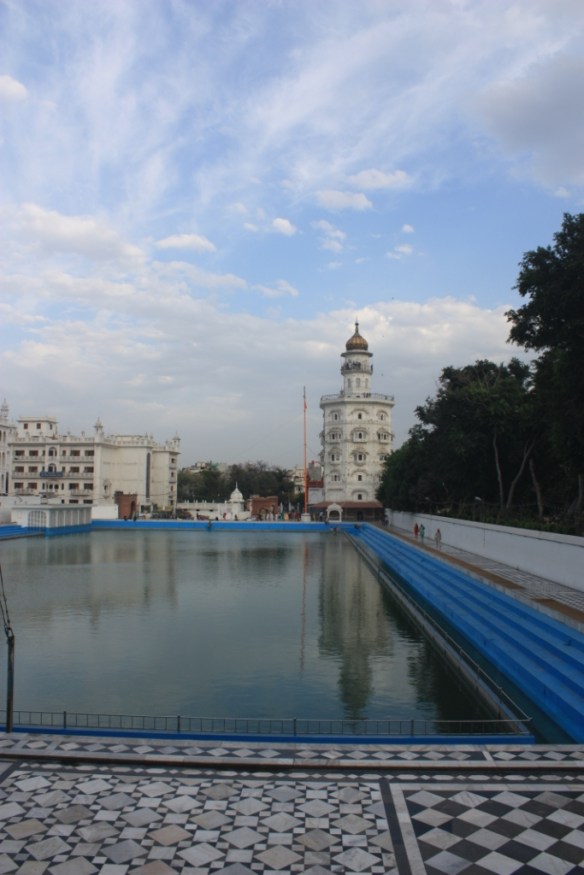
DAILY PHOTO: Jantar Mantar, New Delhi

Taken at the Jantar Mantar, Delhi on December 16, 2016

Taken at the Jantar Mantar, Delhi on December 16, 2016


The Jantar Mantar are astronomical clocks / calendars. Five of them were built in early 18th century India by order of Maharaja Jai Singh II.  The others are in Jaipur, Varanasi, Ujjain, and Mathura. The one at Jaipur is said to be the most impressive, and I can attest that it’s more impressive than the complex in Delhi. However, I’ve only visited the two. What we read of the Varanasi one didn’t make it sound worth the trip, even though we were in the area of it.  (It’s atop one of the buildings near the main ghat.) I haven’t been to the other two cities, but I’ve heard that not all of the Jantar Mantar remain intact, so they may just be ruins.


When we were visiting the location in Jaipur, a guide asked: “Do you believe in these things, astrology and astronomy?”


To which the natural response is: “That’s like asking whether I believe in ghosts and gravity.”


At any rate, if you are into science these sites are worth your time.


img_4704 img_4706


DAILY PHOTO: Happy New Year

img_1985

Taken in Hanoi January 1, 2016

Taken in Hanoi January 1, 2016

DAILY PHOTO: River Runs Through It, Hampi

Taken in October of 2013 in Hampi

Taken in October of 2013 in Hampi

img_0182

Top 5 Travel Destinations of 2016

We visited half a dozen countries (not including India) and about a dozen locales within India in 2016.

Here’s my top 5.


5.) Old Goa: Goa is usually a beachy destination, but when one goes before the rainy season is over, one spends a lot of time touring old churches. And Old Goa (Velha Goa) has some impressive and historic churches.

img_3196 img_3238 img_3265


4.) Amritsar: First of all, there’s the food. Punjabi cuisine is legendary–as is Sikh hospitality. However, there’s also some beautiful sights and a unique feel to the place.

img_3030 img_3059


3.) Bai Tu Long: Most of our trip to Vietnam took place in 2015, but we rang in the New Year on a junk boat on Ha Long Bay’s next door neighbor.

img_2423 img_2467


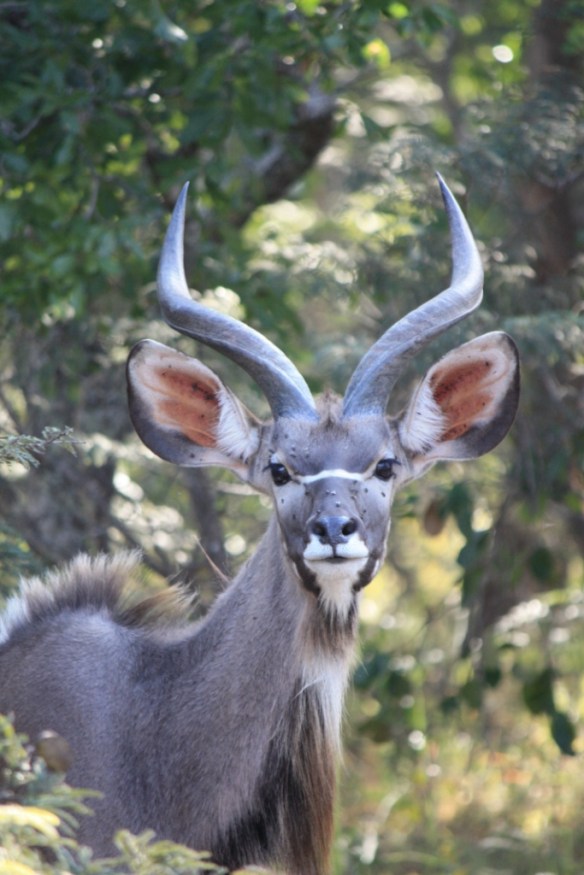
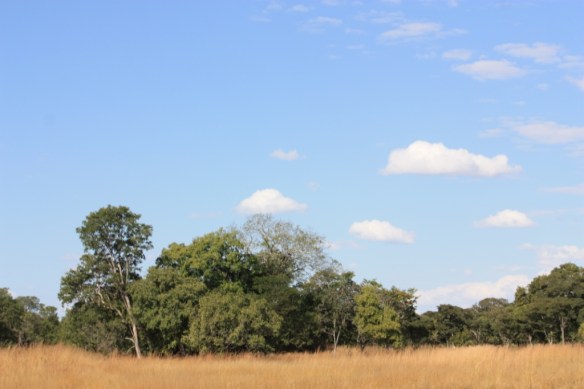
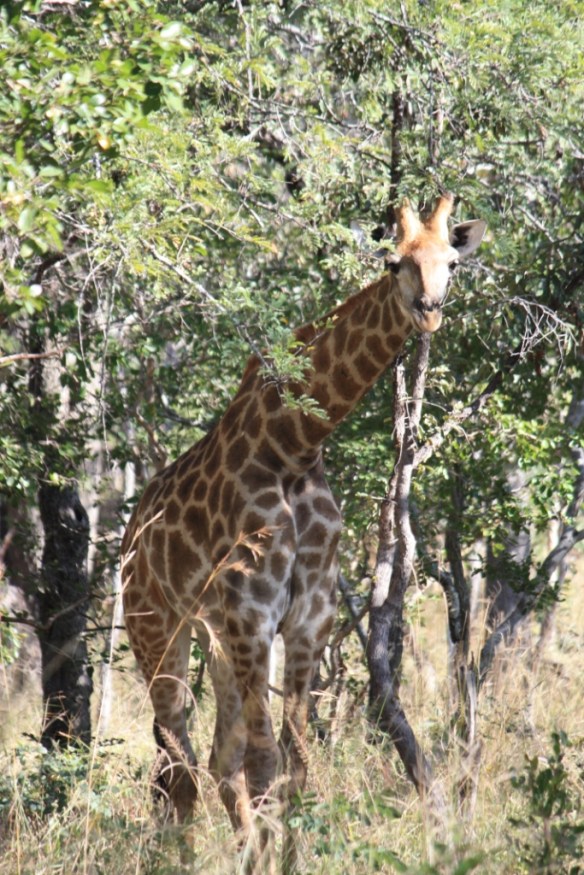
2.) Chaminuka Game Reserve, Zambia: Our first trip to Africa was far too short, but we did get a taste of the continent.

img_0201 img_0147 img_0184


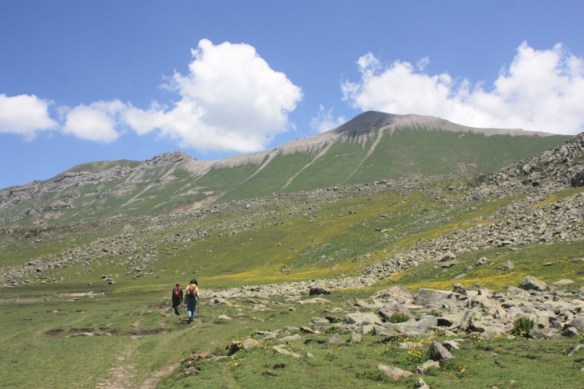
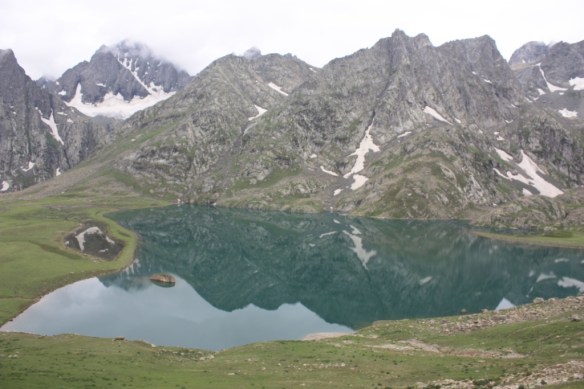
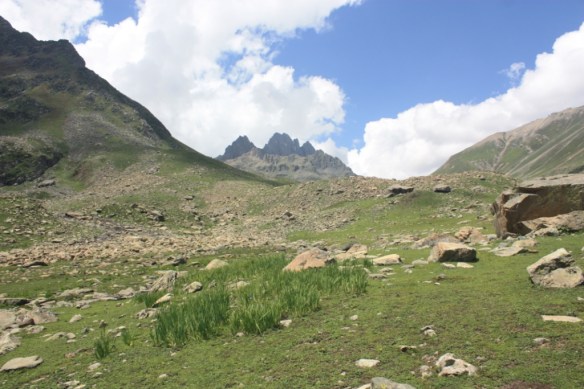
1.) Naranag to Sonamarg Trek: This may seem like an odd choice–particularly for the number one slot–given that Kashmir was under curfew when we visited. I think that may have made the trek all the more enjoyable. Not only is rural Kashmir gorgeous, but it was mostly normal–excepting the daily military checkpoints to remind us that Pakistan and /or China could invade at any moment. We certainly had our share of travails before and after the trek (e.g. only being able to drive through the middle of the night and all shops being closed on occasion) but the trek itself was outstanding. Besides, troubled travels make for good stories.

img_1316 img_1423 img_1591

DAILY PHOTO: The Queen’s Bath, Hampi

Taken in October of 2013 in Hampi

Taken in October of 2013 in Hampi

img_0655

BOOK REVIEW: Body Heat by Mark S. Blumberg

Body Heat: Temperature and Life on EarthBody Heat: Temperature and Life on Earth by Mark S. Blumberg
My rating: 4 of 5 stars

Amazon page


I picked up this book for an odd–and potentially disconcerting–reason. I sweat when I work out. I know that everyone sweats while active, but for me it’s preternatural. It’s at a level that has the potential to be a superpower, if I had any control of it. I’ve finished muaythai sessions with the ring floor looking like it’d rained inside—granted Thailand takes humidity to its heights, but still. I was hoping to gain some insight into what this anomaly was all about. After reading the book, I can’t say I have any greater insight on the issue. However, having lived in the tropics for over three years now, I’ve recently begun to notice that my level of sweating seems normal—at least within a range acceptable for our species.

There are nine chapters. The first examines the basics of heat. While the examples are zoological, the substance is largely what one would study in an introductory physics class—sans the math. Chapter 2 dips more into the biology, considering the various ways in which organisms achieve an ideal temperature. The third chapter explores the role that temperature plays in impregnation, gestation, and genetic information transfer.

Chapter 4 explains how various creatures work internally to create a comfortable temperature. It’s related to chapter 2, but the second chapter deals more with external regulation, i.e. animals’ interaction with their environments. Besides explaining the human need to control the brain’s temperature, chapter 4 explores how birds who keep their feet in chilly water manage to keep from getting hypothermia. In the next chapter, Blumberg considers various ways in which animals fight the cold. There’s an extended discussion of Brown Adipose Tissue (BAT)–a fat that is particularly useful in generating heat–that was interesting.

Chapter 6 raises an intriguing question: should one take fever reducer when one develops a fever? Obviously, a fever can become so high that one needs to combat it, but here we’re talking about a fever of a level that won’t cause any long-term harm. Chapter 7 discusses a range of heat related topics including the connection between spiciness and the feeling of heat and the evolution of language related to heat, but the chapter is mostly about the thermal dimension of sex.

Chapter 8 is about how our body regulates fat so that it can be used both as an energy reserve and as insulation, and what can go wrong with the process. The final chapter addresses the thermal dimension of sleep. If you’ve ever woken up soaked in sweat or chilled, it may have occurred to you that our thermal regulation doesn’t work as usual through sleep.

There is a point in the Introduction that reads as though the author is calling Tibetan Buddhists monks charlatans, and that seems both harsh and offensive. However, I’m willing to give him the benefit of the doubt that he used an example in unfortunate juxtaposition to his charlatan comment—which is well taken. He’s referring to monks who wrap themselves in wet sheets in subfreezing conditions. His point is that it’s not a suspension of the laws of physics that the monks don’t end up with hypothermia—true enough. The monks’ point is likely that it’s a tremendous challenge to be able to maintain a tranquil mind under such conditions, which I would argue is true as well.

There are only a few graphics, and they consist of tables, line drawings, and photos. There is an extensive bibliography that is organized by chapter.

The Kindle version of the book that I have has some formatting irregularities. However, they didn’t really detract from the reading experience, and will probably be corrected in newer editions. [But it wasn’t an ARC, so the formatting should have been finalized.]

I found this book to be interesting, and I learned a lot from reading it. It’s an important topic, but for many it won’t be a subject that one thinks of learning about in isolation. If you are interested in finding out more about the many ways in which animals (humans included) are influenced by temperature, I’d recommend you give this book a look.

View all my reviews

BOOK REVIEW: Altitude Illness by Stephen Bezruchka

Altitude Illness: Prevention and Treatment (Mountaineers Outdoor Expert)Altitude Illness: Prevention and Treatment by Stephen Bezruchka
My rating: 5 of 5 stars

Amazon page


I picked this book up after my third, and most recent, trek at high altitude. On each trek, I felt the altitude at some point along the trail, but the most troubling and persistent issue for me has been sleep disruption—what I learned in the book was called periodic breathing. That was one of several useful lessons I learned from this book.
Altitude illness is an odd affliction. There’s a clear logic to what is happening inside your body. There’s a lack of sufficient oxygen to get said oxygen distributed throughout your body by way of your body’s business as usual operations. Homeostasis is out of whack, and the body does a number of things at once to rectify the problem. Because of this, in practice the ailment is actually a range of disparate illnesses that can seem to act in an arbitrary manner. Different people feel altitude in different ways. Some have no problems if they acclimate a few days, but others hit a ceiling beyond which they can’t travel no matter what. One’s level of fitness has little to do with how well on acclimatizes. For some, like myself, it can be a nuisance, but for others it can turn into a threat to survival in a flash.

This book is a concise introduction to altitude illness that covers: acclimatization / adaptation [ch. 1], the various forms of altitude illness [ch. 2], prevention [ch. 3], diagnosis [ch. 4], treatment [ch. 5], the effects of altitude given common preexisting conditions [ch.6], and a guide to preparing for a high altitude jaunt [ch.7.] In addition to the chapters mentioned above, there are two final chapters that make for nice features. Chapter 8 presents case studies of various true instances of altitude afflictions. The cases not only make for interesting reading, but also may help one connect the dots as to what is happening with oneself or someone in one’s party. The last chapter is a frequently asked questions (FAQ) collection that helps to summarize and restate issues addressed in the main chapters. The FAQ may also help one find needed information more quickly, rather than having to flip through the entire book while someone is having trouble.

There are some graphics in the book. Most of the graphics are photos of high or extreme elevation environments—and mostly the latter. (fyi: The book calls 12,000 – 18,000 feet [3660m to 5490m] high altitude, and over 18,000ft [5490m] is extreme altitude.) There are also several tables and a line drawing or two. There’s a short bibliographic section that is nicely divided into two sections, one for health care professionals and the other for lay readers.

I found this guide to be useful and well-presented. It’s well organized, concise, and easy to navigate (bullet points are frequently used to good effect.) This is the kind of book that is meant to help you get to the information you need quickly. There’s not a lot of use of the narrative approach beyond the case study chapter and a few anecdotes in the chapters to liven the discussion. I don’t mean to make is sound dry, but it’s a book with a purpose and that purpose isn’t entertainment. The lack of extraneous information and the keeping of blocks of text small is a good idea for this kind of guide. Having said all that, it’s quite readable by a layman. Jargon is explained and there is a glossary. (There are only a few medical terms—e.g. edema (fluid build-up), ataxia (incoordination), and syncope (fainting)that one needs to be concerned with repeatedly.)

If you will be traveling at altitude (and remember that may not be high or extreme elevations, some people have problems at as low as 6000ft [1800m.]) I’d highly recommend this book. I’d further recommend one re-read it on subsequent high elevation travels. It’s a short book and is broken up into tight subsections.

View all my reviews

DAILY PHOTO: Goan Garlands by the Mile

Taken in Vasco Da Gama, Goa in October of 2016

Taken in Vasco da Gama, Goa in October of 2016

img_3473

Vasco Da Gama

Vasco da Gama

img_3408

Panjim, Goa

Panjim, Goa

15 Books that Changed my Worldview in 2016

By year end, I’ll have read about 100 books in 2016. Any book I finish has merit, but only a few rock my world.

Note: Only a few of these books were published in 2016. So if you’re looking for “best books of 2016” lists, this isn’t that–though I have listed publication years, so the few that came out in 2016 may be worth a look.


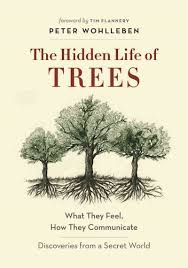
hiddenlifeoftrees

1.) Title (Year): The Hidden Life of Trees (2016, English language ed.)

Author: Peter Wohlleben

Goodreads review

Amazon page

I had no idea. Trees communicate, share, parent, form alliances, and I could go on. I’ll never look at a tree the same way.


beingmortal

2.) Title (Year): Being Mortal (2015)

Author: Atul Gawande

Goodreads review

Amazon page

Beating one’s fear of death is not so hard as beating one’s fear of losing control.


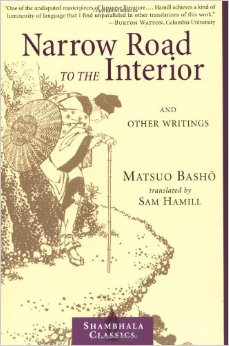
narrowroad_basho

3.) Title (Year): Narrow Road to the Interior: And Other Writings (2006 [this ed.])

Author: Matsuo Bashō

Goodreads review

Amazon page

Any time one can glimpse the mind of a haiku master, one comes away with an injection of clarity.


aliceinwonderland

4.) Title (Year): Alice’s Adventures in Wonderland & Through the Looking-Glass (2008 ed.)

Author: Lewis Carroll

Goodreads review

Amazon page

Killing my misogyny. I love “secret door to an alternate universe” stories. Gaiman’s Neverwhere is one of my favorite novels. And here I’m just getting around to reading this exemplar (and the mother) of all such stories. I suspect I’d dismissed it as a girl’s book–whatever that means.


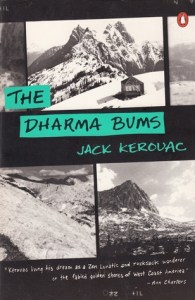
dharmabums

5.) Title (Year): The Dharma Bums (1958)

Author: Jack Kerouac

Goodreads review

Amazon page

A voyeuristic impulse across time, space, and culture. Kerouac’s use of language and way of describing events sometimes rattles loose sticky ways of thinking.


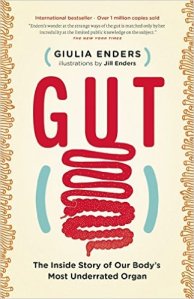
gut_enders

6.) Title (Year): Gut (2015)

Author: Giulia Enders

Goodreads review

Amazon page

This may seem like a bizarre and morbid fascination, but Enders makes studying the alimentary canal both interesting and amusing.


tibetanyogas

7.) Title (Year): The Tibetan Yogas of Dream and Sleep (1998)

Author: Tenzin Wangyal Rinpoche

Goodreads review

Amazon page

Forget space. The subconscious is the final frontier, and this book offers insight into how to hack it.


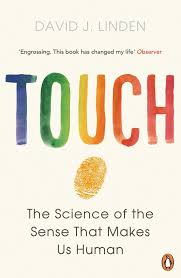
touch_linden

8.) Title (Year): Touch (2015)

Author: David J. Linden

Goodreads review

Amazon page

I was just reviewing a book (John Medina’s Brain Rules) that claimed that vision trumps all other human senses. Linden’s book made me rethink that belief.


lifedeath_moyan

9.) Title (Year): Life and Death are Wearing Me Out (2006)

Author: Mo Yan

Goodreads review

Amazon page

Another kind of voyeurism across time, space, and culture–but this one giving one a taste of what it was like to live in China through the Cultural Revolution and what came after.


intoafrica

10.) Title (Year): Into Africa (2012 ed.)

Author: Martin Dugard

Goodreads review

Amazon page

I bought this before my wife and I went to Zambia. Basically, I just wanted to know what “Dr. Livingstone, I presume?” meant. However, I became fascinated with the challenges of exploring Africa in that era.


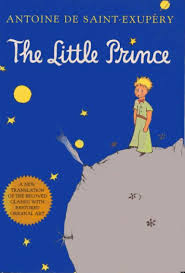
littleprince

11.) Title (Year): The Little Prince (1943)

Author: Antoine de Saint-Exupéry

Goodreads review

Amazon page

I’m stunned by the ability to pack this much wisdom into a book and yet make it approachable to a child.


emperor_of_maladies

12.) Title (Year): The Emperor of All Maladies (2011)

Author: Siddhartha Mukherjee

Goodreads review

Amazon page

I knew cancer was mean, but I had no idea of the degree to which cancers are both vicious beasts and clever disasters.


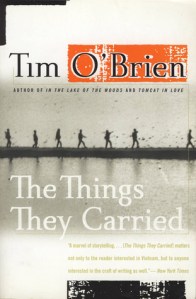
thethingstheycarried

13.) Title (Year): The Things They Carried (1990)

Author: Tim O’Brien

Goodreads review

Amazon page

This book freed my impression of what a novel must be.


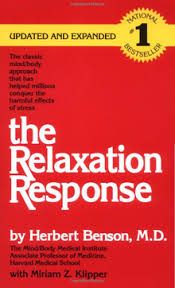
relaxationresponse

14.) Title (Year): The Relaxation Response (1975, but I read the 2009 ed.)

Author: Herbert Benson

Goodreads review

Amazon page

A classic. The book reminded me of what it must have been like to be doing research on meditation back then–and makes me wonder whether we’d be much further ahead if one hadn’t had to have cast iron gonads to take on such a research agenda in those days.


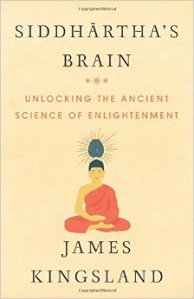
siddharthas-brain

15.) Title (Year): Siddhartha’s Brain (2016)

Author: James Kingsland

Goodreads review

Amazon page

I’d read the life story of Siddhartha Gautama Buddha, and I’m constantly reading about the science of the mind. Still, this book that drops chocolate in the peanut butter got me thinking in new ways on the subject.