BOOK: “Tell My Horse” by Zora Neale Hurston

Tell My Horse: Voodoo and Life in Haiti and JamaicaTell My Horse: Voodoo and Life in Haiti and Jamaica by Zora Neale Hurston
My rating: 5 of 5 stars

Author’s Book Site — Zora Neale Hurston Trust

This is a beautifully written and fascinating look at Jamaica, Haiti, Voodoo, Zombies, and the sinews that run between them. The first half of the book reads largely like a travelogue of, and introduction to, Jamaica and Haiti, respectively. In this half, Voodoo is only mentioned here and there as an aside. There is much more discussion of culture, race, and politics, notably the disheartening politics of Haiti. (I should point out for those unfamiliar with Harlem Renaissance figures, this book dates to the 1930’s — so current affairs are not addressed, but — unfortunately — Haiti has a long history of troubles.) The second half of the book delves much more intensely into Voodoo and the supernormal happenings broadly connected to it. Hurston’s exploration is neither as a tried-and-true believer, nor as a hardcore sceptic; rather she takes a more journalistic objectivity.

The language of this book is splendid, and Hurston produces many a quotable line. It is true that the subject matter, Voodoo, is extremely compelling, but this book is more than just a collection of tales of magic, superstition, and the weird. It also offers depth of insight into the cultures of these countries and their peoples. Hurston frequently mentions the differences between classes on the matter of Voodoo, the upper-class rejecting it as mere superstition and the lower classes often engaging with it as a way of life.

I’d highly recommend this book, not only for those interested in learning more about Caribbean Voodoo practices, but also for travelers with an intense curiosity about culture.

View all my reviews

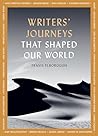
BOOKS: “Writers’ Journeys That Shaped Our World” by Travis Elborough

The Writer's Journey: In the Footsteps of the Literary Greats (Journeys of Note, 1)The Writer’s Journey: In the Footsteps of the Literary Greats by Travis Elborough
My rating: 4 of 5 stars

Publisher Website

This book discusses important travel events in the lives of thirty-five prominent writers and poets. Some of these were long international travels and some entirely domestic, some aborted and others completed. All of these trips in some way influenced the subsequent works produced by these writers. In some cases, it was just for a scene, as with Sir Arthur Conan Doyle’s use of Reichenbach Falls to kill off his widely beloved (but personally soul-sucking) character, Sherlock Holmes. In others, the trip became the basis of a book, as with Joseph Conrad’s travels on the Congo River. And in yet others, the trip would become the basis of multiple works, such as Jack London’s travels in the Klondike. Of course, there were some travels that had more indirect influence on the writers’ works by way of shifts in worldview and life experience.

The graphics for this book are excellent and include a simple route map for each trip as well as photos from key locations, as well as a few relevant historic artworks. The maps and pictures help to give one a feel for the appeal of these places, and — in some cases — to better understand literary works once read.

If you are a traveler, are interested in literary history, or are both, this book is well worth investigating.

View all my reviews

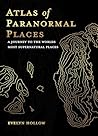
BOOKS: “Atlas of Paranormal Places” by Evelyn Hollow

Atlas of Paranormal Places: A Journey to the World's Most Supernatural PlacesAtlas of Paranormal Places: A Journey to the World’s Most Supernatural Places by Evelyn Hollow
My rating: 4 of 5 stars

Publisher Site

While I’m not much of a believer in the paranormal, I am always curious to learn more about the beliefs, folklore, and backstories of various destinations. Such information, even when immensely interesting, often remains hidden from the casual traveler. For example, had a not read this book I wouldn’t have known that Siquijor Island in the Philippines (a place I’ve been to) had a thriving witch market. I read this book not only because of an interest relevant to places I’ve been and also places I intend to go (e.g. Bhangarh Fort,) but — most importantly — to learn about new and fascinating locations that were not yet on my radar. The book did not disappoint.

The almost forty entries in this atlas are divided among six categories (ghosts, witches, sacred, mythic, nature, and cryptid/creatures.) It is a broad and varied selection of locations from around the world and will most certainly offer even vagabonds some new sites for their “to travel” lists.

I appreciated the thoughtfulness of this book. I noticed this with the discussion of Báthori Erzsébet, a Hungarian noblewoman who was accused of mass murder and – literal – blood baths. Many paranormal authors, either out of an intense need to believe strange things or because of a desire to sell more books, would ignore the extensive evidence that Báthori was framed for purely political motives. Hollow presents said evidence despite the fact that it kind of undercuts her argument that Cachtice Castle is a locus of supernatural happenings.

I found this book compelling, well-written, and illustrated with fine maps and photographs. If you’re interested in the folklore and ghost stories of various locations, I’d check it out.


View all my reviews

BOOKS: “Road to Mussoorie” by Ruskin Bond

Roads to MussoorieRoads to Mussoorie by Ruskin Bond
My rating: 5 of 5 stars

Publisher’s Site

This is a collection of essays about Bond’s home of many years, Mussoorie, along with — as the title suggests — the areas one comes through traveling to – and hiking out of – Mussoorie. The book ventures from a straight up travelogue into ghost stories, local gossip, autobiography, and municipal history. It enlightens the reader on the White Woman of Mussoorie, on the death of its cinema, and on the town’s historical involvement in colonial licentiousness.

I enjoyed this short book. It’s humorous and offers one a feel of hill station India.

View all my reviews

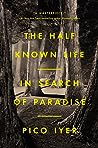
BOOKS: The Half Known Life by Pico Iyer

The Half Known Life: In Search of ParadiseThe Half Known Life: In Search of Paradise by Pico Iyer
My rating: 5 of 5 stars

Amazon.in Page

The subtitle to this collection of travel essays might suggest Iyer intends to write about the most idyllic places on Earth. In a way, he does, but he’s also revealing the conundrum of “paradise” by showing the reader places that have been called “paradises,” but which are also some of the furthest places from serenity imaginable. I wouldn’t say that the author is revealing the concept of paradise to be an illusion, but rather that he’s showing that there is an inextricable tangle of dark and light in any earthly paradise. I think the idea is best expressed in a quote from the book, “A true paradise has meaning only after one has outgrown all notions of perfection and taken the measure of the fallen world.” [FYI: the main title is from a quote from Moby Dick.]

From my experience with some of the places that Iyer covers (e.g. Kashmir, Sri Lanka, Varanasi, etc.) I can glimpse the substance that started him digging. It isn’t just that these places are superficially paradisaical (though Kashmir and parts of Sri Lanka are definitely scenically idyllic,) but there is some other (deeper) quality by which these places feel fantastical. Of course, the examples that I mentioned (as well as others: e.g. Jerusalem) are simultaneously examples of the antithesis of paradise. These are troubled places with histories of violence and dysfunction. I even learned that Bali (which doesn’t have its own chapter but is discussed) has barbarity in its own history, and it seems as likely a candidate for true paradise as any.

I enjoyed reading this book. I must admit that part of my fascination with it derived from the fact that I’d tread much of the same ground that Iyer covers. I’d highly recommend the book for readers of travel writing.

View all my reviews

BOOKS: Travels with Epicurus by Daniel Klein

Travels with Epicurus: A Journey to a Greek Island in Search of a Fulfilled LifeTravels with Epicurus: A Journey to a Greek Island in Search of a Fulfilled Life by Daniel Klein
My rating: 5 of 5 stars

Amazon.in Page

With the wave of renewed interest in Philosophies of Life lately, it’s nice to see a book that puts Epicurus at the fore. In a number of ways, I believe Epicurus was the most advanced of Ancient Greek philosophers, and yet he doesn’t get much attention compared to Plato, Aristotle, and the Stoics. (In part this is because the vast majority of Epicurus’s writings were lost, and in part it’s because little-“e” epicureanism [i.e. being culinarily hedonistic] has become much more familiar to people than big-“E” Epicureanism [i.e. a materialist philosophy that values pleasure, but not in so hedonistic way as to lose sight of virtue and the countervailing costs of pursing pleasure.] While adjectival forms have done a number on Cynicism and Stoicism as well, the former is – for all intents and purposes – dead and the latter has become much more well-known to present-day people from a pile of podcasts, books, and vlogs.)

I should point out that Klein doesn’t solely focus on the philosophy of Epicurus, he also tells readers what other schools of philosophy teach us about how to age well (and to not turn into a curmudgeon) — most notably: Buddhism, Stoicism, and Existentialism. That said, it’s fair to call Epicureanism the backbone of this book.

One who reads the title might wonder whether this is a pop philosophy book on aging or a travelogue. It’s definitely both, but the philosophy part dominates. I would call it 70/30 pop philosophy to travelogue (maybe 65/35.) The book uses the individuals Klein interacts with on Hydra (and elsewhere in Greece) as examples of how people age well, and in the process shows the reader [textually] a beautiful part of the world. But the core of the book is about philosophy as it pertains to such topics as play, perception of time, idleness, and changing views of spirituality.

I will warn the reader that, while the book offers many great thoughts for a philosophy of aging well, I didn’t agree with everything in the book. Klein contrasts his philosophy for living well into old age and for adapting one’s life to changing roles to the people he calls the “forever young” crowd. I wouldn’t put myself in the “forever young” category as I don’t believe I’m grasping at youth and all its blessings and pains. However, I suspect Klein would put me in that group because I work out intensely, watch what I eat / manage my vices, and am trying to work things so that my heart explodes while I’m still physically and mentally capable — i.e. before I become decrepit or senile. My point is, I’m not sure Klein’s dichotomy is that useful or reflective of reality, and that being health-conscious should necessarily be contrasted with enjoying the pleasures of age. [Truth be told, I’d say the biggest driver for people being more health-conscious into old age is seeing earlier generations live longer, but with a decreased quality of life through that period of increased longevity — See: Being Mortal by Atul Gawande.]

Still, overall, the book is quite readable and offers much excellent food for thought, and I’d recommend it for anyone who is interested in moving into advanced age in a way that isn’t misery filled.

View all my reviews

BOOK REVIEW: Goa Travels ed. by Manohar Shetty

Goa Travels: Being the Accounts of Travellers from the 16th to the 21st CenturyGoa Travels: Being the Accounts of Travellers from the 16th to the 21st Century by Manohar Shetty
My rating: 5 of 5 stars

Amazon.in Page

I picked up this book because I’m now planning a trip to Goa — only my second trip to India’s smallest state and my first to the north beach area for which it has become such a popular destination in recent decades. It’s always good to get a literary feel for a place, perhaps receiving some insights one might otherwise miss. In a way, this is the perfect book for that purpose in that it offers outsider views of Goa across time. [In another way, it’s admittedly a skewed view.]

This book gathers written excerpts from travelers to Goa. It’s divided into three parts. The first part mostly covers the sixteenth and seventeenth centuries, back when Goa was a Portuguese colony. This is the largest section and includes twenty-one pieces by priests, sailors, merchants, and adventurers. This section shows a preoccupation with a few features of Goan culture that seized travelers’ attention. One of these was the terrifying practice of sati, in which a widow would throw herself on her deceased husband’s funeral pyre and be burned alive. Another was the obsessively guarded way wives were treated, generally barred from doing anything in public or with those who weren’t blood relatives.

The second section, also the shortest, features one piece on the Goan Inquisition, which was an extension of the Portuguese Inquisition and one of the major examples of horrifying behavior by the Roman Catholic church. While it’s alarming and gruesome to read about, it’s nonetheless fascinating.

The final section is about the modern era, which – for the purposes of this book – runs from about the 1950’s (after India gained independence from Britain, but while Goa was still a Portuguese colony,) through its days on the Hippie Trail, and on to more-or-less the present. I knew about Goa as a hippie hangout during that countercultural revolution, but I was less aware of what went on between Indian independence and Goa’s independence from Portugal. Among the seven pieces in this section, one also gets a feel for the challenges of having an intensely culturally conservative population packed into India’s smallest state with what is probably South Asia’s biggest party destination.

I learned a lot of fascinating facts from reading this book. It may be a bit sensationalist in some places and vaguely racist in others, but it’s not boring.


View all my reviews

BOOK REVIEW: Atlas of Improbable Places by Travis Elborough

Atlas of Improbable Places: A Journey to the World's Most Unusual CornersAtlas of Improbable Places: A Journey to the World’s Most Unusual Corners by Travis Elborough
My rating: 4 of 5 stars

Amazon.in Page

This book has entries on about fifty odd and off the beaten path locations. These locales are grouped into six parts that explore: “utopias,” abandoned places, bizarre architecture, islands, otherworldly destinations, and subterranean attractions.

There’s a standard set of graphics for each entry that include: a map that shows where in the world the place is, a photograph at that place, and a closeup map of the site’s immediate environs. The text describes a little about the history of each place and any quirky facts of relevance (such as how a location came to be abandoned.) The text also helps to clarify definitional issues such as what kind of utopian vision was being sought-after for the various [arguably] failed utopias of the first section.

I enjoyed this book. I’ve only visited two of the sites in the atlas (Ross Island and Auroville,) and I’m always excited to learn about more strange and unconventional destinations. I felt the atlas did succeed by presenting so many places I’d not only not visited, but about which I’d not even heard. (There are locations like Puerto Princessa [under-island river in the Philippines], Aokigahara [Japan’s suicide forest,] and “the Palm” [Dubai’s artificial islands] that are well-known to geography buffs, and many of the lesser-known sites are quirky tourist traps (Ten Commandments Mountain in North Carolina,) but –still — there are some fascinating but little-known locations in the book.) There is a disproportionate coverage of North American and European locations, presumably because that’s where the market for English language books disproportionately lies, and little coverage of African or South American locations.

If you’re into strange and remote travel locations, you may want to have a peek at this book.


View all my reviews

BOOK REVIEW: A Transcendental Journey by Stephen Evans

A Transcendental JourneyA Transcendental Journey by Stephen Evans
My rating: 4 of 5 stars

Amazon.in Page

Release date [for 25th Anniversary ed.]: September 10, 2022

Get Speechify to make any book an audiobook

A Transcendental Journey intersperses a quirky travelogue of a rambling road-trip through America with a book report on selected essays of Ralph Waldo Emerson. On a positive note, the book offers genuinely funny lines within a generally amusing wandering discussion of events, and there’s something authentic about the voice – you may find yourself hearing the words in the voice of someone you know (or a character) who is idiosyncratic and nerdy in a way that is not uncommon in America. I did. In addition to the funny lines, there are statements that feel profound and are definitely thought-provoking.

Some of the offbeat elements go a bit too far, reaching the point of distraction. For some reason, the author decided to note not only each time he drank a Coca-Cola, but the size of the beverage. At first, it’s just a bit of weirdness that seems to contribute to the aforementioned authentic voice, but eventually one is made sad by the idea that this guy is giving himself diabetes and involving you, as reader, in the process. I can’t say that the philosophy bit is particularly well integrated into the travelogue, and the author often seems like an Enlightenment guy more than a Transcendentalist. (Transcendentalism being an offshoot of Romanticism, a philosophy meant to counteract the perceived cold, hard rationality of Enlightenment thinking and take a more mystical / spiritual [though not necessarily religious] view of the world.) That said, I can’t fault an inability to keep these schools of thought in boxes, as my own philosophy and worldview are fairly ala carte. My point is just that someone who picked up the book expecting to have a clearer view of what distinguishes Transcendentalism from other philosophies might come away confused.

If you enjoy travelogues, particularly of the United States, you’ll find this book a fun read. If you’re familiar with the works of Emerson, I wouldn’t expect any deep philosophical insight, but there are some fine quotes and discussions to remind you of Emerson’s great ideas and beautiful language. (And there are certainly many varied insights to ponder.)

View all my reviews

BOOK REVIEW: A Stranger in Tibet by Scott Berry

A Stranger In Tibet: The Adventures Of A Wandering Zen MonkA Stranger In Tibet: The Adventures Of A Wandering Zen Monk by Scott Berry
My rating: 5 of 5 stars

Amazon.in Page

This book tells the story of a Japanese Zen Buddhist monk, Kawaguchi Ekai, who traveled to India, Nepal, Lo (now Upper Mustang,) Sikkim, and Tibet in the early years of the twentieth century in search of Buddhist scriptures and teachings. His ultimate goal was Tibet, which he’d heard had the complete Buddhist canon in Tibetan. However, at that time, Tibet (like some of the other nations he traveled through) was xenophobic and strictly controlled / prohibited movements of foreigners, sometimes under penalty of death. This necessitated Kawaguchi first spending a year-and-a-half in Darjeeling to become fluent in Tibetan, and then using a range of disguises to facilitate travel. There was a book published after Kawaguchi’s trip entitled, “Three Years in Tibet,” but there are reasons why one might prefer Berry’s work, reasons that will be addressed below.

Kawaguchi was an interesting figure, a skilled polyglot, a fast thinker, and an iron-willed pursuer of truth. He was also bigoted and held uncompromising moral beliefs upto which few could live. The travelogue is sometimes comic, sometimes tragic, but always interesting. Sometimes Kawaguchi comes across as a Buddhist Don Quixote, but other times he’s a valiant scholar / adventurer.

As for why one might enjoy reading Berry’s account better: first, “Three Years in Tibet” is rather bloated and wasn’t written directly by Kawaguchi but rather by way of journalists. Second, Berry explores the truth behind some of the intolerant and sectarian views of Kawaguchi. Third, Berry offers broader context into the intrigues and geopolitics of the times that led to the shunning of foreigners in the first place.

This book delves into a fascinating time in a little-known part of the world, and it’s a compelling read throughout. I’d highly recommend it for those interested in learning more about the region and its past.


View all my reviews