
A timeless time will come to be,
when all is uniform.
And nothing 's hot & nothing 's cold,
but all is just lukewarm.

So thank your lucky stars you've lived
in this age of bedlam:
when stars can shine and buildings rise
and we've cerebellums.

A timeless time will come to be, when all is uniform. And nothing 's hot & nothing 's cold, but all is just lukewarm. So thank your lucky stars you've lived in this age of bedlam: when stars can shine and buildings rise and we've cerebellums.
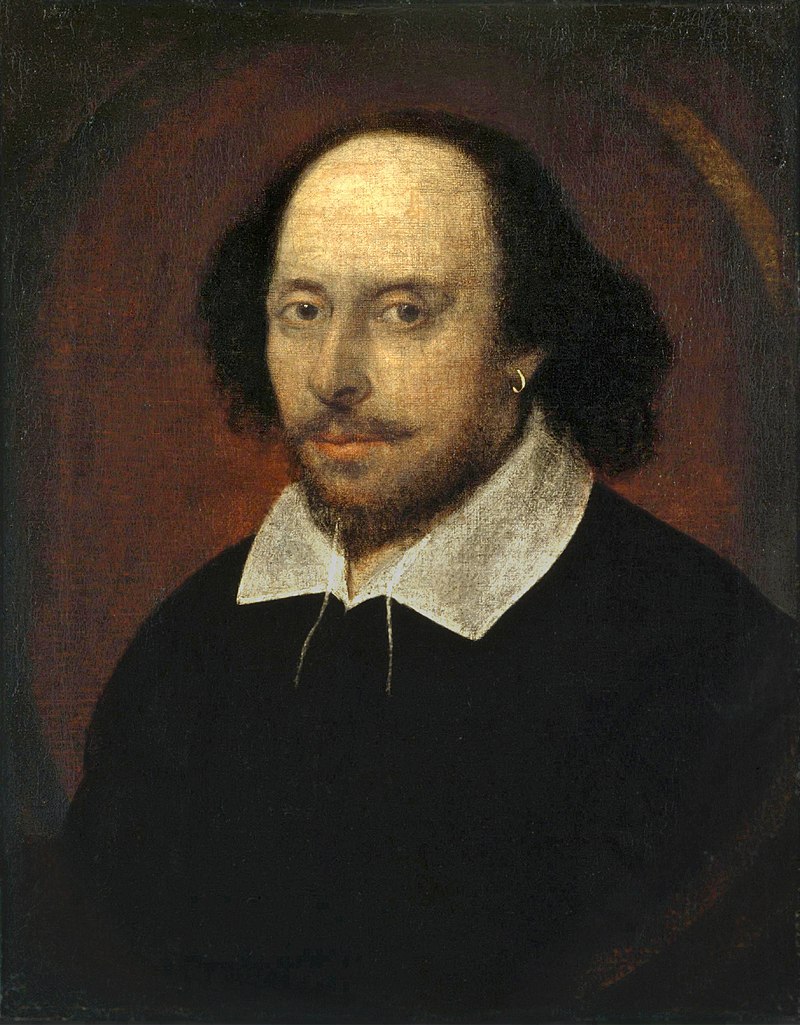
If you’re looking to attain Enlightenment, you may have turned to someone like the Buddha or Epictetus for inspiration. But I’m here to tell you, if you can put these four pieces of Shakespearean wisdom into practice, you’ll have all you need to uplift your mind.
There is nothing either good or bad, but thinking makes it so.
william Shakespeare, Hamlet
Through Yoga, practitioners learn to cultivate their inner “dispassionate witness.” In our daily lives, we’re constantly attaching value judgements and labels to everything with which we come into contact (not to mention the things that we merely imagine.) As a result, we tend to see the world not as it is, but in an illusory form.
The fault, dear Brutus, is not in our stars, but in ourselves.
William shakespeare, julius caesar
In Psychology class, you may remember learning about the self-serving bias, a warped way of seeing the world in which one attributes difficulties and failures to external factors, while attributing successes and other positive outcomes to one’s own winning characteristics. Like Brutus, we need to learn to stop thinking of our experience of life as the sum of external events foisted upon us, and to realize that our experience is rooted in our minds and how we perceive and react to events.
The fool doth think he is wise, but the wise man knows himself to be a fool.
william shakespeare, as you like it
A quote from Hamlet also conveys the idea, “There are more things in heaven and earth, Horatio, than are dreamt of in your philosophy.” If you grasp this idea, you may become both humbler and more readily capable of discarding bad ideas in favor of good. It’s common to want to think of yourself as a master, but this leads only to arrogance and to being overly attached to ineffective ideas. Be like Socrates.
Cowards die many times before their deaths; The valiant never taste of death but once.
william shakespeare, julius caesar
Fears and anxieties lead people into lopsided calculations in which a risky decision is rated all downside. Those who see the world this way may end up living a milquetoast existence that’s loaded with regrets. No one is saying one should ignore all risks and always throw caution to the wind, but our emotions make better servants than masters. One needs to realize that giving into one’s anxieties has a cost, and that that cost should be weighed against what one will get out of an experience.
There it is: Enlightenment in four bits of Shakespearean wisdom.

Emerson said,
"Trust thyself: every heart vibrates to that iron string."


REM said,
"What's the frequency, Kenneth?"


Will Kenneth's waves propagate down the line?

If so, would they add to,
or cancel out,
the waves of others?

That depends on the frequency, Kenneth!

I guess that's why Michael Stipe
took such an impassioned interest
in the question.

Is it even a good thing if one's waves
add to those of another?

Might it not become disharmonious,
like a runaway washing machine,
shaking violently,
parts flying through the air
in smooth ballistic arcs
only to bounce and clatter
in dull discordance.

Does one's iron string
even need to come into contact
with Kenneth's?

Might not the wave energy
passing through the air
stir up a resonance in one's bones?

Questions, such as these, haunt me --
not to mention:

Who, exactly, is Kenneth?

People sometimes tell me
they have trouble understanding poetry.

That's because they consume it
as they would a banana,
starting at one end and chomping
down to the other.

Poetry has to be consumed like
corn on the cob.

One should start at one end
and work down to the other,
but then one has to
go back to the beginning --
change one's angle of perspective --
and - again - go from one end to the other.

I can't
emphasize
this point about changing
one's angle of perspective
enough.

There is a difference:
with corn on the cob, one rotates the corn,
but, with poetry, one has to rotate something
within the reader.
Otherwise, one is just chomping into
an empty rut -
a track devoid of sustenance.

Then, one has to repeat the process
until every last morsel has been consumed.

That's how one ingests poetry.

Human nature is a raging river
which a few shitty sandbags of common sense
will not detour.

Some people stand on the bank
and shout at the river.
I will admit, I've done the same.

But those words neither soak in
nor bounce off that raging river --
they're made silent,
dying in air.

Some people try to steer
the river by splashing at the lapping waters
near its edge,

But none of them is Moses,
not one can dam a river by force of will.

And - even if one could --
eventually, that person would have to let go,
leaving a backed up and angry river
to rage onward.
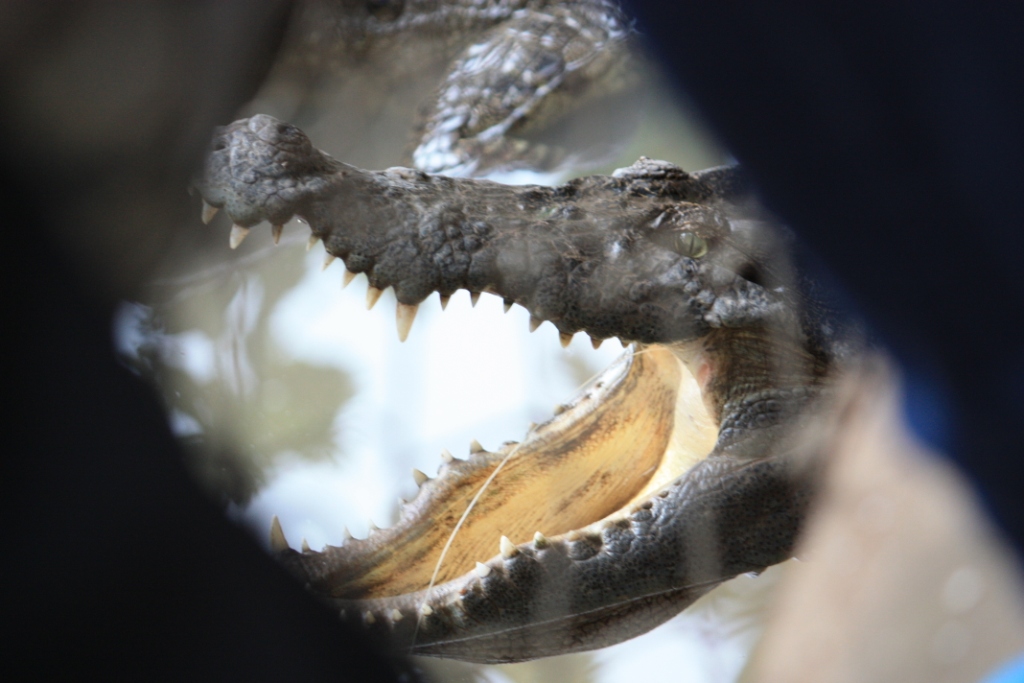
One burning moment --
taffy-stretched to the edge of reason:

stretched so broadly that one
can't fathom escape -
like Monkey on the Buddha's palm

One burning idea --
cloned, and then carved
to make infinite variants,
and painted infinite shades:
the dark tone of each
darker than the last

Burning ideas populating
the vast expanse of a
burning moment,
until the urge to escape
insists that one carve a hatch
into living tissue

But what is it that does
the stretching of the burning moment
&
the cloning of the burning idea?

Can't that stretcher and cloner
 be wound back,
scaling all to proper proportions?

And can't it be done before
that terminal instant
is carved in jagged stone?

The other day I read that a man had pushed a person onto the tracks in front of an oncoming train.

The week before that, I'd read in a book by Robin Ince that a person who -- having had a baby thrust into his hands -- has intrusive thoughts of throwing said baby out of the nearest window is [believe it, or not] the best person to ask to hold one's baby.

The argument goes like this, the person having these intrusive thoughts is being intensely reminded by his or her unconscious mind that under no circumstances -- no matter what unexpected or unusual events should transpire -- is he to throw the baby out the window (or otherwise do anything injurious.)

I've heard that, at some point, virtually everyone has some type of awkward intrusive thought such as the thought of pushing a stranger in front of a train.

Most never do it, nor truly want to do it.

Then this one time... someone did.

People pray for
blinding, deafening
magic.

Instead, they should
make themselves keen
observers of the
mundane miracles.

Those little magic
moments like
seeing a baby's smile
or
crossing over
a green ridge
to face a
snow-capped mountain.

Feel these rare moments
to their fullest,
rather than wishing
to be dazzled by
grand displays of
the supernatural.

Those loud miracles
will probably never happen,
and - if they do -
one who hasn't become
attuned to hearing the quiet
moments of glorious perfection
might still miss them.
 Three Japanese Buddhist Monks by Saigyō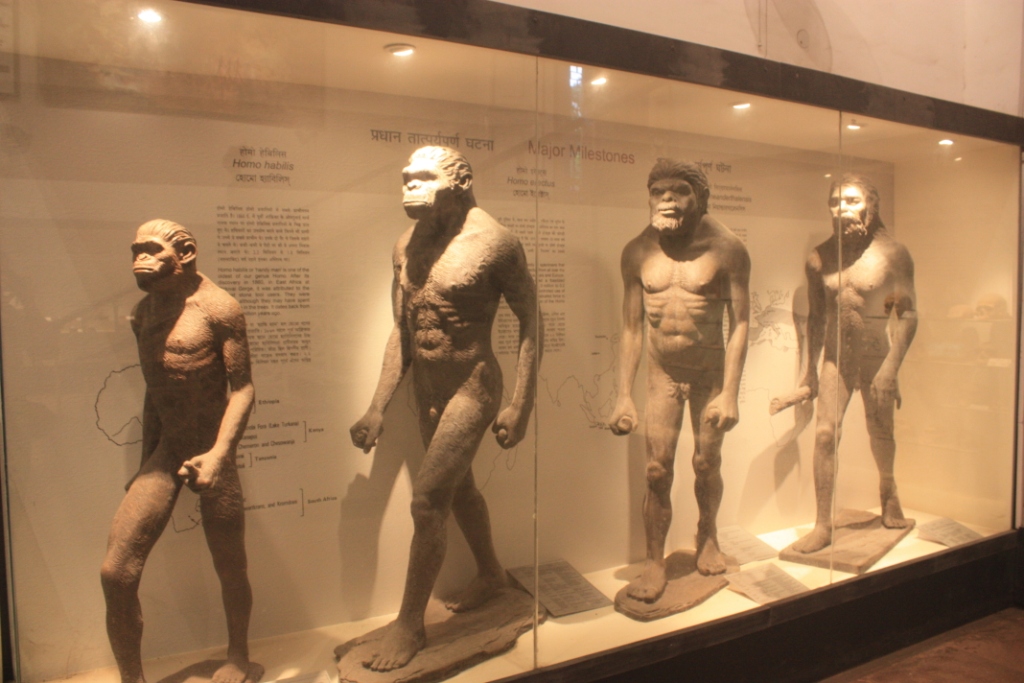
We laud our rational side

- The Thinking Man -

But we're emotional beasts
to the core.

To use that old
[and disparately applied]
chestnut:

Of emotions,
better master
than servant.

Poetry is a conduit
to emotional savvy.

That's part of the reason
Plato urged poetic restraint;

he found the emotional
inferior to the rational,
and thought most youngsters
couldn't behave responsibly
in the face of poetry's
emotional power.

It's also where Aristotle
found virtue in poetry,
its ability to induce
catharsis.

Could they both
be right?


 Tiger Riding for Beginners