Five Wise Lines from Fireflies by Rabindranath Tagore

In the drowsy dark caves of the mind / dreams build their nest with fragments / dropped from day’s caravan.

From the solemn gloom of the temple / children run out to sit in the dust, / God watches them play / and forgets the priest.

The wind tries to take the flame by storm / only to blow it out.

The same sun is newly born in new lands / in a ring of endless dawns.

When death comes and whispers to me, / “Thy days are ended.” / let me say to him, “I have lived in love / and not in mere time.” / He will ask, “Will thy songs remain?” / I shall say, “I know not, but this I know / that often when I sang I found my eternity.

Fireflies by Rabindranath Tagore is in the public domain and can be read at sites such as:

Fireflies is available at PoetryVerse

Five Wise Lines from Macbeth

Macbeth & Banquo Encounter the Witches
by Theodore Chasseriau

“There’s no art to find the mind’s construction in the face.”

Duncan in Act I, Scene 4

“Bloody instructions, which, being taught, return to plague the inventor.”

Macbeth in Act I, Scene 7

“when our actions do not, our fears do make us traitors”

Wife of Macduff in Act IV, Scene 2

“Then the liars and swearers are fools, for there are liars and swearers enough to beat up the honest men and hang them up.”

Son of Macduff in Act IV, Scene 2

“Life ‘s but a walking shadow, a poor player, that struts and frets his hour upon the stage and then is heard no more. It is a tale told by an idiot, full of sound and fury signifying nothing.

Macbeth in Act V, Scene 5

Five Wise Lines from Tsurezuregusa by Kenkō

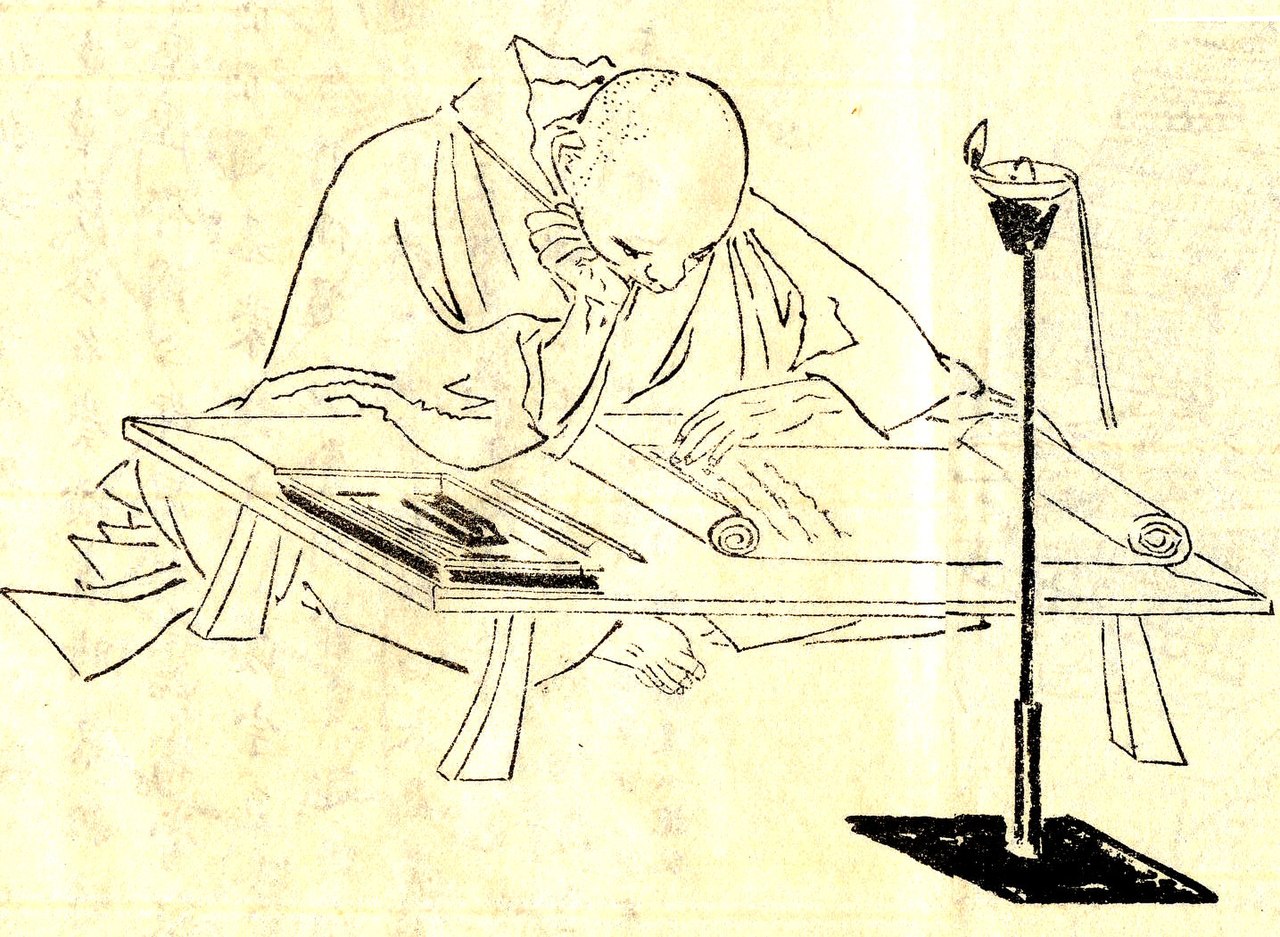
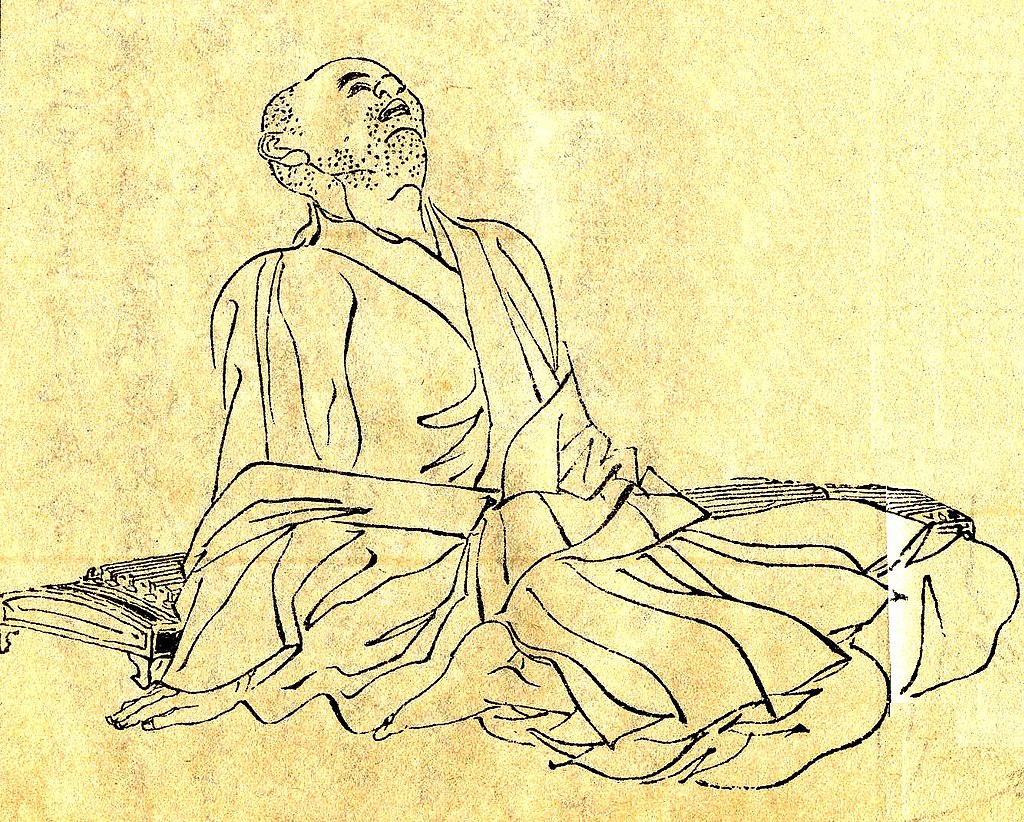
Yoshida Kenkō by Kikuchi Yosai [Date Unknown]

There is much to admire, though, in a dedicated recluse.

Kenkō Yoshida, Essays in Idleness (No. 1)

Going on a journey, whatever the destination, makes you feel suddenly awake and alive to everything.

Kenkō Yoshida, Essays in IdleNess (No. 15)

You can find solace for all things by looking at the moon.

Kenkō Yoshida, Essays in Idleness (no. 21)

Something left not quite finished is very appealing, a gesture toward the future.

Kenkō Yoshida, Essays in Idleness (No. 82)

It’s in easy places that mistakes will always occur.

Kenkō Yoshida, Essays in Idleness (No. 109)

CITATION: Kenkō Yoshida & Kamo no Chōmei. 2013. Kenkō and Chōmei: Essays in Idleness and Hōjōki. London: Penguin. 206pp.

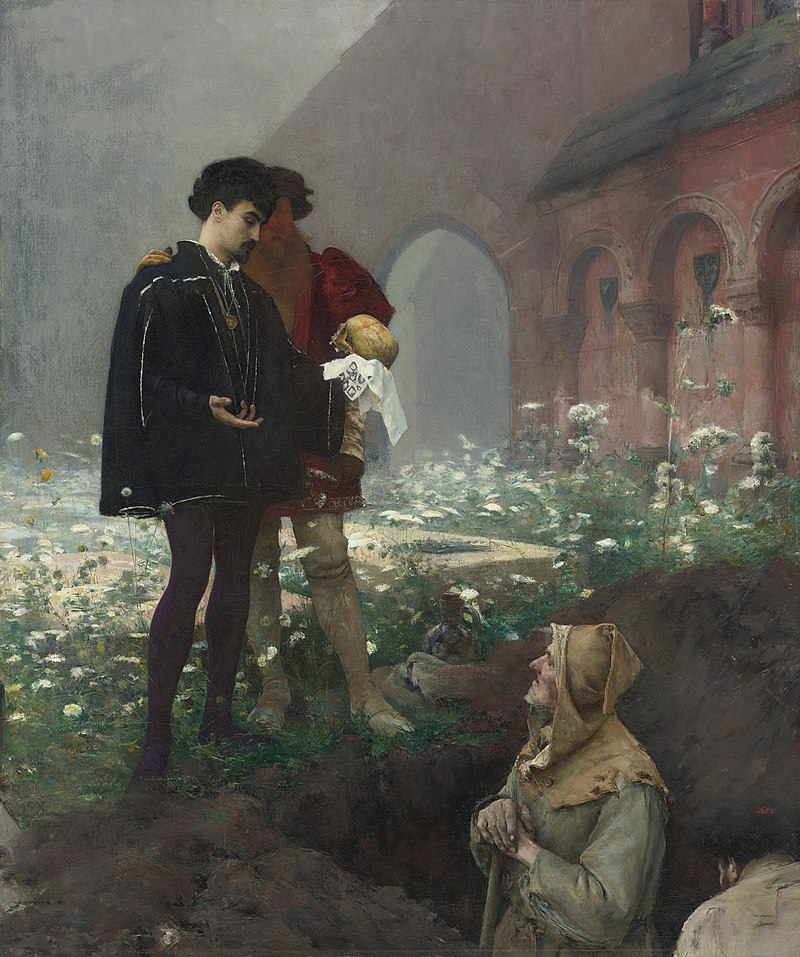
Five Wise Lines from Shakespeare’s Hamlet

We fat all creatures else to fat us and we fat ourselves for maggots… a king may go a progress through the guts of a beggar.”

HamLet to Claudius in Act IV, Sc. 3

One may smile, and smile, and be a villain.

Hamlet to Queen Gertrude in Act I, Sc. 5

I could be bounded in a nutshell and count myself a king of infinite space, were it not that I have bad dreams.

Hamlet to rosencrantz & Guildenstern in Act I, sc. 2

Brevity is the soul of wit.

Polonius to claudius & gertrude in act II, sc. 2

A knavish speech sleeps in a foolish ear.

hamlet to rosencrantz in act IV, Sc. 2

Five Wise Lines from Chōmei’s Hōjōki

drawing by Kikuchi Yōsai

On flows the river ceaselessly, nor does its water ever stay the same.

 Kamo no Chōmei, Hōjōki

No one owns a splendid view, so nothing prevents the heart’s delight in it.

Kamo no Chōmei, Hōjōki

Knowing what the world holds and its ways, I desire nothing from it, nor chase after its prizes. My one craving is to be at peace; my one pleasure is to live free from troubles.

Kamo no Chōmei, Hōjōki

These days, I divide myself into two uses — these hands are my servants, these feet my transport.

Kamo no Chōmei, Hōjōki

When I chance to go down to the capital, I am ashamed of my lowly beggar status, but once back here again I pity those who chase after the sordid rewards of the world.

Kamo no Chōmei, Hōjōki

Reference: Saigyō Hōshi, Kamo no Chōmei, Yoshida Kenkō. 2021. Three Japanese Buddhist Monks. New York: Penguin Books. 112pp.

Available Here

PROMPT: Quote

Do you have a quote you live your life by or think of often?

Four, actually:

Be kind, for everyone you meet is fighting a hard battle.

Plato (attributions vary)

There is nothing either good or bad, but thinking makes it so.

William Shakespeare (in HamLet)

Contentment comes not so much from great wealth as from few wants.

Epictetus

If you reject the food, ignore the customs, fear the religion, and avoid the people, you might better stay home.

James a. Michener

Food for Thought [Voltaire & Smartphones]

When Voltaire said:

“Once a nation begins to think, it is impossible to stop it.”

I don’t think he’d anticipated smartphones.

Five Wise Lines from “The Marriage of Heaven and Hell” [Plus Five Lines, More]

No bird soars too high, if he soars with his own wings.

william blake

The road of excess leads to the palace of wisdom.

William blake

Prisons are built with stones of Law, Brothels with bricks of Religion.

William Blake

The fox condemns the trap, not himself.

William Blake

Exuberance is Beauty.

William blake

Without Contraries is no Progression. Attraction and Repulsion, Reason and Energy, Love and Hate, are necessary to Human existence.

William Blake

If the doors of perception were cleansed, everything would appear to man as it is, infinite.

William blake

The man who never alters his opinion is like standing water, and breeds reptiles of the mind.

William Blake

I also asked Isaiah what made him go naked and barefoot three years. He answer’d: ‘The same that made our friend Diogenes, the Grecian.’

William Blake

The most sublime act is to set another before you.

William blake

NOTE: William Blake’s “The Marriage of Heaven in Hell” is available in many collections of his poetry, and is in the public domain and available via Project Gutenberg at: https://www.gutenberg.org/ebooks/45315

5 Thought-Provoking Quotes I’ve Read Recently

Nothing records the effects of a sad life as graphically as the human body.

Naguib mahfouz (in Palace of desire)

Religion is recognized by the common people as true, by the wise as false, and by the rulers as useful.

Lucius annaeus seneca (via edward gibbon)

Comparison is the thief of joy.

theodore roosevelt

I was not; I have been; I am not; I do not mind.

Epicurean Epitaph

My experience is what I agree to attend to. Only those items which I notice shape my mind.

william james

BOOK REVIEW: An Essay on Criticism by Alexander Pope

An Essay On CriticismAn Essay On Criticism by Alexander Pope
My rating: 5 of 5 stars

Amazon.in Page

View free at The Poetry Foundation

This essay is a poem, i.e. heroic couplets in iambic pentameter, to be precise. It advises both poets and critics of some of the mistakes made in their respective pursuits (though at the outset he warns that bad criticism is a bigger sin than bad poetry.) To critics, Pope advises against nit-picking, as well as failure to recognize the tradeoffs inherent in poetry – i.e. sometimes the better sounding line is grammatically strained, or the wittier line may be less musical. To poets, he lays out a range of insights from stylistic to psychological, and it is an essay both about improving the product of writing as well as improving the relations between writers and critics.

Those unfamiliar with the essay will still be aware of a few of its lines, these include: “A little learning is a dang’rous thing;” “To err is human, to forgive, divine.” “For fools rush in where angels fear to tread” and anyone who’s learned to write iambic pentameter (and the sins, thereof) will remember: “And ten low words oft creep in one dull line.”

But those everyday aphorisms are by no means the full extent of this essay’s wise words and its clever phrasing. My favorite couplets of the poem include:

“Some neither can for wits nor critics pass, // As heavy mules are neither horse nor ass.”

“Trust not yourself, but your defects to know, // Make use of ev’ry friend – and ev’ry foe.”

“For works may have more wit than does ‘em good, // As bodies perish through excess of blood.”

“Words are like leaves; and where they most abound, // Much fruit of sense beneath is rarely found.”

“True ease in writing comes from art, not chance, // As those move easiest who have learn’d to dance.”

“Some praise at morning what they blame at night; // But always think the last opinion right.”

“Unhappy wit, like most mistaken things, // Atones not for that envy which it brings.”

“All seems infected that th’ infected spy, // As all looks yellow to the jaundic’d eye.”

“’Tis best sometimes your censure to restrain; // And charitably let the dull be vain:”

I delighted in this poem. It’s full of food-for-thought, and reads remarkably well for a piece from the year 1711.


View all my reviews