What personality trait in people raises a red flag with you?
When a “grown man” makes life / wellbeing decisions based on what others will think of him, one of the words in quotation marks is in question. So, I guess… conformity.

What personality trait in people raises a red flag with you?
When a “grown man” makes life / wellbeing decisions based on what others will think of him, one of the words in quotation marks is in question. So, I guess… conformity.
 The Creative Act: A Way of Being by Rick Rubin
The need to break free of the program -- e.g. to be master of fear & anger, not slave to them.
What brings you peace?
Being in the now, and feeling – but not feeding – emotional sensations.
I have a daily practice of FEELING gratitude for this awesome life and all that contributes to said awesomeness. I don’t place much emphasis on EXPRESSING emotion beyond the usual social protocols and niceties. Quite frankly, I think expression of gratitude is overrated. It binds the process up with ego and desire for reciprocity, and the next thing you know you’ve lost all touch with the experience of gratitude and the powerful influence it has on fostering a positive outlook.
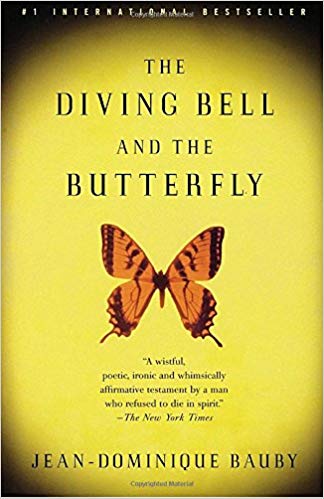
Furthermore, when one emphasizes expression, one tends to develop a blind-spot, thinking that the only entities worthy of consideration of gratefulness are other intelligent beings (or constructs attributed intelligence — e.g. gods.) I begin (though do not end) my practice of gratitude with my body (/ mind) and its systems. I’ve been told many people have trouble fostering gratitude when they focus on their body, but I don’t think one really understands gratitude if one can’t feel deep gratitude for one’s body and mind (literal warts and all.) For the body is the means by which one experiences everything, and one can only be unconditionally grateful for it. [For those who have trouble being grateful for body and mind, I’d recommend the book, “The Diving Bell and the Butterfly” by Jean-Dominique Bauby. It’s a short read because it was dictated using eye-blinks by a man who developed “Locked-in Syndrome,” a condition that left its author only with conscious control of an eyelid.]
1.) Good company; 2.) studiousness; 3.) a sense of humor, and 4.) the capacity to let go of that which has no value.

How is being hit by a hard word
 different from being hit by
  a brick or a bat?

To burn, the spark of a hard word
  must find some kindling inside
   the recipient, elsewise it can't ignite.

If someone points at me and screams:

"YOU ARE SUBPAR AT ALGEBRA!"

I remain unwounded.

[I'd like to say that it doesn't burn
  simply because it's true,
   but the truth or falsity of hard words
   is -- perhaps sadly -- not a major
   ignition factor.

 The kindling is a thing that sits inside one --
  something that makes one care,
   probably a complex mélange of factors.

 The truth of hard words?
   That is an outside factor.]

Even if I were to discover that,
  to the person who issued the insult,
   there is no greater disparagement
   than to cast aspersions upon a
   person's middle school-level
   mathematics competency,

I would remain unwounded.

If I were to feel any sort of way
  about uncovering that knowledge,
   it would be to feel sort of bad
   for the person who issued the taunt.

Now, how to burnproof one's soul,
  that is the question?
Do you have a quote you live your life by or think of often?
Four, actually:
Be kind, for everyone you meet is fighting a hard battle.
Plato (attributions vary)
There is nothing either good or bad, but thinking makes it so.
William Shakespeare (in HamLet)
Contentment comes not so much from great wealth as from few wants.
Epictetus
If you reject the food, ignore the customs, fear the religion, and avoid the people, you might better stay home.
James a. Michener
Describe something you learned in high school.
A Psych teacher told us a story of what he called “a gestalt of expectations.” A man from a city in the East is driving out West, and he passes a gas station – despite being low on fuel. (He’s used to gas stations being everywhere.) Anyhow, he runs out of fuel. He can’t see anything around except desolate desert bisected by a line of asphalt. He decides to walk back to the gas station he passed ten miles back. There is no one traveling on this remote stretch of desert road. As he’s walking in the intense heat, it comes to his mind that the employee at the service station is really going to gouge him on the price of gas and a jerry can. As he walks and walks, skin prickling with the heat, he keeps thinking about how he’s going to get screwed by the gas station attendant and also how he’ll be chided and ridiculed for running out of gas in the middle of the desert. He imagines it in great detail. Finally, bedraggled and with heaving breaths, he arrives at the station. The gas station attendant rushes out to help this poor man, and the man punches the attendant square in the nose (for all the offenses taking place solely in the man’s mind.)
In a broader formulation, I think this is the most important lesson any human can learn. Our personal perception of what we experience is not equal to what it is that we experience (the exterior world.) This is why some people dealt a crappy hand can turn it into a wonderful life, and also why some people who seem to have it all commit suicide in the prime of life.
I could be angered or dismayed that the single most important lesson I learned in secondary school was via off-curriculum ramblings during an elective class, but I choose not to. Instead, I’ve been trying all my life to make that bit of knowledge into wisdom.
 The Meaning of Life by Terry Eagleton


 Tiger Riding for Beginners