Without desire everything is sufficient.
 With seeking myriad things are impoverished.
 Plain vegetables can soothe hunger.
 A patched robe is enough to cover this bent old body.
 Alone I hike with a deer.
 Cheerfully I sing with village children.
 The stream under the cliff cleanses my ears.
 The pine on the mountain top fits my heart.
Translation by Kazuaki Tanahashi and Daniel Leighton in Essential Zen (1994) HarperSanFrancisco.
Passage O soul to India!
 Eclaircise the myths Asiatic, the primitive
   fables.

Not you alone, proud truths of the
   world,
 Nor you alone, ye facts of modern
   science,
 But myths and fables of eld, Asia's, Africa's
   fables,
 The far-darting beams of the spirit, the
   unloos'd dreams,
 The deep diving bibles and legends,
 The daring plots of the poets, the elder
   religions;
 O you temples fairer than lilies, pour'd over
   by the rising sun!
 O you fables, spurning the known, eluding
   the hold of the known, mounting to
   heaven!
You lofty and dazzling towers, pinnacled,
   red as roses, burnish'd with gold!
 Towers of fables immortal, fashion'd from
   mortal dreams!
 You too I welcome, and fully, the same as
    the rest!
 You too with joy I sing.

Passage to India!
 Lo, soul! seest thou not God's purpose from
   the first?
 The earth to be spann'd, connected by
   network,
 The races, neighbors, to marry and be given
   in marriage,
 The oceans to be cross'd, the distant
   brought near,
 The lands to be welded together.

A worship new I sing,
 You captains, voyagers, explorers,
   yours,
 You engineers, you architects, machinists,
   yours,
 You, not for trade or transportation only,
 But in God's name, and for thy sake, O
   soul.
Publisher Site – OUP
This is a brief guide to the philosophies and major developments in United States’ academia from pre-colonial times to the 1990’s. But both of those end points require a bit of clarification. The discussion of pre-colonial scholarly history is largely a mea culpa for beginning with colonial history because Native American tribes weren’t big on recording their philosophical and other scholastic ideas in writing. There is an appendix that discusses America scholarship in the era of globalization (and beyond.) My point is that if you’re hoping for discussion of what’s happened in the last couple decades, you won’t find it herein. (There are a few bibliographic references from the 2010’s, but that’s it.) It is a history book, but some readers may be curious because there’s been a lot of talk of late about issues related to scholarship in America.
Overall, I believe the book covered the topic solidly. There is considerable discussion of the debates triggered by the ideas of Charles Darwin arriving on American shores. As one would expect, there is also quite a bit of discussion of Transcendentalism and Pragmatism, two philosophies closely associated with America. The author covered a wide swath of ground including both progressive and conservative thinkers and viewpoints. One conspicuous absence was any mention of Objectivism / Ayn Rand. I know that isn’t a popular topic in academic circles and is widely dismissed with contempt, but on the grounds of: a.) Objectivism’s considerable influence (e.g. we had a Federal Reserve Chairman – Alan Greenspan – who served almost 20 years under both Republican and Democratic Presidents who was from that school of thought,) b.) its distinctive Americanness, I’m shocked that it didn’t merit at least a sentence or any mention of a book in the bibliography.
All in all, it’s an interesting book that offers unique insight into the history of the United States.
Are you the new person drawn toward me?
 To begin with, take warning, I am surely far
   different from what you suppose;
 Do you suppose you will find in me your
   ideal?
 Do you think it so easy to have me become
   your lover?
 Do you think the friendship of me would
    be unalloy'd satisfaction?
 Do you think I am trusty and faithful?
 Do you see no further than this facade,
    this smooth and tolerant manner of me?
 Do you suppose yourself advancing on real
   ground toward a real heroic man?
 Have you no thought, O dreamer, that is
   may be all maya, illusion?
Available in Traditional & Simplified Chinese [w/ multiple translations] at YellowBridge
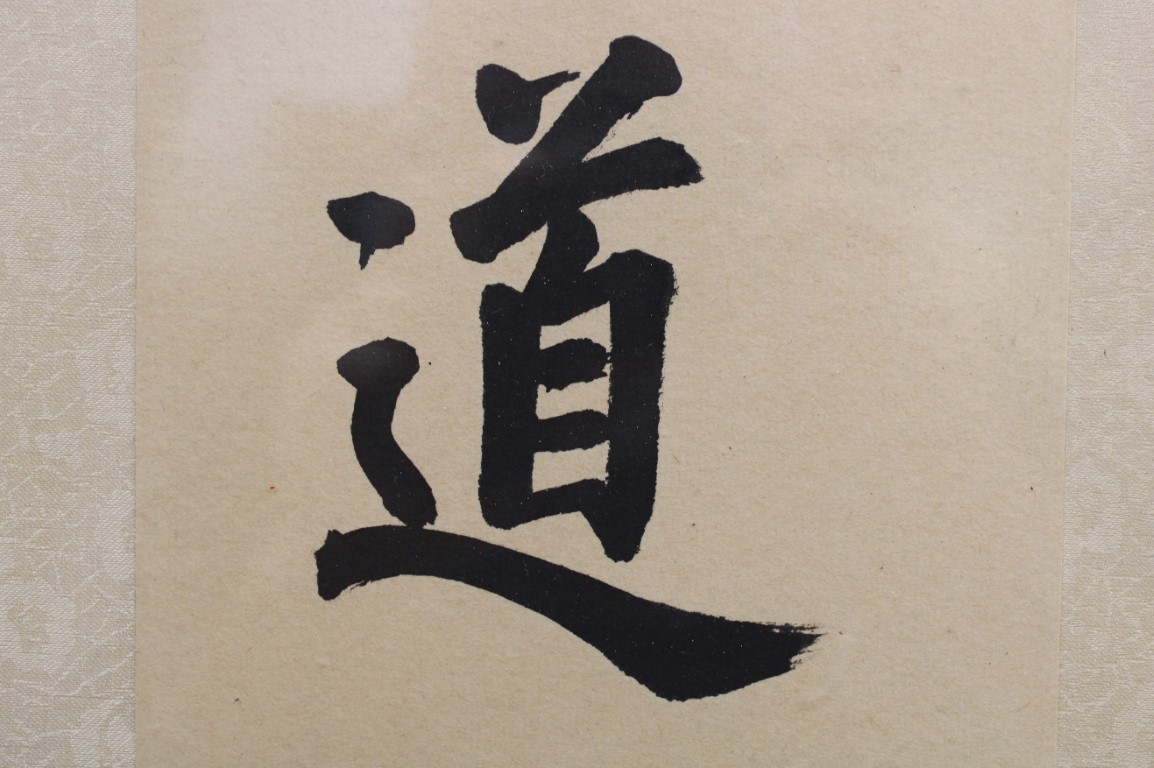
Packed into the 81 brief chapters of this book is the core Taoist philosophy on life, human relationships, governance, and war. Most often, it offers a wisdom that turns conventional wisdom on its head, advocating for inaction over action, less over more, simplicity over complication, and for recognizing the usefulness of what isn’t.
Some of the book’s central ideas are captured in these quotes:
上善若水。水善利万物而不争. “The greatest good is like water. It benefits all without fighting.” [Ch. 8] 金玉满堂,莫之能守 “A house full of jade and gold cannot be guarded.” [Ch. 9] 知人者智,自知者明。胜人者有力,自胜者强。“He who knows others is smart; he who knows himself is enlightened. He who conquers others has power; he who conquers himself is mighty.” [Ch. 33] 柔胜刚,弱胜强。“Softness overcomes hardness; weakness overcomes strength.” [Ch. 36] 道常无为而无不为。“The Dao is constant inaction, yet nothing is left undone.” [Ch. 37] 善者,吾善之;不善者,吾亦善之;德善。“The good, I treat well; the bad, I also treat well. Yeah Virtue!” [Ch. 49] 知者不言,言者不知。“He who knows does not speak; he who speaks does not know.” [Ch. 56] 千里之行,始于足下。“The journey of a thousand li (“miles”) begins with a single step.” [Ch. 64] 天之道,不争而善胜 “The way of heaven is to win without fighting.” [Ch. 73] 信言不美,美言不信。“True words aren’t pleasing; pleasing words aren’t true.” [Ch. 81]
I think this is one of those works that should be read and reread. It may help rewire your brain in useful ways.
Nuns fret not at their convent's narrow room;
  And hermits are contented with their cells;
  And students with their pensive citadels;
  Maids at the wheel, the weaver at his loom,
 Sit blithe and happy; bees that soar for bloom,
  High as the highest Peak of Furness-fells,
  Will murmur by the hour in foxglove bells:
  In truth the prison, into which we doom
 Ourselves, no prison is: and hence for me,
  In sundry moods, 'twas pastime to be bound
  Within the Sonnet's scanty plot of ground;
  Pleased if some Souls (for such there needs must be)
 Who have felt the weight of too much liberty,
  Should find brief solace there, as I have found.
Yes, I have a thousand tongues,
 And nine and ninety-nine lie.
 Though I strive to use the one,
 It will make no melody at my will,
 But is dead in my mouth.















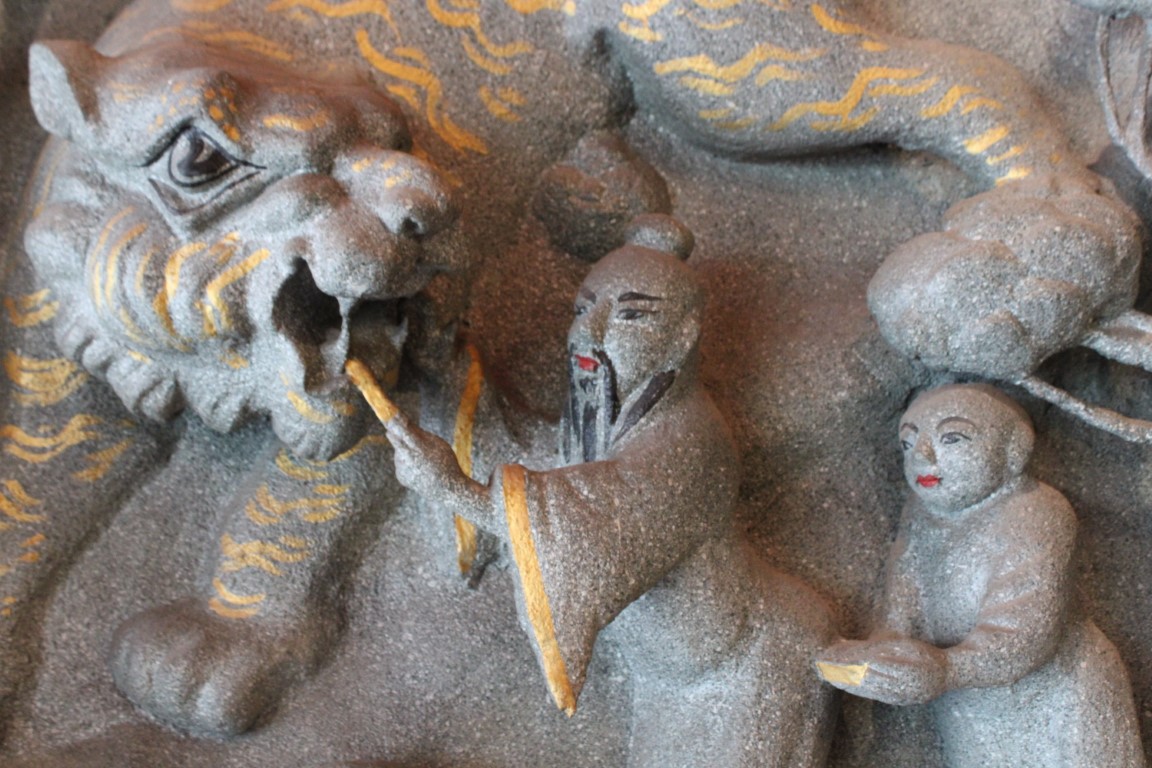

 Tiger Riding for Beginners