


ALIVE!
PROMPT: One Word
Reply
ALIVE!
All of the above. Any of the above. And don’t forget “feet.” (A more specific answer requires knowing what country is being crossed. The plan of attack for crossing Singapore is much different than for crossing Russia.)
I don’t think that’s a question I can meaningfully answer. I think each person has more confidence and courage in some dimensions of life than in others. A given observer tends to see the person who is the most confident in the areas in which that observer is least confident and think of that person as the most confident — when that person might be quite lacking in confidence in areas to which the observer isn’t being attentive.
It was eye opening to read about Audie Murphy, a man who won the Congressional Medal of Honor for single-handedly taking on a unit of Nazis, a man who had a successful career in film, but also a man who was said to have been tremendously shy and awkward around strangers. It would be all in the context in which one saw Murphy that might make one think he was the most or least confident person around.
Quite frankly, the person who appears the most confident in all aspects of life is probably also the most full of shit.
The poet stands in the Center
   And stares into deep mysteries.
 He's nourished by reading Classics
   And tombs of the men in Histories.
 He sighs as four seasons pass by
   And thinks upon ten-thousand things.
 He's saddened by Autumn's leaf drop
   And gladdened by the tender Spring.
 He feels Winter's frost on his heart,
   Though his mind may be up in a cloud.
 And when he sings of ancestors'
   Heroic deeds, he belts the song aloud.
 He combs through great literature
   Just as he roams the forest wild,
 But in search of a "natural" --
   Shown in elegant phrase and style.
 And it's just such thoughts and feelings
   That set my brush and mind wheeling.
The Original Chinese:
佇中區以玄覽,頤情志於典墳。
遵四時以嘆逝,瞻萬物而思紛。
悲落葉於勁秋,喜柔條於芳春,
心懍懍以懷霜,志眇眇而臨雲。
詠世德之駿烈,誦先人之清芬。
游文章之林府,嘉麗藻之彬彬。
慨投篇而援筆,聊宣之乎斯文。
No. I’ve trained myself to recognize factors, such as selection bias, that contribute to superstitions. And I try to hold all beliefs only so tightly as they can be shaken away by better understanding, particularly beliefs that aren’t strongly supported by experience and reason.
Dear 100-year-old self,
In the unlikely event that we’re still alive, go play with the wolves. Let them have their meal, meager though it may be. We’ve had a good run, and – unless I miss my guess – are not feeling vigorous of either mind or body. If we are feeling vigorous of mind and body, please disregard until such time as it’s not true anymore. In said case, I’m very curious about what kind of scientific breakthrough occurred (or magic fountain we fell into,) and look forward to learning about that in due time.
Signed,
Your younger self, the one far more afraid of dementia & incontinence than of death-
I was just reading George Bernard Shaw: A Very Short Introduction and learning about how his philosophy informed his plays. In particular, I learned why the play Pygmalion, which I recently read and which is the origin of the popular musical My Fair Lady, has an odd appendix which tells of the main characters’ continued life stories after the events of the play — as Shaw imagined them. Apparently, audiences pined for a love story between Henry Higgins and Eliza Doolittle, and Shaw never wanted that. Apparently, when Shaw saw what actors and directors were doing to tilt the story toward that love affair, he felt the need to add a postscript to set things straight.
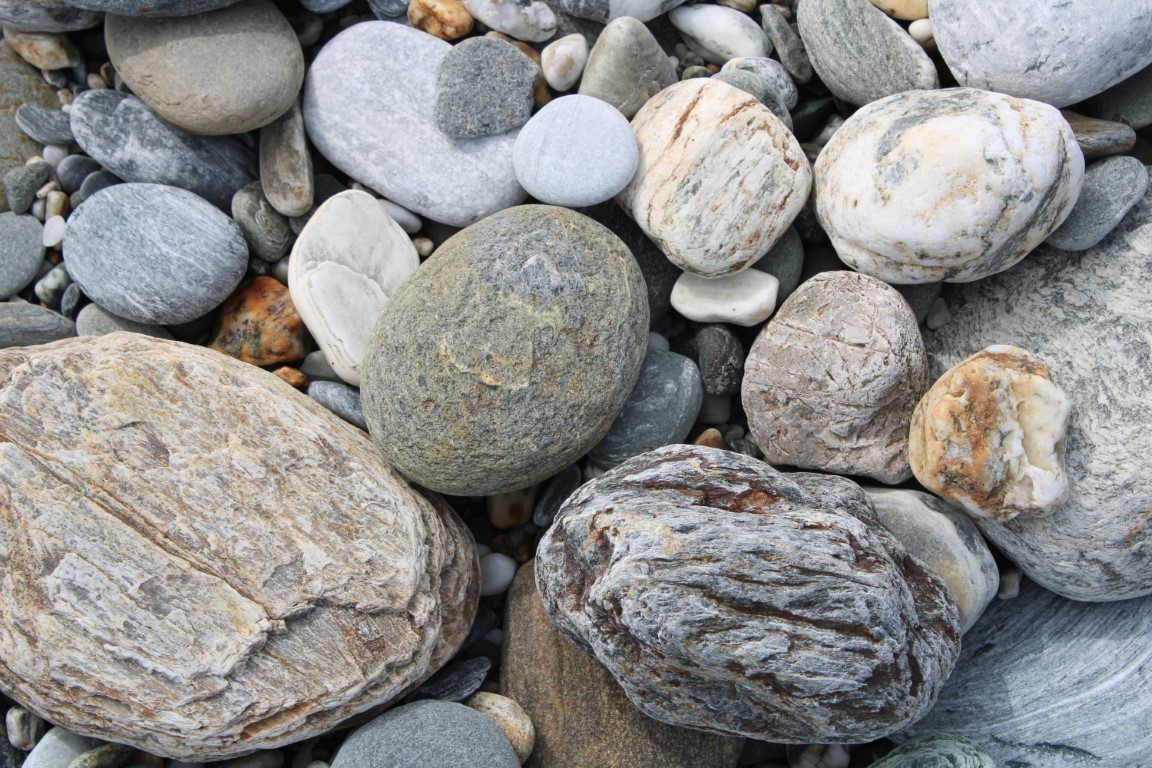
On a sandy beach,
 I think of each grain
    of sand as being
    the same.

But on a pebble beach,
 Each stone has its own
    color, texture, size,
    and shape.

It's made me second guess
 What I know about beaches.
Being a traveler who lives abroad, the answer is simple: “Where are you from?”
As a traveler, I can’t grasp tribal / jingoistic people’s obsession with where one fell out of one’s mom, and it always feels a bit xenophobic — as though, noticing one’s foreignness, there is a rush to determine whether one is one of the tolerable foreigners or one of the really bad ones.
As an introvert, the question offends my preference to be talked to by people who have something to say, and to be left alone by people who are just playing out social programming with the objective of breaking silence that they find objectionable (but which I, as a rule, find delightful.) (Even being highly introverted, I can converse for hours with someone who has something to say on a topic that is neither themselves nor me — i.e. I love ideas but hate small talk and interaction for the sake of interaction.)
Plus, it just gets annoying being asked the same question sixty times a day when I’m in more remote parts — a question, the answer to which will be forgotten in three minutes and is merely sound for sound’s sake. In the unlikely event that one hopes to have an actual conversation with me, one must start with something that is not your culture’s default socially programmed question. One must get to at least the second most commonly asked question, a question varies from person to person (in my case, it’s: “Why are you such an asshole?”)
Would the world ever have been made if its maker had been afraid of making trouble?
george bernard shaw, PygMalion
Refrain from talk of others’ shortcomings; don’t rest on your strengths.
Thousand Character classic [千字文]
[罔谈彼短; 靡恃己长.]
The reasonable man adapts himself to the world: the unreasonable one persists in trying to adapt the world to himself. Therefore all progress depends on the unreasonable man.
george bernard shaw, Man and superman
A child is the most reliable measure of time. His daily growth is proof of your daily ageing and decline. The child’s gains are your losses, and the closer a child gets to anything, the farther you withdraw, as though you were tied to one another on opposite spokes of a wheel and the wheel, without your noticing it, turns. Dawn for the child is dusk for you.
Otar chiladze, A Man was going down the road
We are all dependent on one another, every soul of us on earth.
George bernard shaw, Pygmalion


 Tiger Riding for Beginners