Enlightenment in Four Bits of Shakespearean Wisdom

If you’re looking to attain Enlightenment, you may have turned to someone like the Buddha or Epictetus for inspiration. But I’m here to tell you, if you can put these four pieces of Shakespearean wisdom into practice, you’ll have all you need to uplift your mind.

There is nothing either good or bad, but thinking makes it so.

william Shakespeare, Hamlet

Through Yoga, practitioners learn to cultivate their inner “dispassionate witness.” In our daily lives, we’re constantly attaching value judgements and labels to everything with which we come into contact (not to mention the things that we merely imagine.) As a result, we tend to see the world not as it is, but in an illusory form.

The fault, dear Brutus, is not in our stars, but in ourselves.

William shakespeare, julius caesar

In Psychology class, you may remember learning about the self-serving bias, a warped way of seeing the world in which one attributes difficulties and failures to external factors, while attributing successes and other positive outcomes to one’s own winning characteristics. Like Brutus, we need to learn to stop thinking of our experience of life as the sum of external events foisted upon us, and to realize that our experience is rooted in our minds and how we perceive and react to events.

The fool doth think he is wise, but the wise man knows himself to be a fool.

william shakespeare, as you like it

A quote from Hamlet also conveys the idea, “There are more things in heaven and earth, Horatio, than are dreamt of in your philosophy.” If you grasp this idea, you may become both humbler and more readily capable of discarding bad ideas in favor of good. It’s common to want to think of yourself as a master, but this leads only to arrogance and to being overly attached to ineffective ideas. Be like Socrates.

Cowards die many times before their deaths; The valiant never taste of death but once.

william shakespeare, julius caesar

Fears and anxieties lead people into lopsided calculations in which a risky decision is rated all downside. Those who see the world this way may end up living a milquetoast existence that’s loaded with regrets. No one is saying one should ignore all risks and always throw caution to the wind, but our emotions make better servants than masters. One needs to realize that giving into one’s anxieties has a cost, and that that cost should be weighed against what one will get out of an experience.

There it is: Enlightenment in four bits of Shakespearean wisdom.

Meditation Chamber [Common Meter]

He sat and stilled his weary mind,
and his thoughts slowed their flow.
Until he was a ceaseless void
with nowhere left to go. 

Endogenous High [Free Verse]

hot-injected molecule -
squeezed into my bloodstream,
shooting me into bliss

& 

i ride that tide,
rising
&
rising
on the swell

breath jagged,
mind rapt with nothingness,
& 
brain firing 
in electric tangles

i'm seeing,
but not attaching
i'm being,
but nothing in particular

in time, my ride will be
at an end,
and I'll be back 
to the world
of strange disasters

BOOK REVIEW: Walking Meditation by Thich Nhat Hanh & Nguyen Anh-Huong

Walking Meditation (With DVD)Walking Meditation by Thich Nhat Hanh
My rating: 5 of 5 stars

Amazon.in Page

This brief guide to walking meditation lays out a basic practice linking breath and stride, and then explores such topics as: how to apply the practice to varied environments, coping with emotion through [and during] walking, the social dimension of walking meditation, and a few thoughts on applying the practice to jogging. The book is nominally attributed to the beloved Vietnamese Zen Buddhist monk who recently passed (i.e. January 2022,) Thich Nhat Hanh, but it seems the bulk of the book was written by the co-author (Nguyen Anh-Huong.) That said, it’s a clearer distribution of labor than usual for mega-guru books; not only does the author get a co-author credit but the words of Thich Nhat Hanh are presented as textboxes with bylines.

The book is less than a hundred pages of text, but the edition I have came with a CD and DVD (if anyone still has a player for these antiquated technologies. If you’re paying full price, I’d make sure you have some means to play the CD and DVD. I obtained a used copy at a low price, so it wasn’t a concern.) The book’s brevity has both pros and cons. On the pro side, it keeps things simple. The practice is a straightforward one of linking one’s breath to one’s stride, and there’s no tedious elaborations or variations with which to contend. On the con side, if one is looking for insight into improving alignment or biomechanics of walking, that’s not covered in this book. That is probably for the best, because it’s hard to avoid overthinking the practice if one is given extensive directions on stride and the like. This isn’t so much a criticism as an attempt to temper expectations for those who may feel they would benefit from some sort of anatomical or biomechanical insights on walking or physiological insights about the breath.

If you’re looking for a quick and straightforward guide to practicing walking meditation, give it a read.

View all my reviews

Beautiful Scum [Tanka]

the algae pond -
dappled with leafy fractals,
 patterns shift.
what moves: water or branch?
or, perhaps, just my mind

Quiet Moments of Buddha Time [Poem]

in quiet moments
of Buddha time
i watch the world
like a man who's blind

i sing my songs 
like a drunken sage
and offer curses
as though free of rage

River Trance [Common Meter]

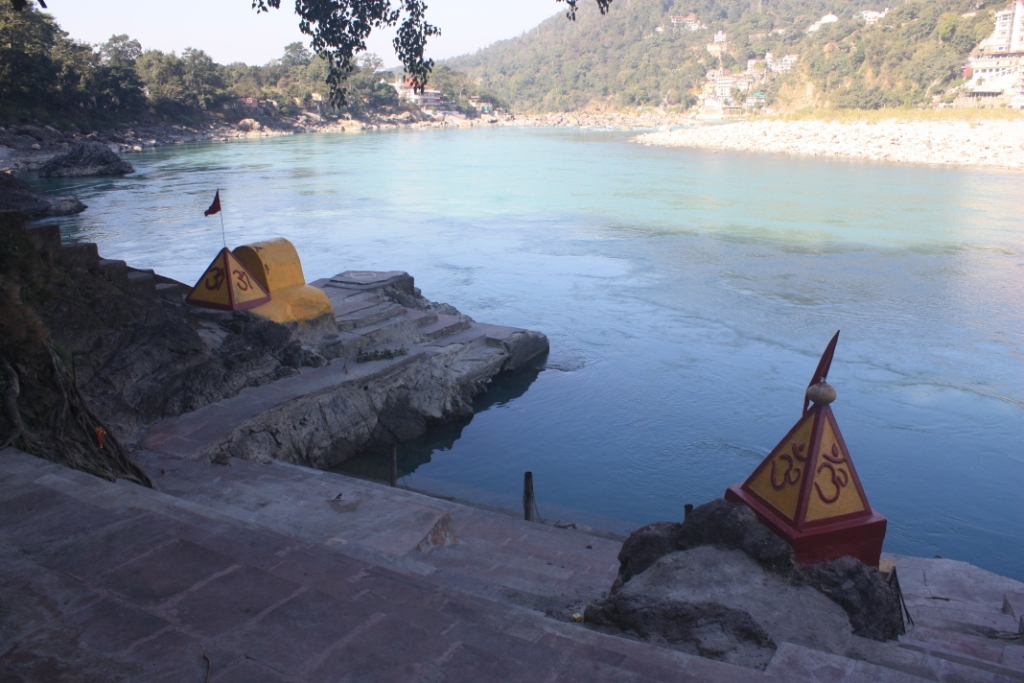
I sit on a green grass riverside,
watching brown waters flow.
Some karst monoliths stand behind
in which scrubby shrubs grow.

I feel my mind could be swept on
down to the sprawling sea,
while my body would stay behind
asleep with back to tree.

And panic and freedom both rise -
untethered from earth's hold.
As I see the future and the past
blended at the threshold.

And space, like time, has no meaning --
just an amorphous blob.
I awaken gasping spastically,
my pulse in a wild throb.

Cold Shore [Free Verse]

Was it a lifetime ago,
or was it a dream?

I remember it being a 
long drive to a cold shore.

And I sat alone
on that shore,
and I sought a shark --
not out in the waters,
but within myself. 

Finding nothing,
I felt the thing to do
was to 
rattle in rhythm with
the twisted hustle of
pounding waves,

and I awoke, 
shivering under piercing
points of light
that somehow felt cold,
& 
made me feel cold -
deep inside.

BOOK REVIEW: Transforming Trauma with Jiu-Jitsu by Jamie Marich & Anna Pirkl

Transforming Trauma with Jiu-Jitsu: A Guide for Survivors, Therapists, and Jiu-Jitsu Practitioners to Facilitate Embodied RecoveryTransforming Trauma with Jiu-Jitsu: A Guide for Survivors, Therapists, and Jiu-Jitsu Practitioners to Facilitate Embodied Recovery by Jamie Marich
My rating: 4 of 5 stars

Amazon.in Page

Out: March 15, 2022

This book proposes that jiu-jitsu can be beneficial and therapeutic for those with trauma-related conditions (e.g. PTSD,) and it offers advice and insight to martial arts teachers, therapists, as well as trauma survivors considering jiu-jitsu. I’m curious to see how much merit these ideas prove to offer. By that, I mean neither to insult the bona fides of the authors, nor even to foreshadow skepticism. What I am saying is that this proposition isn’t one that’s been studied thoroughly and systematically. [The authors acknowledge as much. They’re at the vanguard of an idea here.] Therefore, the good news is that the book is bleeding edge, but the bad news is that it’s based largely on anecdotal evidence and the application of tried concepts to an untried (and quite unique) domain.

On one hand, few activities can teach one: breath control, now-centric living, command of emotions, and increased comfort with being in close proximity to people (who may seem physically intimidating) like the martial arts. Those all feel like positive features for a trauma survivor, and some of them (e.g. breath control) are addressed extensively in the book. On the other hand, the way martial arts teach one to keep one’s focus in the moment is via the pressure of an attacker – defender dynamic. If one is triggered by intense, seemingly aggressive activity, that’s hard to reconcile with the nature of the martial arts — which should always be safe but do necessitate a certain degree of intensity to mentally prepare students for a combative experience.

As I read through the panoply of challenges that might arise – from inability to train with someone who looks vaguely like one’s attacker to not being able to be experience a mount (one of the most fundamental jiu-jitsu positions) – I often had the feeling I’d have in response to a book entitled, “CrossFit for the Severely Arthritic” [i.e. not all fine objectives work together.] The authors do discuss alternatives like private lessons and specialized workshops / classes, but those are more realistic solutions in some cases others. (i.e. I feel that few of the dojos I’ve been in could afford to offer the range of classes for special demographics that are mentioned [workshops, probably.] But there’re only a few hours a day one can hold classes that people who can afford to attend aren’t working, and paying rent on a larger space on the amount that can be earned from those few hours a day is daunting enough.) If you can attend special trainings for trauma survivors, the book’s guidance all seems quite workable. But, otherwise, I had to wonder to what degree one could accommodate those with these needs without losing those who feel they benefit from the existing approach. [e.g. Many dojos I’ve been in used a rotation scheme so that everybody trained with everybody else, and in virtually all there was an expectation of a certain level of decorum and discipline of behavior on the mat — e.g. not wandering off in the middle of practice, not holding side conversations, and not picking / choosing what techniques one will / won’t practice. (All of which, were activities mentioned that could happen in the trauma-sensitive school, and all of which I feel I benefited from having trained out of me.)]

There was a tremendous amount of useful information in the book. How to recognize an individual has been triggered. How to best respond. It’s certainly worth reading for those reasons alone, and – maybe – they’re onto something.

View all my reviews

Avalanche [Free Verse]

One false footing
erases the screeched blackboard
writing that'd formed in my mind
& 
everything becomes a blank, white
emptiness --

Not a good empty.
Not a good quiet.
The emptiness of blinding pain.

That's the slow, cold death
of falling into a drift
and then cascading,
tumbling,
tumbling,
in an avalanche.

Wrenched asunder -
or so it feels -
and left to go numb in a
silence so total 
that i know 
it's my first experience 
with true silence. 

We all fall down?
That's what the plague rhyme says,
isn't it? --

Madmen & Holymen,
and those who take this fall
and are twisted into a 
grotesque blend of both.

Which way is up?
Tiny seedlings can tell,
but I cannot.

I'm lost --
50/50, I dig myself deeper
into my own doom.

My life trickles in a file of hours,
dripping into that dim distance 
of non-time. 

I'll stay lost until the spring thaw
when I'll ride the glacial runoff
to complete my tumble
as a gray and bloated thing.