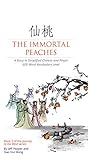
BOOK: “The Immortal Peaches” [Vol. 3 of “Journey to the West”] Ed. by Jeff Pepper / Trans. by Xiao Hui Wang

The Immortal Peaches: A Story in Simplified Chinese and Pinyin, 600 Word Vocabulary (Journey to the West Book 3)The Immortal Peaches: A Story in Simplified Chinese and Pinyin, 600 Word Vocabulary by Jeff Pepper
My rating: 5 of 5 stars

Publisher Site – Imagin8

This is the third volume in this Journey to the West series aimed at language learners. It covers Chapters 5, 6, and 7 of the book, which includes events from Sun Wukong’s return to heaven acknowledged with the title “Great Sage Equal to Heaven” through the conflicts that result from his lack of control and decorum to Buddha’s bet with Monkey King.

I’ve enjoyed this series. The pinyin is interspersed with an abridged and linguistically simplified Chinese telling of the story on a paragraph basis, and the English translation is at the end. This allows one relatively quick access to the pinyin without continually cheating by stray glance. Also, one can determine whether one wants to read the English translation before or after reading the Chinese, as is appropriate to one’s level and language learning strategy. The book also has a glossary of all the Chinese words it uses, and the words beyond the most basic (beyond HSK3, or so) are footnoted. (I read on kindle, so looking up translations of any words is as quick as highlighting them.)

This is a great language learning tool, featuring one of Chinese literature’s most engrossing stories. I’d highly recommend it for those learning Mandarin Chinese with Simplified script.

View all my reviews

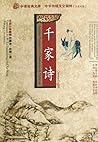
BOOK: “Golden Treasury of Quatrains and Octaves” [i.e. 千家诗] Trans. by Xu Yuanchong and Xu Ming

Golden Treasury of Quatrains & OctavesGolden Treasury of Quatrains & Octaves by Xu. Yuanchong (translator)
My rating: 5 of 5 stars

Publisher Site — China Translation Corp

This is the bilingual (Chinese-English) edition of an anthology of Tang and Song Dynasty poems commonly known in Chinese as 千家诗 (it has a much longer formal title,) which was jointly translated by Xu Yuanchong and Xu Ming (no relation.) The book is organized into four parts by the form of poem: 7-character line quatrains, 7-character line octaves, 5-character line quatrains, and 5-character line octaves. The anthology includes poems by Li Bai, Du Fu, Wang Wei, Meng Haoran, Jia Dao, Ouyang Xiu, Yang Wanli, Su Shi, and many other important Tang and Song poets — from Emperors to Hermits. That said, while the aforementioned Chinese title suggests there are works of a thousand poets involved, that’s an exaggeration. (And that’s probably all the better. While this was the golden age of Chinese poetry, going that wide into surviving poetry might involve hitting the dregs.)

Each entry has a title, byline, the poem in Simplified Chinese script and pinyin (Romanized phonetic script,) an English language translation, notes in Chinese, and a line or two of commentary in English. All but the seven-character line octaves take up just one page per poem. (Seven-character line octaves take two pages per poem.)

This is a great anthology. There’s an introduction to give insight into what approach the translators took. They stuck to rhyming verse to emulate the originals in form, but more can be learned from the introduction.

I’d highly recommend this anthology for poetry readers.

View all my reviews

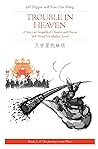
BOOK: “Trouble in Heaven” [Vol. 2 “Journey to the West” (西游记) Series] ed. by Jeff Pepper / trans. by Xiao Hui Wang

Trouble in Heaven: A Story in Simplified Chinese and Pinyin, 600 Word Vocabulary Level (Journey to the West in Simplified Chinese)Trouble in Heaven: A Story in Simplified Chinese and Pinyin, 600 Word Vocabulary Level by Jeff Pepper
My rating: 5 of 5 stars

Publisher Site – Imagin8

This is an abridged and linguistically simplified telling of the story of chapters three and four of the Chinese classic novel, Journey to the West. It is written and organized for learners of Chinese who would like to start reading in Chinese.

The events covered in this volume are Monkey King’s (a.k.a. Sun Wukong’s) acquisition of weapons for himself and his companions, his discovery that his name is on the registry of the underworld (and, thus, he’s not as immortal as he’d believed at the end of Vol. 1,) his ascension to heaven where he is given the job of stable manager (a life and job he is happy with until his discovery that it is the lowest level job in heaven,) and his skirmishes with the forces of heaven when he takes on the title “Great Sage Equal to Heaven.”

The story is conveyed in Simplified Chinese script, and has pinyin interspersed at the paragraph level. I like this arrangement because one has access to the pinyin as needed, but it’s not immediately adjacent (as it is with many starter readers,) such that it’s not possible to “cheat” by seeing the pinyin in one’s peripheral vision. It also offers an English language telling of the story, but after the entirety of the Chinese. The book also has three glossaries that collectively define all the terms used in the book. The first contains all the proper nouns, the second is all the basic words, and the last is all the words that are a little outside the most basic reading level. (The latter are also footnoted throughout the text.)

I’m enjoying this series. It’s a gripping story, it’s arranged in a way that encourages one read by the Chinese characters alone, and it is readable by the most beginning level student. That’s a combination that isn’t readily found. I’d highly recommend this series for those learning to read Chinese.


View all my reviews

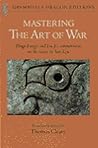
BOOK: “Mastering the Art of War” by Zhuge Liang & Liu Ji [Trans. & Ed. by Thomas Cleary

Mastering the Art of War: Commentaries on Sun Tzu's Classic (Shambhala Dragon Editions)Mastering the Art of War: Commentaries on Sun Tzu’s Classic by Zhuge Liang
My rating: 5 of 5 stars

Publisher Site — Shambhala

This book combines the writings of two prominent Chinese strategists, Zhuge Liang and Liu Ji. Both men came after Sunzi, author of The Art of War, and Cleary describes these two works as commentaries on the work of Sunzi.

Zhuge Liang’s piece is called The Way of the General and it collects short essays from Records of the Loyal Lord of Warriors. Like many, I first became acquainted with Zhuge Liang from his novelized personage in the Chinese classic, Romance of the Three Kingdoms, in which he is called “Kongming” and is a force to be reckoned with in service to Liu Bei of the Shu Kingdom. Zhuge Liang’s ideas are conveyed as short topical discussions, not unlike Sunzi’s work.

Liu Ji’s manual, Lessons of War, is a bit different in that the explanation of the strategy is briefer than in the works of Sunzi or Zhuge Liang, but Liu Ji always includes an exemplary story from history. This makes Liu Ji’s work a little more narrative. It is interesting to see the varied approach to conveyance of the concepts under consideration.

Because the works of Zhuge Liang and Liu Ji are thin, the book has a fair amount of padding in the form of Translator’s Introductions, both an overall Introduction and one per included work. I was happy with how these were done. They do not drone on but rather give some background that will be useful to the average reader without getting lost in the weeds.

If you’re interested in strategy, be it applicable to war or otherwise, I’d highly recommend this book.

View all my reviews

PROMPT: Topics

Daily writing prompt
Which topics would you like to be more informed about?

I’d like to know more about the capabilities and limitations of AI, a rabbit-hole that I have only recently stumbled upon, but which I am tumbling down hard. Particularly, how to best use it for language acquisition as I am currently learning Chinese and would like to increase my literacy so I can open myself up to a whole new world of books.

I’m also curious about pratfalls and physical comedy all of a sudden.

PROMPT: Excited

Daily writing prompt
Tell us about the last thing you got excited about.

Being able to read Chinese, even if is dumbed-down stories for beginners and I still have to look words up every few sentences. But it feels like I’ve stumbled upon a door to a whole new universe.

“To a Taoist Hermit on Mt. Quanjiao” [寄全椒山中道士] by Wei Yingwu [韦应物]

Today, my office is chilly.
At once, I miss my mountain chum,
Who bound firewood in the valley,
Bringing it back to boil white stones.
I wish I could ladle some wine
To comfort on this stormy night.
But fallen leaves fill mountain hollows,
How could I find a track to follow?

This is poem #29 from the 300 Tang Poems [唐诗三百首], entitled 寄全椒山中道士. The original poem in Simplified Chinese is:

今朝郡斋冷, 忽念山中客; 
涧底束荆薪, 归来煮白石。
欲持一瓢酒, 远慰风雨夕。
落叶满空山, 何处寻行迹?

Wen Fu 12 [文赋十二] “Idiosyncrasy” by Lu Ji [陆机] [w/ Audio]

Thoughts conveyed by way of short verse
May degrade in eccentricity.
With bowed head, lonely and friendless.
Face up, vast sky where all is free.
Like one string stretched to perfect pitch,
But lacking all resonancy.

NOTES: Earlier I posted a translation by Tony Barnstone and Chou Ping, entitled A One-String Harp that was contained in The Art of Writing (Boston: Shambhala; p. 15) This, however, is my own translation. The original poem in Simplified Chinese is:

或讬言于短韵,对穷迹而孤兴。
俯寂寞而无友,仰寥廓而莫承。
譬偏弦之独张,含清唱而靡应。

“Parting” [送别] by Wang Wei [王维] [w/ Audio]

I dismount to share some booze, 
And ask the wayfarer where he goes.
Begrudgingly, and with discontent,
He says, "I'll rest up near South Mount."
He asks me to just leave him be.
White clouds cross vast skies - endlessly.

This is poem 13 in the 300 Tang Poems [唐诗三百首.] The original poem in Simplified Chinese is:

下马饮君酒, 问君何所之?
君言不得意, 归卧南山陲。
但去莫复问,白云无尽时。

“Inspired by Late Spring” by Ye Cai [w/ Audio]

Sparrows cast on my desk their shadows in pair,
And willow down falls in my inkstone here and there.
Sitting by the window, I read the Book of Change,
Not knowing when has Spring gone, I only feel strange.

Note: This is the joint translation of Xu Yuanchong and Xu Ming found in the Golden Treasury of Quatrains and Octaves (a Bilingual edition of 千家诗 “Thousands of Poems”) on which they collaborated (i.e. China Publishing Group: Beijing (2008) p. 40)