TODAY’S RANDOM THOUGHT: Narrow Escapes

IMG_1330


Every living soul exists by virtue of an ancestor who narrowly escaped death. Someone in your family tree refused to quit during an onslaught by predators, as war raged on ceaselessly, or while clinging to the side of a cliff.

That potential now remains dormant.

TODAY’S RANDOM THOUGHT: Blind Dog

IMG_0606

This dog followed us around during our tea plantation walk in Munnar. It was a fine-looking dog with a warm disposition. It seemed quite healthy, except for the fact that it was missing its left eye.

This made me think. If you take in a blind dog, does that make you its seeing eye human?

TODAY’S RANDOM THOUGHT: Be the Change

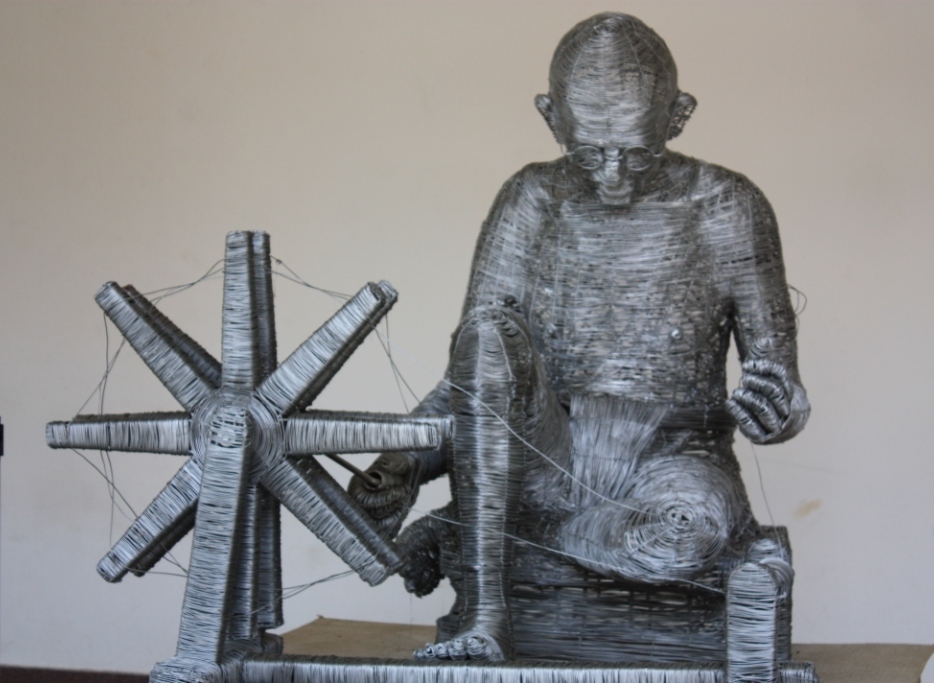
IMG_1501Gandhi is credited with saying, “Be the change you wish to see in the world.”

That’s powerful phrasing. It’s much more effective than, say: “Nag your friends until they’re the change you desire.” It’s also far more potent than: “Write your legislator to draft a new bill so that we all have to be the change you wish to see.”

It’s powerful because it acknowledges that–whatever else you do–you have to set a good example by doing what you think is right. Even if that”s painful and lonely. It’s powerful because it’s bold.

That’s why it sticks in the mind. I once read an entire book by a well-known billionaire who made his fortune in foreign currency arbitrage. I was underwhelmed by the book and the character of the author, and don’t even remember the title because I remember thinking the title should have been: “Why It Should Be Illegal to do What I Did.” This individual came to believe it was morally repugnant to upset the economies of entire nations to make a quick buck, but the lure of making that buck was too great for him to stop without the threat that someone would put him in jail for it. In other words, instead of living by the motto of “be the change,” he lived  by the motto of “If I don’t do it, someone else will.”

TODAY’S RANDOM THOUGHT: How Sad for You

success-failA man once said to me, with evident pride, that he’d never failed a test of any kind in his life.

I guess he was expecting admiration, and must have been disappointed when I blurted, “how sad for you.”

But here is a person who has never stepped outside his comfort zone, who has no idea what he is capable of, and–moreover–he’s pleased as punch with that state of affairs.

TODAY’S RANDOM THOUGHT: Smart TV Still Leads to Stupid

smartTVI learned the terms “hot media” and “cool media” during my weekend reading. These terms were coined by Marshall McLuhan, and don’t seem to have caught on outside of academia.


Hot media are information sources that are packed with data (often simultaneously transmitted to multiple sensory organs at once), and that require little or no interpretation or analysis on the part of the recipient. Television and movies are prime examples.


Cool media are those information sources that offer relatively little data, but which require the receiver to interpret, interpolate, analyse, and draw conclusions about the information they receive.  Books are the prime example of cool media.


There are people who proudly say, “I don’t have the time to read, but I only watch the Discovery Channel and Public Broadcasting.” If you think you’re getting smarter just like readers, you’re not. You’re still mainlining information, and the parts of your brain that have to exercise when you read (or otherwise take in information in an abstract form) are shut down.


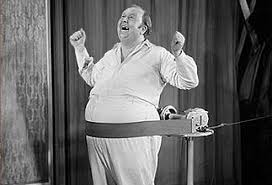
I’m not suggesting one shouldn’t watch television, or that you can’t learn something from it. I’m just saying that if you don’t read, but try to educate yourself via TV, you are the intellectual version of this guy…


exercise


TODAY’S RANDOM THOUGHT: Bear or Squirrel?

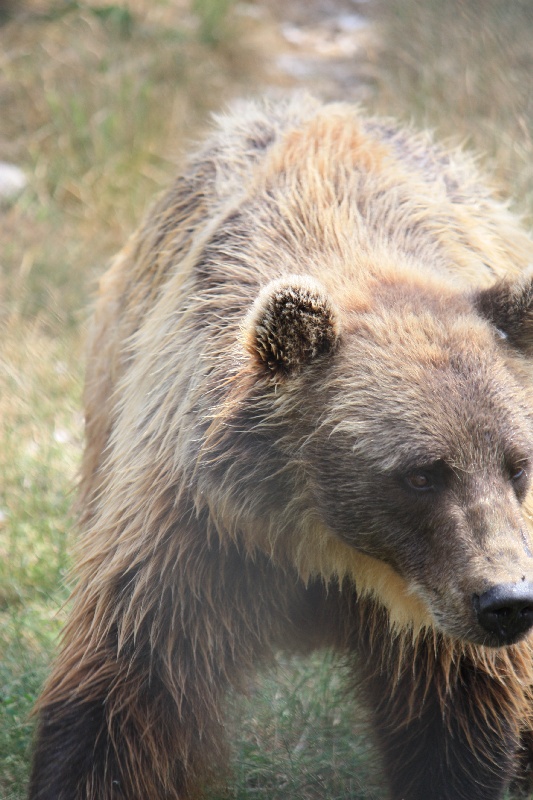
Taken in the summer of 2011 in Hungary.

Taken in the summer of 2011 in Hungary.

There are two ways to survive a harsh winter: you can squirrel away your pile of acorns or you can bear it by just not needing much.

TODAY’S RANDOM THOUGHT: Hitler’s Final Victory

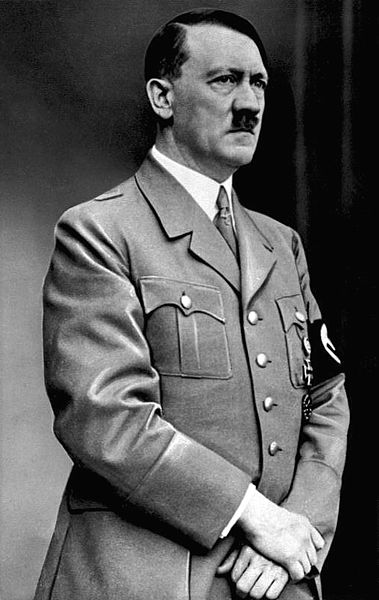
Source: German Federal Archives

Source: German Federal Archives

Hitler killed the short-stache (a.k.a. the “toothbrush mustache.”) Imagine that, almost 70 years after his death, he still holds power over people’s decisions about facial hair.

This is a misplaced take-away lesson. It’s the unbridled narcissism, the icy hatred, and the irrational exuberance in the power of evil of Hitler that should be abandoned (yet, somehow, those intangibles still quietly exist.) It’s not the superficial aspects of Hitler that should be shunned, but the ones at the bastard’s core.

I’m not saying the toothbrush-stache was a good look. On the contrary–as one who has had a mustache his entire adult life and has worn a beard now for several years–I’m a little offended by the lack of commitment to one’s choice of facial hair that the toothbrush-stache represents. (Incidentally, I feel the same about the sole patch and mutton chops.) In my mind, one should go full-stache or go home to shave.

Still, there being no accounting for taste, I think those individuals who would otherwise find the short-stache appealing (i.e. you know, indecisive types who wear culottes and eat with sporks) should revive the toothbrush mustache as a big fuck-you to Hitler–don’t let tyrants boss you around from the grave.

Toothbrush mustache admirers of world, unite!  (No, I won’t be joining you.)

TODAY’S RANDOM THOUGHT: Death as the Good Drunk

I don’t think Death should be depicted as a cowled, faceless Grim Reaper.

Instead, I think Death should be the wise drinking buddy who can hold his liquor.  Not the one who acts like an idiot an encourages friends to do the same. Rather, the one who spurs you to ask out a girl who’s way out of your league, and keeps you classy if (when) she declines.

Paleo-Stressing: Acute v. Chronic Stress

"What happened to the good ole days when I ate you people--not lived in your cages?"

“What happened to the good ole days when I ate you people–not lived in your cages?”

Paleolithic dieting is all the rage these days. I’m no expert on the paleo-diet, but–as I understand it–this refers to the practice of eating the foods consumed by our pre-agrarian ancestors. The idea is that if one consumes the foods that our species is evolutionarily-optimized to eating, one will be healthier.  Whether one believes in the merits of the paleo-diet or not on the whole, it’s hard to argue that one wouldn’t be better off eating less highly-processed and highly-refined foods and more things that look like food at a glance.


Our diet isn’t all that has changed since the days of our pre-agrarian ancestors. Modernity has brought with it an entirely new way of experiencing stress. Eliminating or reducing stress is a common topic of discussion, but not all stress is created equal. There’s a necessary form of stress, a stress that makes one better, stronger, faster, and smarter. We don’t want to willy-nilly eliminate stress; we want to reduce the wrong type of stress.


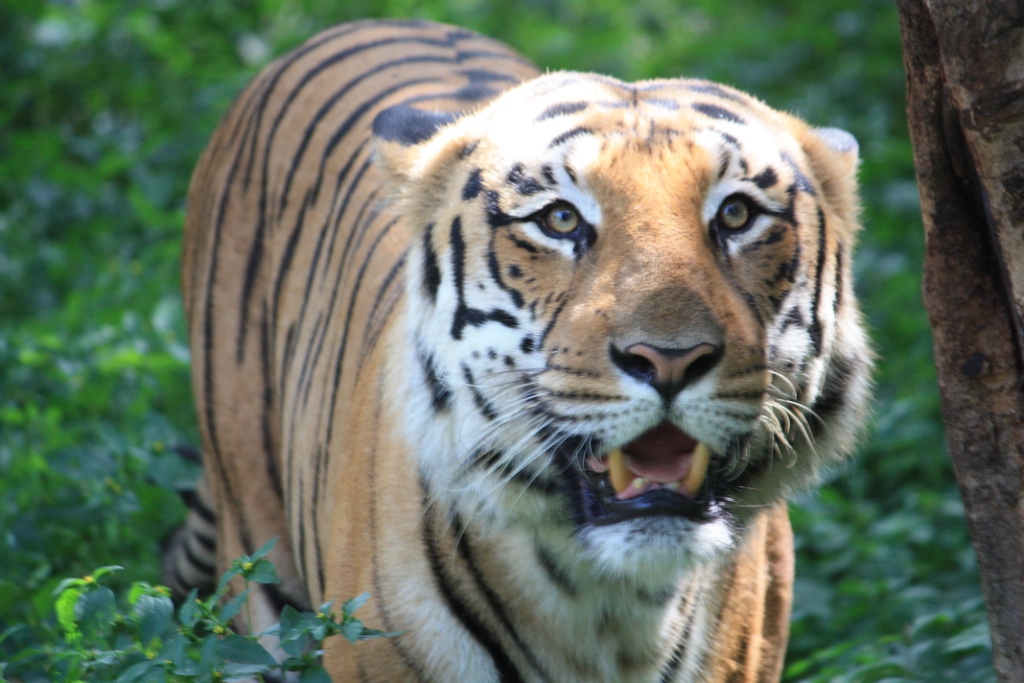
Our ancestors—like animals–experienced brief periods of intense stress (e.g. saber-tooth tiger attacks), followed by longer periods in which they were free of deadlines, carpools, and after-school activities. Now, no one likes to have a saber-tooth tiger stalking them. It’s unpleasant. Modern humanity has gone to great lengths to eliminate those short bursts of terror, but not without cost. (If you don’t believe me read Robert Sapolsky’s Why Zebras Don’t Get Ulcers.)


Whether or not you believe that eliminating acute instances of terrifying stress is bad for mankind, it’s hard to argue that modernity’s leveling process didn’t eliminate stress, but instead resulted in a chronic stress on a smaller scale. People today have impossibly long daily to-do lists, and they have to accept trade-offs between work, family, and personal development.


It’s true that you don’t get eaten by a giant cat when you drop the ball, but life is so packed diverse events that one may feel like one is dropping some ball constantly. If your boss thinks you’re a model employee, then your kids are probably going to need therapy. If you have a contented home life, your boss may have his or her eyes open for someone who can give the firm consistently 70+ hour work weeks. If you feel you’re doing alright on both the work and family front, your body and / or mind is probably a train wreck.


Chronic [mini] stress may feel better than acute [catastrophic] stress, but it takes its tolls in various ways. First, with our sympathetic nervous system (fight-or-flight reaction) constantly engaged our body’s power to heal itself is reduced. When the parasympathetic nervous system is engaged, the body devotes resources to long-term goals like getting healthier, but in stress mode activities not relevant to immediate survival shut down. This is a great system if you have periodic life and death stress, but is not so good if you’re under constant stress.


Second, chronic stress reduces sleep, and sleep is essential to one’s mental and physical well-being. There are a wide variety of symptoms associated with sleep deprivation such as forgetfulness, decreased concentration, decreased alertness, reduced reasoning ability, diminished problem-solving capacity, and depression—all of which can diminish our physical health through accidents, ailments, suicide attempts, and lack of energy for exercise.


Third, chronic stress can make one fat, with all the health issues that result. Some people use food as a coping mechanism. Other people eat too fast or choose their food poorly because of time constraints or because they are not mindful of eating as their monkey minds churn at a mile a minute. Then there is the more convoluted and complex issue of cortisol–a hormone released under stress that is linked to weight gain in at least some cases. Even if you don’t have a problem on the calorie intake side, the stressed individual may not do so well on the calorie burning side—either because of a lack of time to exercise or a lack of energy.


Modern humans are uniquely suited to chronic stress because we are the only species that achieves the same physiological stress response by remembering and obsessing about a stressful event as experiencing it. Abandoning the modern approach to living isn’t an option most are willing to entertain; but there are ways to combat chronic stress.


Move – Meditate – Mindfully Breath: The bad news is you’ve got to shoehorn these activities into your schedule daily (or at least several times a week.) The good news is that they don’t need to take up a lot of your day. There are a number of systems that address all three components in one handy package such as Qi Gong, Yoga, and some martial arts. I don’t think it matters so much which one chooses as how one goes about one’s practice.


Movement strengthens and strategically stresses the body, but it also increases one’s bodily awareness so that one becomes aware of how stress is manifesting itself in one’s body. Meditation teaches one how to live in the present moment, and it trains one to recognize the seeds of negative thought and emotion earlier so that one can counter-act them. Obviously, breathing is essential to life, but learning to be aware of one’s breathing patterns and to “manually override” the breath patterns associated with harmful emotional states is a beneficial skill.


Massage / Bodywork: Whether self-administered or other-administered (the latter allowing greater distressing–particularly if the masseuse is skilled) massage is an activity, like movement, that can help one become aware of where one is physically holding one’s stress. These physical manifestations of stress can exacerbate the whole experience of stress. One should take time periodically to have bodywork done. A day rarely goes by in which I don’t work on my own neck, shoulders, head, or face, and I occasionally get professional Thai Yoga Bodywork done.


The Places that Scare You: Force yourself to go someplace (not necessarily literally a “place”) that scares you once in a while. This needn’t be skydiving or hand-gliding—but it could be. It may be a martial arts class in which one has to put on the gloves occasionally and go at it. It may be joining Tostmasters and having to give a speech in front of a crowd. It may be traveling to some backwater where you don’t know the language, but you want to learn. This is a very personal issue. (i.e. A Type-A personality he-man may not find that skydiving is outside his comfort zone. If so, sorry, skydiving doesn’t count, he may need to learn ballroom dancing, or something else that truly takes him outside being comfortable.) KEY POINT: The problem with hiding from all stressors is that it doesn’t result in a stress-free life, what happens is that smaller and smaller stressors loom bigger and bigger in one’s mind. Which brings us to…


Perspective:  One must put life’s challenges in perspective. Each person’s problems are important to them, and I don’t want to diminish anyone’s problems, but—come on—you’re not going to be eaten by a freaking saber-tooth tiger.

Antifragility and First World Diseases

Antifragility

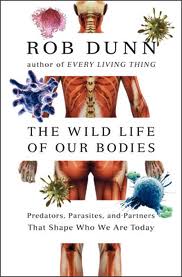
TheWildLifeofOurBodiesI was sitting at an outdoor cafe as I thought about how to write this post. I’d just finished reading chapter 5 of the Rob Dunn book entitled The Wild Life of Our Bodiesand was reflecting upon how interesting it was to be reading two books whose central premise–in broad brush strokes–was the same. As I was ruminating, a family of four–a couple and their two daughters, an infant and a preschooler/kindergartener–came and sat down at an adjacent table.

For a while the preternaturally-cute infant crawled around on the table top, but as the mother became concerned that the wriggly little child might fall or spill scalding coffee, she eventually set the child down. The child proceeded to crawl around on the ground–ground on which one could easily imagine pigeons trolling for crumbs. [Full-disclosure: I didn’t actually see any pigeons, or even any noticeable filth on the ground for that matter, and–while this is India–it was a major coffee chain attached to the side of a popular up-scale shopping mall, and so that particular ground was probably at least hosed down daily.] The child crawled on all-fours, except that she had the plastic number placard which told the waitress where to bring the order in one of her hands, and she would alternate between dragging it across the ground and–when she got tired of crawling–she would roll onto her rump and pop a corner of the placard into her mouth.

If reading the preceding scene made you a bit queasy, you should be reading one [or both] of books mentioned above. Doing so gave me a totally different perspective on this event. There was a point when I–like many–would have assumed the little girl would get some sort of ailment and that her parents would pay in lost sleep for letting the kid crawl on the ground in an urban public space, but I’m now more inclined to think that probably nothing will happen, and she could–theoretically–end up better off for the wear. I’m not advocating wallowing in filth, but I have come to see biological stressors in a new light. I wouldn’t go so far as to advocate letting a child crawl around sticking things in his or her mouth that have been on the ground at a cafe, but it would no longer surprise me to hear that this child lived a healthier life than children of germophobic (properly “mysophobic”) first-world moms who are about one cookie-off-the-kitchen-floor from forcing their children to live in a bubble.

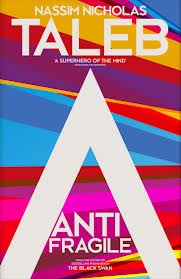
The reader may be wondering two things: 1.) how these books could mitigate one’s queasiness, and 2.) what the books even have in common. If  you’re familiar with Nassim Nicholas Taleb, it’s likely you associate him with criticisms of the misuse of statistical methods, and the failure to understand under what conditions the usefulness of these methods break down. While Taleb does consider a wide range of examples in his popular books Black Swan,  Fooled by Randomness, and–most recently and most relevantly–Antifragilethe world of business is where Taleb’s background lies and where much of his discussion is centered. The Dunn book, one the other hand, fits squarely in the domain of biology and medicine.

Both of these books take as their core idea that there are systems that must face constant and occasionally serious challenges to grow stronger, and that the removal of these challenges can have adverse and sometimes dire consequences. Taleb looks at such systems in a broad and general sense, and coins a term, “antifragile”, to describe such systems. A system is antifragile if it gets stronger (i.e. in some way better) when subjected to stresses. This shouldn’t be confused with robustness, which is being indifferent to stressors. Robust systems can take or leave stressors, but antifragile systems need them or they become weakened. Dunn’s book deals with a specific example of an antifragile system, our guts. The biologist suggests that our war on parasites and germs has created a whole raft of problems never before seen. It’s probably not a new idea to most readers, as there are ongoing arguments about the risks of our antibacterial frenzy.

While first-world dwellers tend to take a superior view of those poor third-worlders and their myriad ailments–a number of which have been stamped out in the developed world–Westerners may not even be aware that there are a number of ailments that exist almost exclusively in the first world. Increasing evidence is developing that certain forms of diabetes and allergies are linked to “clean living.”  Interestingly, while one might readily imagine how a digestive tract ailment like Crohn’s Disease is tied to insufficiently populated digestive ecosystem, there’s reason to believe that diverse issues such as autism and anxiety disorders may also be linked to loss of internal predators and the imbalances their loss causes.

It’s not entirely a coincidence that I’m reading these books concurrently. I’ve been interested in the issue in a broad sense as of late. How does the craving of comfort weaken a population? What are the risks of indiscriminately weeding the stressors out of one’s life? (As seems to be a major objective of modernity.)  Of course, stressors are not eliminated, but instead stressors that are relatively feeble may become the 800 lb. gorilla of stressors.