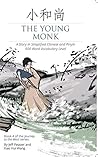
BOOK: “The Young Monk” [Vol. 4 of the “Journey to the West” Series] ed. by Jeff Pepper / trans. by Xiao Hui Wang

The Young Monk: A Story in Simplified Chinese and Pinyin, 600 Word Vocabulary (Journey to the West Book 4)The Young Monk: A Story in Simplified Chinese and Pinyin, 600 Word Vocabulary by Jeff Pepper
My rating: 5 of 5 stars

Publisher Site — Imagin8

This book, Volume 4 of the Journey to the West series, takes a turn from the books thus far. While the first three volumes (Ch. 1-7) focus on Sun Wukong, the Monkey King, this volume leaves him under the mountain where the last volume left him, and — instead — focuses on the origin story of Xuanzang — the monk who is sent by the Buddha to India to get scriptures in the original book — based on the real-world monk who did travel to India to complete the selection of Buddhist scriptures available to Chinese Buddhists.

The monk’s story might not sound like it would be as thrilling as that of the superpowered immortal monkey, but it’s a gripping tale. The story begins before Xuanzang is born and ends in his eighteenth year. So, before he is assigned to travel West to get scriptures.

As I’ve said in earlier reviews, I really like the approach of this series. It has Simplified Chinese script, pinyin, an English translation, and a full glossary of terms used, and it’s organized so as to facilitate reading by a language learner.

I continue to recommend this series for language learners who need a linguistically simplified text to be able to read.

View all my reviews

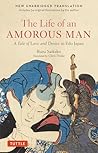
BOOK: “The Life of an Amorous Man” by Ihara Saikaku [Trans. by Chris Drake]

The Life of an Amorous Man: A Novel of Love and Desire in Old JapanThe Life of an Amorous Man: A Novel of Love and Desire in Old Japan by Ihara Saikaku
My rating: 5 of 5 stars

Publisher Site – Tuttle

On sale October 14, 2025

Original Title: 好色一代男

As the title suggests, this novel is presented as the biography of a man who is — shall we say — a horndog. Actually, it would be more correct to say that it is the story of the man’s sex life, as it begins with his sexual awakening as a boy of seven and tells stories of his relationships and dalliances throughout his life until he reaches the age of sixty and is no longer physically capable of the act. Of course, the novel does describe non-amorous life events such as the protagonist’s (i.e. Yonosuke’s) brief time as a monk and as (what in modern terms would be called) a “trust-fund kid.” Yonosuke is from a wealthy merchant family, though his inability to keep his mind on task sees him disowned for many years. So, he leads lives both rich and poor, but never without lust in his heart.

Given that the book focuses on Yonosuke’s interactions with geisha and varied sex workers, one might expect that it is a work of erotica (or even pornography.) It is neither. There is no graphic description of sexual activities and often those events are glossed over altogether. This book will be of much more interest to those interested in what life in Edo Period Japan was like, and particularly how sex work operated as a regulated industry with licit and illicit domains, than to anyone wishing to read erotica for sensual or prurient purposes.

The book has a series of illustrations (one per chapter) that were drawn by the author and appeared in the original (1682) edition. There are also poems (tanka and haiku) sprinkled in here and there, many of which were invocative in their own right.

If you are interested in historical Japan and / or its “floating world,” you’ll find this book to be an interesting read. It’s highly readable and entertaining.

View all my reviews

BOOK REVIEW: “New Story of the Stone” by Jianren Wu [Trans. by Liz Evans Weber]

New Story of the Stone: An Early Chinese Science Fiction NovelNew Story of the Stone: An Early Chinese Science Fiction Novel by Jianren Wu
My rating: 5 of 5 stars

Publisher Site – Columbia University Press

This book is presented as a sequel to the Chinese literary classic (alternatively) known as Dream of the Red Chamber or Story of the Stone. The central character is a scholarly traveler by the name of Baoyu. The first part of the book is set in China around the time of the Boxer Rebellion, an event that features in the story. Throughout this portion, the book reads like historical fiction. However, Baoyu’s travels eventually bring him to a hidden realm, a technologically advanced utopia within China. It is here where Baoyu’s adventures get fantastical and otherworldly, and the book ventures into the domain of Science Fiction.

The setting of the book reminds me a little of Marvel’s Wakanda from Black Panther. Perhaps both instances of worldbuilding were motivated by the humiliated colonists’ fantasy of being more advanced than those who pull the strings for once, or of showing their (respective) lands to be places of “crouching tigers and hidden dragons” (i.e. where great talents exist but remain unseen.) (Note: While China wasn’t on-the-whole colonized by a Western country, its interaction with England and other Western nations left it forced to accept terms unfavorable and undesirable to China (not to mention the outright colonized enclaves such as Hong Kong and Macau.) While the publisher has emphasized the science fiction aspect of this work, it is an anticolonial work through and through. The book can come across as xenophobic and nationalistic in places, but this only reminds the reader of how such positions might be arrived at under the boot of foreign influence.

The book is readable though philosophical and is well worth reading for those interested in developing a deeper insight into Chinese perspectives.

View all my reviews

BOOKS: “The Last Brother” by Nathacha Appanah

The Last BrotherThe Last Brother by Nathacha Appanah
My rating: 5 of 5 stars

Publisher Site — Gray Wolf Press

When Mauritius made it onto my shortlist for upcoming travel, I needed to find an enlightening work of Mauritian literature, and this book was prominently discussed as one that might fit the bill.

The book is narrated by an old man telling a story from his boyhood. It is a poignant and riveting tale. The book’s title, The Last Brother reflects the protagonist’s (Raj’s) first tragedy, losing his two brothers in a natural disaster in Mapou, Mauritius. Raj’s family then moved south where his father got work in a prison.

Much of the book revolves around a strange historical event — the imprisonment of a large number of Jews on Mauritius during World War II. These Jews had fled Europe and were trying to make their way to Palestine but were not granted entry because of a lack of acceptable documentation. They were then sent to Mauritius where they were imprisoned in a detention camp.

The reader only sees this event through the relationship of Raj and David. Raj is taken to the prison infirmary after being beaten by his alcoholic father. There he meets David, a Jewish boy in the detention camp. It isn’t until the very end of the book that the author presents the facts of the historic event. I think this is a wise move, allowing the reader only knowledge of what the characters would know (which – as nine-year-olds – is not much.) The late reveal adds to the tension and makes some of the characters’ decisions more understandable.

The last part of the book is a little reminiscent of Huck Finn, except without Twain’s lightheartedness and with a more melancholic and tragic tone and ending, but featuring two young men on the lam for different reasons.

I found this novel to be a potent read and would highly recommend it for readers of global literature — especially if you expect to find yourself in Mauritius at some point.

View all my reviews

BOOKS: “The Romance of the Three Kingdoms” by Luo Guanzhong

Three Kingdoms (4-Volume Boxed Set)Three Kingdoms by Luo Guanzhong
My rating: 5 of 5 stars

Publisher Website – Penguin

The edition that I read was the Penguin abridged version that fits this sprawling epic into a single volume of a little over 600 pages. This is one of the four Great Classics of Chinese literature (along with Journey to the West, Water Margin, and Dream of the Red Chamber.) It offers a fictionalized telling of a period of Chinese history featuring a three-way civil war, especially centered upon the Han attempt to maintain its Imperial line against challengers, a fight that would ultimately end in the reunification under the Jin.

I’ve loved reading the Chinese classics. While this book and Water Margin feature massive ensembles of characters and could become clunky and cumbersome to read, they don’t because stories are told in intense battle-sized chunks and with a profound capacity to build character hooks that maintain clarity despite so many characters.

I would break this book up into three parts. The first (and by far the bulk of the story) focuses on a trio of great warriors that form a kind of blood-brother pact: Xuande, Guan Yu, and Zhang Fei. Under Xuande’s leadership, these men fight to keep the Han imperial line intact. (It’s fair to say it could also be seen as focusing on the opposition to these men, notably Cao Cao.) The next bit continues the action as the masterful strategist, Kong Ming, tries to keep the wheels rolling on Xuande’s army after the dramatic deaths of the aforementioned trio, and finally there is a section in which it is as though all the great warriors are gone, resulting in an inevitable reunification as there are no longer those who can fight insurmountable odds. As I describe it, it might seem anticlimactic, but it is far so, but I would count it a tragedy.

To me, this book read more like historical fiction than did Water Margin, the latter (also excellent) is almost like fantasy: its characters are so much larger than life as to be veritably superhuman. That said, this novel does feature some magic, but the characters feel much more life-sized — if not without a measure of grandiosity.

I’d highly recommend this book for readers of historical fiction. It’s highly engaging and readable, despite being long and of epic of proportions.

View all my reviews

BOOKS: “Water Margin” by Shi Nai’an

Outlaws of the marsh (the Water Margin)Outlaws of the marsh by Shi Nai’an
My rating: 5 of 5 stars

Amazon.in Page

Water Margin is one of the four classic Chinese novels. The English language translations of the novel go by many names, but in Chinese it’s called Shui Hu Zhuan (i.e. 水滸傳.) The book tells a tale of war and brotherhood in a world in which a person’s virtue and his station in life are often topsy-turvy. It’s one of the most engaging pieces of fiction I’ve read in some time. While it’s a sprawling epic (close to a thousand pages in the unabridged translation,) it draws the reader in and keeps one reading by way of clever plotting and intense intrigues.

The story revolves around 108 individuals of varied checkered pasts who end up together as a band of outlaws in the Liangshan Marsh (hence, one of the most common translated titles is “Outlaws of the Marsh.”) Under the leadership of an exceptionally virtuous and beloved leader, Song Jiang, these outlaws are united into, first, a band of outlaws and, later, (having been pardoned by the emperor) as an incomparable military force that quells threats to the nation.

About the first half of the book consists of the individual stories of the most central of the 108 outlaw chieftains. The next quarter of the book describes their time together as outlaws and, particularly, how they repeatedly defeated government attempts to crush their band. The final quarter of the book is about the band’s Imperial service: first in defeating Tartar invaders from the North and then in crushing a kingdom that arose in the south by uprising of a self-declared king.

If the reader is thinking that 108 primary characters is too many to contend with, I would say that: a.) there are a small set of characters that are so substantially discussed and developed that you’ll be able to always keep them straight; b.) not all of the 108 are crucial to keep straight to follow the flow of the story, but c.) yes, it is not easy to keep them all straight — particularly for a non-Chinese reader who will find a number of the names quite similar (e.g. Wu Yong and Wu Song.)

I should note that the book can be extremely visceral, too much so for some readers. This intensity largely has to do with the stories involving one of the chieftains, Li Kui. Li Kui is the worst. He has a horrific temper, a blood lust, is completely out of control, and almost always turns anything he touches into a bloody mess. His only saving grace is that he recognizes in Song Jiang’s virtue something that must be followed, such that he does his level best to do anything Song Jiang tells him to and (often more importantly) not do whatever he is told not to do. Many readers will hate Li Kui, finding him completely despicable. However, there is a good chance that thinking about why Li Kui is kept around and tolerated after constantly fouling things up will be a productive thought exercise for those who can get through the gore. One may want to consider that question in relationship to the fascinating fact that Song Jiang, the undisputed leader who all the men insist take the position of head chieftain, is the only member of the band who has no kung fu. The other 107 chieftains are all martial arts masters-extraordinaire, most with specialties in particular weapons or tactics.

I won’t say there aren’t clunky plot devices and repetitive elements, but they didn’t bother me much for a few of reasons. Firstly, this novel is from the fourteenth century, and — given that — the readability and emotional resonance of the book is phenomenal. Secondly, I have no way of knowing how much the cheapening plot devices are a product of the original versus of the translation. Finally, those elements are more than made up for by skilled story crafting.

I’d highly recommend this book for all readers who can feasibly get through an 850-page novel with hundreds of characters. Martial artists and travelers may find it of particular value.


View all my reviews

BOOKS: “Ali and Nino” by Kurban Said

Ali and Nino: A Love StoryAli and Nino: A Love Story by Kurban Said
My rating: 5 of 5 stars

Amazon.in Page

I read this book as travel literature for a trip to Azerbaijan and was pleased that it both met my needs as travel literature (i.e. offering insight into the local culture(s),) and it turned out to be an engrossing story, as well. You may have caught that “turned out to be.” It’s true that the first one-third to half of the book is a slow-burn on the story front. Through those early chapters, the book is the character-driven, plotless novel one frequently sees among literary fiction. Don’t get me wrong, it is still interestingly written and engaging (if you’re a literary fiction reader,) and it definitely met my needs for travel literature. But just as I’d resigned myself to this character-driven literary fiction formulation, it shifted into being a compelling and even action-packed story.

This is a tale of star-crossed lovers but set in the Caucuses in the WWI era (i.e. the time of the Armenian Genocide, when the Ottoman Empire was in its violent death throes.) Unlike Romeo and Juliet, in which the lovers came from feuding clans that were culturally quite similar, cultural divergence is the crux of the matter for Ali and Nino. While the families of the two kids get along fine enough, Nino is from an aristocratic Georgian family of progressive Western (and Christian) proclivities. The protagonist, Ali, is also from an upper-crust family, but they are of a much more conservative Muslim bent. While Ali, himself, is an educated and moderate personality and somewhat of a bridge between the old world Persian mindset of his family and the liberal European one in which he was educated, he has friends and family that it would not be unfair to call fanatics. So, while the families bless the union, it is ill-fated because the worldviews of Ali and Nino make it so there is no place they can both be happy living, except a Baku that is being contested by the Ottoman Empire and a Russia in the midst of its own transmutation. In Persia, Nino is a soulless possession who is not allowed to interact with anyone but Ali, eunuch and female servants, and her own family when they visit. On the other hand, Ali can’t bear to go to Europe or America, where he’d be so far out of his element. So, they are stuck with a Baku besieged by multiple entities.

The writer made a couple of unconventional but clever choices that I found to be brilliant. I’d highly recommend this book for readers of literary fiction and / or historical fiction.

View all my reviews

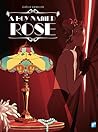
BOOK REVIEW: A Boy Named Rose by Gaëlle Geniller

A Boy Named RoseA Boy Named Rose by Gaëlle Geniller
My rating: 4 of 5 stars

Amazon.in Page

Release Date: July 18, 2023

This is the story of a preternaturally likeable and enthralling young cabaret dancer, the titular boy named Rose. Rose’s entire life has been lived in the cabaret that his mother runs, and much of the story revolves around his introduction to the broader world as his fame grows.

It is eye-catchingly illustrated in a way that creates and facilitates a unique feel for the story.

As stories go, it’s not particularly emotionally rousing. I suspect that is partly because, as is common with literary fiction, it’s more character-driven than story-driven, and this presents a challenge for the graphic novel format in which the reader has more direct exposure to the characters’ external happenings. One may see a character being pensive, but without insight into that individual’s mental world one doesn’t feel it as intensely as one would with a novel that allows one some internal insight.

That said, a world is presented that is so foreign to most of us, life inside a cabaret, that it generates interest in that sense.

Overall, it was an enjoyable, light-hearted read.

View all my reviews

BOOK REVIEW: Crabwalk by Günter Grass

CrabwalkCrabwalk by Günter Grass
My rating: 5 of 5 stars

Amazon.in Page

This story is narrated by its lead character, Paul Pokriefke, a journalist who was on the ill-fated ship, the Wilhelm Gustloff, being born on a rescue ship immediately after his pregnant mother was among the small proportion of survivors to escape that most deadly maritime disaster in history. The sinking of the Gustloff is the book’s center of gravity, it’s around that event – and the events that led to it and that sprang from it – that the story swirls.

The strange title, “crabwalk,” can be taken in a number of ways. For example, the author uses the term when he advances the story by moving in some direction that isn’t chronologically forward. However, the central crabwalk is the failure of a segment of the German population to move forward in the aftermath of the Second World War. This is shown through the narrator’s son, Konrad Pokriefke, a neo-Nazi of sorts who has an obsession with the sinking of the Wilhelm Gustloff and the incident by which that huge ship got its name (Gustloff being a Swiss Nazi who was assassinated by a Jewish student named David Frankfurter.) For much of this story, Konrad’s obsession plays out on the internet, in chatrooms and on websites that Paul covertly monitors – Paul being estranged from his son, a misfortune that he often blames on his own fatherless upbringing.

One confounding element of the story is the apparent cold rationality of Konrad Pokriefke. To clarify, the young man doesn’t exhibit sound reasoning, but he has this rationale in his mind (nutty as it may be) and he is dispassionate about doing what he believes he needs to do. Konrad isn’t the red-faced, spittle-flying Neo-Nazi. At first, it felt implausible for Konrad to have such a set of views and to be so coolheaded about them. That said, I suspect the author wrote it that way intentionally, and eventually it came to feel true – if horrifying [i.e. the idea that this cold version of hatred might be more sustainable than the intensely angry variety and that it might also retain more hatred in the face of interaction with “the enemy” (it being harder to maintain generic hatred of people with which one has an up close and personal interaction.)]

I found this book, which mixes factual events with fictional characters, to be compelling and thought-provoking. It did have a slow burn at the start, but it makes up for it with greater intensity as the story climaxes.


View all my reviews

BOOK REVIEW: Nights of Plague by Orhan Pamuk

Nights of PlagueNights of Plague by Orhan Pamuk
My rating: 5 of 5 stars

Amazon.in Page

Too soon? I’m interested to see how this brilliant novel does, not because anyone will question that it’s a well-crafted story but because it’s definitely less escapist in the wake of the COVID pandemic. Ordinarily, it would have all the emotional distance of historical fiction. However, here we have a novel set around the turn of the twentieth century, and it features the conspiracy theorists, the science deniers, the pandemic opportunists, and those prone to whistle through the graveyard as a disease eats their community alive – i.e. characters with whom we are now all too familiar.

The novel takes place on the fictional island of Mingheria in the Aegean (Mediterranean) Sea between Turkey and Greece during the waning years of the Ottoman Empire. Given its geography, Mingheria is a potential powder keg under the best of circumstances, being about half Greek Christian and half Turkish Muslim, both of whom overwhelm a group who identify primarily as Mingherian and who want to establish their own state, reflecting a primacy of Mingherian identity. (Not unlike those Kashmiris who want an independent Kashmir because they see their problem not as being a Muslim – Hindu one, but rather an India – Pakistan one.) While the story is full of both Mingherian domestic and international politics, it’s the plague that drives everything, or – more accurately – fearful (and often ill-advised) responses to the plague.

At the heart of the story are Princess Pakize and her husband, Doctor Nuri. The couple is diverted to Mingheria while sailing to China. The reason the Sultan changes their itinerary is two-fold: first, to fight a worsening outbreak of bubonic plague, and, second, to learn who killed the last doctor sent to lead the quarantine response, Dr. Bonkowski. (Bonkowski was a well-regarded medical expert who is killed by unknown perpetrators in the early chapters of the book.) As Nuri is engaged in public health matters and the Princess is occupied by writing letters to her sister and contemplating Bonkowski’s demise, they are swept up in events that will ultimately lead to a revolution and coup d’état. When those who oppose the public health measures (e.g. prohibition of Muslim funerary bath rituals) gain control, the epidemic swells to horrific proportions. As in Pamuk’s excellent novel, Snow, the tension between modern / progressive forces and religious traditionalists is ever present (not unexpected given Turkey’s long history of conflict between reformers and fundamentalists.)

This book is compelling and, in the wake of the COVID pandemic, makes a profound commentary on how far we haven’t come.


View all my reviews