Rainy December day
blows in - not long to stay.
From season to season,
without any reason,
sometimes we feel the fray.

Rainy December day
blows in - not long to stay.
From season to season,
without any reason,
sometimes we feel the fray.
What skill would you like to learn?
FREEDIVING.
What details of your life could you pay more attention to?
Mental states and somatic & emotional sensations. Sakshi Bhava is good stuff.
Over the years, I’ve read many books about survival in extreme or unexpected situations. Here are five of my favorites.
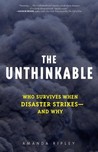
THE UNTHINKABLE by Amanda Ripley [Full Review]
What I like about this book: Ripley focuses heavily on the topic of mindset while exploring a wide range of survival situations from being stranded in a lifeboat to being in the Twin Towers on 9/11. It’s a fascinating – as well as educational – book.
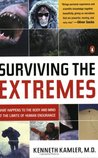
SURVIVAL AT THE EXTREMES by Kenneth Kamler [Full Review]
What I like about this book: This book focuses on surviving in all the places humans are not adapted to, places where one cannot live for long without ongoing technological support. These places include Mt. Everest (with which the author has personal experience,) the ocean, and the harshest of deserts. Kamler is a medical doctor and the book, therefore, does a good job of explaining the limits of human physiology.
EXTREME FEAR by Jeff Wise [Full Review]
What I like about this book: Wise’s book examines how fear can work against us in challenging situations (e.g. causing one to freeze at the wrong time) and what methods have been developed to overcome such crippling or inappropriate fear responses. This book is not entirely about life-and-death survival, but it does have a lot to say that is relevant to the subject.
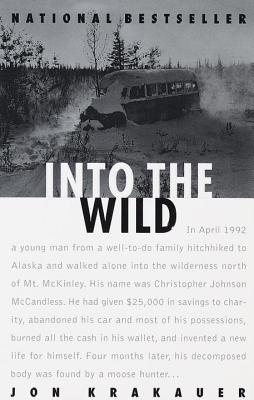
INTO THE WILD by Jon Krakauer [Full Review]
What I like about this book: This book is not like the others. There are no physical or mental techniques for survival described in it, nor discussions of physiology. Rather, it is an extremely well-written cautionary tale about a young man who goes out into the wilderness and gets in over his head. It is highly readable food-for-thought.
98.6 by Cody Lundin [Full Review]
What I like about this book: This is the closest thing to an actual survival manual on my list. But it’s written in conversational, folksy style that makes it easy to read, despite the daunting subject matter. As the title suggests, Lundin’s central premise is that one must keep the body burning at its appropriate temperature, or else…
No, but it sounds like fun — starts with a “GRR” and rhymes with “fudge.”
What brings a tear of joy to your eye?
Feigning melodrama.
When tigers chase, I run. When sunsets glow, I sit and watch.
Curiosity. I exist in a state of perpetual perplexity. For example, is curiosity an emotion? If so, is it a positive one? I know it includes a feeling that drives me to make a decision or take an action, which would be an emotion by definition. But I don’t see it on a list of emotions. I consider it positive, but I also try to avoid putting value judgements on all things. Maybe it’s neutral. Can an emotion be neutral?…
In short, I think we need to foster emotional intelligence and not just academic intelligence, and we need to rebuild social interaction in a super-tribal world (i.e. a world too big for everyone to know everyone else.) [But do the latter without the xenophobia.]
To elaborate:
First, I think we need some true coming-of-age experience that facilitates a sense of self-empowerment. This would not just be collecting envelopes of cash and dancing a dance or reciting a prayer, but something more akin to being dropped in the woods for a week. Of course, this would require engaged parenting and skill acquisition and not just leaving kids with video games and social media. It seems like a lot of our present problems result from people with no sense of empowerment or the emotional intelligence that comes therefrom. Such people may have passed all the tests but still have “imposter syndrome” and the like.
Second, we need some sort of way to build tribal-scale groups in which people interact with a small group of others repeatedly — in person and face-to-face. The challenge is that this needs to be done without increasing xenophobia, which is already trending the wrong way. I think there is a problematic tendency to be virtually engaged but not personally engaged with others in humanity. Even in I, who am intensely introverted, the social impulse remains, but we live in a world where people can successfully dropout.
Some people get one or both of these experiences in any number of ways, but it seems like an ever-increasing segment of the population lacks confidence (even if they had a 4.0 gpa the whole way through their formal education,) and lacks human interaction (even if they have 2000 social media “friends.”)
Equanimity and emotional resilience — i.e. the ability to give fewer f___ks.