What a moment!
   When you realize
     that your lips had been more numb
     than from Szechwan peppercorns,
   and that numbness
     has slid into paralysis.

You are dying:
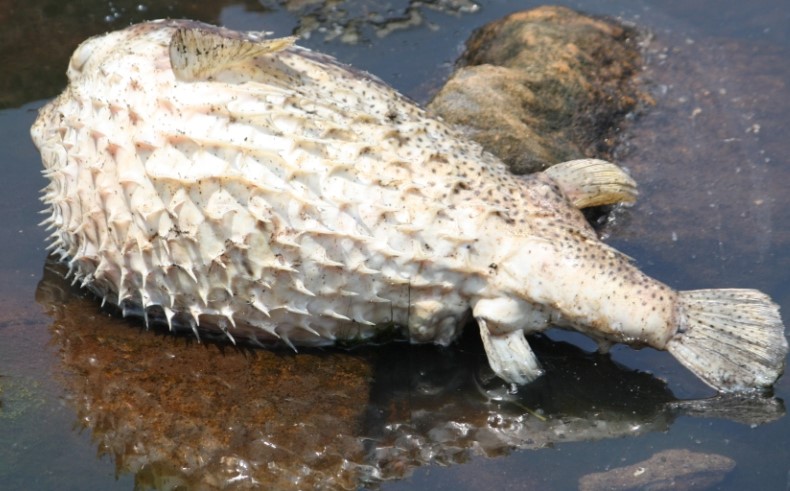
   death by Fugu --
     poison blowfish.

Your heart will stop.
   You will keel over,
     falling from your stool
     at the sushi counter.

A booth-dweller,
   seeing you bounce off
     an adjacent patron,
     wonders why you don't
     bring your arms up to catch yourself,
     but - of course - they're dangling
   uselessly,
     and so you land face first.

The booth-dweller cringes.

There's nothing to be done for you.

You had the nerve
   to try the Fugu!

But, while Fugu life is exhilarating;
   Fugu death is inglorious.
I'm wired and amped; my feet know the last dance.
   What's a poor old end-run death dog to do
 But surrender to music's honeyed trance,
   Waltzing to it like dreams that seem cuckoo?
 But nothing 's crazy at last dance juncture --
   Just before the call for all to get lost:
 When sanity stretches but won't rupture,
   And one can see crystalizing hoarfrost.
The Greeks' Styx. The Hindus' Vaitarna. The Norse Gjȍll. The Gnostic's Hiṭpon. The Japanese Sanzu-no-Kawa. The Mesopotamians' Hubur. Taoists cross Naihe Bridge -- over what (I'm not sure, but) is probably a river.
I click on Google Maps;
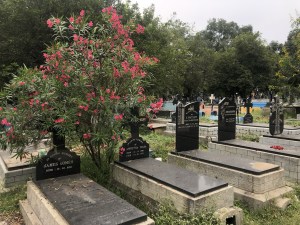
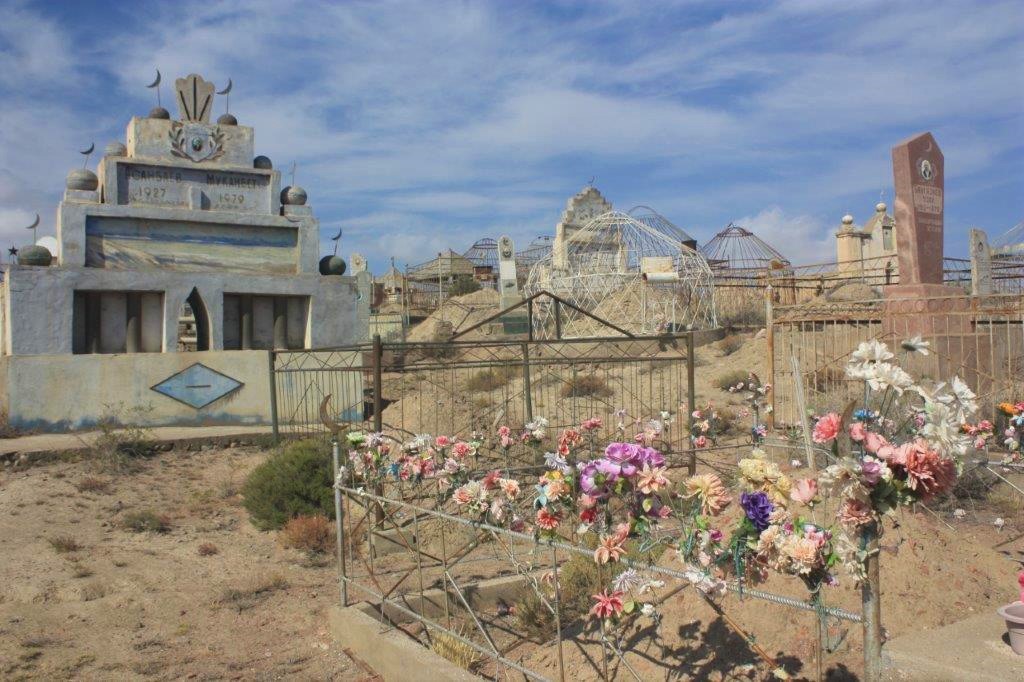
 a pin highlights for a cemetery,
  and, here, I stumble upon
   graveyard reviews.

These reviews intrigue me because
 it seems to me that if one is capable
  of writing a cemetery review,
    then one is unqualified.

And, if one is qualified to comment
 on the caliber of an eternal resting place,
  then one is unlikely to be capable of
   posting a review.

I read one of the one-star reviews
 and see that the reviewer's principal complaint
 is an overabundance of "pocong."

"What is a 'Pocong?'" you may ask.
 It is a Javanese ghost that takes up
  occupancy in death shrouds.

Why is there a Javanese ghost
 infestation in a cemetery 4000 kilometers
  from Java, and -- as near as I can tell --
   with zero Javanese occupants?

The review does not say,
 but I love that someone panned
  a cemetery based on the presence
   of foreign ghosts

[and not because it is simultaneously
 phasmophobic and xenophobic.]

But because it shows an unbridled commitment
 to one's imagination that is usually
  only seen among children.
dying by the second
   from a starving brain;
 each new panicked moment
   narrows down the frame.

now, my world is dwindling,
   shrinking to a dot:
 like TV's used to do
    when you shut them off.

Now, this poem is done.
   there's nothing past one pel --
 except for oblivion:
    no sight, no sound, no smell.
In the drowsy dark caves of the mind / dreams build their nest with fragments / dropped from day’s caravan.
From the solemn gloom of the temple / children run out to sit in the dust, / God watches them play / and forgets the priest.
The wind tries to take the flame by storm / only to blow it out.
The same sun is newly born in new lands / in a ring of endless dawns.
When death comes and whispers to me, / “Thy days are ended.” / let me say to him, “I have lived in love / and not in mere time.” / He will ask, “Will thy songs remain?” / I shall say, “I know not, but this I know / that often when I sang I found my eternity.
Fireflies by Rabindranath Tagore is in the public domain and can be read at sites such as:











 Tiger Riding for Beginners