BOOK REVIEW: Yoga Body by Mark Singleton

Yoga Body: The Origins of Modern Posture PracticeYoga Body: The Origins of Modern Posture Practice by Mark Singleton

My rating: 3 of 5 stars

Amazon page

I was excited to stumble across this book because it proposed fresh insights into the history and development of posture-centric yoga. Singleton’s premise is that yoga as it’s practiced in studios around the world today (i.e. practices focused heavily on asana, or postures) has almost nothing to do with historic yogic traditions and is to a large extent European (or Western) fitness practices fed back to the world with a patina of Indian-ness instilled by a few Indian fitness teachers (e.g. T. Krishnamacharya and students.) This is a bold and stunning hypothesis. The problem is that Singleton leaves plenty of room to doubt his thesis. I’m not saying that I’m certain Singleton is wrong, but after reading the book I’m no more inclined to believe his hypothesis than when I first read the book blurb.

The book consists of nine chapters:
1.) A Brief Overview of Yoga in the Indian Tradition
2.) Fakirs, Yogins, Europeans
3.) Popular Portrayals of the Yogin
4.) India and the International Physical Culture Movement
5.) Modern Indian Physical Culture: Degeneracy and Experimentation
6.) Yoga as Physical Culture I: Strength and Vigor
7.) Yoga as Physical Culture II: Harmonial Gymnastics and Esoteric Dance
8.) The Medium and the Message: Visual Reproduction and the Asana Revival
9.) T. Krishnamacharya and the Mysore Asana Revival

One can see the flow of the book in this chapter listing. It begins by describing the ancient yogic traditions (e.g. Jnana yoga, Bhakti yoga, and Karma yoga.) Singleton then goes on to put immense weight on very few voices that were speaking globally about yoga in the late 19th century—largely European but notably including Swami Vivekananda. (This, by the way, is where I noticed the most glaring weaknesses of the book. There seems to be an assumption that what the most vocal people were saying during this time was the truth, the whole truth, and nothing but the truth.) One will note that the late 19th century is an arbitrary point to make the critical juncture for a study of yoga—this era’s sole importance seems to be in that that’s when Europeans started entering the scene (and documenting it in English and Western languages to a large extent.) I understand that there may have been a dearth of information previously; however, I’m also skeptical of equating the sum of truth with the sum of what is documented.

The book then shifts into the early 20th century when Singleton proposes the proto-postural yoga is beginning to coalesce with both Western and indigenous Indian influences. Singleton writes extensively about this period, and presents what he believes is the path by which postural practice evolved over a short time into modern yoga as we know it. The book ends in the mid-20th century with an extensive discussion of T. Krishnamacharya and his pack of brilliant students (i.e. B.K.S. Iyengar, Pattabhi Jois, T.V.K. Desikachar, and Indira Devi) who are responsible for a lot of how yoga is practiced today (for virtually all of modern yoga by Singleton’s reckoning.)

It should be noted that this book is put out by an academic press, Oxford University Press, and there’s all the front and post matter that one would expect of a scholarly press publication. This includes an introduction, notes, and a bibliography.

So, you might be wondering how I could have so much doubt about the veracity of the book’s central claim—a book written by a Cambridge educated scholar and published by Oxford University Press. It’s, after all, chocked full of facts that are designed to bolster Singleton’s argument. I’m certainly not suggesting that Singleton lied or presented false facts (however, I have–and will further–argue that he frames facts throughout the book to diminish those statements and facts that run counter to his argument while wholeheartedly accepting statements that validate his argument—even when the people whose statements he leaves unchallenged would seem to have their own agendas. I don’t know, perhaps T. Krishnamacharya was—as Singleton intimates though never explicitly accuses—lying when he claimed to have received his sequence and approach from a scripture he was taught by a Himalayan master. However, interestingly, he would be lying to minimize his role in the development of yoga rather than to increase his fame. This stands in contrast with the European authors who Singleton readily accepts who were seeking to build their bona fides as experts in the esoteric systems of India and the Himalaya, who arguably had a lot to gain from being seen as having a full understanding of these systems.)

The best way to understand the root of my skepticism is to tell a make-believe story. Imagine a race of aliens came down to Earth. For whatever reason, they want to understand (presumably among many other things) the Roman Catholic Church. One astute alien scholar notes that, after having reviewed not only the entire Bible but a vast canon of theologian discourse, there is scant mention of sitting or kneeling. However, when cameras came around, there came to be clear evidence of pews and kneelers in the church. The aliens conclude that Catholics had always stood during worship, but with the advent of the camera they began to sit and kneel. The aliens, having big and bulbous butts, conclude that the Catholics have become concerned that their own big, bulbous butts will be captured for posterity (pun intended) by the cameras and have, thus, opted to adopt postures that would more adequately provide cover. In the present day, sitting and kneeling are the bulk of what Catholics do with their bodies when [overtly] practicing their religion, and so it must be those postures–rather than abstract notions like achieving “grace” are now the most critical part of the practice. (Besides, the earliest photos of kneelers came from Protestant churches, so perhaps Anglicans taught Catholics how to kneel.)

If you haven’t figured it out, in my little scenario, the late 19th century Europeans who were writing the English language tracts that formed the heart of Singleton’s research material are the aliens with big, bulbous butts. I would propose that the Europeans aren’t viewing yoga completely objectively but through the lens of their own experience and desires. Furthermore, they are also only giving weight to what they see and hear (which may or may not be a full picture.) I would further argue that just like Catholics don’t devote much text to discussing sitting and kneeling in the documents of the Vatican library doesn’t mean there isn’t a long history of those practices. Postural practice is:

a.) not the critical end result that everyone is concerned with even if it takes up the bulk of one’s time in [overt] practice. It’s certainly true that there are a vast number of yoga practitioners whose only interest is in the fitness aspect of the practice. However, there are also many who spend most of their yoga reading time learning from Vedas and reading yogic philosophy even though the bulk of their practice time is asana.
b.) extremely difficult to convey via text but readily conveyed through demonstration and hands-on teaching. If you were a Catholic and wanted to teach someone kneeling, would you write them a three paragraph text description of the process, or would you just demonstrate how to kneel and correct any glaring (albeit unlikely) deficiencies in form.

At no point does Singleton get into the postural details of individual asana. He mentions another scholar that supposedly has done some of that work, but Singleton feels it’s not critical. However, it’s very hard to prove what he’s trying to prove without getting into that level of detail. Yes, there will be similarities between various systems of stretching because of the nature of the body. For example, European stretching systems had a forward bend that looks reminiscent of paschimottanasana (the body folds that way and stretching the hamstrings is one of the most important functions in any stretching regimen), and it shouldn’t be surprising or revealing if the first photograph of this posture was in a European gym (the fact that Scandinavians had cameras before Himalayan yogis isn’t a sound basis to conclude that Himalayan yogi’s learned to bend forward from Scandinavians.) A there are a lot of postures that two systems might reasonably independently discover, but one also can’t rule out that the Indian yogi taught the Europeans and not the other way around. (I know it’s hard to comprehend in the era of FaceBook, but failure to be documented does not equal failure to be true. The farther one goes into the past, the less of what happened is going to be documented, and some cultures are going to be more likely to document events than others. e.g. Would our aliens be right or wrong if they concluded that 85% of humans are females between the age of 12 and 24 years old because 85% of the selfies posted on the internet are among that group. )

Singleton’s book does have some graphics. They didn’t always help his case, however. I was struck by how few of the fine details of the European postures correspond to practice as we know them, while some of the very old paintings look almost exactly like present day asana. (If one accepts that the fact that they didn’t have the greatest grasp of capturing perspective back then isn’t indicative of how flat the postures and people were back then.) I’ll readily admit that I wouldn’t definitively count Singleton wrong on my subjective observation of the pictures, but it does leave me with a lot of room for doubt.

I suppose the next question is why I didn’t completely pan the book. Three stars isn’t a tragic rating. I thought the book contained a lot of good information and food for thought (even if it fell far short of proving its central hypothesis.) I particularly enjoyed the chapter on T. Krishnamacharya and his now-famous student body. I’ll also say that part of why I came away from the book with such a muddled perception of this history is that Singleton doesn’t hide facts that are damning to his case, but rather presents them and then tries to marginalize them. A prime example would be the Hatha Yoga Pridipika (HYP), a 15th century text that mentions a number of the asana considered classic yoga postures today (some of which form the core of a Hata practice)—though admittedly HYP emphasizes the importance of only four seated postures.

I can’t say that Singleton didn’t help give me pause to wonder about the truth of the received understanding of yoga’s evolution. I’ve practiced yoga in places as varied as India, the U.S., Thailand, and Hungary, and I found it shocking how similar the practice is around the world. This bodes well for the argument that yoga as it’s practiced today has coalesced recently. By way of contrast, there are many myths about how one martial art is the ancestor of another but the two systems often look nothing alike. (e.g. I’ve studied Kalaripayattu, which many believe was the ancestor art taken to China by Bodhidharma through Southeast Asia, but which today looks nothing like Kung fu or Muay Thai. Furthermore, Kung fu styles usually look quite unlike the Korean and Japanese martial arts that they are said to have inspired.) If the latter among these martial arts did come from the earlier, they evolved apart quickly. While the evolution into different martial art forms is quite possible, it raises the question of why yoga should be so similar internationally. A skilled yoga teacher would likely give a given student the same alignment adjustments for, say, Warrior I, regardless of whether the teacher was in Prague, Manila, Tokyo, or San Diego.

I can’t say that I’d endorse Singleton’s argument. It would take much more precise information for me to buy it (and it’s likely that said detailed historical information doesn’t exist.) However, if you’re interested in the history of yoga, you might want to check out this book. Your conclusions may differ from mine, but even if they don’t I suspect you’ll learn a thing or two of interest. Yoga Body was reasonably priced as a Kindle book when I bought it.

View all my reviews

READING REPORT: February 20, 2015

This week’s Reading Report will be short. I didn’t complete any books this week.


Most of my reading was divided between two books that I’ve mentioned in earlier reports. The first is Zen and the Brain by James H. Austin. This is probably the most expensive book that I’ve purchased since the ridiculously overpriced textbooks of college. While I’ve been known to pan decent books for being overpriced (e.g. most recently Zen Mind, Strong Body by Al Kavadlo), I will say that I’ve found this book to be worth it. There are vast numbers of books on the fascinating findings of neuroscience research. Also, there is a vast canon on Zen, meditation, and the quieting and mastering of the mind. However, there are only a small (though growing) number of books that deal with the intersection of these two subjects, and none covers the subject in as much depth as Austin’s work–as far as I’ve seen. The chapters I’ve been reading of late deal with emotions, visceral drives, and memories–all relevant issues for one who is seeking personal development in a scientifically-minded manner. The next chapter will deal with GABA. I’m looking forward to this because I know there is scientific evidence that yoga can reduce depression through its effect on GABA levels, and I look forward to having a better understanding of how this works.

Zen&Brain


The second book that’s consumed a lot of my time over the past week is The Pyjama Game. I’m about 2/3rd of the way through this book and will finish it in the upcoming week. It is in part a micro-history of judō and in part an account of what it’s like to be a practitioner of the martial art of judō. While the micro-history chapters are chronological, they’re interspersed with chapters that are more of a personal accounting of the author’s experience (and the experience of individuals with which he interacted with first-hand–i.e. other amateurs.)  The era that was covered in my reading of the past week was an interesting one. It chronicled judō’s shift from a time in which Japan completely dominated the sport to one in which Russians, Europeans, and Americans started to make headway and—in some ways–unique contributions to the art. This includes judō‘s rise to Olympic status, and how the sport has progressed since that time.

pyjamagame


There were another couple of books that I read substantial parts of as research for the novel I’m writing. The first of these is The Taiheikiwhich is–as was the style in medieval Japan–a mix of part history and part literature. It tells the story of Emperor Go-Daigo’s retention of power, largely through the efforts of valiant loyalist warriors–most notably the famous Kusunoki Masashige.

Taiheiki


The second research work is entitled Fighting Techniques of the Oriental World: AD 1200 – 1860As my novel takes place partly in 14th century Japan, China, and Southeast Asia, this reference comes in handy for learning about the activities of warriors across several nations.

FightingTechniquesOrientalWorld


I purchased three books this week. In a way, I was successfully (and happily) suckered. For those who haven’t realized, Amazon is very clever. If you look at a book once or twice, the price will often rise a little when you go back. This drives a few suckers to buy it at a higher price before it rises to some imagined peak price. I’ve noticed this on enough occasions to believe that it’s not just coincidence. Furthermore, as one trained as an economist, I know this is a sound pricing strategy. What I’d not yet experienced is that if one keeps periodically checking on the books–but not buying–the prices will creep back down to a new low, probably only a tiny bit under the first price you saw. I bought three books that I’ve been looking for both on Kindle and at my local bookstore, but which have stayed above my reservation price.


The first, and most expensive, was Buddha’s Brain, which is along similar lines to the aforementioned Zen and the Brain. The book is by a neuroscientist who specializes in neuroplasticity, and who examines how one can go about “rewiring” one’s brain to be happier and more well-adjusted.

BuddhaBrain


The second book is called The Relaxation Response. It was the cheapest book of the three and is much older than the book Buddha’s Brain. In it Dr. Benson (Harvard MD) describes the relaxation response as the body’s counterpoint to “fight or flight” mode. In this state of relaxation, the body–among other things–goes to work on repairing what ails it. There’s a lot of evidence that a human body can repair most of what can ail it if it gets enough rest–i.e. sufficient break from stress.

Relaxation Response


My final purchase was A Confederacy of Dunces. This book is considered to be one of the best comedic novels in American literature. It’s also a book that all depressed writers (which is to say all writers struggling to get things published) should read for the cautionary tale of the novel’s tragic back story. The author, John Kennedy Toole, committed suicide (at least in part) because he couldn’t get it published. His mother then took up the torch, shopping it around. It took her seven years, but she finally got it published after convincing the novelist Walker Percy to look at it, and having achieved his recommendation. In 1981 it won the Pulitzer Prize for fiction.

confederacy of dunces

BOOK REVIEW: Zen Mind, Strong Body by Al Kavadlo

Zen Mind, Strong Body: How To Cultivate Advanced Calisthenic Strength--Using The Power Of Zen Mind, Strong Body: How To Cultivate Advanced Calisthenic Strength–Using The Power Of “Beginner’s Mind” by Al Kavadlo

My rating: 3 of 5 stars

Amazon page

This book discusses issues related to a calisthenics-centric approach to fitness. The first thing that one should be aware of is that the book has no such unifying theme as would be suggested by the title. Really, this is a sort of “best of” collection of Al Kavadlo’s blog posts, but—of course—that makes for a really unsalable title. The title is a take-off on Shunryu Suzuki’s Zen Mind, Beginner’s Mind, which is quoted in the front matter. Don’t expect Zen or the mind to formally enter the picture in a major way. I will say that Kavadlo has a Zen approach in that he emphasizes simplicity and paying attention to what one is doing throughout (so many people try to drown out their workouts with music or entertainment.)

I had mixed feelings about this book. On the pro side, Kavadlo is clearly knowledgeable and has a sound and pragmatic approach to fitness. Not only is he not trying to sell you on supplements and fitness fads, he tries to discourage such profit-driven nonsense. You’ll get some good information and sound advice from reading this book. You’ll find out why Kavadlo eschews dietary supplements, how he prepared for a marathon and a triathlon, what advantages calisthenics hold over other strength building activities, and how to avoid injuries.

So what’s the problem with the book? The first problem is rooted in the fact that I paid full price for the book soon after it came out, and–at said price—it’s overpriced for what it is—a rehash of blog posts. It looks like Amazon has dropped the Kindle price. As I said above, I respect Kavadlo’s approach to fitness, and think that he offers some useful insights, but the question is whether you couldn’t get the same insights for less–I think you can. At half the price I paid for this book, I would have been much happier with it. Alternatively, if they had beefed it up a bit—particularly with useful graphics—I might have found it a good buy at the price I paid. The bottom line is it’s a thin book of blog quality material.

My second problem is that they waste too much space with pictures of Kavadlo standing around shirtless in front of random minor NYC landmarks. I understand that a cut, muscular body is the ultimate resume for a personal trainer. However, I suspect that even the ladies and gay men will at some point say, “Enough with the standing around shirtless photos, Al.” For us heterosexual males, the number of these shots is way over the top.

Now, I’m not saying that the number of photos is excessive. They could have used some of that photo space for instructional photos of how to better do the exercises, or to build up to the more challenging exercises. Kavadlo has an excellent YouTube channel, so I know it would be possible to get more photos of him actually doing exercises. (They do have some pics exercise pics, particularly in the sample workout section at the back.)

The book’s 26 chapters are arranged in four parts that deal with background information, calisthenics, cardiovascular workouts, and diet respectively. There is a section at the back that presents a series of sample workouts divided into beginner, intermediate, and advanced levels.

As for my recommendation, I’d say that if you are interested in fitness and see this book at a price of around $4, buy it. However, if it’s at $10, it’s overpriced for what it is. Of course, your views of a fair price may vary. (I should note that I purchased it in Kindle e-book format.)

View all my reviews

BOOK REVIEW: I Have No Mouth & I Must Scream by Harlan Ellison

I Have No Mouth and I Must ScreamI Have No Mouth and I Must Scream by Harlan Ellison

My rating: 4 of 5 stars

Amazon page

This collection of short fiction by Harlan Ellison consists of only seven stories. It was originally published in the late 1960’s and a second edition was released in 1983—the latter being the edition I read. Despite a bit of Cold War zeitgeist–most notably in the title story—this collection holds up well to time.

I’ll proceed by discussing each of the seven stories.

1.) I Have No Mouth & I Must Scream: It’s after World War III, the Soviets, Americans, and Chinese had built artificial intelligences (AIs) to help prosecute the war. The AIs ganged up against humanity and exterminated all humans—excepting five individuals (4 men and 1 woman.) The AI finds a way to indefinitely extend the lives of the five so that it can keep its playthings around. The AI is kind of like a sadistic child with an ant farm. The story is told from the perspective of one of the five remaining humans.

2.) Big Sam Was My Friend: A folksy narrator tells the tale of how a fellow interstellar circus performer met his ends. The deceased, Big Sam, was capable of teleportation, like the character Nightcrawler (Kurt Wagner) in the X-men. Ellison does an excellent job of creating a unique character and tone in this story.

3.) Eyes of Dust: On a planet of beautiful people, there remains a family of uggos–and the child is the ugliest of all. However, ugliness isn’t the boy’s only unique trait. This is one of the weaker stories of the collection in my opinion, but it’s not bad.

4.) World of The Myth: The three-person crew of a spaceship crashes on an unfamiliar planet. The planet is inhabited by ant-like creatures that can form complex shapes, and through such displays the creatures can reflect the essence of who a person is back at them. This proves more than the despicable captain of the small crew can bear.

5.) Lonelyache: This story is more realism than speculative fiction—or at least I interpreted it that way. It’s about a guy who’s gone through a divorce recently, and is living alone. The story intersperses recurringly-themed dreams in which men are trying to kill the lead character, with waking sequences which revolve around the man’s troubled relationships with women.

6.) Delusion For a Dragon Slayer: In the Introduction, we are told by Theodore Sturgeon that the description in this story is very much how people on hallucinogens experience the world. I can see what Sturgeon is saying. The story begins with a series of vignettes about people who died for no logical reason and at the least likely times. The story then tells an extended tale of one such death, that of the lead character, in a way that mixes dream and reality in a way that’s hard to differentiate.

7.) Pretty Maggie Moneyeyes: A man in Las Vegas hits the jackpot on a slot machine. He feels compelled to engage in the very sucker-like behavior of playing the same machine again, but he wins again and then keeps winning. The casino obviously suspects foul play with the second jackpot, but they can’t find anything wrong with the machine or any way in which the man might be cheating. All their investigation reveals is that a woman had died playing that machine some time before.

I’d recommend this book for those who like short speculative fiction. The best of the stories are outstanding, and the worst of them are still intriguing and readable. I will say that it’s not a collection for readers with delicate sensibilities–including young readers. (e.g. Rape is a theme that repeats in a couple of stories.)

View all my reviews

READING REPORT: February 13, 2015

Welcome to a special Friday the 13th edition of the Reading Report. What’s so special about it? If you’re not deluded by superstition, then not much. If you are superstitious, reading this post may cause you to suffer a plague of locusts (or whatever plagues your particular geographic area.)


Now that we’ve gotten rid of the illiterate ninnies, we can get down to discussing books.


I finished two books this week–one nonfiction and one fiction. I’ll be posting book reviews within the next couple weeks.


The nonfiction book was called Yoga Body: The Origins of Modern Posture Practice. The author’s intriguing and controversial thesis is that yoga as it’s practiced in studios around the world today nothing to do with traditional Indian yoga, but, instead, owes it’s existence to European calisthenics and bodybuilding systems and the Indians that borrowed from them. I didn’t find the author’s argument compelling for a number of reasons that I’ll get into in my review. This isn’t to suggest that I’m certain he’s wrong. He may be right, but the way he constructed his argument left a great deal of room for doubt.


TLEG_Vol1

The fiction book was a graphic novel entitled The League of Extraordinary Gentlemen (Vol. 1). For those of you who haven’t seen the movie featuring Sean Connery, this comic book gathers together a team of protagonists from 19th century science fiction and adventure novels. The team consists of Mina Harker (of Bram Stoker’s Dracula), Allan Quatermain (of H. Rider Haggard’s King Solomon’s Mines), Captain Nemo (a Jules Verne recurring character), Dr. Jekyll/Mr. Hyde (Robert Louis Stevenson’s title characters), and Hawley Griffin (of H.G. Wells’ The Invisible Man). One needn’t have read all those classic stories to follow this book, but being a fan of 19th century tales of the fantastic definitely makes it more fun. The story depicted in this volume has nothing to do with the movie plot.


mantraSherlockHolmes

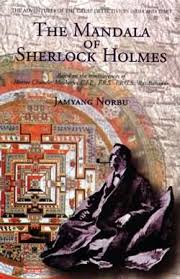
I’m more than halfway through a couple of books that I mentioned in earlier Reading Reports, they are Why Do People Get Ill? and The Mandala of Sherlock Holmes.  I read chapters 7 through 9 of the former book, which had to do with the expression of symptoms, the heart as a symbol and that symbol’s expression in illness, and the impact of mother’s experiences on infants and children. In the latter book, Holmes has arrived in Tibet, and the plot thickens. The author is Tibetan, and so has some unique insights. However, some chapters advance the story with action, and others are almost like travelogue.


I’m still early into reading two books that I’ve previously mentioned. The first is Zen and the BrainIn this book I’ve transitioned out of the part explaining Zen and the author’s experience of that tradition, and am now into the part that lays down the basic neuroscience. While the author writes in a readable style, for a neuroscientist, this is still challenging reading because of its scientific nature and the complexity of the brain. However, the chapters I read recently both raise some fascinating questions and provide useful information. The chapter I just finished dealt in part with the neurochemistry of addiction. I like that this book is divided up into short chapters. This is beneficial for taking in such complicated information. I need frequent think-breaks to ruminate on what I’ve read.


pyjamagame

The second is The Pyjama Game. After a slow start, the last two chapters have contained some fascinating information. One of these chapters dealt with the history of jujutsu, particularly as Japan transitioned from medieval to modern. The other chapter outlined Kanō Jigorō‘s development of judō.


I bought three books this week.


The first is entitled Healing Moves, and is by a married couple consisting of a fitness writer and a cardiologist. This book addresses a topic that is a prevailing theme in my nonfiction reading as of late, which is what movement, exercise, and physical activity can do to improve one’s health (not just one’s fitness.)

HealingMoves


The second book is Greatest Ever Boxing Workouts.  This book presents information about what boxers like Mike Tyson, Manny Pacquiao, and Floyd Mayweather do to prepare for fights. It’s a follow-up to an earlier book that included fighters like Muhammad Ali and Roy Jones Jr.

BoxingWorkouts


Finally, I just got a short story collection on Kindle Daily Deal the other day entitled Lovecraft’s Monsters.  This isn’t a collection of H.P. Lovecraft stories, but rather is an anthology of stories inspired by Lovecraft’s work.

LovecraftsMonsters

BOOK REVIEW: Quarantine in the Grand Hotel by Jenő Rejtő

Quarantine In The Grand HotelQuarantine In The Grand Hotel by Jenő Rejtő

My rating: 4 of 5 stars

Amazon page

[Note: This book is published by Corvina Books, which is a Hungarian publisher that—among other things—specializes in translations of Hungarian literature (into mostly English and German.) I bought the book on a recent trip to Budapest. I mention these two facts because this seems to be an expensive and / or difficult to acquire work outside of Hungary. A cursory Amazon search brought up copies only at an exorbitant rate. In Hungary I paid 2500 forint (about $9 USD at the time), which I would consider on the high side of what the book is worth. It’s a good book, but it’s a 160-page pulp-fiction paperback novel written about 80 years ago.]

Quarantine in the Grand Hotel is a murder mystery set on a fictional resort in Indonesia (or thereabouts.) However, it’s not your typical dour mystery. It’s as much of a satirical humor novel as it is a mystery. I was hooked with the first paragraph, which reads, “When Maud returned to her room, she saw a man emerge from her wardrobe. Dressed in pyjamas and wearing a bright green lampshade on his head, the stranger beamed a friendly smile at her.” From that point, I had to know who the man in the pyjamas is and how he got there, and that information doesn’t come immediately or without false leads.

The premise is that the resort is quarantined and a murder takes place there (actually two murders.) It’s not a creative premise. The hotel setting allows the author to bring together an international cast of characters (suspects) some of whom would believably have secrets or be leading double lives. Where the creativity comes in is both in the humor, and in the skilled reveals. Rejtő used cliff-hanger chapter closings to good effect. He also plants false information, e.g. in the form of false confessions designed to protect loved ones that may or may not have actually committed a crime.

Rejtő (who wrote under the nom de plume “P. Howard”) was a Hungarian journalist and author. He wrote this and most of his books in the 1930s. He died in a forced labor camp in axis-controlled Soviet territory during World War II. He’d displeased the Hungarian Arrow Cross Militia (i.e. the Hungarian fascists) and was sent to a labor camp at the front.

I’d recommend this book for those who like light, humorous novels. If you’re a hardcore mystery fan, it might seem a little silly and ham-handed. If you are looking for a novel that offers insight into Hungarian literature, I don’t think this one is for you. The setting is not Hungarian, the major characters are not Hungarian, and I would hazard to say that most people wouldn’t know that this translation wasn’t written by a British, or other English-language country, author.

View all my reviews

BOOK REVIEW: How Pleasure Works by Paul Bloom

How Pleasure Works: The New Science of Why We Like What We LikeHow Pleasure Works: The New Science of Why We Like What We Like by Paul Bloom

My rating: 3 of 5 stars

Amazon page

Paul Bloom’s book is about why we take pleasure in peculiar actions, proclivities, and objects. These are the pleasures that aren’t readily or directly explained by our evolutionary hardwiring. Evolution has programmed us to experience pleasure with sex and eating to encourage procreation and nourishment. In other words, those who experienced pleasure with sex had sex more often, and passed on their genes more successfully. Those who had a healthy appetite, ate more, became stronger, survived, and passed on their genes.

However, just because the pleasure of sex is readily understood through biology, doesn’t give us insight into the panoply of activities that people find pleasurable in a sexual way that have no value for procreation whatsoever. Bloom uses the example of masochism, but there are all sorts of kinky fetishes out there that one might also consider. It’s the peculiar pleasures that Bloom tries to explain. This is not to suggest that Bloom’s book is entirely about food or sex. He addresses each of those subjects with a chapter of its own, but they aren’t the sum total of the book. Both he and I, no doubt, rely heavily on food and sex because they are such fundamental pleasures and ones whose domains have blossomed far beyond the dictates of biology.

So what does the book address besides food and sex? It examines why people collect things that were once owned by famous people? Bloom sites a study showing that Joshua Bell anonymously playing violin in the subway in street clothes can barely garner a collective $32 in an afternoon, even having been passed by people who will pay $200 each to hear him later that evening as he wears a tuxedo in a concert hall, though playing the same songs on the same $3.5million violin. Why do we sit around watching television and movies? If any of these pleasures seem self-evident, I would encourage you to ask yourself why they should be? It’s by no means clear that we should value something more highly because of who previously owned it, and it’s certainly not clear why we should get value by watching others play act lives that seem more interesting than our own.

The theory that Bloom presents is called essentialism. It’s the idea that each of these things that give us pleasure represents the essence of something or someone in our minds. So a person who pay’s 500 times the going rate for a used guitar solely based on the fact (x-factor) that it once belonged to John Lennon is, according to Bloom, imagining that there’s some sort of essence of Lennon that rubbed off onto the guitar. Yes, the guy buying the guitar could be buying it entirely based on economic considerations, but the only reason there’s an economic benefit (economic rents in economist terminology) to be made is that there are people out there (many of them) who desire to possess a famous artist’s instrument even though it costs them far more than an equivalent guitar not owned by a famous person. Things become even clearer when one looks at an item like JFK’s tape measure—i.e. a mundane item that is not tied to the man’s fame. (Said tape measure sold for an absurd amount.)

Bloom discusses art forgeries to elaborate this concept of “essence” versus the intrinsic value (i.e. the beauty of the art.) There are many cases of paintings being sold for millions because they were believed to be painted by a certain “artistic genius” and then they become trash when it’s discovered that they were painted by a nobody—a nobody who’s genius was clearly sufficient to convince all the experts that he was some other genius for a while, mind you. If what we cared about was the beauty of the painting, its value would have nothing to do with its origins. In this example, it might seem to be all about rarity (a dead artist paints no more, and, thus, has a limited stock of paintings), but there is reason to believe that’s not the whole story.

We can see the value of these essences ubiquitously. There have been a number of blind taste test experiments that show that oenophiles (wine lovers/experts) can’t tell nearly as much about a wine’s delicate intricacies when they don’t have its label on hand. Famously, there was the CEO of Perrier who couldn’t pick his own company’s water out of a blind line up of waters, though insisting it was a superior product. (It took him five tries out of seven waters.) Even after that event there were people willing to spend twice as much for Perrier because it gave them some pleasure that was completely delinked from its taste or nutritional characteristics.

Bloom’s thesis is interesting, and he presents a lot of fascinating examples in this book. What the book doesn’t really explain is how come certain essences act heavily on some people and not at all on others. It also seems like a theory that begs for another level of explanation. Why should such essences exist, i.e. what is their root cause? The latter may prove difficult given the degree to which individuals vary in their peculiar pleasures from one to the next.

I found this book to be intriguing, and would recommend if for people with interests in the oddities of human behavior.

View all my reviews

READING REPORT: February 6, 2015

I polished off three books this week. That’s not as impressive as it might seem; they were all slim volumes. I’ll do reviews on these books in the near future, but a few words about each will suffice here.

The first was Zen Mind, Strong Body; a book about which I had mixed feelings. It’s by a calisthenics expert named Al Kavadlo, who is a personal trainer, author, and YouTube phenom. On the positive side, Kavadlo is a sharp guy with many useful insights into bodyweight exercise and fitness in general. Additionally, Kavadlo eschews the snake-oil salesmanship that is rampant in the fitness world.

On the other hand, the book is basically a rehash of blog posts, and the “new / first time seen pictures” aren’t useful for learning the exercises because they’re mostly just the author standing in random places with his shirt off. Furthermore, there’s no such consolidating theme to the book as is suggested by the title. I think it just has that title (a take-off on DT Suzuki’s classic work on Zen) because “The Best of Al Kavadlo’s Blog Posts” doesn’t scream “buy me.” I thought a little extra value-added could have been provided for the people who paid for the book, but you will learn from it.

The second book was Quarantine in the Grand Hotel. This novel brings satire and humor into a locked-door mystery. It was written by a Hungarian author in the 1930’s, but remains a readable and enjoyable book.

IHaveNoMouthThe third book was the short story collection by Harlan Ellison that I mentioned I would begin this week. I Have No Mouth and I Must Scream consists of seven stories that are nominally in the genre of science fiction, but could also be classified as tales of the strange. This book was first published in 1967. Ellison writes stories in a readable style, though one that can sometimes be called “trippy.” If I were going to award a “book of the week” for the book that I found most engaging, it would be this one.

I only got a couple of chapters each into the Mo Yan novel Life and Death Are Wearing Me Out and the epic poem The Aeneid. The former is readable has a fascinating premise, but the latter–not unexpectedly– is a little more of a chore to read (but is a classic and seems worth the difficulties.)

Having finished off some nonfiction in the preceding week, I made room to resume reading a book that I started a couple of months ago entitled Why Do People Get Ill? A two-man team consisting of a psychoanalyst and a neuroscientist joined together to write this book. It examines the role that stress and the mind play in illness. Yes, things like germs (i.e. bacteria and viruses) cause illness. However, that’s not the whole story, and a couple of key questions remain. First, how come some people can be repeatedly exposed to causative factors and their bodies knock out disease leaving them asymptomatic. Second, how come others readily come down with ailments–sometimes even when they haven’t been exposed to causative factors. To put matters in scholarly terms, germs may be a necessary condition for disease, but they are rarely a sufficient condition.

WhyDoPeopleGetIll_Leader&Corfield


I didn’t do much yoga or martial arts specific reading this week. However, today I finally began The Pyjama Game, which is a book about Judō that I mentioned in one of my previous Reading Reports.

I purchased four books this week, all on Kindle and mostly on sale.  Those books, which I’m sure to be discussing and reviewing on later dates are:

TheThreeStigmata

The Three Stigmata of Palmer Eldritch: Because I’m a huge PKD fan, and this is said to be one of his best books–of his books that I haven’t yet read. This was in the Kindle Monthly Deals.

FirstHubby

First Hubby: This will be my first Roy Blount Jr. book, but I did enjoy him on that NPR game show (i.e. Wait Wait… Don’t Tell Me!) This was also a Kindle Monthly Deal as I recall.

Ikkyu_Berg

Ikkyu: Crow with No Mouth: This is the story of a Zen master who lived in Kyoto in the 15th century. He sounds like a fascinating man, and was also a skilled poet. This one wasn’t on sale, but neither was it expensive at the usual price.

TheElementsThe Elements: This book is a Kindle Daily Deal as I’m writing this. I love me some science. I did have to look through the sample pages before buying. Even though it was inexpensive, I was concerned that it might not have much usefulness on my black&white, base-model Kindle because the graphics are an important part of the book. However, it looked like there was enough text explanation to be worth the $2.00–even if the graphics don’t show up well.

And that was my week in books.

BOOK REVIEW: 999 ed. by Al Sarrantonio

999: Twenty-nine Original Tales of Horror and Suspense999: Twenty-nine Original Tales of Horror and Suspense by Al Sarrantonio

My rating: 4 of 5 stars

Amazon page

999 is a collection of 28 short stories and one novella that are all in the genre of horror and dark suspense. The collection includes some superstar authors such as Stephen King, Joyce Carol Oates, Neil Gaiman, and David Morrell, but all of the authors are established writers and most will be familiar to readers in this genre.

I won’t go into each story in-depth, but will list and briefly describe each. A few of the stories stuck with me, while others were quite forgettable—so I’ll point out which were which. Your results may vary.

1.) “Amerikanski Dead at the Moscow Morgue” by Kim Newman: This is a Cold War Zombie story. It was intriguing.
2.) “The Ruins of Contracoeur” by Joyce Carol Oates: The family of a disgraced Judge move to a remote area to stay out of the limelight, and faceless monster sightings ensue. How bad could a Joyce Carol Oates’ story be? It’s solid and well-written. It wasn’t among my favorites.
3.) “The Owl and the Pussycat” by Thomas M. Disch: An “inanimate” stuffed owl and plush-toy cat converse about their wicked, spouse-abusing owner. Creepy, but not one of the strongest entries. The stories in this collection range from realism to far-fetched speculative fiction. This work is toward the latter end of the spectrum.
4.) “The Road Virus Heads North” by Stephen King: A mutating “killer” picture is obtained at a yard sale. This is among the stronger stories.
5.) “Keepsakes and Treasures: A Love Story” by Neil Gaiman: About a collector of the “exotic.” While Gaiman is my favorite author of this bunch, I can’t say this is story was among my favorites of the collection. I will say that it has some of the cleverest wording of any of the stories (as one would expect of Gaiman), but maybe that humor works at right-angles to the story. You decide.
6.) “Growing Things” by T.E.D. Klein: About a husband / Mr. Fixit and his following of advice columns on a growth. This is a short piece, but not among the more memorable stories. It’s innovative, but not the least bit intense.
7.) “Good Friday” by F. Paul Wilson: A vampire story set in a convent. A good story, but obviously not particularly innovative. However, if you like the idea of nuns battling vampires, here’s your story.
8.) “Excerpts from the Records of the New Zodiac and the Diaries of Henry Watson Fairfax” by Chet Williamson: A swanky dinner club that rotates hosts and each host tries to outdo the last in the presentation of “exotic delicacies.”
9.) “An Exaltation of Termagants” by Eric Van Lustbader: I’ll have to be honest; this was the least memorable of these stories. When I flipped back through to write this review, I found that I’d completely forgotten the piece. I think its lack of memorableness speaks for itself. It’s about an unappealing man and his sucky life that’s tied to his poor relationships with women. I think the problem is two-fold. First, it’s one of the longer stories in the collection. Second, unlike Joe R. Lansdale’s “Mad Dog Summer,” it’s a long short story without memorable characters or a taut story arc. In short, if you’re going to go long, you’ve got to give us characters we can either love or despise, and you’ve got to give us a pace that keeps us intrigued. This story does neither. I know it’s all subjective, but I think this collection without this story would be improved.
10.) “Itinerary” by Tim Powers: A mysterious caller asks the protagonist to tell an unknown woman caller that said caller “just left” in response to her inquiry. From there the story meanders into personal tragedy before bringing it all back together in the end. It was so-so. I liked the premise, but it didn’t have that x-factor in execution.
11.) “Catfish Gal Blues” by Nancy A. Collins: A river catfish mermaid story. This was a weird but highly memorable story.
12.) “The Entertainment” by Ramsey Campbell: Man thinks he’s checked into a hotel, but it’s really some sort of asylum. Not the most memorable, but not the least either.
13.) “ICU” by Edward Lee: Man awakes in an ICU, and is informed that he’s a gangster involved in pedophilia and other hardcore taboo pornography. Vivid and well-crafted.
14.) “The Grave” by P.D. Cacek: A young woman with a horrible mother discovers a grave in the woods that she’s never seen before. This one is eery and visceral.
15.) “The Shadow, The Darkness” by Thomas Ligotti: About a tour group promised “the ultimate physical-metaphysical excursion.” This paranormal story is just OK.
16.) “Knocking” by Rick Hautala: Remember Y2K? It was the idea that the entirety of the world of computing would come to a screeching halt because their little (inadequately programmed) computer minds would be blown by a date starting in “20?” This story is based on that notion.
17.) “Rio Grande Gothic” by David Morrell: A cop keeps finding shoes left in the same section of road, and eventually begins to wonder if someone isn’t trying to tell him something. This story does a good job of capturing one’s curiosity and keeping one’s attention.
18.) “Des Saucisses, Sans Doute” by Peter Schneider: This is one of the shorter stories in the book, and it’s also an almost absurdist dark piece. You may laugh or you may vomit, either way the writer had an effect.
19.) “Angie” by Ed Gorman: This story is white-trash gothic. It’s about a couple that are “stuck” with this kid, and are concerned that the child has learned their dirty, little secret and will turn them in. It was one of the stories that stuck with me most intensely. The unlikable character development is exceptional.
20.) “The Ropy Thing” by Al Sarrantonio: A couple of kids in a neighborhood assaulted by a thing that is… well, ropy (rope-like.) Not one of the better pieces, but it has the virtue of being short.
21.) “The Tree is My Hat” by Gene Wolfe: A man befriends an outcast on island in the South Pacific. It’s a solid piece.
22.) “Styx and Bones” by Edward Bryant: A cheating man comes down with a mysterious ailment. This is a well-executed story.
23.) “Hemophage” by Steven Spruill: Another vampire story, this one set inside a detective story.
24.) “The Book of Irrational Numbers” by Michael Marshall Smith: It’s about a guy from Roanoke, Virginia who is obsessed with numbers. As there aren’t many math short stories, if you are a big fan of math fiction you may find this interesting. The writing style is fun. If you aren’t a math fan, you may lose the story.
25.) “Mad Dog Summer” by Joe R. Lansdale: A man recounts a story of murder from his youth living in a rural community. This is one of the strongest stories in the collection. It’s also one of the longest, but the author does an outstanding job of keeping one’s attention throughout.
26.) “The Theatre” by Bentley Little: A clerk at a bookstore ventures into a forbidden floor above the store to find a creepy theater that will change his life. It’s a good, creepy story.
27.) “Rehersals” by Thomas F. Monteleone: I don’t know that I would have put this in the same genre as the other stories, but it’s an excellent story—and so I can see why the editor was eager to include it. It is speculative fiction, as opposed to being realist, but I wouldn’t count it as either horror or suspense. It’s about a man handling props in a community theater who is given glimpses into what his life could have been like if he’d stood up to his abusive father. It’s one of the best stories in the collection.
28.) “Darkness” by Dennis L. McKiernan: A man moves into a beautiful house willed to him by an eccentric uncle. The problem is that the lights in the house are so bright as to be an assault on the eyes—leaving not a shadow or dark space in the house. The lights are wired to be either all on or all off. It doesn’t occur to the nephew that the lights might be that way for a reason.
29.) “Elsewhere” by William Peter Blatty: This is the longest piece–a novella / very short novel and not a short story. It’s about a realtor who’s trying to sell a house that’s haunted. She brings together a writer and a couple “experts on the paranormal” to debunk the haunting so that the house will become salable. But everything is not as it appears.

This is a good collection of stories. Some are better than others, but the best are extraordinary. I’d highly recommend it for anyone who likes horror, dark suspense, or the macabre. Within that genre, it’s an eclectic mix of stories in form, substance, and style.

View all my reviews

The Non-shopping Firang

20140316_160803With the notable exception of books, I hate shopping. There are few endeavors more painfully tedious to me than wandering through stores looking for clothes, tsotchkes, knick-knacks, bric-a-brac, widgets, or doo-dads. I do go shopping, in part because I like to eat, and in part because societal conventions require that I wear clothing (you’re welcome.)


Were I not married, I’d be a complete fashion nightmare because I have only three questions when shopping for clothes. 1.) Does it look like it fits? 2.) Does it look comfortable? 3.) Is the price reasonable? (i.e. given that I’m a cheapskate for which stylishness and/or trendiness mean diddlysquat.) If the price of two shirts of the same size is identical, I will buy the one that’s closest to the cash register–or which will otherwise get me out of the store the quickest.


You’ll note, I didn’t include the question: “Does it match?” Correct. I’m not even sure I know what that means. If it’s a shirt, it matches pants because you wear them together, right? A shirt would not match another shirt, unless one could wear one over the other? If you can’t wear the two items at the same time, they definitely don’t match, but that doesn’t come up often. (I know all the bits that need covering, ergo, I can succeed at picking a group of garments that covers all the essential anatomical area.)


I also didn’t include “Does it look good?” It had to look good to someone–they made the damn thing. Who am I to say my taste is better than theirs? I think we’ve already established that I know not thing-one about being fashionable. Now, if it has feathers or a cape, I wouldn’t buy it on the grounds of lack of functionality (have you ever gotten your cape caught in an elevator or escalator?), but I don’t judge on taste. There but for the grace of my wife, go I… looking like non-sparkly Elton John.


So where am I going with this, you may ask? What’s intriguing is that, despite the fact that I hate shopping, I get asked if I want to be taken to a market, mall, or commercial district about four times per day (fyi, that’s roughly the number of times I go shopping per annum.)


Imagine a white person walking down the sidewalk wearing a t-shirt and sweatpants, said person has a full duffle-bag on their shoulder that is long enough to accommodate a standard size yoga mat when rolled up. Where is this person going?

A.) He /she is going to the yoga studio.

B.) He /she is going to a gym.

C.) He / she is going to a martial arts studio.

D.) There isn’t enough information to determine between A,B, or C.

E.) He /she desperately wants to go shopping.


If you answered “D” you’re a keen and astute observer. If you answered A, B, or C, you have drawn a reasonable conclusion, but did so too quickly and without sufficient information for that degree of specificity.  If you answered “E,” you drive an autorickshaw (tuk-tuk) for a living.


For a while, I thought that this was just blatant ignorance, as all forms of racism are. Could these drivers truly not fathom–despite all evidence to the contrary–that I (i.e. whitey) spent my time doing things other than shopping? Did they really think that my days were divided between counting infinite piles of cash and spending it on crap for which I had no real need?


Then I realized that it was tenacious hope that drove these inquiries, and not biases. I came to this conclusion as I was watching a few of the recent Superbowl ads. If I don’t get enraged at Madison Avenue, I can’t really get mad at the aforementioned driver. Advertisers and that driver are both just trying to persuade me that something that I don’t need and have no interest in is somehow pursuit-worthy.


The driver knows that I’m going to yoga or kalari or a funeral (or wherever the evidence might suggest I’m headed at the moment), but they’re just holding out the thin hope that I can be diverted from that funeral to go buy some gee-gaw from which they can obtain a commission. In a way, they’re like the guys (or girls, to be non-discriminatory) who hit on a person who is way out of their league. It takes a lot of confidence to suffer repeated crushing rejection with such low probability of success. There’s a guy in the building where I get both my haircuts and Tibetan thukpa, who invites me into his carpet shop every single time I enter the building–despite the fact that the first 100 times I’ve shown zero interest. As long as said persistent wooer doesn’t resort to stalking, it’s kind of endearing. (Of course, it’s a thin line into stalker territory, and then it becomes instantly intolerable.)


There’s another reason I’ve discovered I shouldn’t hold this persistence against the drivers. That’s that they’re stereotyping isn’t without basis. Most of my expat compatriots do love themselves some shopping. I’m very curious about the root of this behavior. I suspect that it’s the vestigial evolutionary programming of hunter/gatherer behavior carried over into people who don’t like to get their toes muddy, to have to touch anything “icky,” or–in general–to be outdoors.


However, I’m a little out of my league, because I only have this compulsion to shop for books. I’m sure that’s residual hunter / gather behavior, but there’s a goal that can be understood. Through book shopping, I’m searching for a kind of nourishment–not the kind that ends hunger pangs, but the kind that’s an assault on my stupidity. I still don’t have a theory for how this applies to Hello Kitty stickers, Chia Pets, a second (or 403rd) pair of sneakers, or any of the other inane crap the people really–but unbelievably–purchase.

IMG_2160