BOOKS: “Idle Thoughts of an Idle Fellow” by Jerome K. Jerome

Idle Thoughts of an Idle FellowIdle Thoughts of an Idle Fellow by Jerome K. Jerome
My rating: 5 of 5 stars

Project Gutenberg Site

This is a collection of fourteen humorous essays on a range of topics related to human existence. Besides the titular topic of living a life of idleness, other discussions include: love, poverty, vanity, attire, eating, pets and babies. (The latter two being distinct topics addressed in different chapters, though not with an altogether different attitude.)

Much of the humor holds up well considering this book originally came out almost a hundred and forty years ago. That said, it must be acknowledged that some of the humor and a number of the attitudes have not aged well and will not necessarily be relatable.

If you’re looking for a collection of essays on life that are humorous, if not contemporary, this book is worth looking into.

View all my reviews

BOOKS: “The Sandman, Vol. 3: Dream Country” by Neil Gaiman

The Sandman, Vol. 3: Dream CountryThe Sandman, Vol. 3: Dream Country by Neil Gaiman
My rating: 5 of 5 stars

DC Site

If you love a good story, you really can’t go wrong with Gaiman. This volume consists of four standalone pieces of short fiction set in the Sandman universe.

“Calliope,” like Greek Mythology, envisions an anthropomorphized muse, but takes the idea into a dark and modern twist as said muse is held captive and violated.

“A Dream of a Thousand Cats” imagines dreams do shape the real world and asks what if animals dreamt as big as humans.

“A Midsummer Night’s Dream” is built around the premise that Shakespeare had a patron, none other than Morpheus, a.k.a. Dream, himself.

“Facade” is about a supernatural woman who can only go out in public by taking risky measures to look “normal,” and explores her lonely existence.

All of these stories are clever and compelling, and I’d highly recommend this collection for readers of speculative fiction.

View all my reviews

BOOKS: “DC vs. Vampires, Vol. 1” by James Tynion IV & Matthew Rosenberg

DC vs. Vampires, Vol. 1DC vs. Vampires, Vol. 1 by James Tynion IV
My rating: 4 of 5 stars

Publisher’s Site

In this opening volume in a series that pits a set of the DC pantheon of superheroes against a shadowy vampire cabal, we learn that the vampires are preparing for attack and that they’ve infiltrated all levels of society to degrees unknown — even the Justice League. This volume focuses heavily on the extended “Bat-Family” along with Oliver Queen’s smaller Green Arrow team, but includes many more superpowered characters in varied roles. Though it also ignores some of the most powerful characters, a big risk for such a huge ensemble cast. (One wants to save some big guns, but it begs the question of whether Superman is fiddling while the world burns.)

I like how tension was built in this story, and how information is revealed to the reader, allowing one to be gripped by questions of how the characters will learn what one already knows and with what consequences. The volume ends with a big reveal, though not with any kind of resolution. So, it’s not a standalone story in my view.

I found the volume engaging, but feel it suffers from the unavoidable problems of having too many characters, particularly characters of the god-tier variety.

View all my reviews

BOOKS: “Sweet Tooth, Vol. 2: In Captivity” by Jeff Lemire

Sweet Tooth, Vol. 2: In CaptivitySweet Tooth, Vol. 2: In Captivity by Jeff Lemire
My rating: 5 of 5 stars

Publisher’s Site

This volume interweaves the continuing stories of Gus and Jepperd, separated at the end of the debut volume. As outlandish as this story might seem, human-animal hybrid babies and all, the basic forces that drive the story are straightforward and relatable. Jepperd’s is essentially a love story as he attempts to do right by his wife in a post-pandemic dystopian world. Gus, having been motivated by a desire for new adventure in the first volume, just wants to get home now that he has confronted the fundamental crumminess of the human world.

While this volume is largely filling in the backstories of the two main characters, it does so skillfully through a mix of flashback and current timeline events that advance the story. It certainly has me hooked to learn more about these characters.

I found this story to be emotionally moving and compelling and would highly recommend it for comic book readers.

View all my reviews

BOOKS: “Color” by Countee Cullen

Color (AmazonClassics Edition)Color by Countee Cullen
My rating: 5 of 5 stars

Available on Project Gutenberg

This excellent collection of lyric poetry is by one of the greats of the Harlem Rennaissance. The poems include a range of forms and sizes from single quatrain epitaphs to poems of several pages, with those in between (including a number of sonnets) being most common. Like Dickinson, Cullen had a fondness for common meter (a.k.a. hymn meter,) and it is prevalent throughout. The topics include serious matters, such as race and death, but there is no lack of whimsicality within these pages.

The book is divided into four sections: “Color,” “Epitaphs,” “For Love’s Sake,” and “Varia.” The first is the most serious of tone. (Interestingly, the epitaphs and other poems on death often take a lighthearted, even humorous, tone.)

I’d highly recommend this collection for poetry readers. It’s fun to read, and the poems are skillfully crafted.

View all my reviews

BOOKS: “The Penguin Book of Indian Ghost Stories” ed. by Ruskin Bond

Penguin Book of Indian Ghost StoriesPenguin Book of Indian Ghost Stories by Ruskin Bond
My rating: 5 of 5 stars

Publisher’s Website

This is an anthology of stories of the supernatural set in India or built around characters and contexts of India. About half of the stories are by writers of non-Indian ancestry, though some were born or lived extensively in India (e.g. Rudyard Kipling and C.A. Kincaid.) Not all of the pieces are “ghost stories” in a technical sense, but they all revolve around the supernatural or surreal experience.

I enjoyed all the stories in this collection, but among my favorites were: “The Brown Hand” by Arthur Conan Doyle; “The Strange Ride of the Morrowbie Jukes” by Rudyard Kipling; “The Fire-Jogi” by A.C. Renny; “Fritz” by Satyajit Ray; “Anath Babu’s Terror” by Satyajit Ray; “The Yellow-Legged Man” by Sudhir Thapliyal, and “Topaz” by Ruskin Bond.

If you enjoy scary stories, I’d highly recommend this book.

View all my reviews

BOOKS: “Translation: A Very Short Introduction” by Matthew Reynolds

Translation: A Very Short Introduction (Very Short Introductions)Translation: A Very Short Introduction by Matthew Reynolds
My rating: 5 of 5 stars

Publisher’s Site

Language translation is one of those tasks that people take for granted is a straightforward endeavor — especially in the current era in which computers are starting to do a decent job of it. It turns out that translation isn’t at all straightforward, and a number of tradeoffs must be addressed through the act of translating — e.g. should one try to convey the original author’s meaning as closely as possible or should one make the writing as approachable and comprehensible to the readership as possible? This might seem like a false dichotomy, but because languages never map perfectly to each other and reflect differing worldviews, there is always some degree of trade-off necessary.

Reynolds addresses not only cases from literature, but also shows the role that translation (and mistranslation) can play in the legal, political, and business domains as well. I found this book to be interesting and useful in providing food-for-thought on the subject. It is particularly illuminating in its discussion of how translation is changing in an era of AI, and how profound an effect this will have on our future. (e.g. People worry about the death of languages with small followings, but if automated translation becomes cheap and ubiquitous, will the pressure to focus one’s efforts on one of the world’s major languages remain?)

If you are interested in issues of language translation, this is a fine book with which to begin one’s exploration.

View all my reviews

BOOKS: “Moonwalking with Einstein” by Joshua Foer

Moonwalking with Einstein: The Art and Science of Remembering EverythingMoonwalking with Einstein: The Art and Science of Remembering Everything by Joshua Foer
My rating: 5 of 5 stars

Author’s Book Site

This fascinating work of immersion journalism offers insight into the human memory at its best (and worst,) and throughout the book one follows the author’s experience in preparing for and competing in the American and World Memory Championships. A central theme of the book is how humanity’s attitudes toward (and approach to) memory have changed over time. The tactics that allow competitive mnemonists to perform astounding feats of memorization were well-known in the ancient world and Middle Ages but began becoming less practiced from the dawn of the printing press, becoming almost unheard of by the general population in this, the internet age. Questions such as whether education’s shunning of memorization is, indeed, a sound move are explored. (The mnemonists argue that memorization is done poorly by our educational system, but — if it was done correctly — it would offer tremendous value.)

I found this book to be quite compelling. Foer pulls no punches when presenting individuals who are (or appear to be) charlatans — though in a way that is fair and doesn’t deny things are not always straightforward. (Most of the mnemonists he talks to are clear that they do not have particularly good memories but rather are well-practiced in a set of techniques — e.g. the “memory palace” — that allow even mediocre memories to memorize stacks of cards, chains of random numbers, or even poems at lightening speeds.) Hence the author, with no such background, can learn the skills well enough to be competitive in the US national competition after practicing about a year.

The author speaks to semi-celebrities such as Kim Peek (whom Dustin Hoffman’s character in “Rain Man” is very loosely based upon,) and self-help guru Tony Buzan. But he also interviews a man who has no long-term memory (except from his childhood) and speaks to experts in optimal human performance.

I’d highly recommend this book. It is intensely readable. The stories are riveting and sometimes humorous and the throughline of Foer’s preparation and competition just add icing to the cake.

View all my reviews

BOOKS: “Sweet Hunter” by Teresa of Avila; Trans. by Dana Delibovi

Sweet Hunter: The Complete Poems of St. Teresa of Ávila (Bilingual Edition)Sweet Hunter: The Complete Poems of St. Teresa of Ávila by St. Teresa
My rating: 4 of 5 stars

Publisher Website

This is a bilingual collection of the poems of Teresa of Avila, one of history’s most influential Christian mystics, newly translated by Dana Delibovi. The collection contains about thirty poems, some ecstatic and some philosophic, in both English the original Spanish.

The book also offers an overall introduction and commentaries on each of the five sections by which the poems are grouped. This provides the reader, particularly a neophyte to the history and theology that inform these poems — such as myself — with background useful to better experiencing the poems. I do enjoy bilingual editions even when they are in a source language that I don’t read because they do allow some insight into rhyme, metering, and other considerations of sound. One can observe to what degree the translator emulates form, even if one remains ignorant of the degree to which meaning is captured.

I enjoyed this collection. If you are interested in the poetry of Christian mystics, I’d recommend you give it a read.

View all my reviews

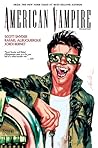
BOOKS: “American Vampire, Vol. 3” by Scott Snyder

American Vampire, Vol. 3American Vampire, Vol. 3 by Scott Snyder
My rating: 5 of 5 stars

Publisher site

The third volume of the American Vampire series advances the story into the 1940’s — World War II to be precise. The book contains two distinct storylines, both involving missions behind enemy lines. The first, “Strange Frontier,” is set in the Pacific theater and centers on the character of Henry Preston (the non-vampire husband of benevolent American Vampire, Pearl Jones.) In it, Preston is assigned to an elite fighting squad dispatched to investigate an island that turns out to be infested with a new strain of vampire.

The second story, “Survival of the Fittest,” takes vampiric vampire-hunter Felicia Book as its lead as she is dispatched (in partnership with agent “Cash” McCogan) to Nazi-occupied Romania to investigate claims of a “mad” scientist’s vampire-related research, only to find herself in a completely unexpected and daunting scenario.

I’m enjoying this series. The stories are satisfying and well-crafted, and the books somehow manage to not be just another set of vampire stories. Moving through time allows the stories to be self-contained while making it possible to continue with ever fresh material. (A tactic that works owing to the long lifespans of vampires.) The books also use genre mixing brilliantly, be it detective noir or — in the case of this volume — the war story. Snyder has breathed new life into the vampire story, and I’d highly recommend this series for comic book readers.

View all my reviews