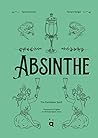
Green Fairy [Free Verse]

Bohemians
   gathered around 
   the absinthe bottles,
  the light hitting 
   the bottles shone
   a radioactive shade
   of green.

That green light
   threw blotches
  against walls &
 floors & people &
  anything else there
  was to illuminate.

The more they drank,
 the less green the mottling --
  not because the empty glass 
   was clear, &
 didn't refract, or spray green,
   but because the splotches
  turned every color --
   every color there is --
  and the colors danced
   around the increasingly 
  amorphous surfaces.

 Until, at last,
  everyone was asleep,
 and visions of Green Fairies
  danced in their dreams. 

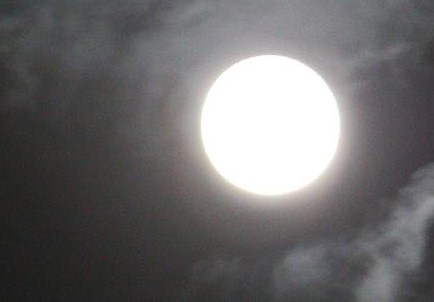
Drinking Alone by Moonlight by Li Bai [w/ Audio]

A pot of wine, under blossoms.
   I drink alone, no friends in sight.
 I raise a cup to lustrous Moon:
   Me, Moon, and Shadow will make three.
 But Moon is a teetotaler.
   And Shadow just skulks at my feet.
 Still, Moon & Shadow are my chums.
   We need a bash before Spring's end.
 But my singing makes Moon recoil.
   And Shadow flops hard when I dance.
 At first, we have a grand old time,
   But we part ways when I drift off.
 We should keep this epic friendship rolling,
   and meet again in the River of Stars.

NOTE: I produced this “translation” / arrangement, using translations by Arthur Waley, Ezra Pound, and that of “The Anchor Book of Chinese Poetry” [ed. by Tony Barnstone and Chou Ping] to get varied takes on the source poem.

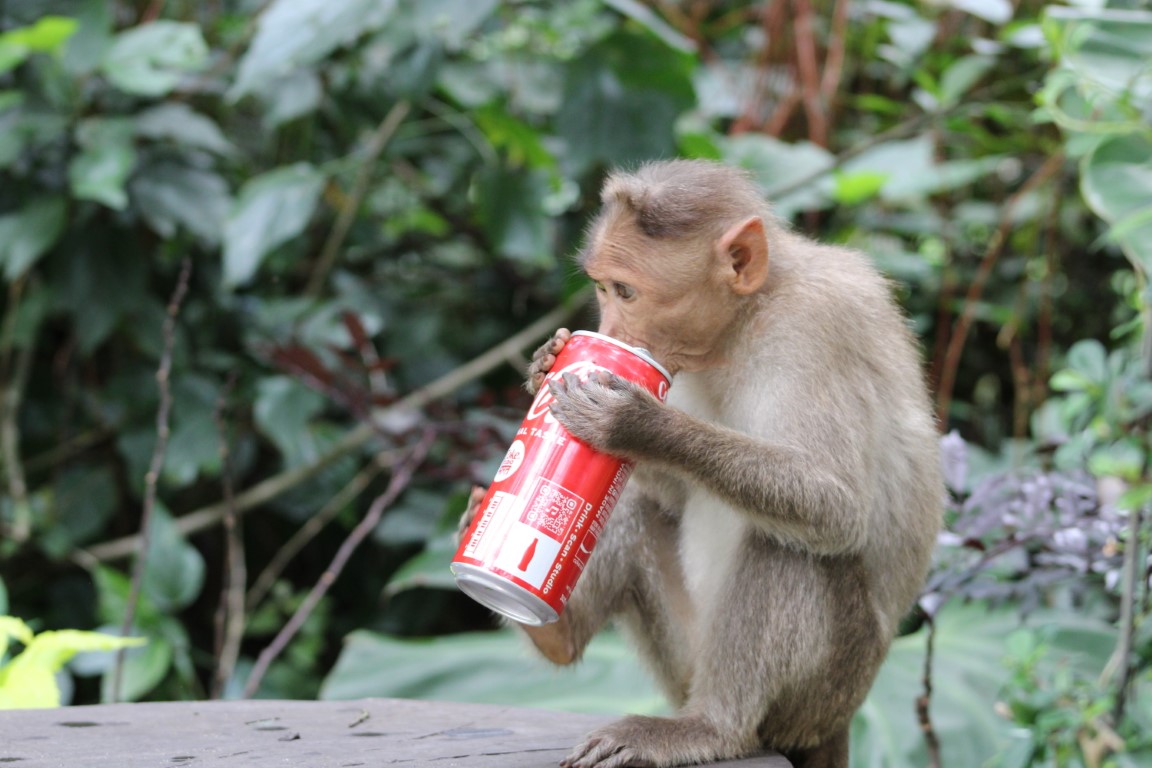
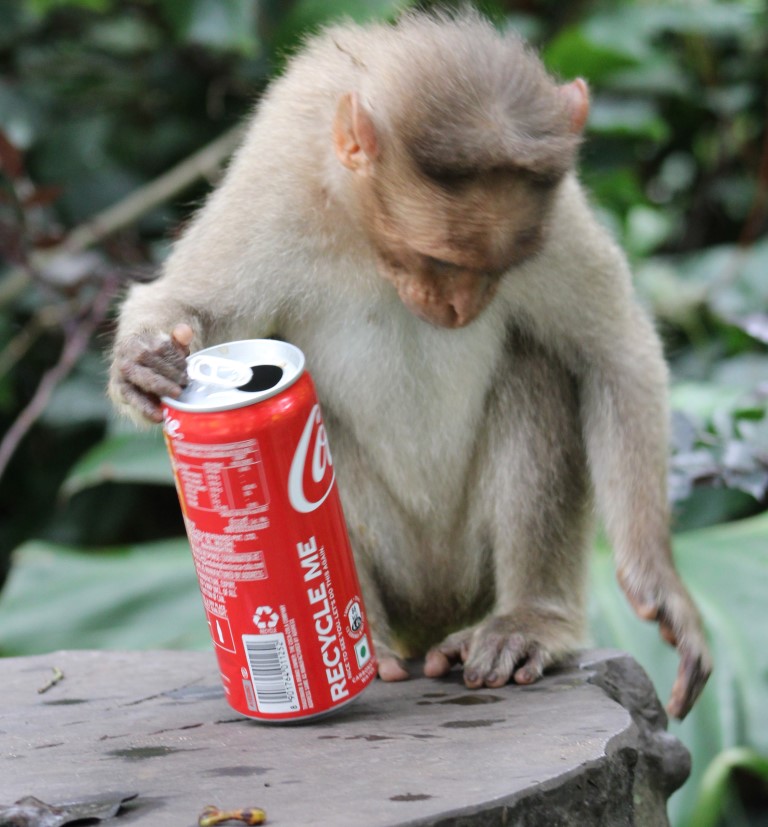
DAILY PHOTO: A Monkey’s Drinking Problem

Love Won [Senryū]

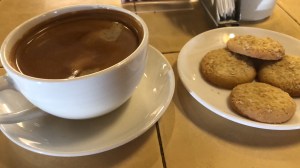
ordered black coffee, 
they brought a plate of cookies,
well-played, love won.

BOOK REVIEW: Made in Chicago by Monica Eng & David Hammond

Made in Chicago: Stories Behind 30 Great Hometown BitesMade in Chicago: Stories Behind 30 Great Hometown Bites by Monica Eng
My rating: 5 of 5 stars

Amazon.in Page

Release Date: March 21, 2023

Chicago is a food city. Once famous for its stockyards and still a major transit point for the products of America’s breadbasket, the city is home to a diverse people, a gathering of migrants and immigrants who brought a wide variety of foods from their homelands and put the necessary twists on them to make them salable to Chicagoans while using available ingredients. This book features entries on thirty foods and beverages that are products of Chicago ingenuity, be they dishes that were wholly invented in the Windy City or one’s that have a distinctive Chicago-style variant. Foodies know exactly what is meant by Chicago-style hot dogs, pizza, or tamales.

If all you know about Chicago cuisine is that ketchup on a hot dog is considered a sin, you’ll learn about some colorfully named Chicago inventions such as: “the Jim Shoe,” “the Big Baby,” and “the Mother-in-Law,” as well as many others that are more prosaically named, if equally calorically dense. One also sees the mark of Chicago’s immigrant story in the Akutagawa, Flaming Saganaki, Gam Pong Chicken Wings, the Maxwell Street Polish, and Chicago Corn Roll Tamales.

Each chapter discusses the nature of the respective dish, its influences, the [often contentious] origin of each item, where one can obtain said dish, and (for most) includes a recipe for making one’s own home variant. So, it’s mostly food history, but with a bit of cookbook, as well. There are pictures throughout, of the foods and in some cases of the location that invented or popularized each dish.

Be forewarned, while Chicago is a city that loves food, it’s not a place that’s wild about nutrition or moderate serving sizes. In fact, I feel certain that many people attempting to consume every item in this book in, say, one month’s time would drop dead of a coronary shortly thereafter (if not during.) Most of these dishes are foods done fast and served with an allowance of fat, sugar, and / or meat suitable for a family (for several days.)

If you’re a traveler (or a Chicagoan) and want to know more about quintessential windy city foods and where you can sample them, you must read this book.


View all my reviews

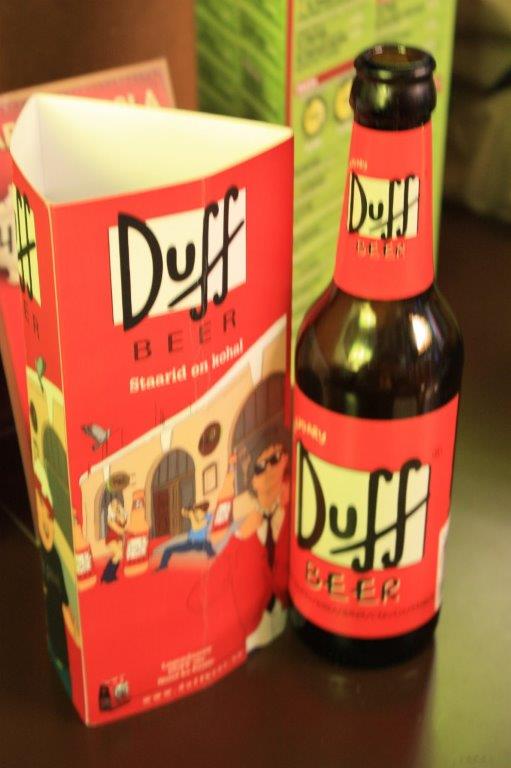
Beerplugs [Limerick]

There was a man with a fondness for beer.
There was nothing else that he held so dear.
Beer-goggles were his Cupid,
& beerplugs muted his stupid:
though it remained for the plugless to hear.

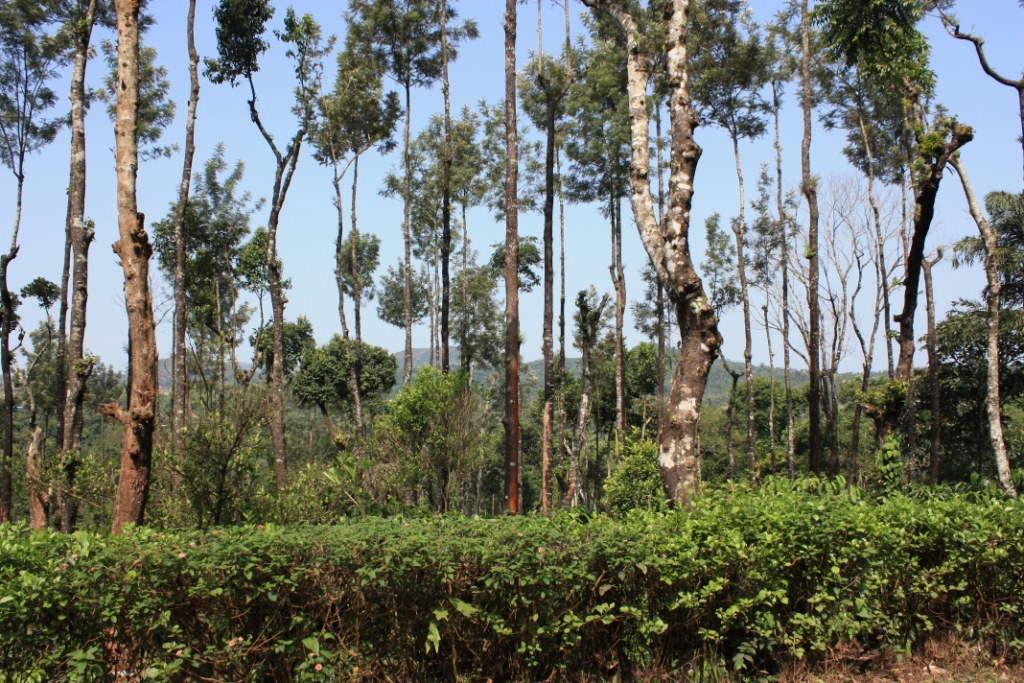
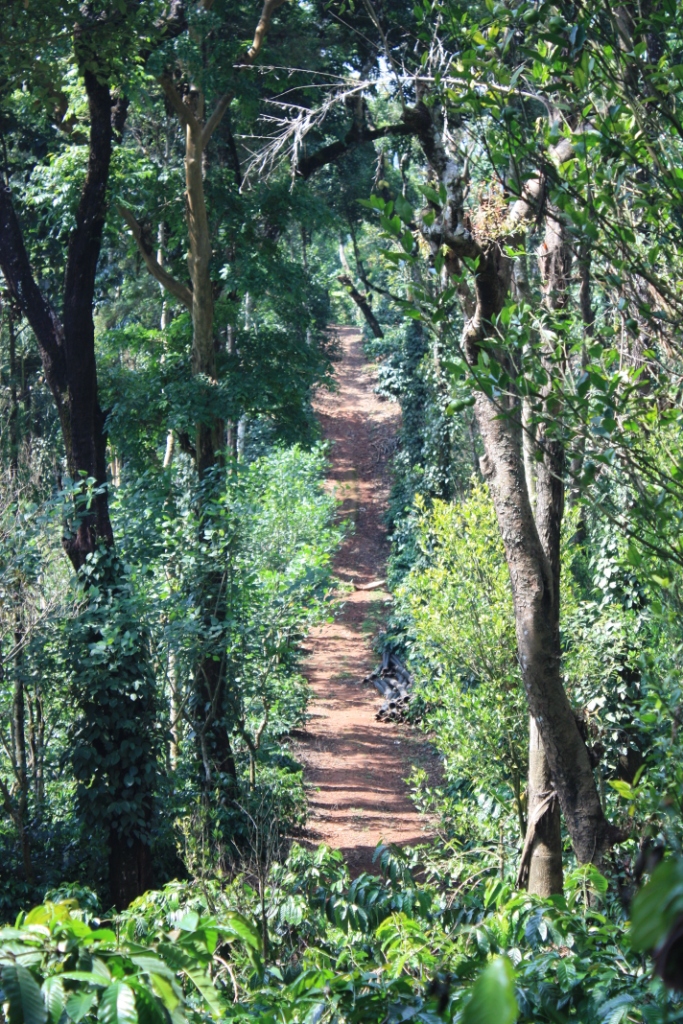
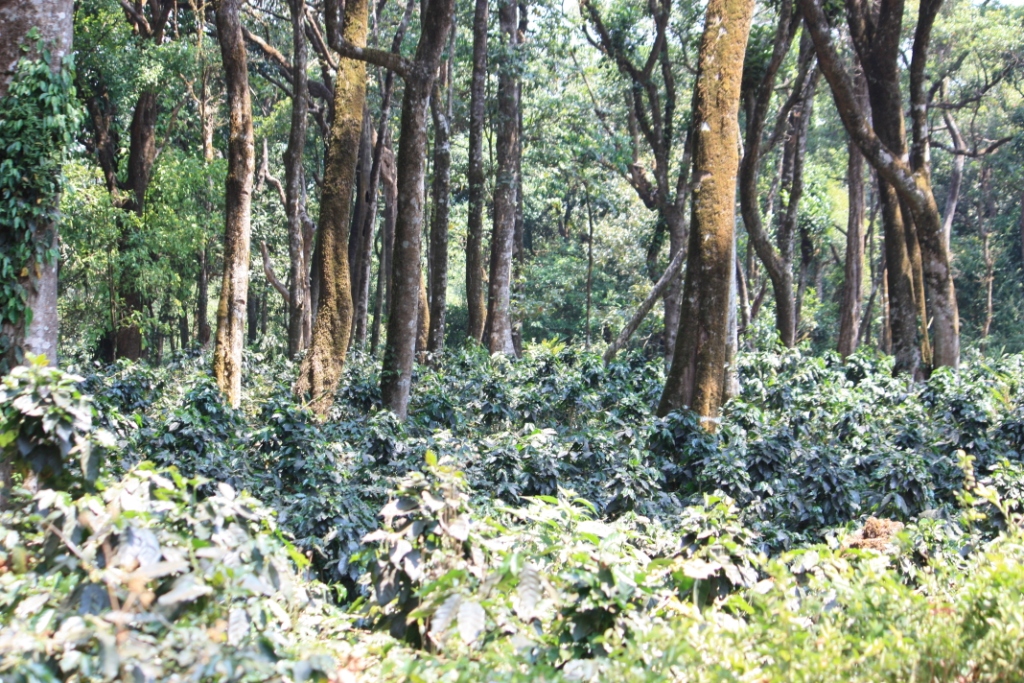
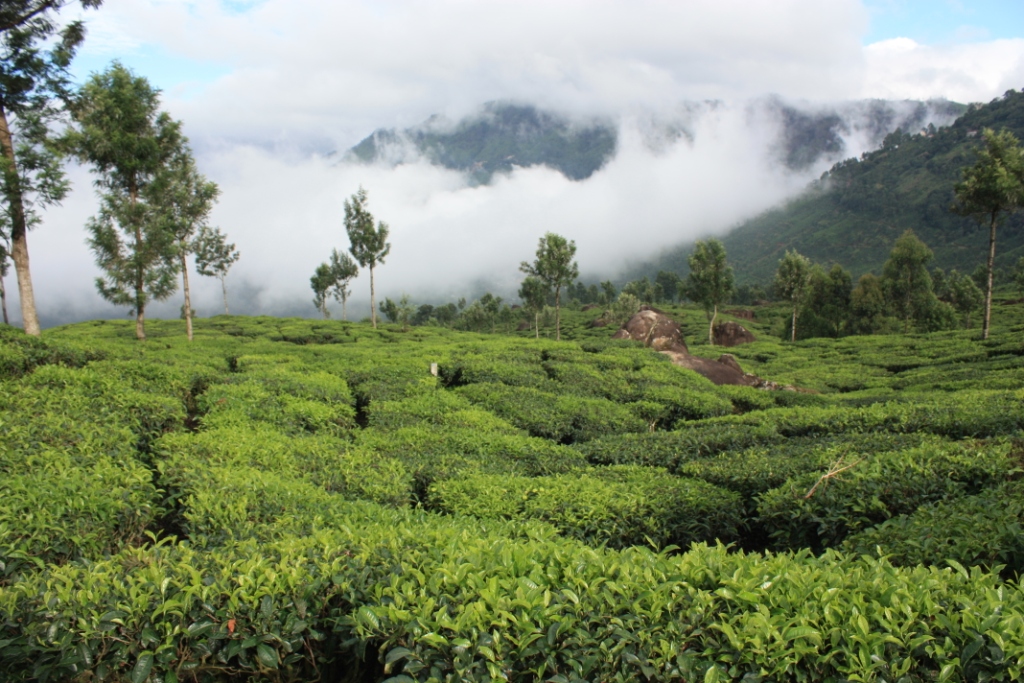
DAILY PHOTO: Coffee or Tea? Why Not Coffee & Tea

Taken on a Coffee & Tea Plantation in Coorg (Kodagu)

BOOK REVIEW: The Botany of Beer by Giuseppe Caruso

The Botany of Beer: An Illustrated Guide to More Than 500 Plants Used in BrewingThe Botany of Beer: An Illustrated Guide to More Than 500 Plants Used in Brewing by Giuseppe Caruso
My rating: 5 of 5 stars

Amazon.in Page

Out: July 26, 2022

This is an excellent reference for those with a serious interest in beer, botany, or both of the above. For the amateur brewer, it offers insight into some new and exotic ingredients for experimental brews. For the amateur botanist, it offers greater understanding of how plants are used by mankind — in one prominent domain, at least. For the beer connoisseur, it provides examples of some brews with unusual ingredients that might just expand one’s palate. The book is well-organized, easy-to-use, and has some fine ancillary features to make it an even more valuable tool.

For each of the 500-ish plants, there’s an orderly entry. Entries are arranged alphabetically by scientific name, and the book also provides alternate names, as well as common names and variations. There are drawings that break parts of the plant out for better identification, and there are sections offering both physical and chemical textual descriptions of each plant. There are also sections listing related species and cultivars (cultivated variants.) There is a geographic section that describes, if known, the place of origin of the plant, as well as the domain the plant has expanded to, or in which it’s now cultivated. One section describes what parts of the plant are used in beermaking, another provides a list of the styles of beers the plant has been (or might be) used in, and another (where applicable) an example of a beer in which that ingredient is found. As applicable, there’s also information about plant toxicity and – in some cases – fun facts related to the plant’s use in brewing. There’s a glossary, bibliography, and common name index, as well.

I’d put the included plants into three categories: 1.) plants that are common cultivated foods somewhere on the planet (note: that doesn’t mean they will appear in grocery stores in your particular neck-of-the-woods;) 2.) trees whose wood is used in barrel-making or smoking, but aren’t ingredients, per se; and 3.) ingredients that aren’t likely to appear on your plate unless you’re a hardcore forager or a deep-dive foodie with connections to a botanist or native population.

I found this book to be a well-crafted guide to beer-relevant plants, and would recommend readers interested in beer (or – more broadly – food and beverage ingredients) give it a look.


View all my reviews

BOOK REVIEW: Darjeeling by Jeff Koehler

Darjeeling: A History of the World's Greatest TeaDarjeeling: A History of the World’s Greatest Tea by Jeff Koehler
My rating: 5 of 5 stars

Amazon.in Page

As Bordeaux or Tokaj are to wine, Darjeeling is to tea, producing a quality beverage considered by many to be the best in the world. However, this isn’t merely the story of how this region of northern Bengal (or, alternatively, Gorkhaland) came to produce a unique kind of tea that would be sought-after around the world. It’s also a story of empire and how Britain’s insatiable demand for tea drove major developments in geopolitics. It’s yet further the story of recent troubled times of Darjeeling tea, from labor shortages to environmental degradation, and what tea estates have done to adapt – from management / organization changes to organic production techniques.

Lessons in the history and geography of tea may seem niche and uninteresting, but the story of tea is actually quite fascinating, involving Opium Wars, the Black Hole of Calcutta, and an industry shakeup resulting from India’s independence.

I found this book compelling, and thought it did a good job of zooming in and out between local and global (and past to present) to maintain the interest of a diverse readership. Whether the book is exploring attempts to transplant tea shrubs and expertise from China or the changing customer base for Darjeeling tea, it’s an engaging and thought-provoking story. If you’re interested in tea, world history, or agribusiness, you’ll likely find something in this book to hold your attention.


View all my reviews

Tea Master [Free Verse]

drink the wisdom --
you'll find it more in the heat
than in the liquid

subtle - 
like the flavor of tea

in drinking it 
you'll discover:

there is no tea,
but the tea --
a tea-less tea

the life in you
the life in me
melted into a mound
of unity